
Martina Franca
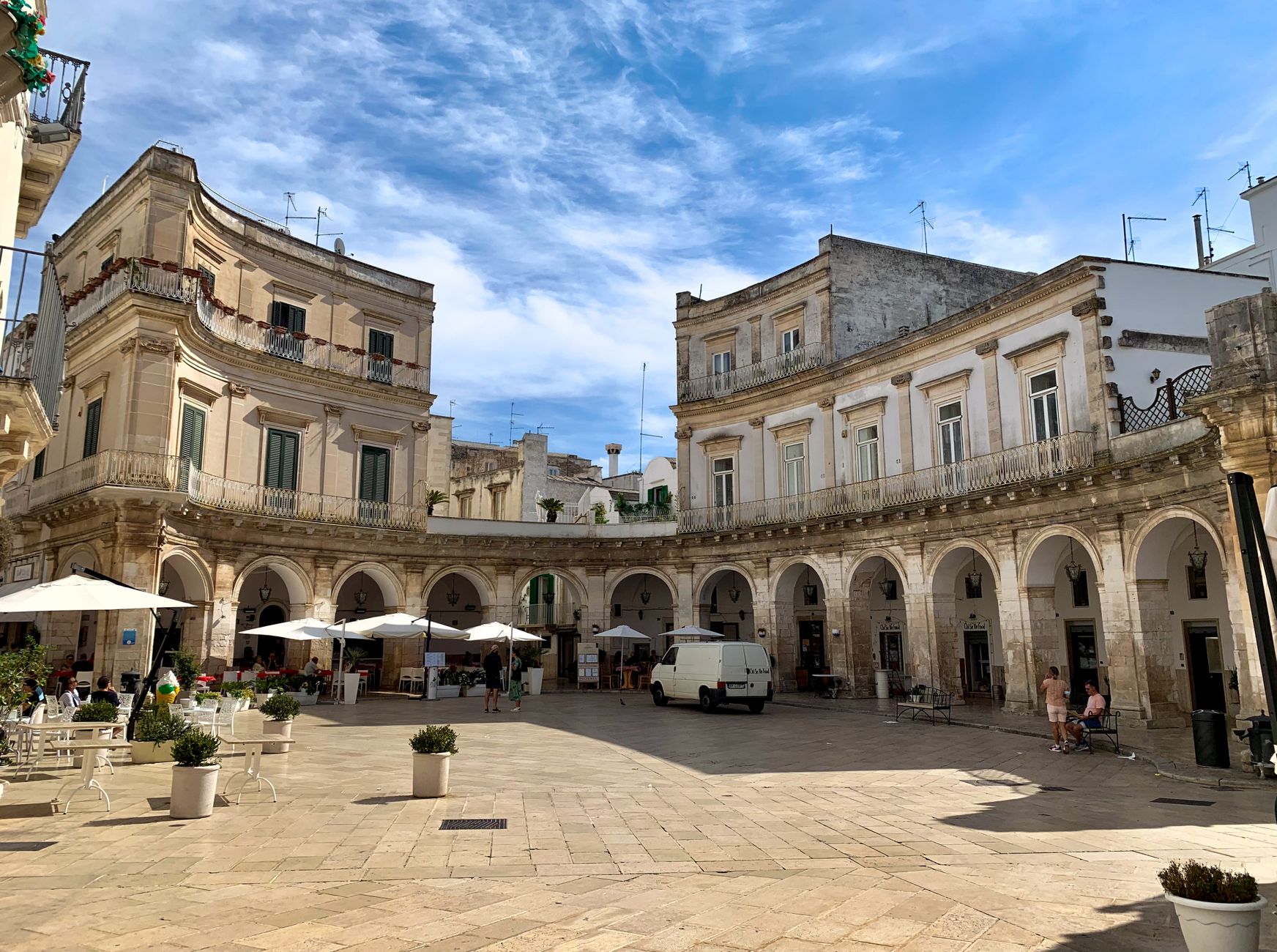
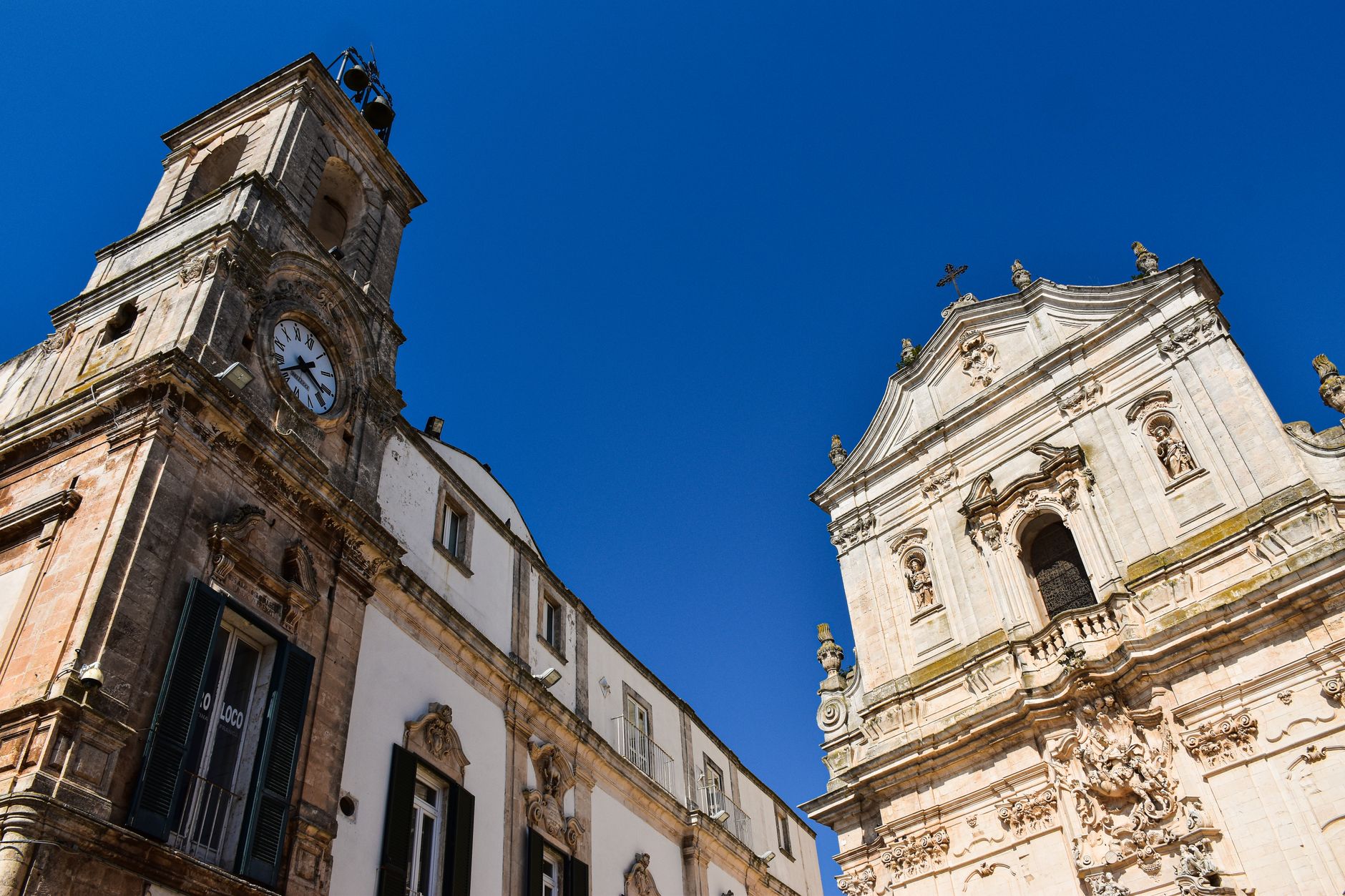
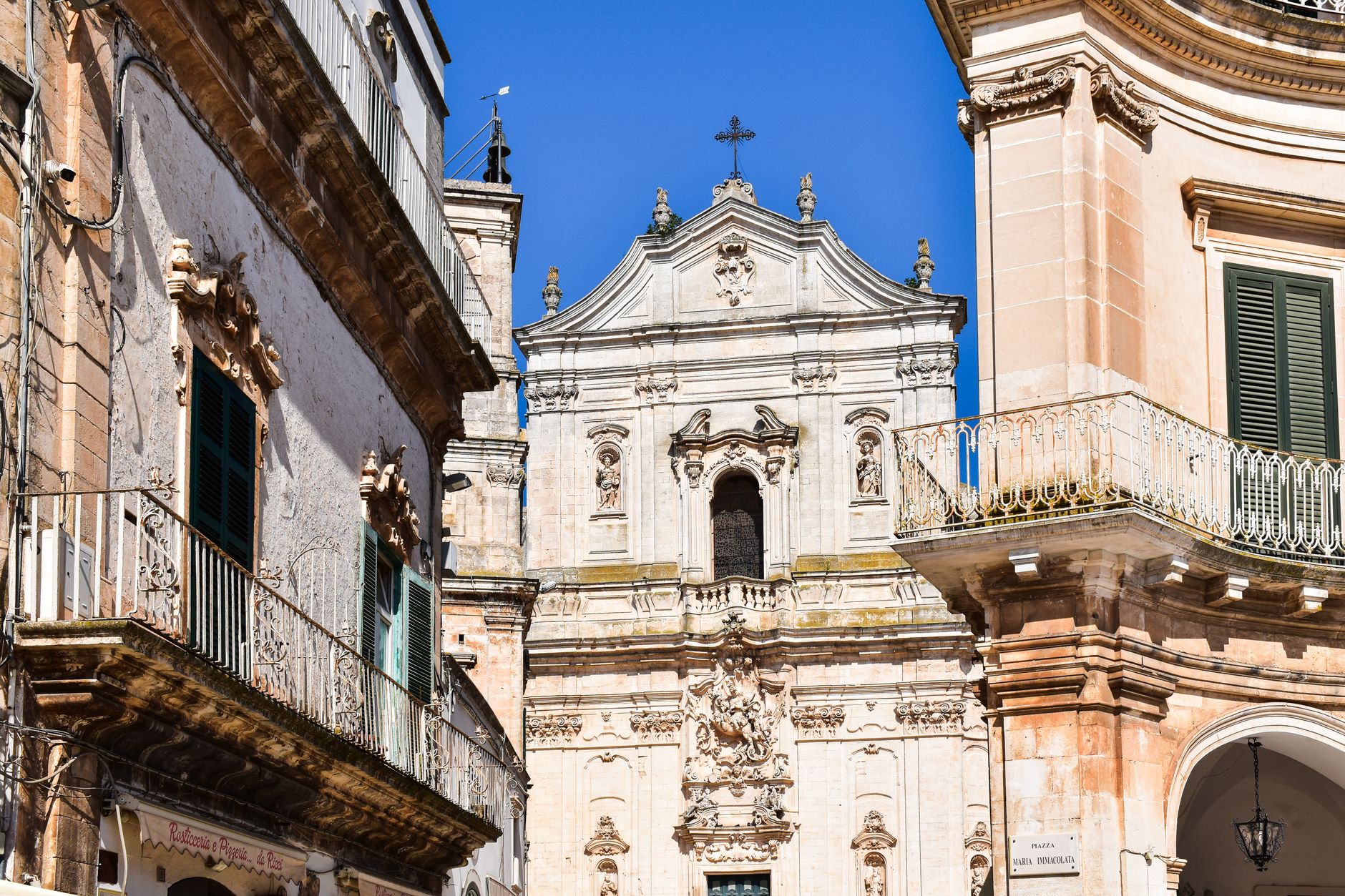
Stand in Piazza XX Settembre on any quiet morning and the 42-metre façade of the Basilica di San Martino fills the sky above you — all carved stone and controlled drama, built between 1747 and 1775 when the noble families of this hilltop town were competing in marble and plasterwork. Martina Franca sits at 381 metres in the Valle d'Itria, which means it stays a degree or two cooler than the coast, and the whitewashed Baroque streets of the old town have a composed, unhurried quality that the busier Puglian towns have largely lost.
Every July and August, the courtyard of Palazzo Ducale — the 17th-century seat of the Caracciolo family, now the town hall — fills with opera and chamber music for the Festival della Valle d'Itria, running since 1975. The rest of the year, the palazzo is free to walk through on a weekday morning.
💛 What travellers fall for
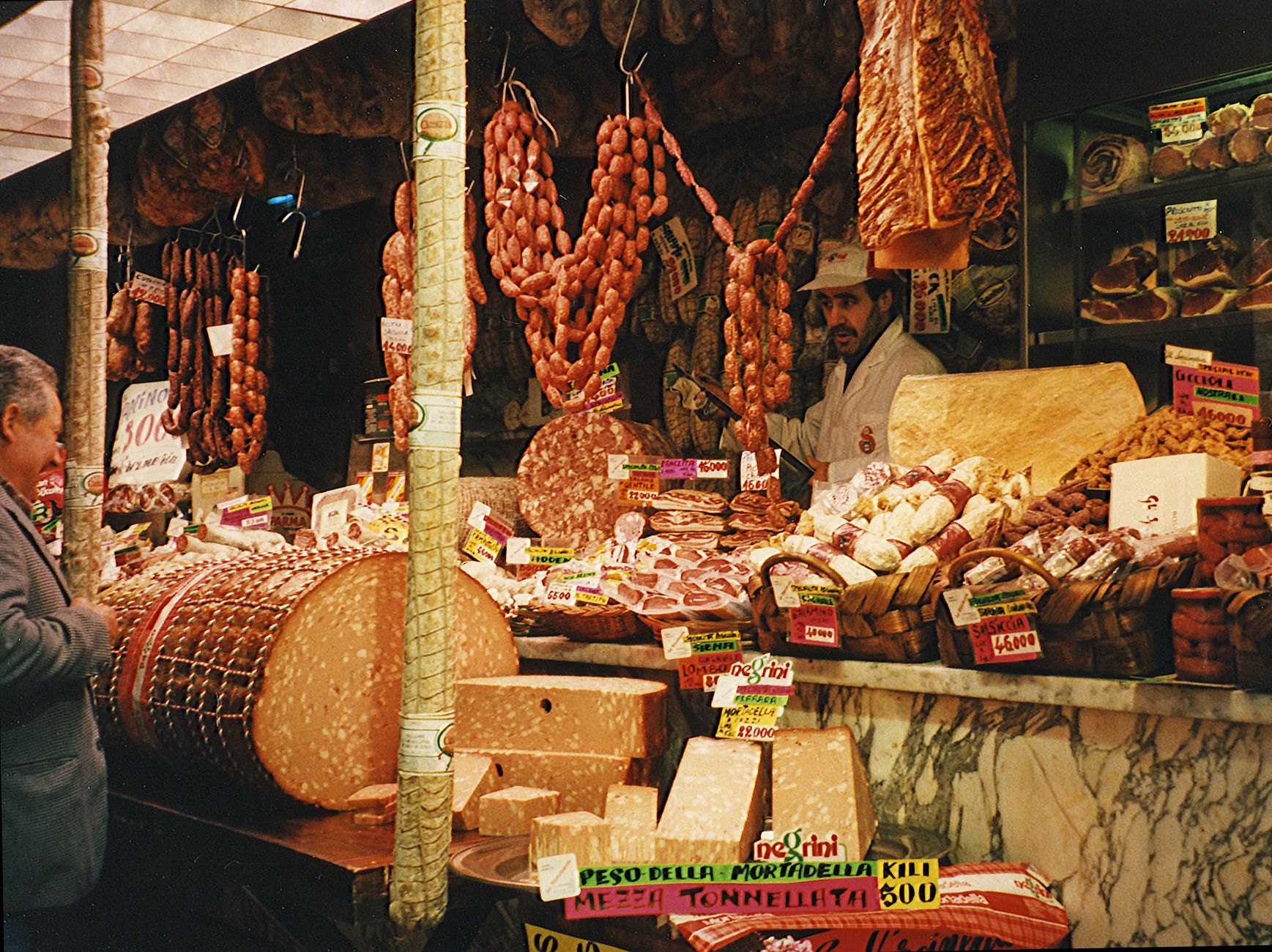
People who come back tend to time it around the Wednesday food market or the third-Sunday antiques spread in Piazza Vittorio Veneto. They also mention arriving by the Ferrovie del Sud Est train from Alberobello — fourteen minutes, and the approach through the trulli countryside earns the journey.
Experiences you don't want to miss



Deals in Martina Franca
Book directly at the provider
How Martina Franca came to be
The town's name carries its origin inside it: Philip I of Anjou, Prince of Taranto, formally founded Martina in 1310 and granted its settlers tax exemptions and free grazing rights — the 'Franca' in the name means exempt, free. The land had already drawn people before that; tenth-century refugees from Taranto, fleeing Saracen raids, had settled the ridge earlier. In the 15th century Apulia passed to Aragonese rule and Martina became a fiefdom of the Caracciolo family from Naples.
The town's present face was made in the 18th century, when noble patronage and skilled craftsmen — among them Calmerio del Vecchio from Lecce, who brought the ornate Lecce Baroque north — transformed it. Palazzo Ducale, begun in 1668, received its interior mythological and arcadian frescoes from Domenico Canella between 1771 and 1776. The city walls that once held 24 watchtowers came down after Italian unification in 1861.
Who and what shaped it
People who shaped it
Landmark buildings
See Martina Franca in motion
Plan your visit
On the map
When to go
The elevation keeps Martina Franca noticeably cooler than coastal Puglia in summer — July and August hover around 31°C rather than the punishing heat at sea level, which is one reason the opera festival planted itself here. Winter is mild but can be sharp; January averages around 13°C.
Right now
Background & history adapted from Wikipedia (CC BY-SA) · specs from Wikidata (CC0) · weather from Open-Meteo · map data © OpenStreetMap contributors · photos from Wikimedia Commons / Unsplash with per-image credit. No third-party reviews or social posts reproduced.