
Marienplatz
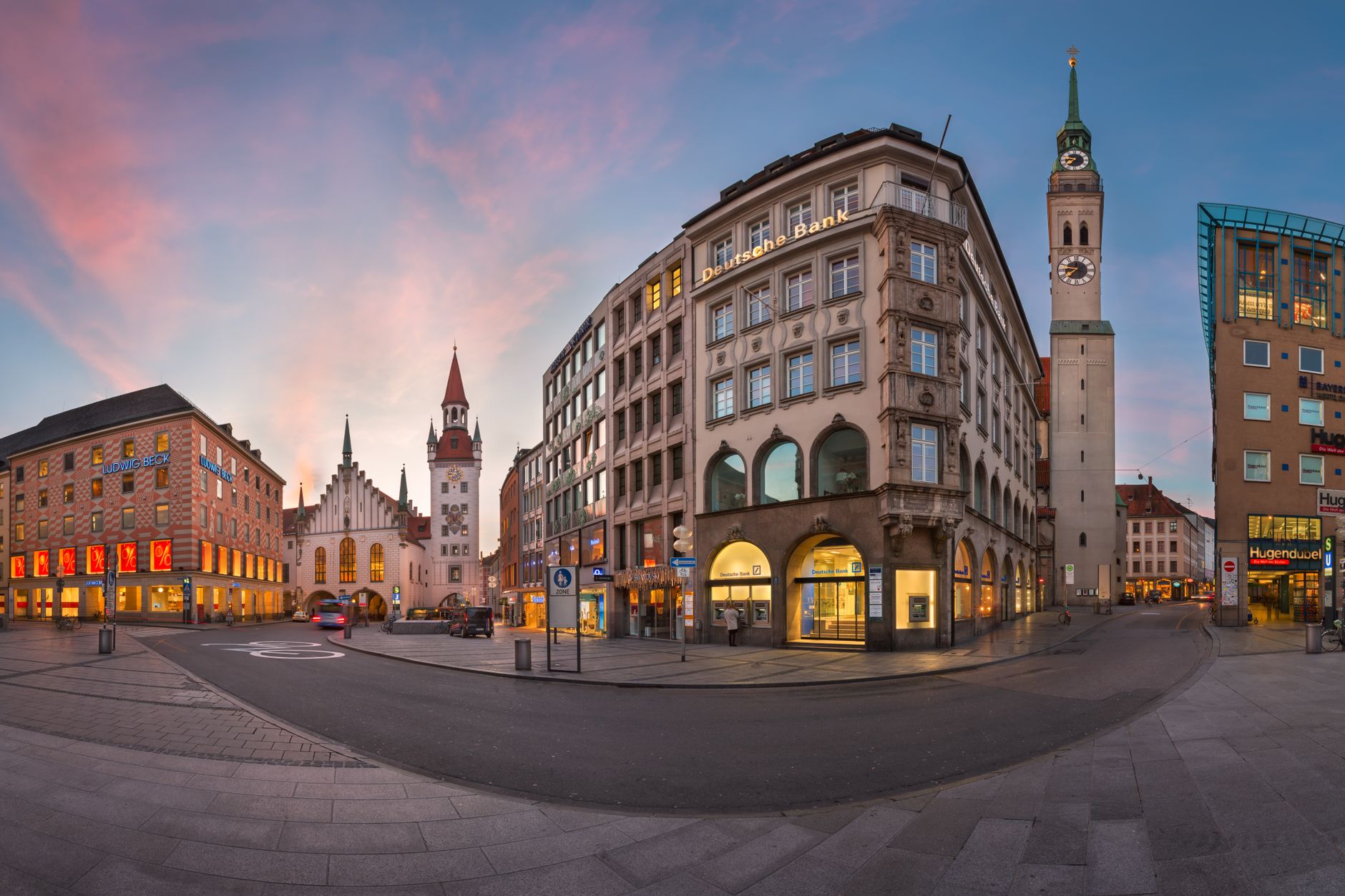
Stand in Marienplatz on any given morning and the square does several things at once. The Glockenspiel's 43 bells start up at eleven — 16 gilded figures wheel through a jousting tournament and a coopers' dance while a crowd of several hundred tilts their heads back in unison. It's a little absurd and entirely worth it.
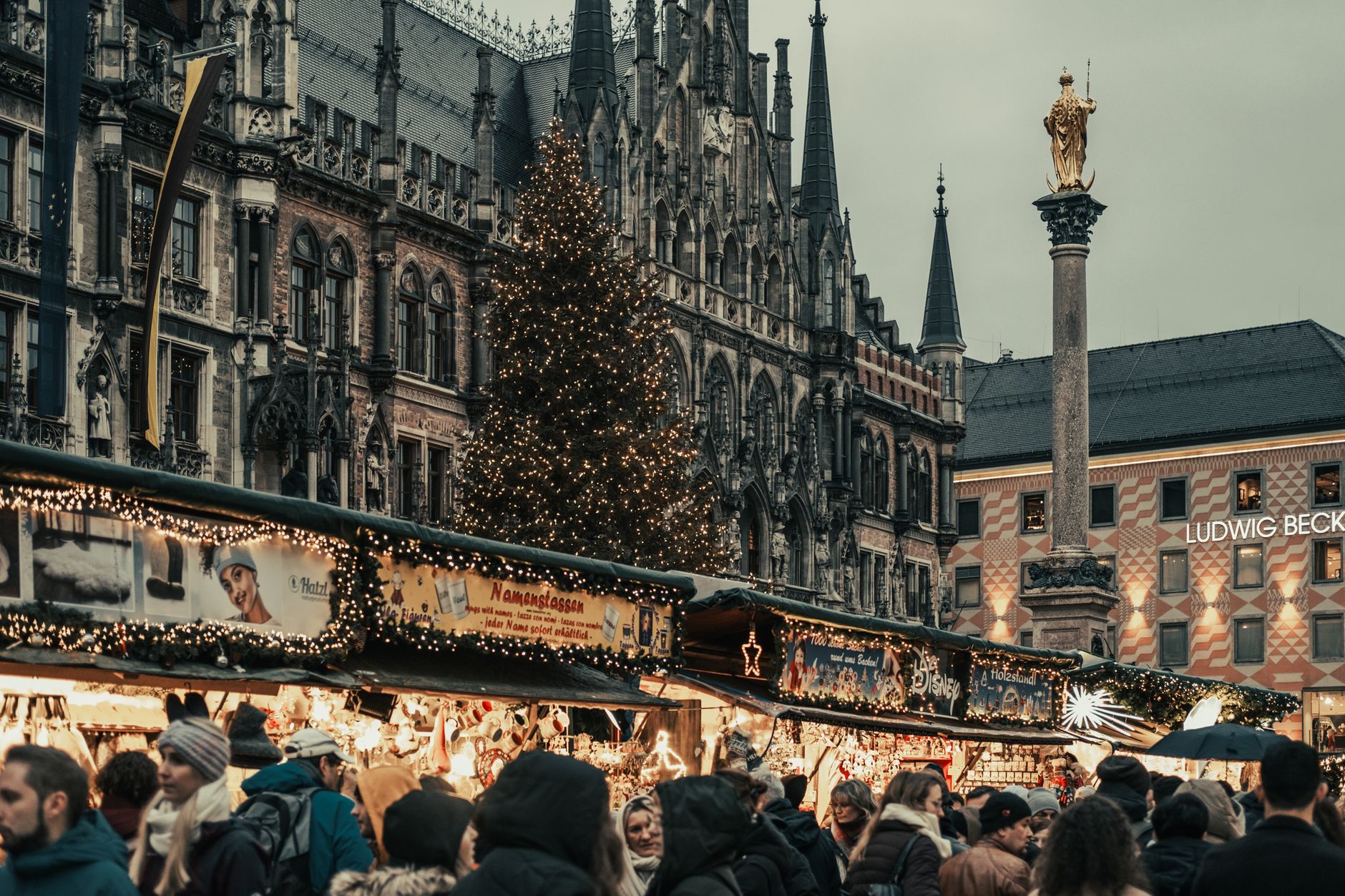
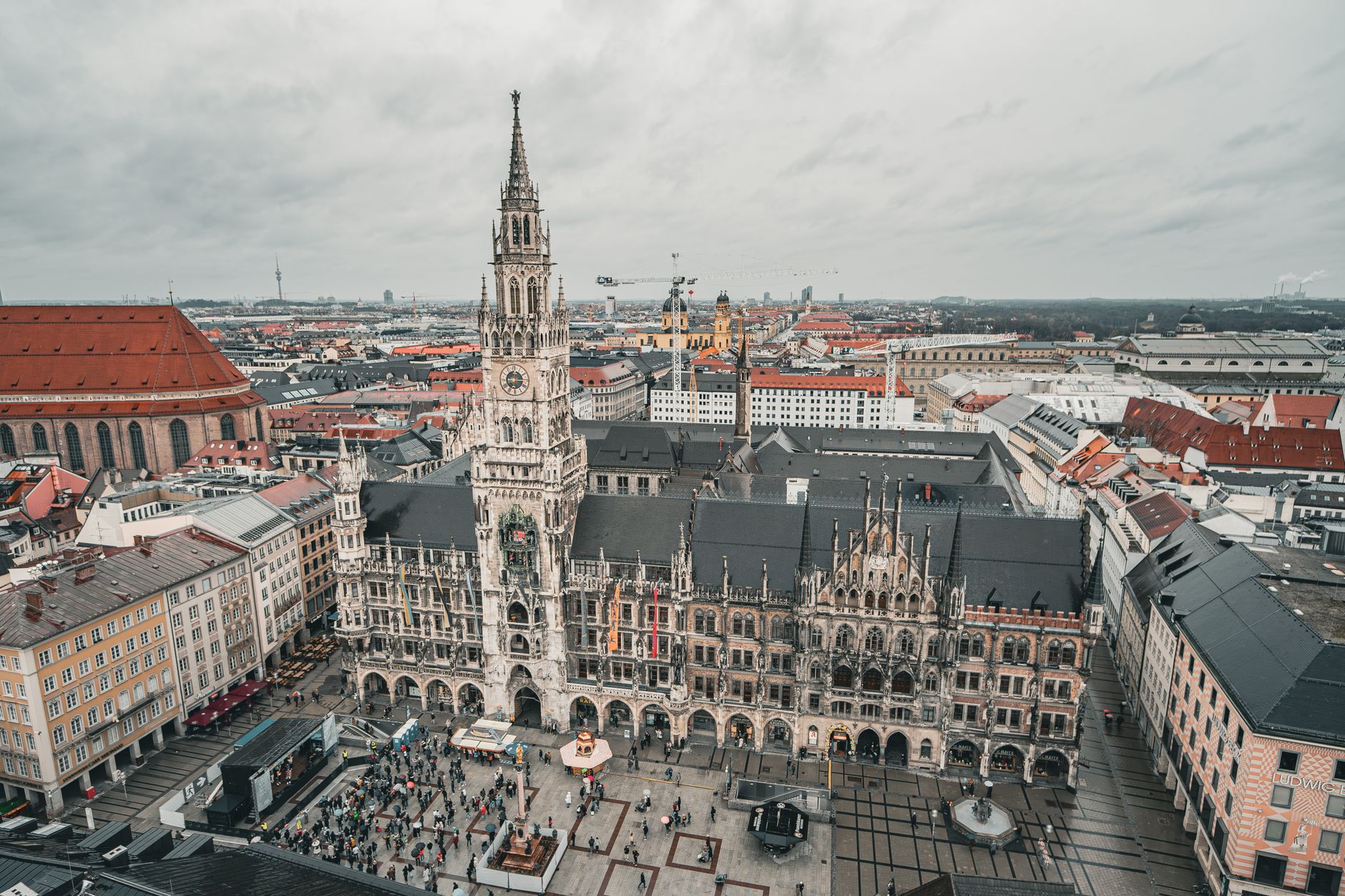
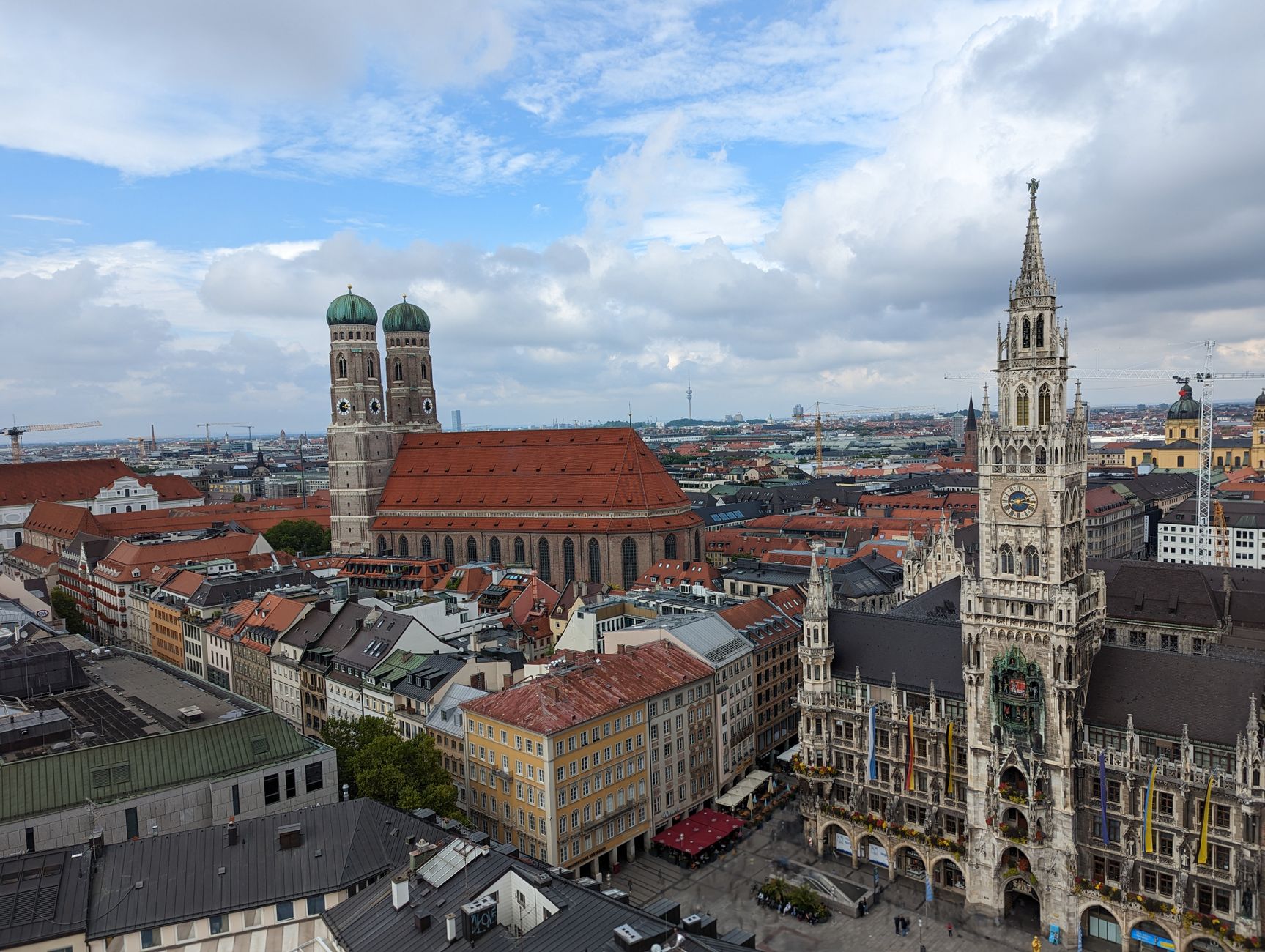
The square is Munich's oldest fixed point, a car-free expanse anchored by a gilded column to the Virgin Mary and flanked by two town halls built eight centuries apart. Every S-Bahn line in the city passes beneath it. Almost everything starts here.
💛 What travellers fall for
People who come back tend to time the Glockenspiel for the 5pm summer performance rather than the tourist-dense 11am show, and they make a point of finding the Fish Fountain (Fischbrunnen) — a quieter corner of the square with a genuinely strange local tradition involving butchers' apprentices and Ash Wednesday purse-washing. The tower lift to the ninth floor earns its fee on a clear day.
Deals in Marienplatz
Book directly at the provider


How Marienplatz came to be
Munich traces its founding to 1158 and Henry the Lion, and Marienplatz was the city's market square from the beginning — grain trading gave it its earliest names: Schranne, then Schrannenplatz. When the grain market relocated to a new iron-and-glass building near Blumenstrasse in 1853, the square took its current name on 9 October 1854.
The Mariensäule went up in 1638 after Duke Elector Maximilian vowed to honour the Virgin Mary following the end of Swedish occupation during the Thirty Years' War. It was the first column of its kind built north of the Alps, and its four corner putti — carved by Ferdinand Murmann — each wrestle a different beast: lion for war, cockatrice for pestilence, dragon for famine, serpent for heresy. The New Town Hall followed two centuries later; architect Georg von Hauberrisser won the design competition at 25, and construction ran from 1867 to 1909.
Who and what shaped it
People who shaped it
Landmark buildings
See Marienplatz in motion
Plan your visit
On the map
When to go
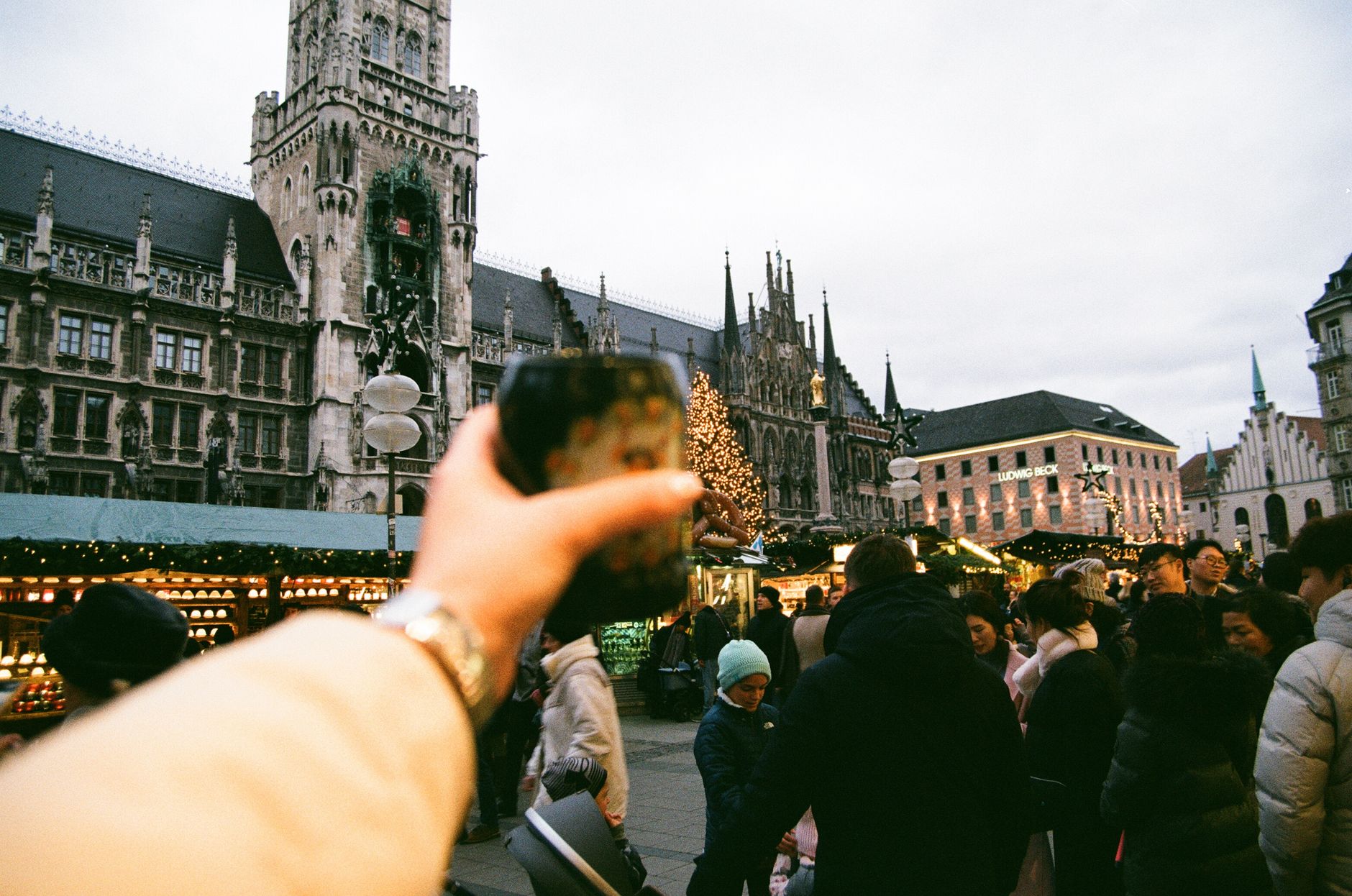
Summers are warm and comfortable for lingering in the square, though afternoon thunderstorms are common in July and August. Winter brings genuine cold — the Christmas market runs in sub-zero temperatures some evenings — so layers matter more than you'd expect this far south.
Right now
Background & history adapted from Wikipedia (CC BY-SA) · specs from Wikidata (CC0) · weather from Open-Meteo · map data © OpenStreetMap contributors · photos from Wikimedia Commons / Unsplash with per-image credit. No third-party reviews or social posts reproduced.