
Marchmont
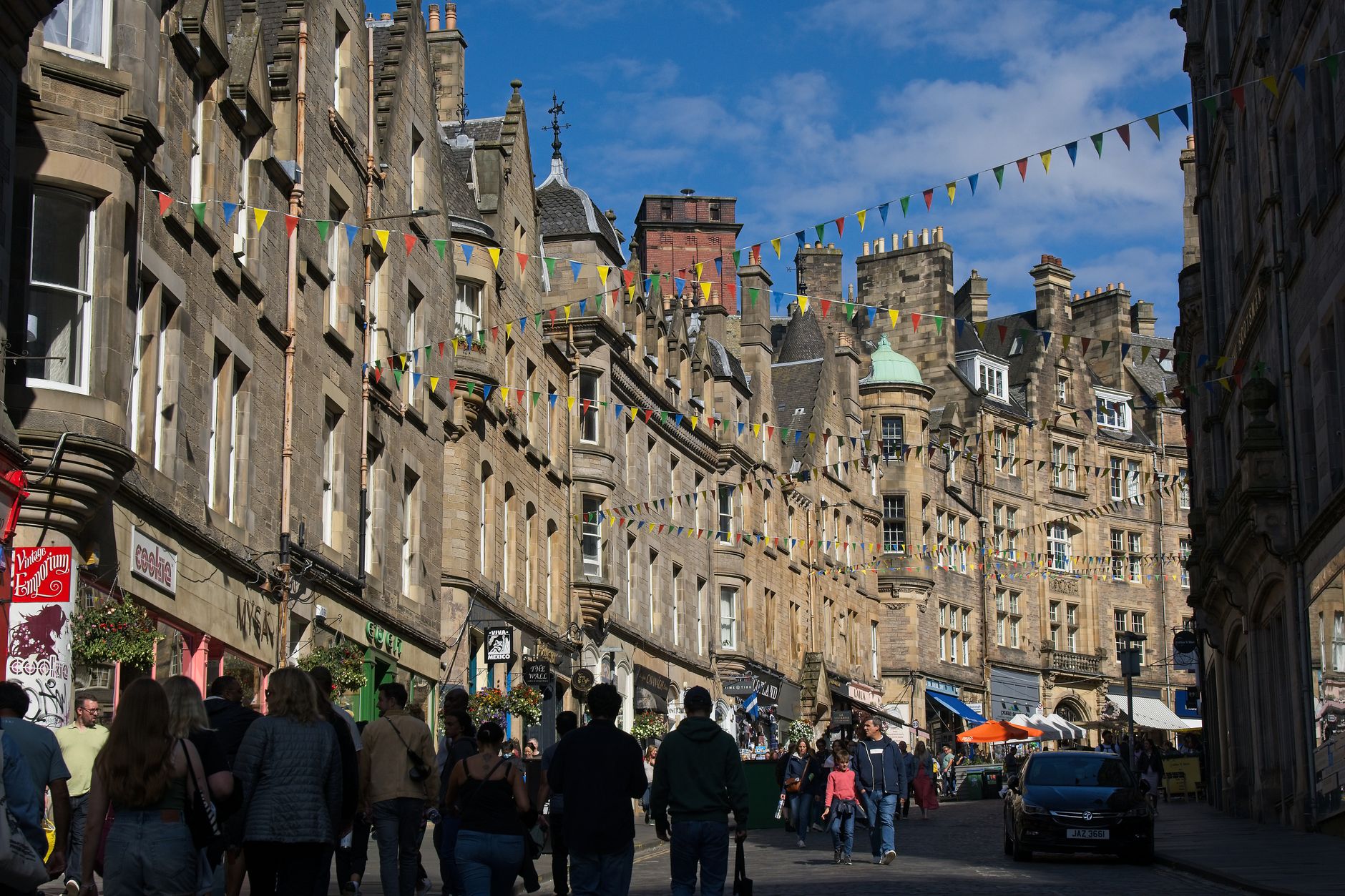

Walk south from the Meadows and the city changes register. The grand sandstone tenements of Marchmont rise four and five storeys in pink and honey-coloured blocks, their Scots Baronial turrets and bay windows catching whatever light Edinburgh is offering that day. This is a neighbourhood built in a single confident burst — the 1870s and 1880s — and barely touched since, which is why the conservation designation feels almost redundant: the place preserved itself.
Marchmont was always middle-class and it remains so, populated now by students, academics and long-term residents who chose it and stayed. The streets are quieter than the areas flanking it, and that quiet is the point.
💛 What travellers fall for
People who keep coming back tend to walk the full circuit of Marchmont Crescent before anything else — it sets the architectural tone. Then Warrender Baths for a swim in a pool that smells correctly of chlorine and history. Arden Street gets a look from those who've read their Rankin or know their wartime history. The Meadows, just over the boundary, does the rest.
Deals in Marchmont
Book directly at the provider

How Marchmont came to be
The neighbourhood takes its name from the 5th Earl of Marchmont, Hugh Hume Campbell, whose title traces back to a Brittonic word likely meaning 'hill-pasture for horses.' The man who turned the name into a suburb was Sir George Warrender, Hume Campbell's son-in-law, who owned Bruntsfield House and the surrounding estate. In 1869 architect David Bryce drew up the first feuing plan, envisaging terraced and detached villas. That scheme was overtaken by a more comprehensive layout from the firm of John Watherston & Sons, and the building that followed in the 1870s and 1880s produced the tenement-lined streets that still define the area.
The pink sandstone blocks in Scots Baronial style went up first, the work of architects including Edward Calvert. Warrender himself donated the land for the public baths that opened in 1887. In 1987 the area became a conservation area, with boundaries later extended to include the Meadows and Bruntsfield Links.
Who and what shaped it
People who shaped it
Landmark buildings
See Marchmont in motion
Plan your visit
On the map
When to go
Edinburgh's weather applies in full here: expect cool, changeable conditions year-round, with the wind off the Meadows adding bite from autumn through spring. Summer days can be genuinely mild and bright, but a layer is rarely a mistake.
Right now
Background & history adapted from Wikipedia (CC BY-SA) · specs from Wikidata (CC0) · weather from Open-Meteo · map data © OpenStreetMap contributors · photos from Wikimedia Commons / Unsplash with per-image credit. No third-party reviews or social posts reproduced.