
Mara River Crossing Area
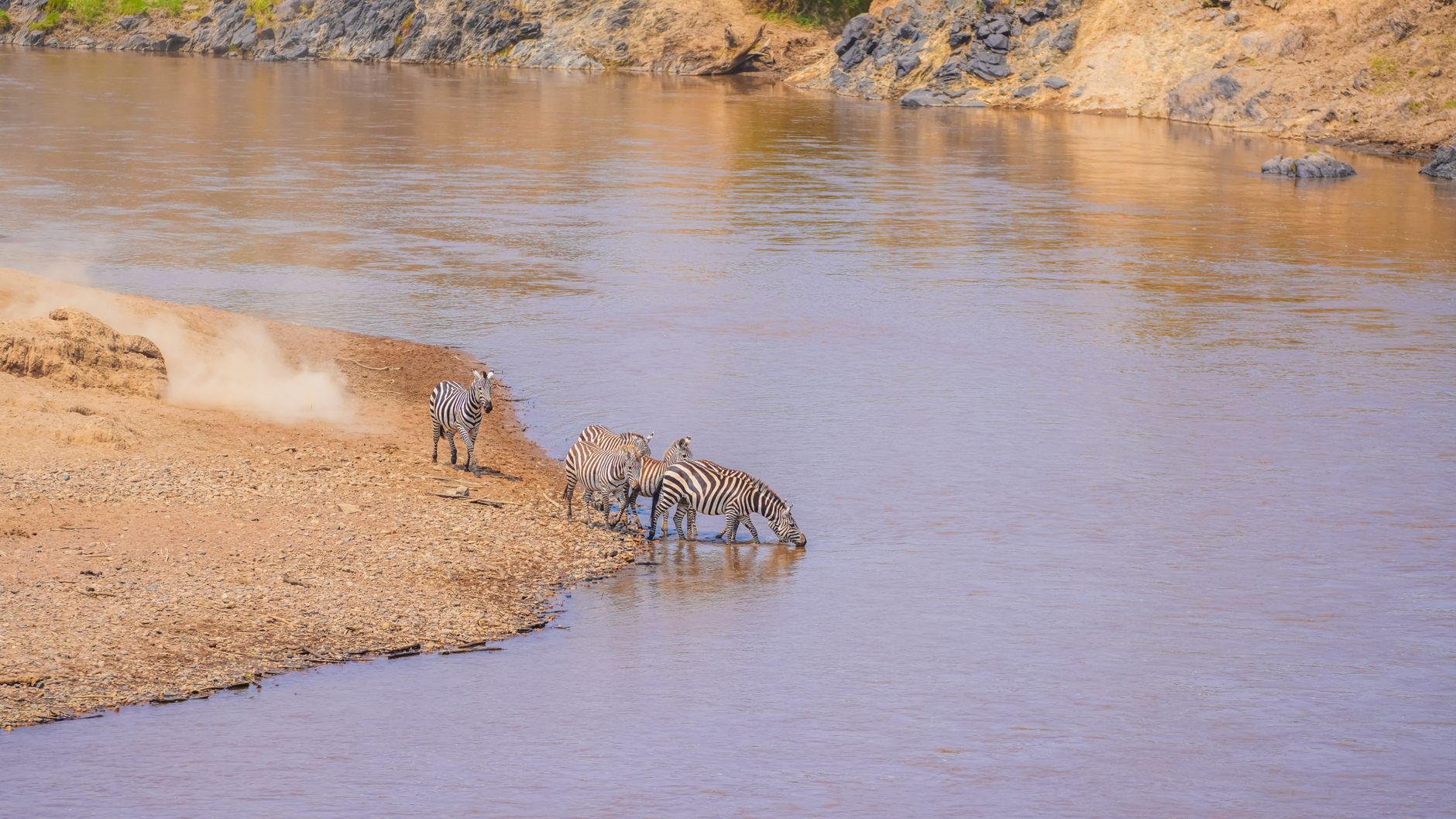
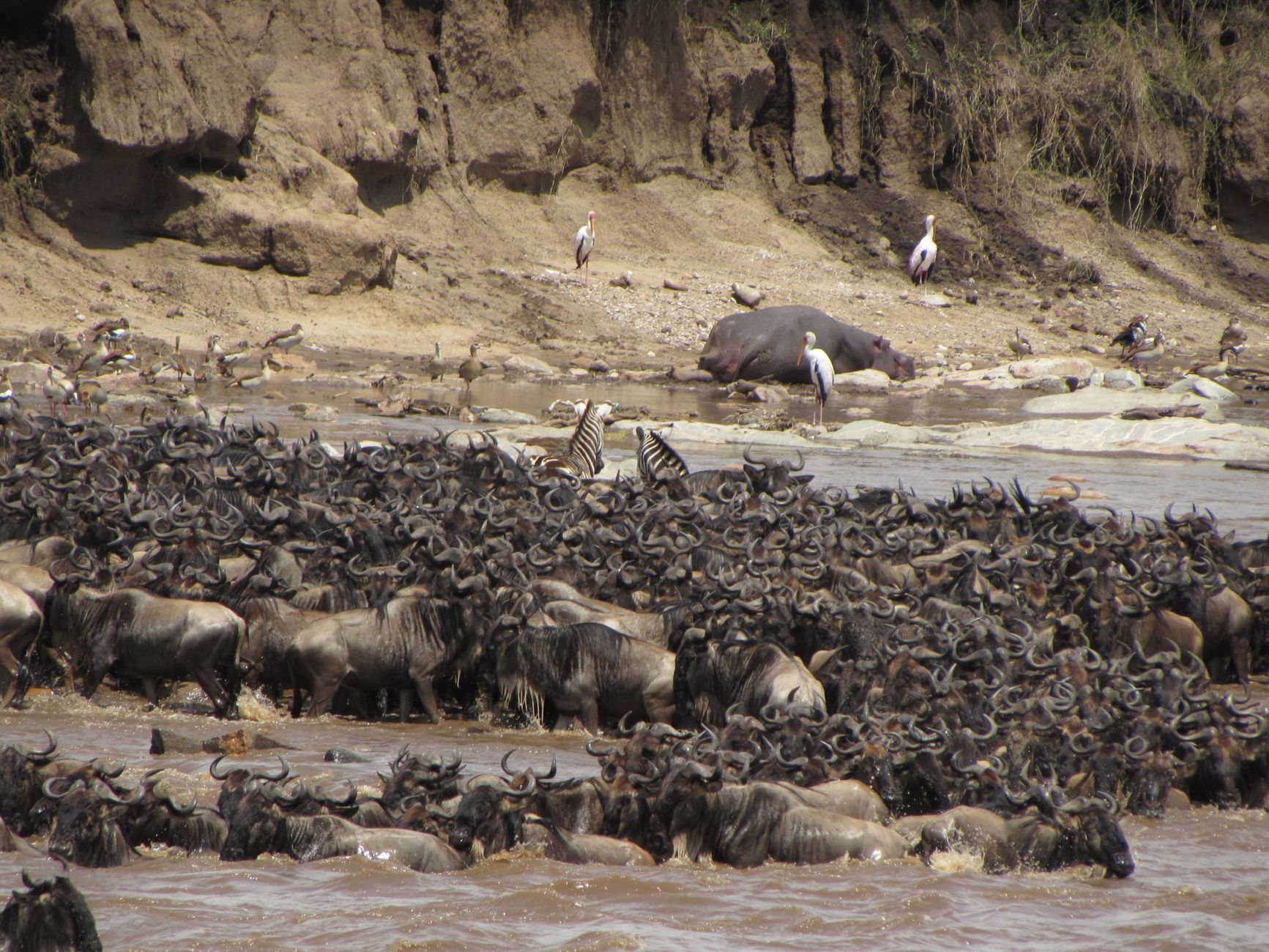
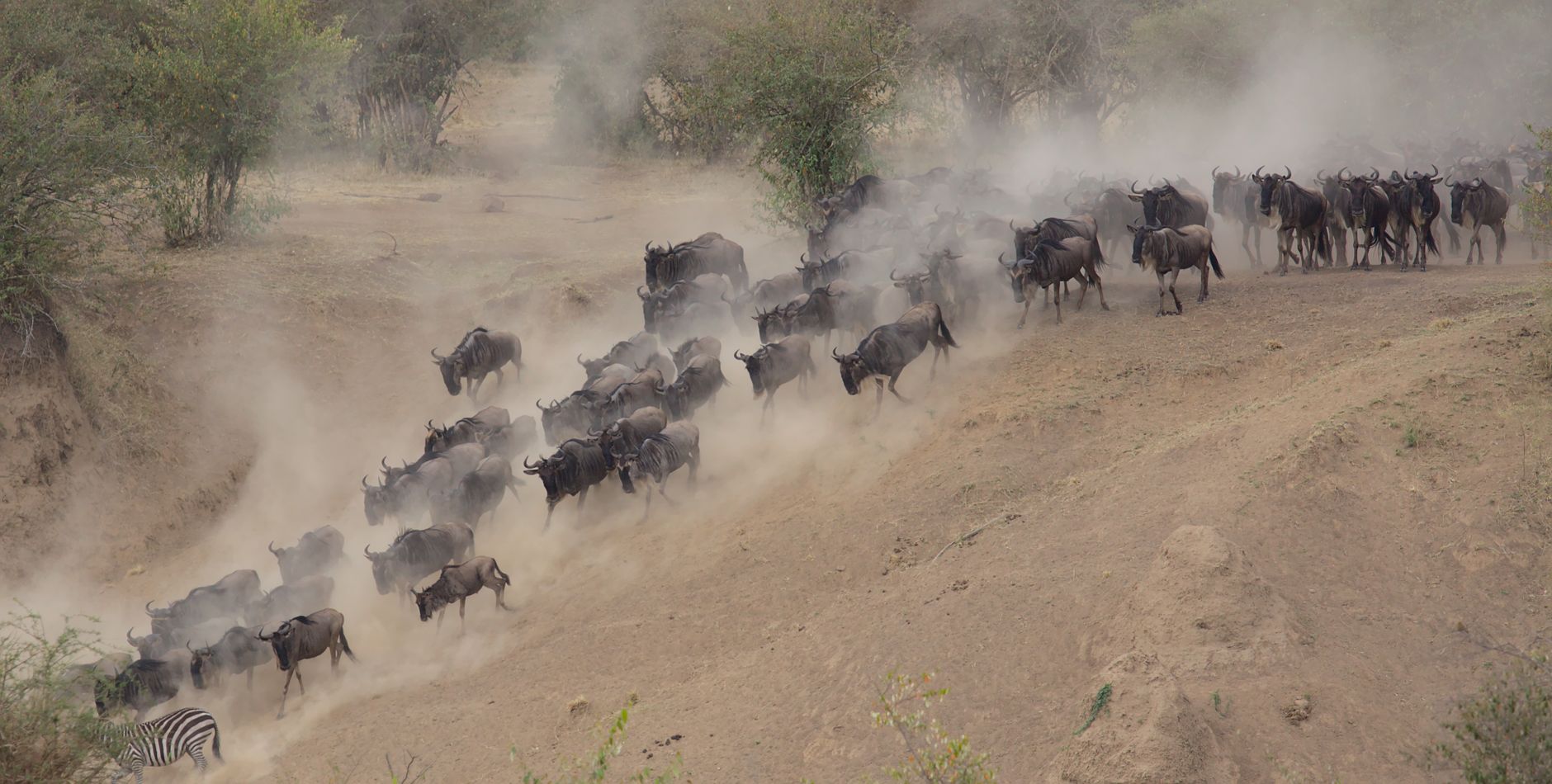
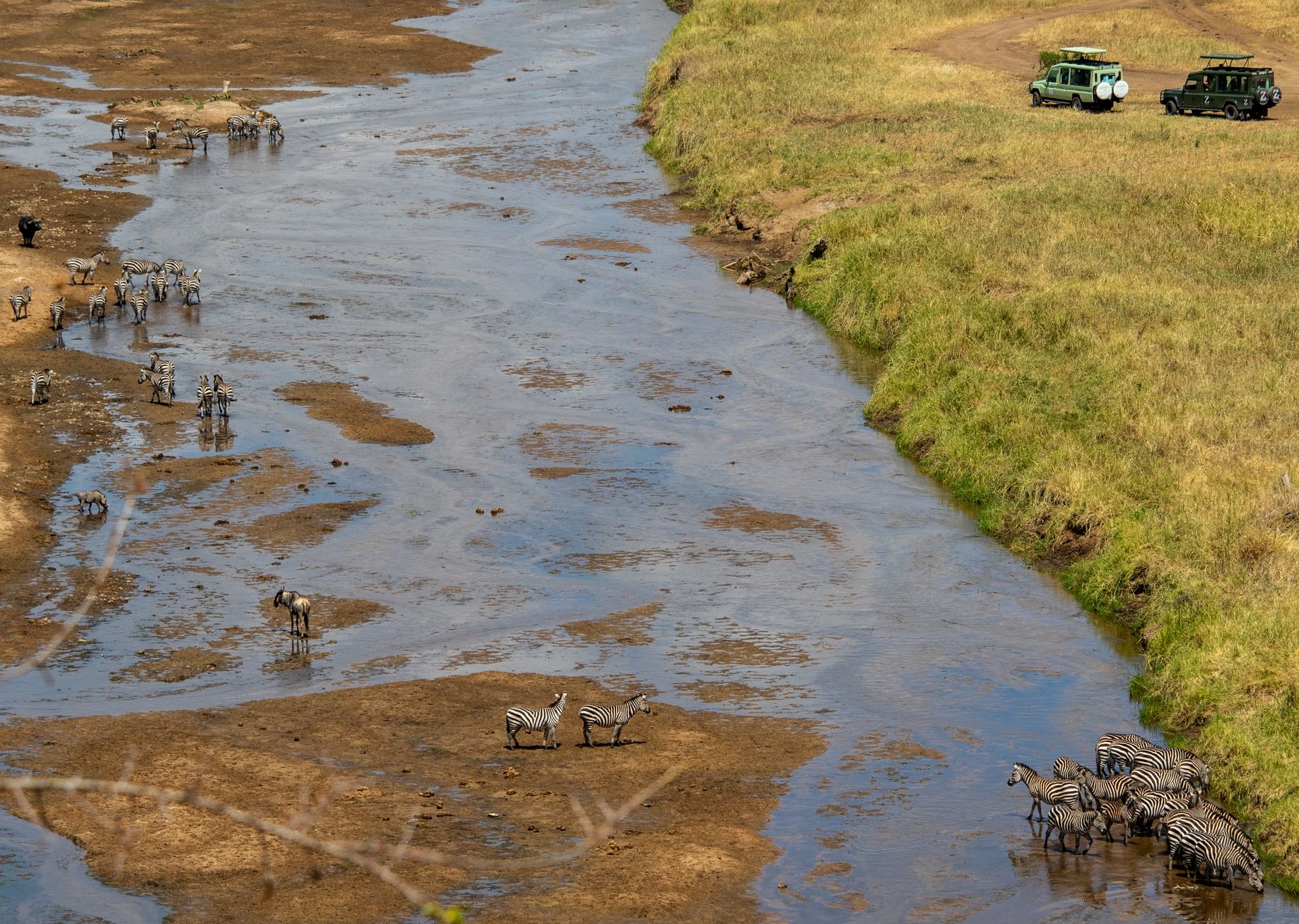
The Mara River runs about 100 metres wide through the northern Serengeti, and roughly 3,000 crocodiles are waiting in it when the wildebeest arrive. That fact alone explains why a crossing can take days to begin — the herds mass on the bank, wheel away, return, wheel away again, until one animal finally commits and the rest pour in behind it. There are about a dozen numbered crossing points along this stretch, from Kogatende in the west to Bologonja in the east, and no algorithm tells you which one will fire on any given morning.
The area operates on its own clock, indifferent to your schedule. Camps cluster near Kogatende, south of the river, and the Lamai side to the north is often quieter — sometimes the only vehicle for kilometres.
💛 What travellers fall for
People who come back tend to cross to the Lamai side when they can. The concrete causeway at Kogatende Rangers Post is the practical entry point, but the northern bank sees far fewer vehicles, which matters both for photographs and for watching the herds move without a ring of Land Cruisers framing every shot. Book a camp that stays put through October rather than one that packs up in August.
How Mara River Crossing Area came to be
The northern Serengeti spent much of the 1970s and 1980s effectively off the map for visitors after border closures reduced access and camps moved south. The crossing area around Kogatende was largely left to rangers and the migration itself — a de facto absence that kept the infrastructure thin and the roads rough.
The area was gradually rediscovered in the 2000s as operators began positioning mobile camps to follow the wildebeest north. The concrete causeway at Kogatende and the airstrip on the river's bank eventually made logistics workable, and the Lamai triangle — between the Mara River and the Tanzanian-Kenyan boundary — became one of the most sought-after migration-season addresses in East Africa.
Who and what shaped it
Landmark buildings
Plan your visit
On the map
When to go
July through September, when the crossings happen, is the dry season: mornings can drop to around 14°C and cold fronts occasionally push nights close to freezing, so pack a proper layer. By October it warms and dries further before the short rains arrive in November.
Background & history adapted from Wikipedia (CC BY-SA) · specs from Wikidata (CC0) · weather from Open-Meteo · map data © OpenStreetMap contributors · photos from Wikimedia Commons / Unsplash with per-image credit. No third-party reviews or social posts reproduced.