
Manarola
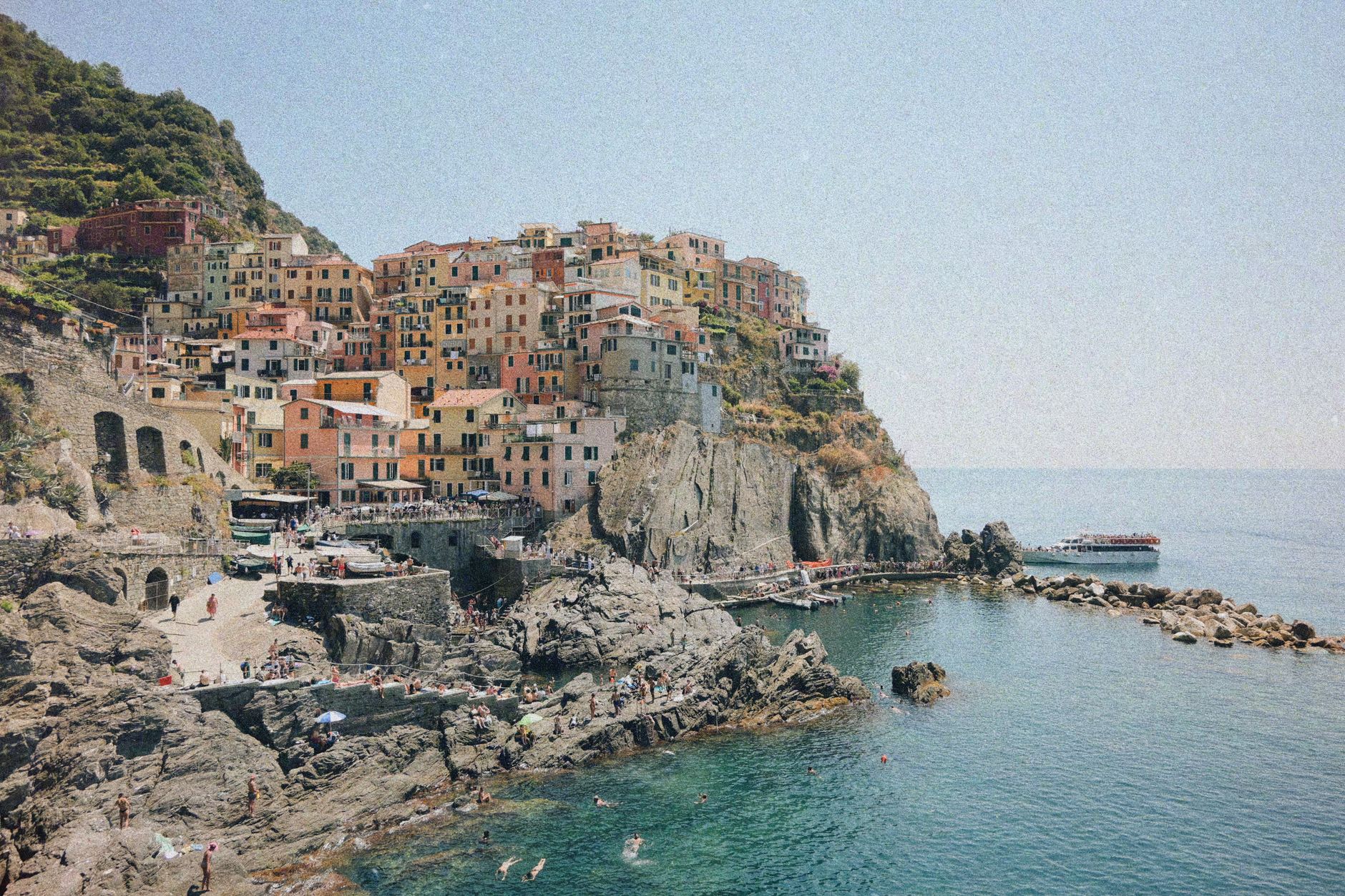
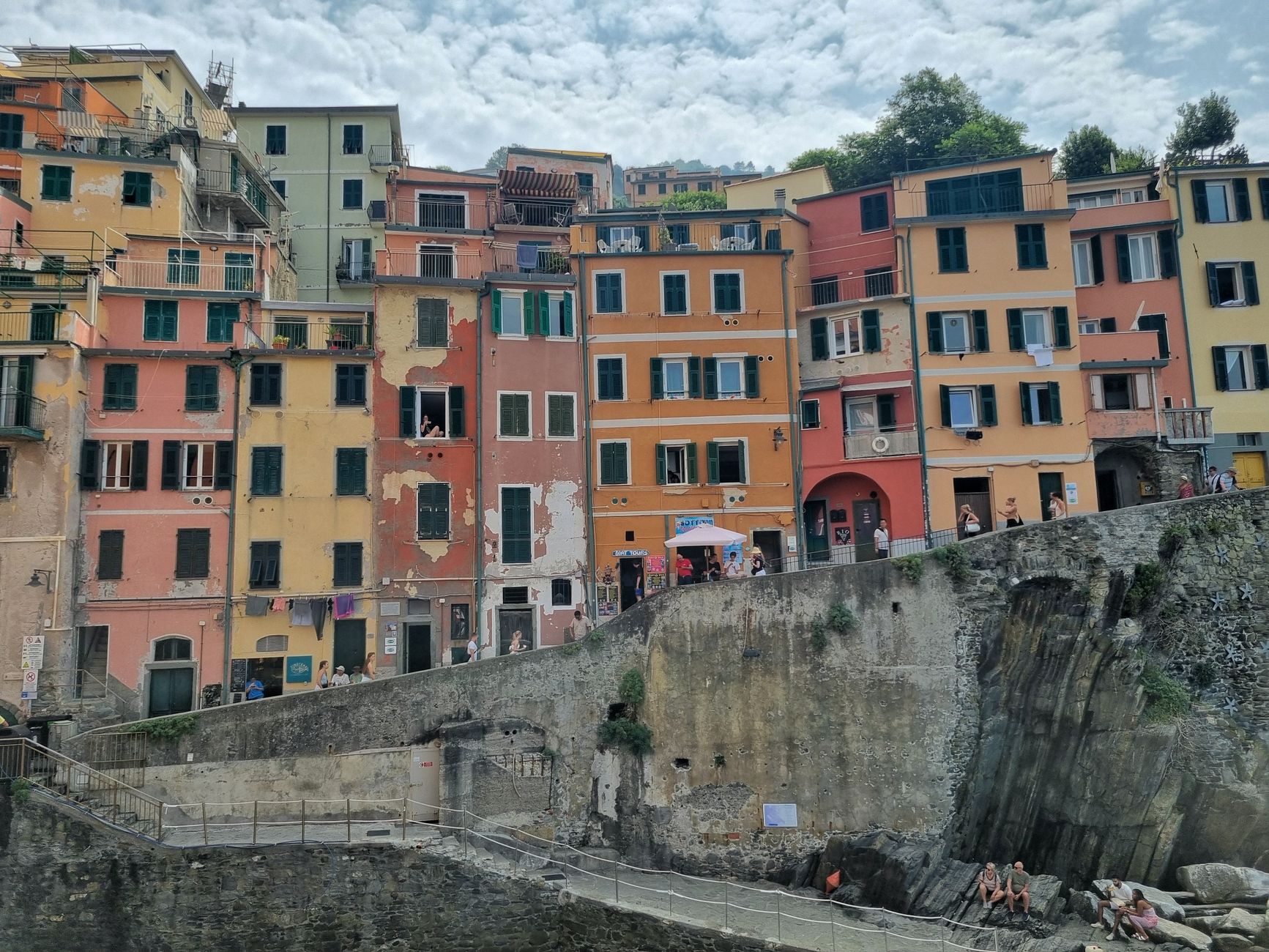
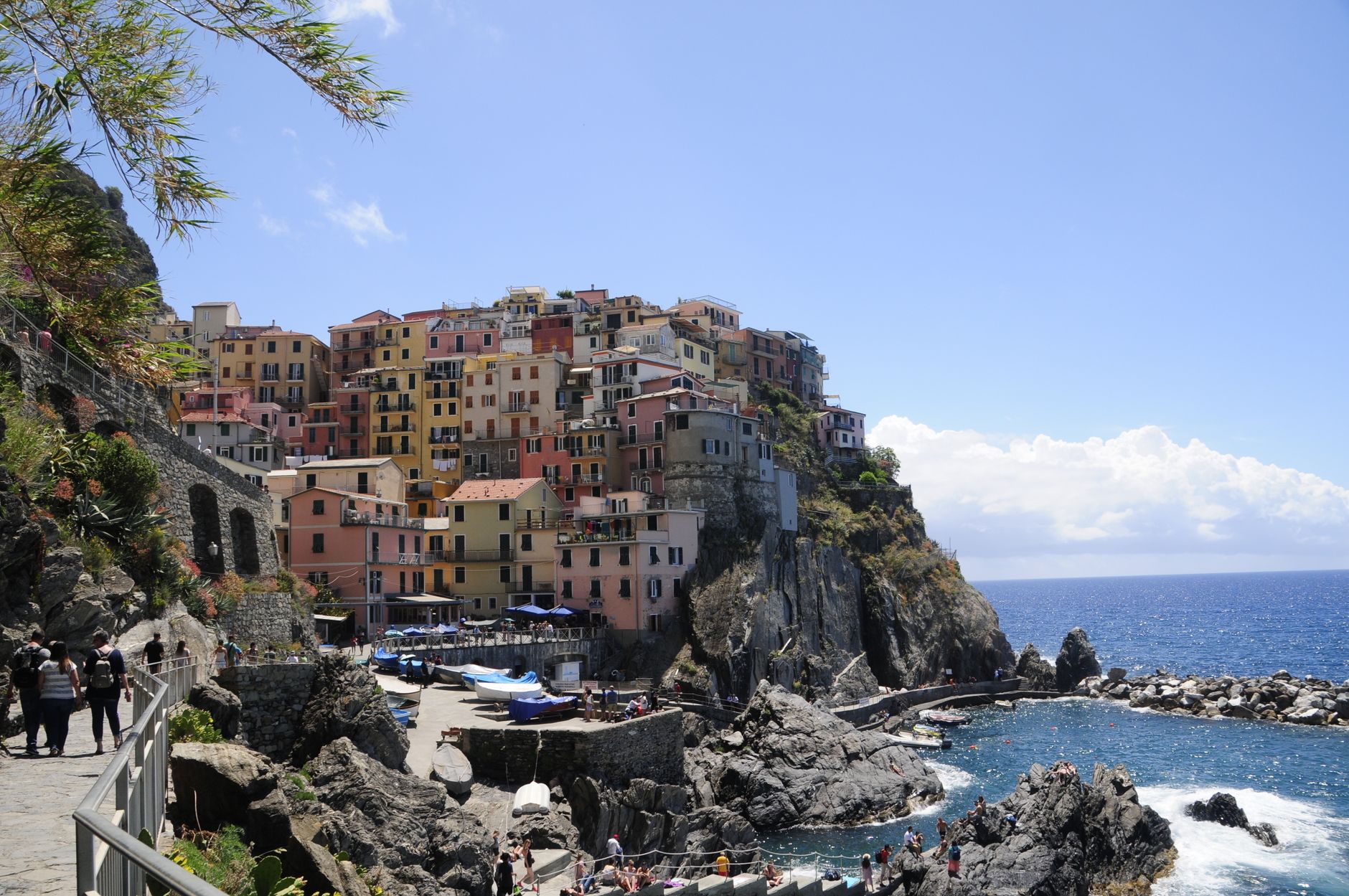
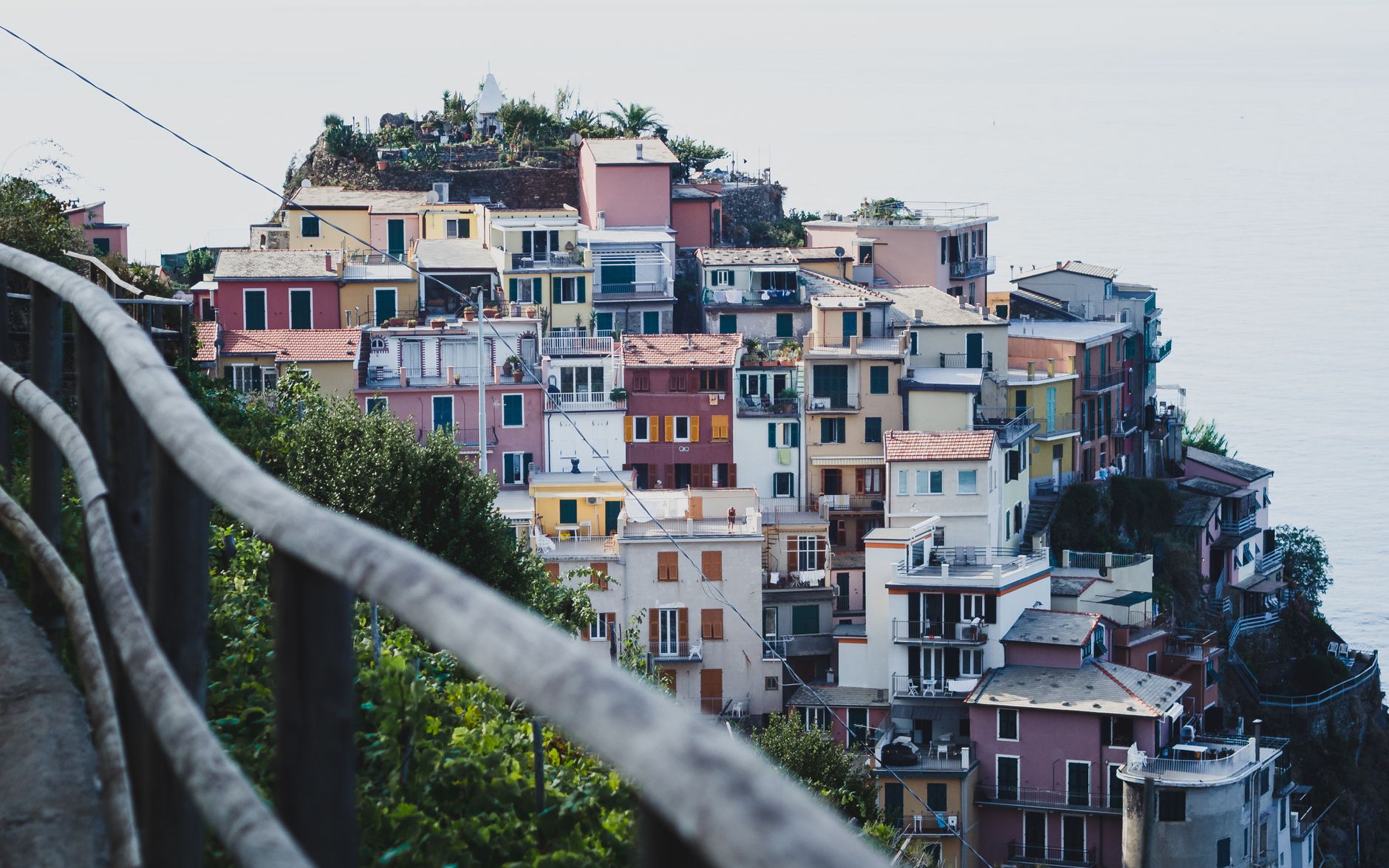
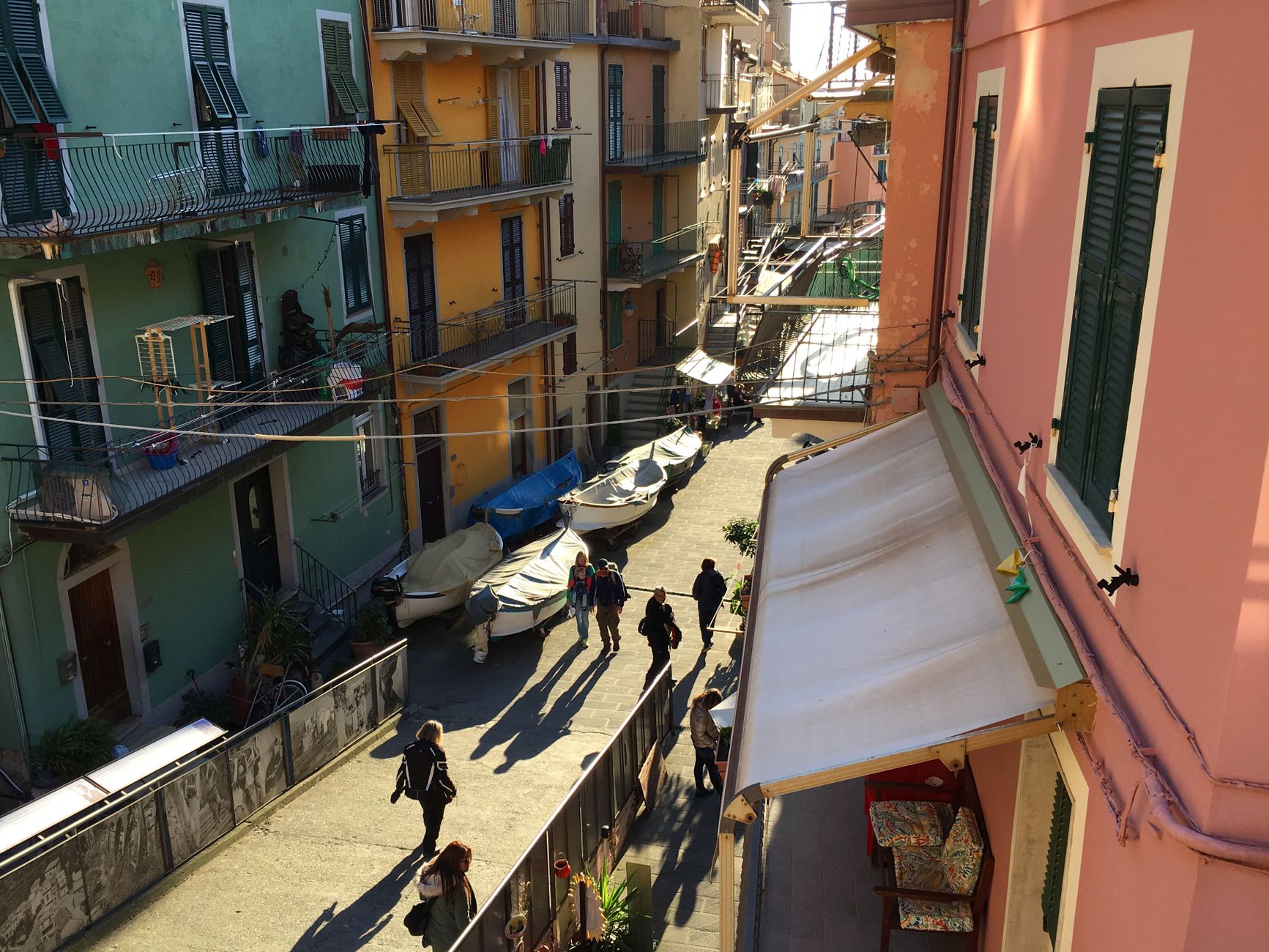
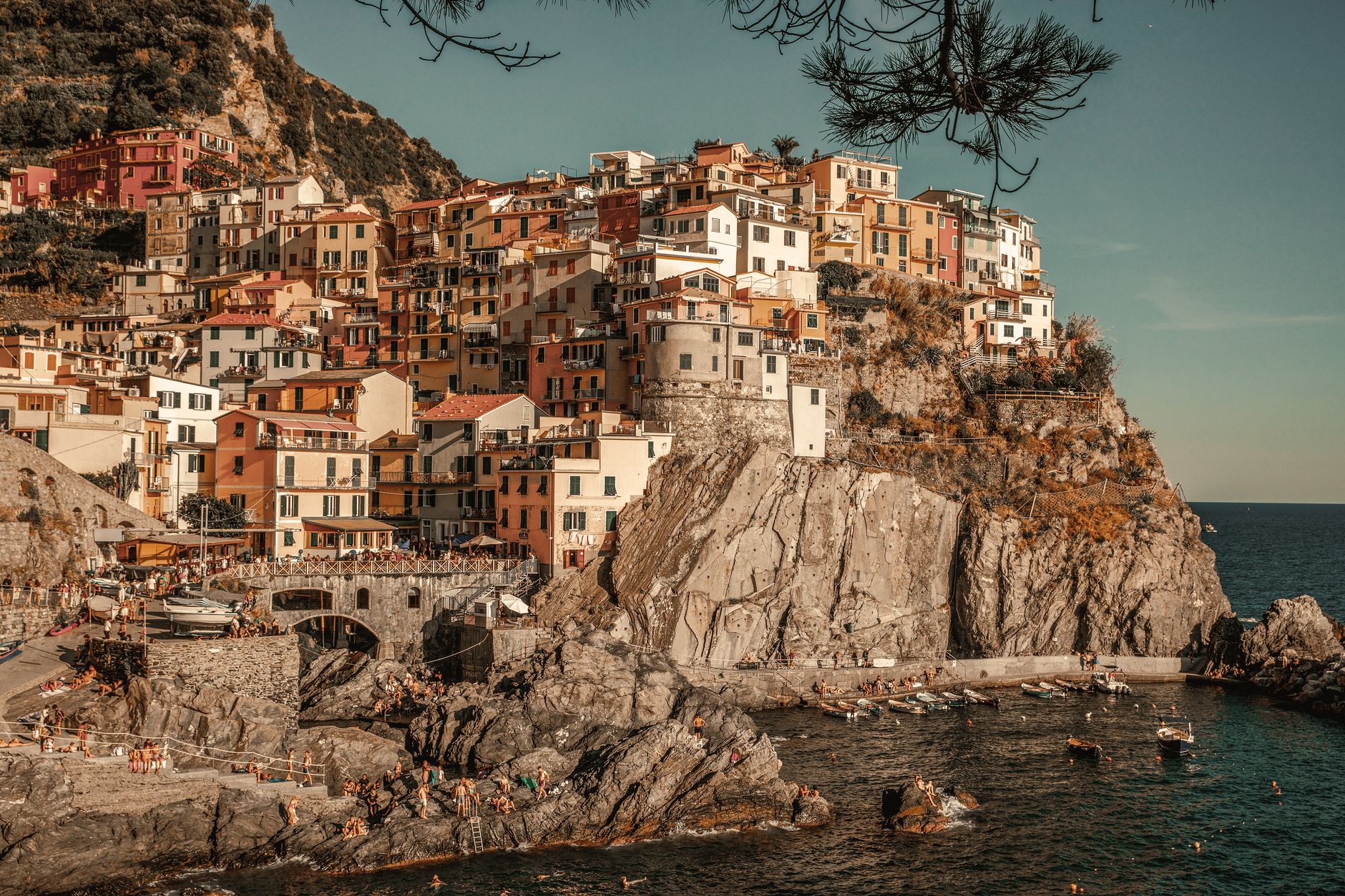
Manarola sits at the foot of a steep ravine where a covered stream runs beneath your feet — paved over between 1863 and 1978, slowly and practically, the way Ligurian villages tend to do things. The coloured houses stack up behind a small harbour, and the whole arrangement is compact enough that you can walk its length in a few minutes, which is partly why so many people try to do exactly that between trains.
The name itself comes from the Latin *magna rota* — the great wheel — a reference to a mill that once worked the stream below. That etymology is easy to forget when you're looking at the harbour, but it's a useful reminder that this was a working place long before it was a photograph.
💛 What travellers fall for
People who come back tend to arrive on an early train, before the midday crowd fills the main lane. The viewpoint at Punta Bonfiglio — north along the cliff toward Corniglia, between the cemetery and the sea — has a bar where you can sit with something cold and watch the water without anyone jostling for position.
Experiences you don't want to miss



Deals in Manarola
Book directly at the provider


How Manarola came to be
The village traces its first written record to 1261, though its roots run older: it was founded by people moving down from Volastra, a settlement already present in Roman times, who relocated to the coast in the 12th century. The Fieschi family held authority here until 1276, when Genoa absorbed the village into its expanding coastal territory.
The Church of San Lorenzo, built in 1338 at the request of the local community, anchors the upper part of the village in Genoese Gothic stone. Its rose window — Carrara marble, added in 1375 — is finer than the building's modest scale would suggest. Across the square stands the bell tower, a 13th-century structure that was deliberately built free-standing so it could also serve as a watchtower against pirate raids from the sea.
Who and what shaped it
People who shaped it
Landmark buildings
See Manarola in motion
Plan your visit
On the map
When to go
February is the cold end of the scale, with daytime temperatures around 8 °C, while August reaches roughly 26 °C. Spring and autumn offer the most comfortable walking weather; summer is warm but the village is at its most crowded.
Right now
Background & history adapted from Wikipedia (CC BY-SA) · specs from Wikidata (CC0) · weather from Open-Meteo · map data © OpenStreetMap contributors · photos from Wikimedia Commons / Unsplash with per-image credit. No third-party reviews or social posts reproduced.