
Mainz
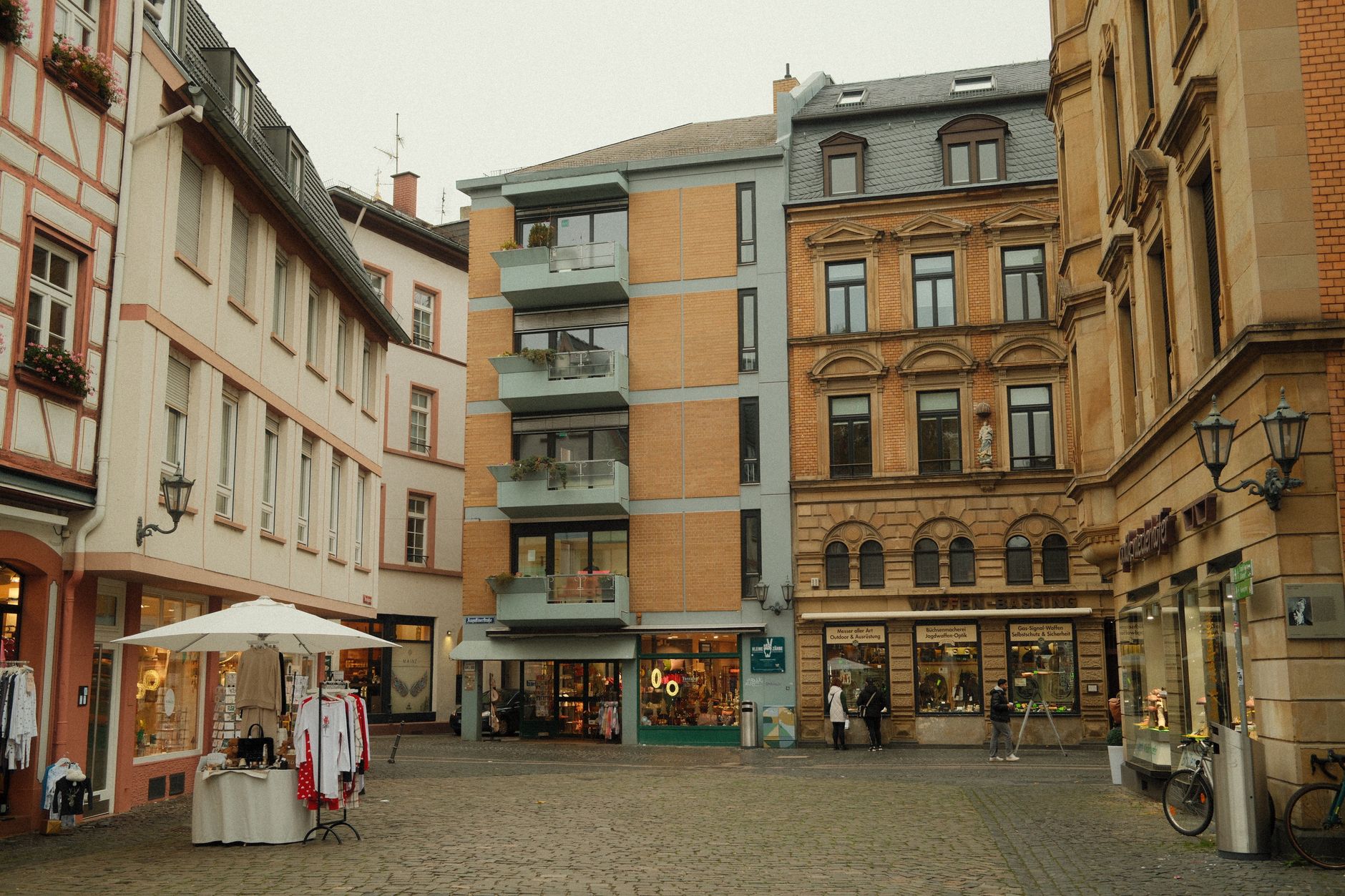
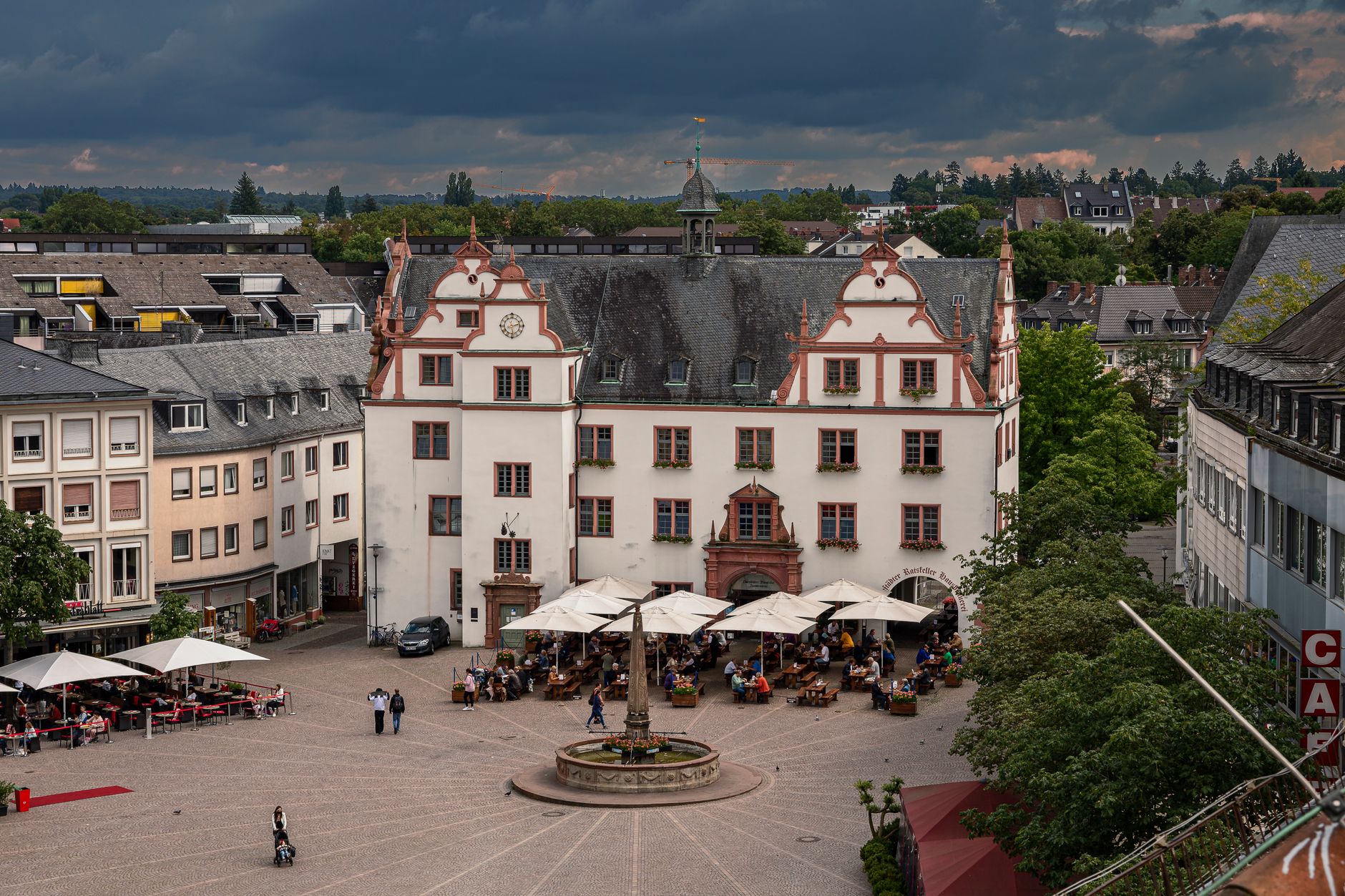
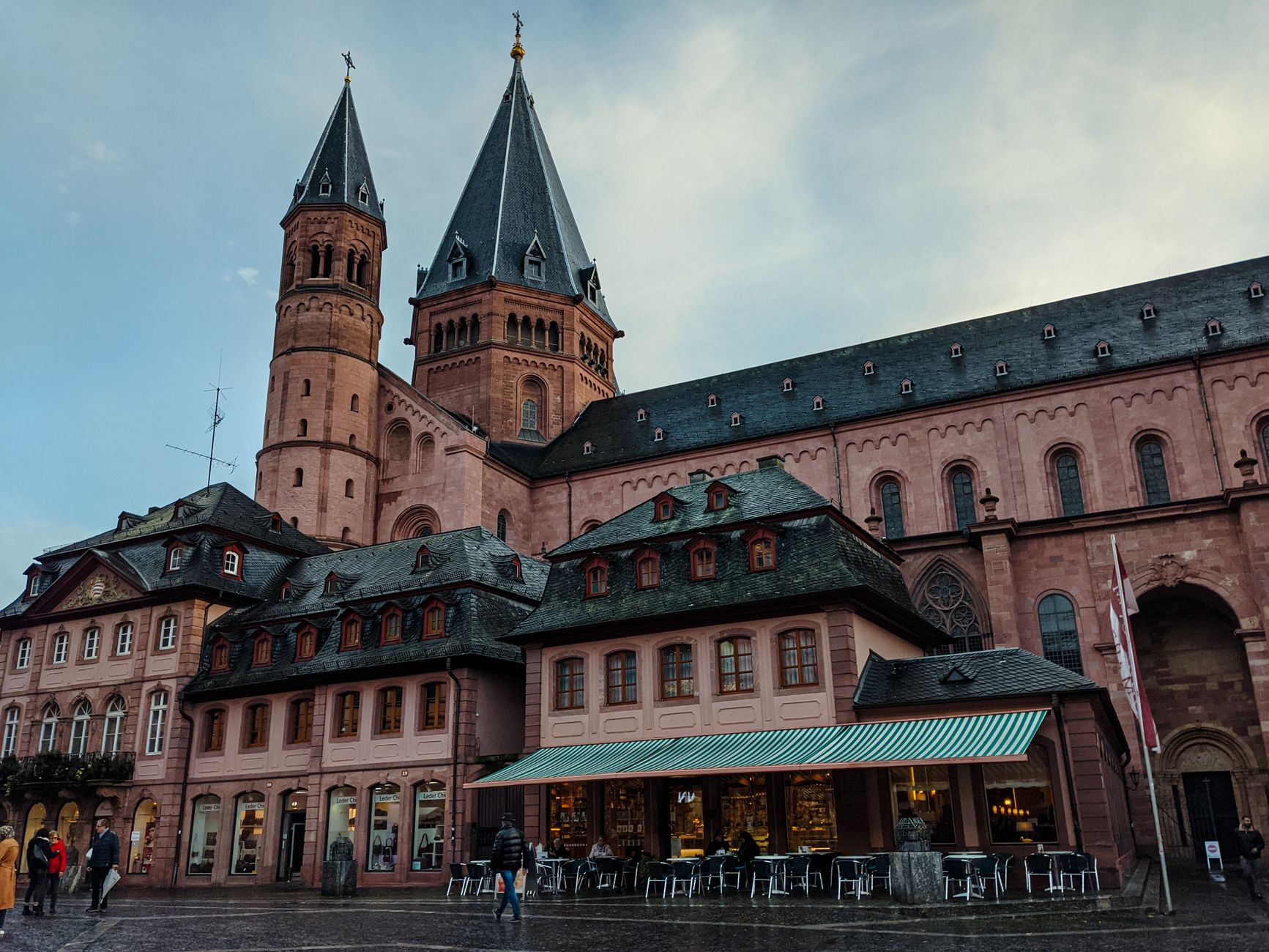
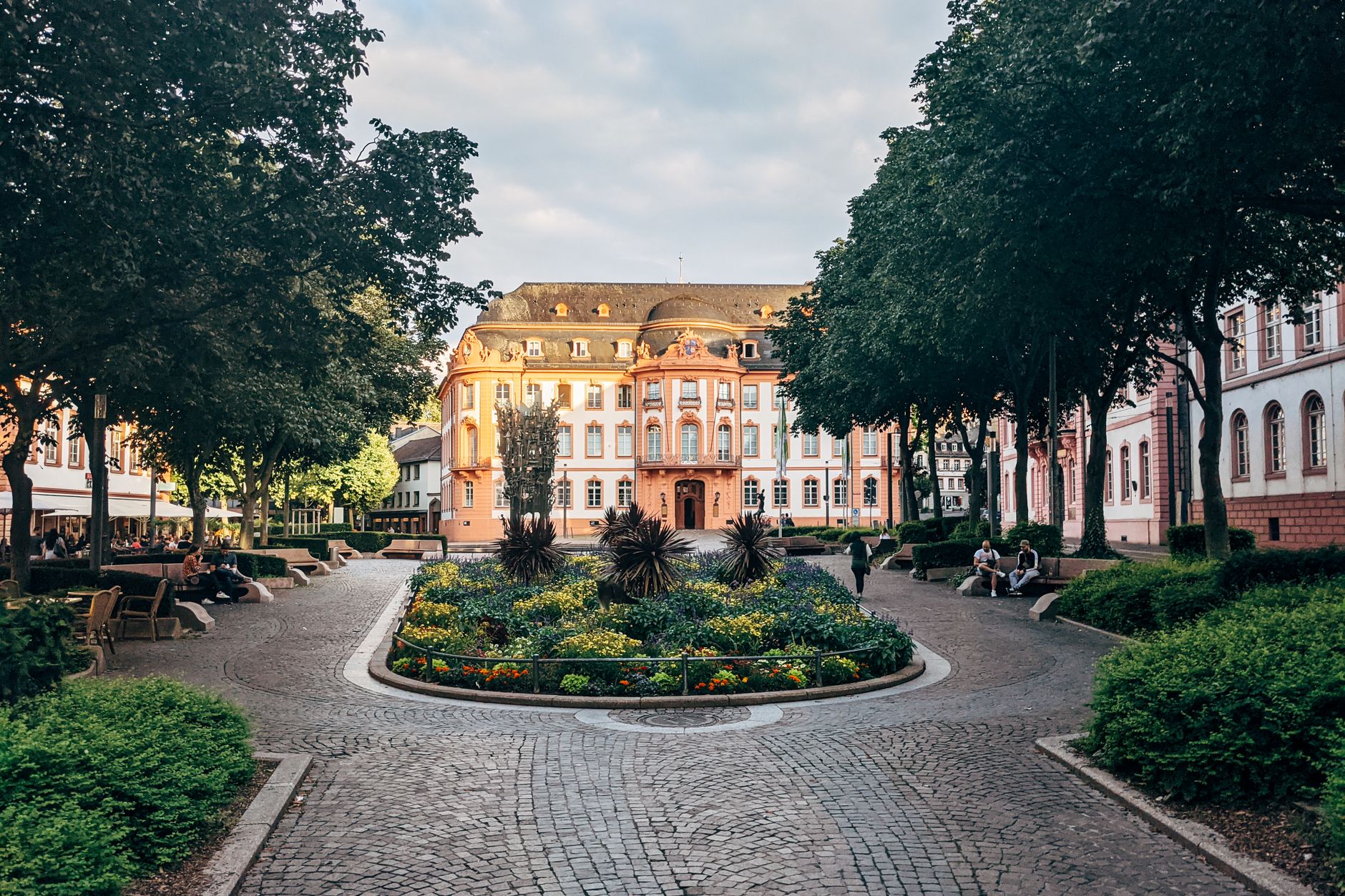
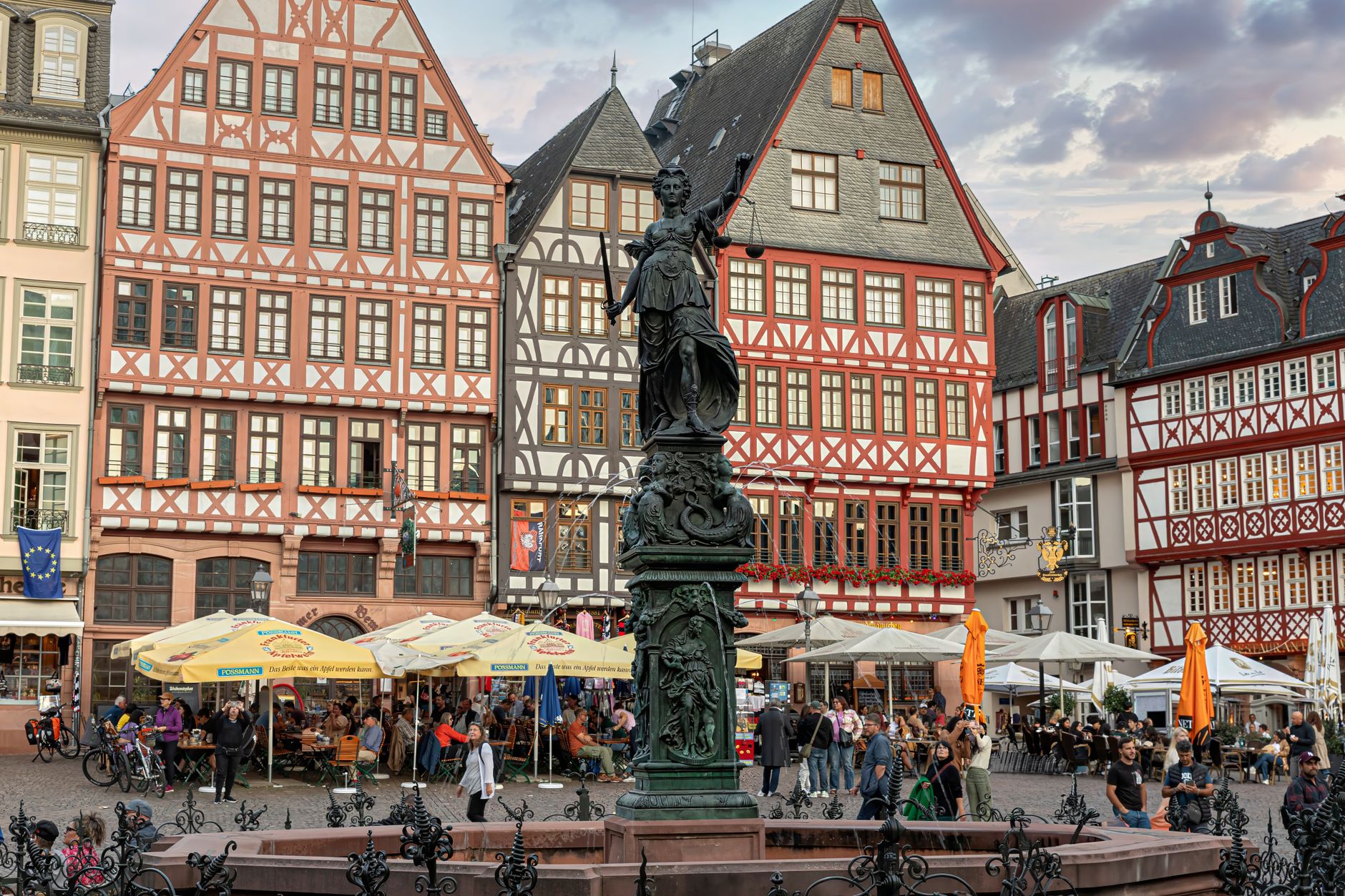
Stand in the Marktplatz and you're looking at a Renaissance fountain from 1526, a cathedral whose foundations go back to 975, and a Danish-designed town hall that opened on New Year's Eve 1973 — three eras stacked in a single glance. Mainz earns its place on the Rhine not through scenery alone but through consequence: this is where Johannes Gutenberg, working as a goldsmith in the 1440s, figured out how to press ink onto paper at scale and changed the written world permanently.
The city paid for its long history in the Second World War, losing eighty percent of its centre to air raids. What you walk through now is a careful reconstruction laced with genuine survivors — a Romanesque cathedral, a Chagall-lit church, a half-timbered square — that make the gaps feel meaningful rather than merely absent.
💛 What travellers fall for
People who come back tend to spend longer than planned at the Gutenberg Museum: the two original fifteenth-century Bibles in their display case have a gravitational pull that photographs don't prepare you for. St. Stephan's Church is worth the detour for the Chagall windows alone — blue light on stone in a way that stops conversation. The MainzCard covers trams and museum entry, which adds up fast.
Deals in Mainz
Book directly at the provider
How Mainz came to be
A Roman general named Nero Claudius Drusus established the military camp Mogontiacum here around 13–12 BC, and the Rhine confluence that made it strategically useful to Rome made it ecclesiastically important to the medieval church. A bishopric arrived in 747; by 775–780 it had become an archbishopric, a seat it held until 1803. Archbishop Willigis ordered the cathedral built in 975–976; it caught fire on inauguration day in 1009 and was largely complete by 1036, eventually becoming one of the three Kaiserdome of the Holy Roman Empire alongside Worms and Speyer.
The city declared itself free in 1244, entering what historians call its Golden Age. Johannes Gutenberg was born here around 1397 and died here in 1468, having spent the intervening decades inventing the process that made mass literacy conceivable. The Americans of the 90th Infantry Division took the city on 22 March 1945; by then, four-fifths of the historic centre was rubble. Rhineland-Palatinate was established on 30 August 1946 with Mainz as its capital.
Who and what shaped it
People who shaped it
Landmark buildings
See Mainz in motion
Plan your visit
On the map
When to go
Mainz sits in one of Germany's milder, drier pockets — the same conditions that make the surrounding Rhine Valley serious wine country. Spring and early autumn give you the most comfortable walking weather; summer is warm and occasionally sharp; winter is grey but rarely severe.
Right now
Background & history adapted from Wikipedia (CC BY-SA) · specs from Wikidata (CC0) · weather from Open-Meteo · map data © OpenStreetMap contributors · photos from Wikimedia Commons / Unsplash with per-image credit. No third-party reviews or social posts reproduced.