
Lourdes
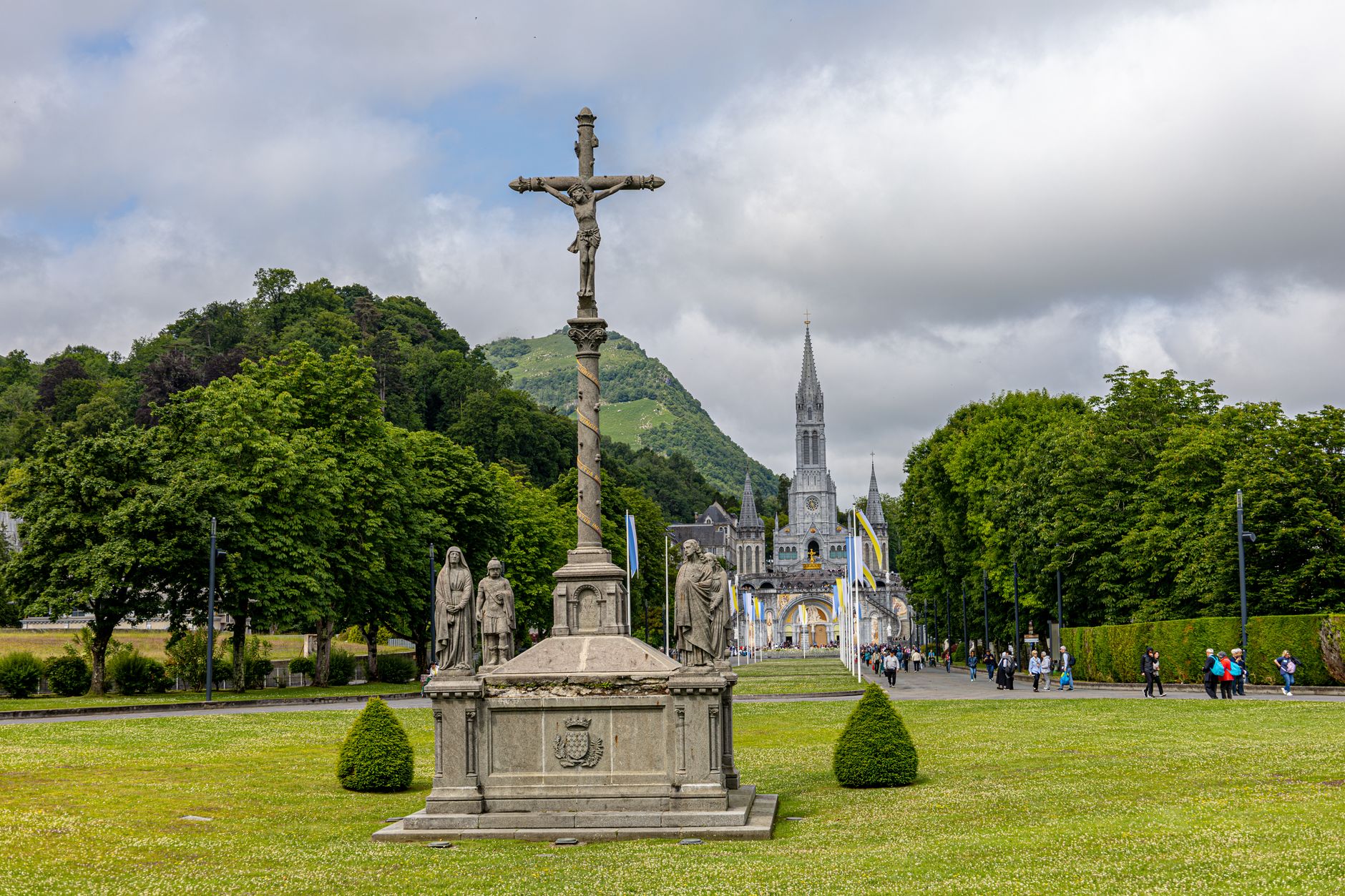
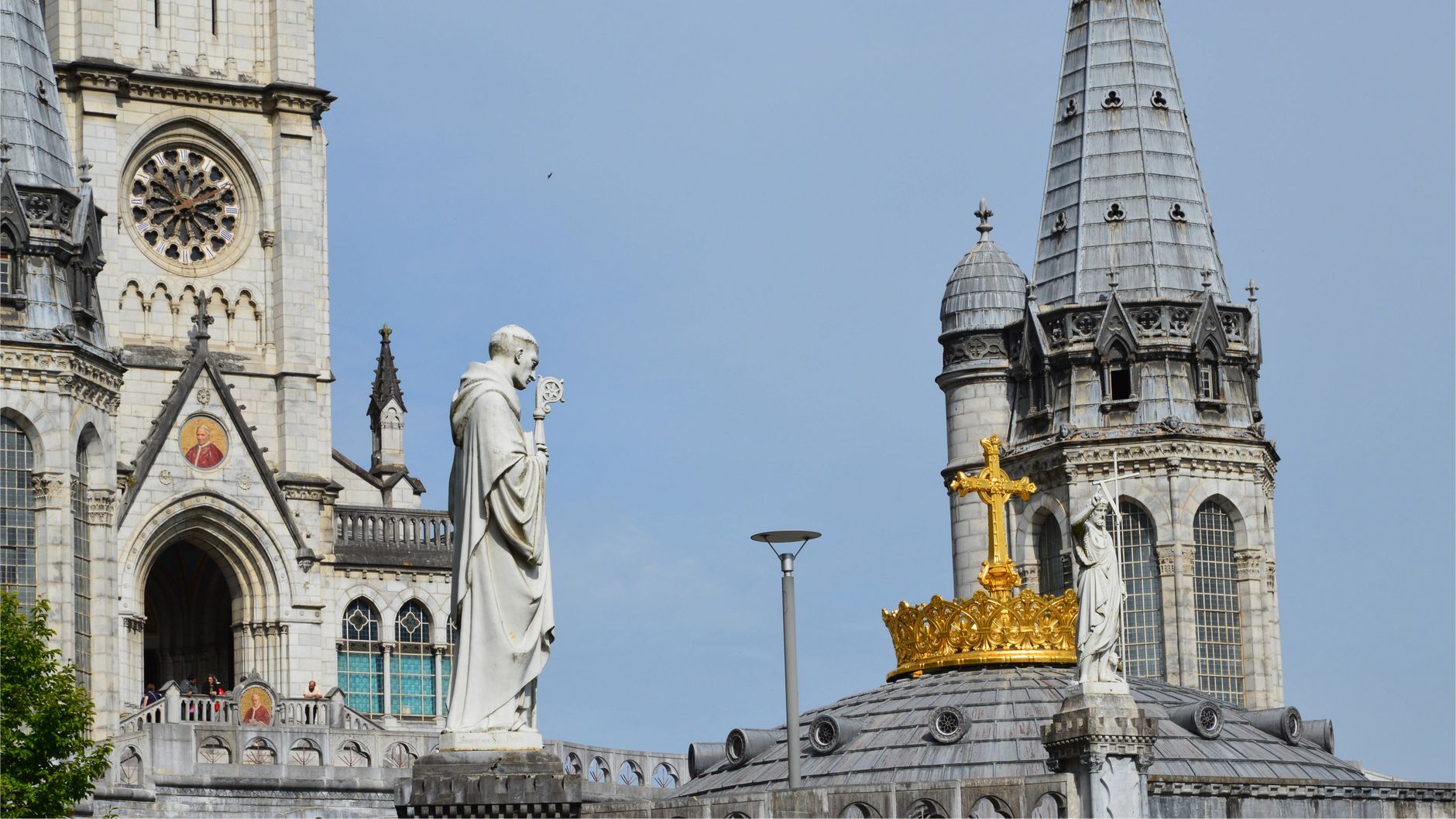
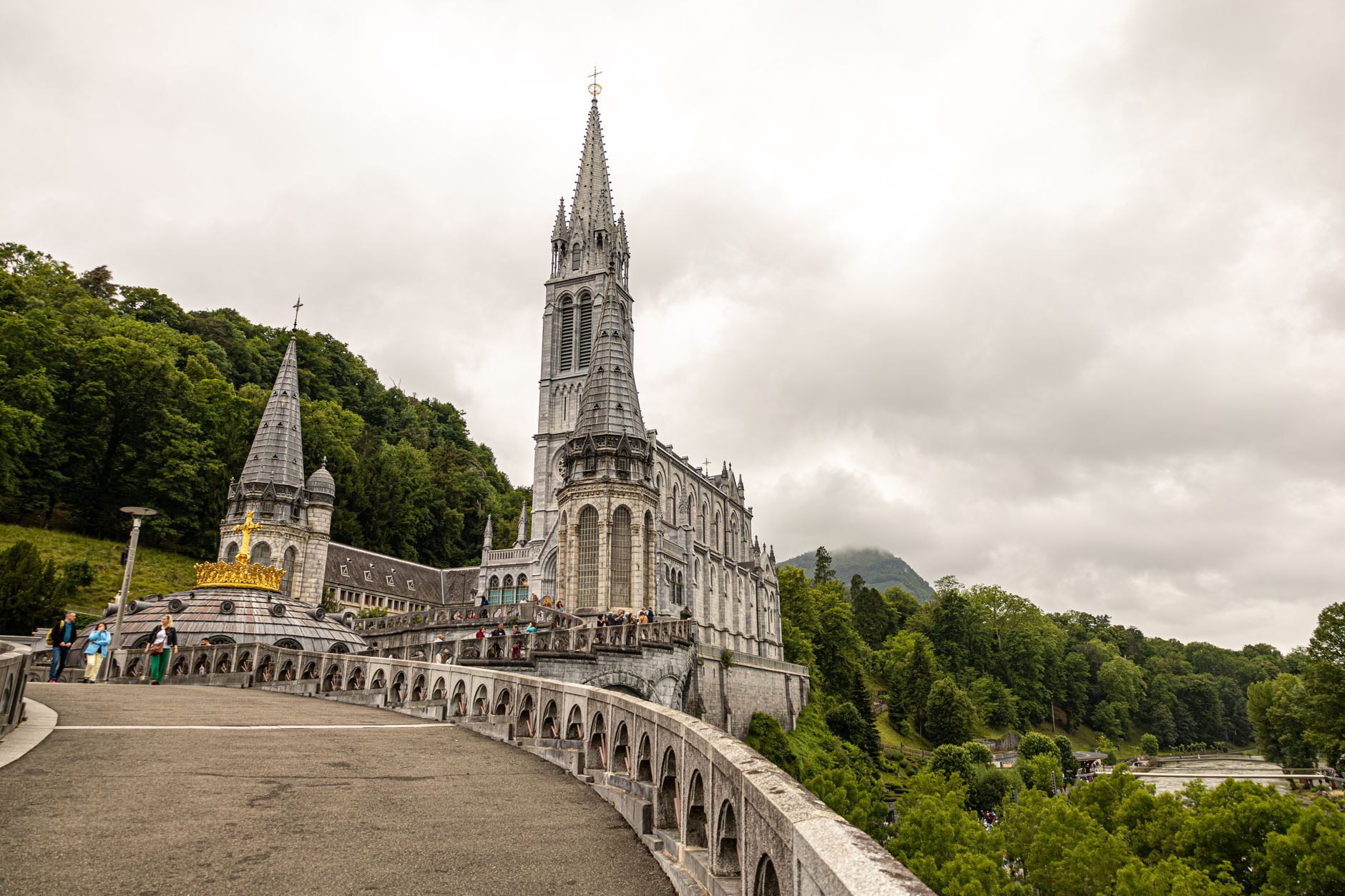
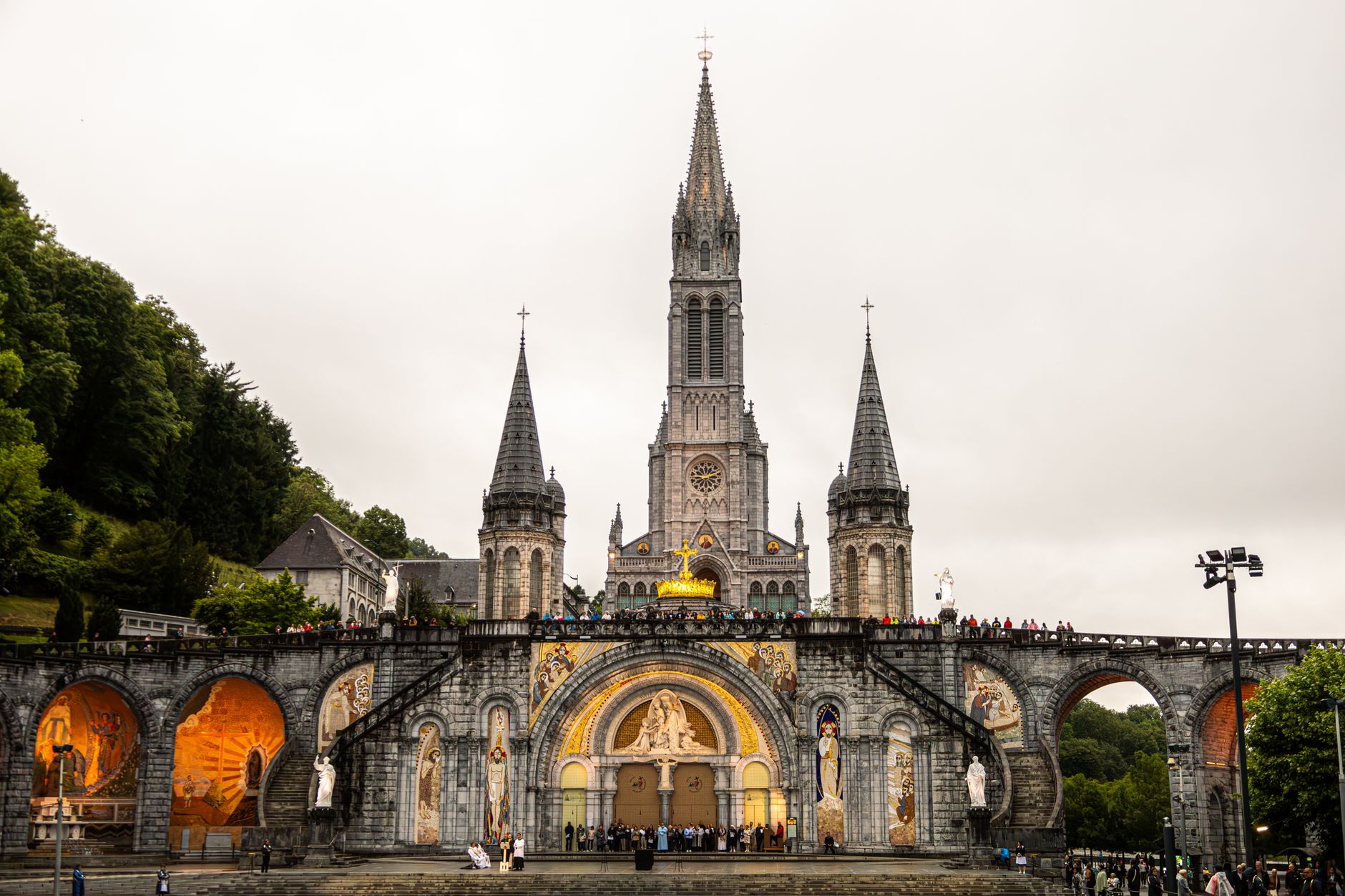
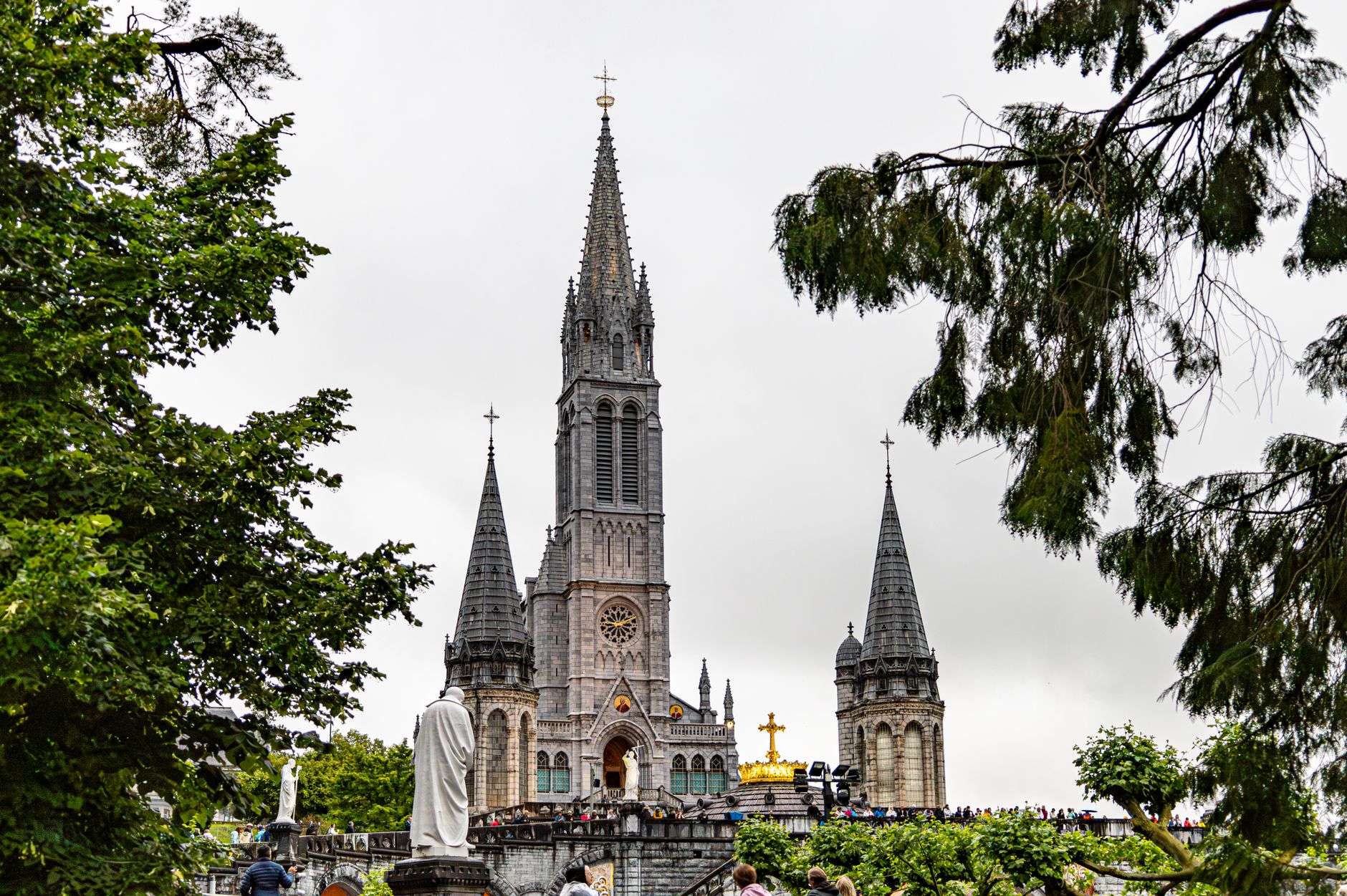
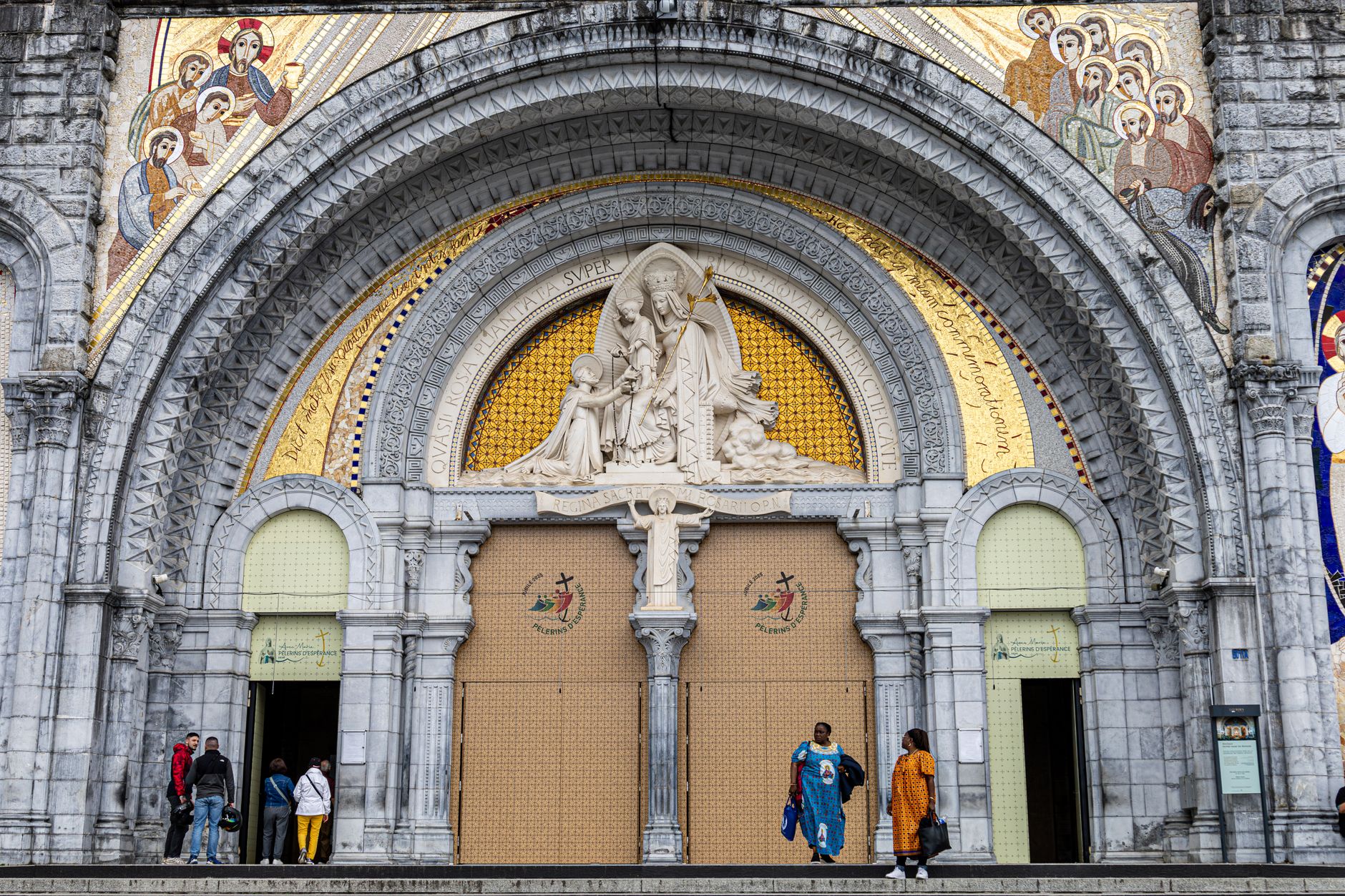
Every day, around 32,000 litres of water rise from a spring inside a riverside grotto on the edge of town — water that began flowing, according to the faithful, when a fourteen-year-old girl named Bernadette Soubirous scratched at the mud on 25 February 1858. Lourdes is built around that moment, and around the seventeen apparitions that followed it.
The sanctuary complex covers 52 hectares and holds three basilicas stacked almost on top of one another, baths fed by the spring, an underground church the size of a small airfield, and esplanades wide enough for processions of tens of thousands. Whether you come as a pilgrim or simply as someone curious about what draws five million visitors a year to a small Pyrenean town, the scale of it earns your attention.
💛 What travellers fall for
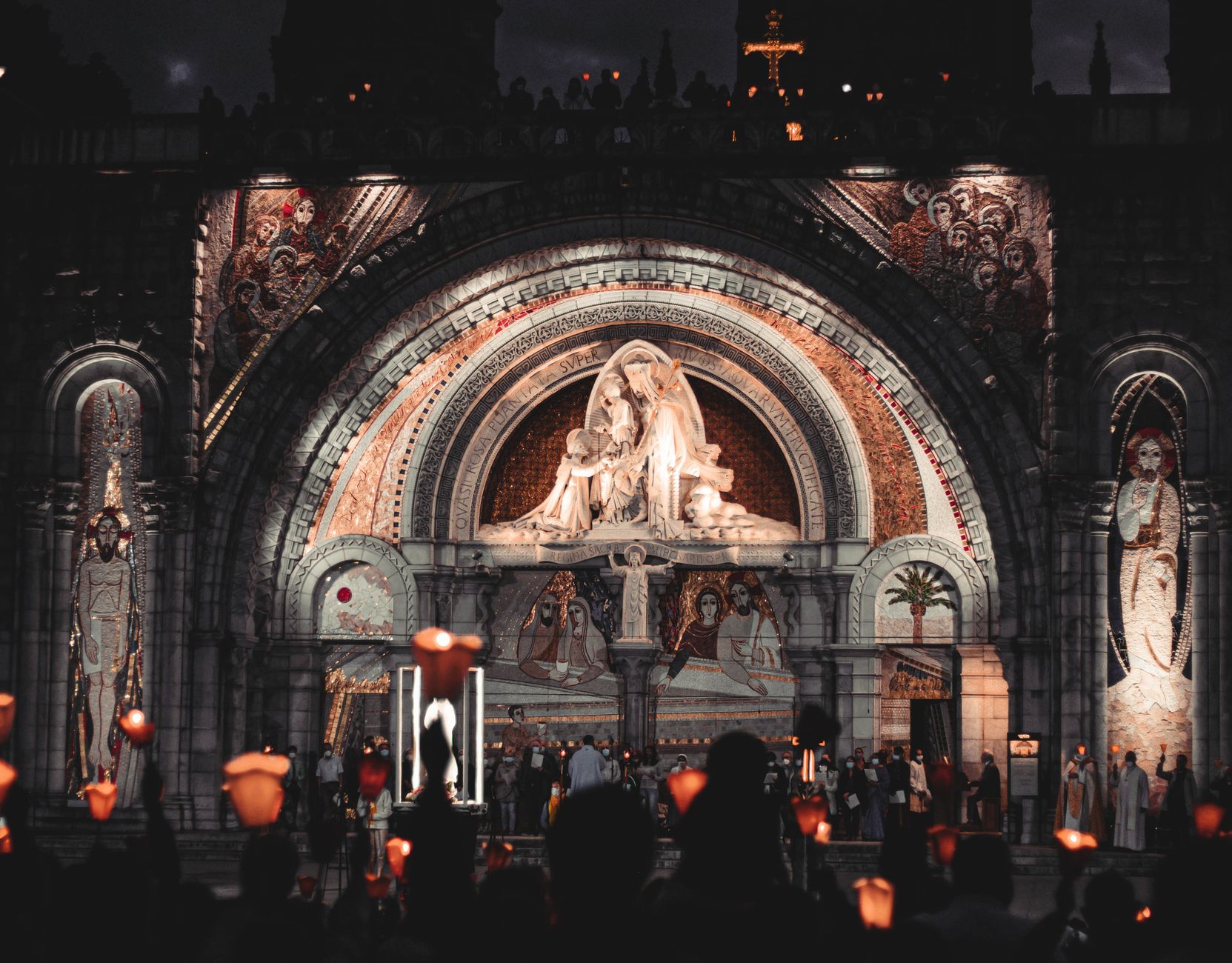
People who return — and many do, year after year — tend to say the same thing: go to the Grotto of Massabielle early, before the organised groups arrive, and again late in the evening for the candlelight procession. The underground Basilica of St. Pius X is worth entering just to understand what 25,000 people in a single column-free room actually looks like.
Experiences you don't want to miss


Deals in Lourdes
Book directly at the provider

How Lourdes came to be
Lourdes spent most of its life as a small garrison town of around 4,000 people, useful mainly as a staging post for travellers heading to the thermal spas and mountain passes further south. Its medieval castle on the Gave de Pau changed hands dramatically during the Hundred Years War — England took the town by the Treaty of Brétigny in 1360, and it took an eighteen-month siege by Charles VI in 1405 to reclaim it. The castle later served as a state prison from the reign of Louis XIV into the early nineteenth century. Lourdes was formally incorporated into the Kingdom of France in 1607.
The eighteen apparitions of 1858 remade the town entirely. In the years immediately after, the site drew perhaps 30,000 pilgrims annually, mostly from the surrounding region. It was only after 1873, when reports of healings at the spring began to circulate, that Lourdes became a national and then international destination. Bernadette Soubirous, who lived to see none of the basilicas completed, was canonised in December 1933.
Who and what shaped it
People who shaped it
Landmark buildings
See Lourdes in motion
Plan your visit
On the map
When to go
Summers are warm and can be wet, with the Pyrenees generating afternoon storms through July and August — the busiest pilgrimage months. Spring and early autumn offer milder temperatures and thinner crowds; winters are cold and the town quiets considerably.
Right now
Background & history adapted from Wikipedia (CC BY-SA) · specs from Wikidata (CC0) · weather from Open-Meteo · map data © OpenStreetMap contributors · photos from Wikimedia Commons / Unsplash with per-image credit. No third-party reviews or social posts reproduced.