
Lorient

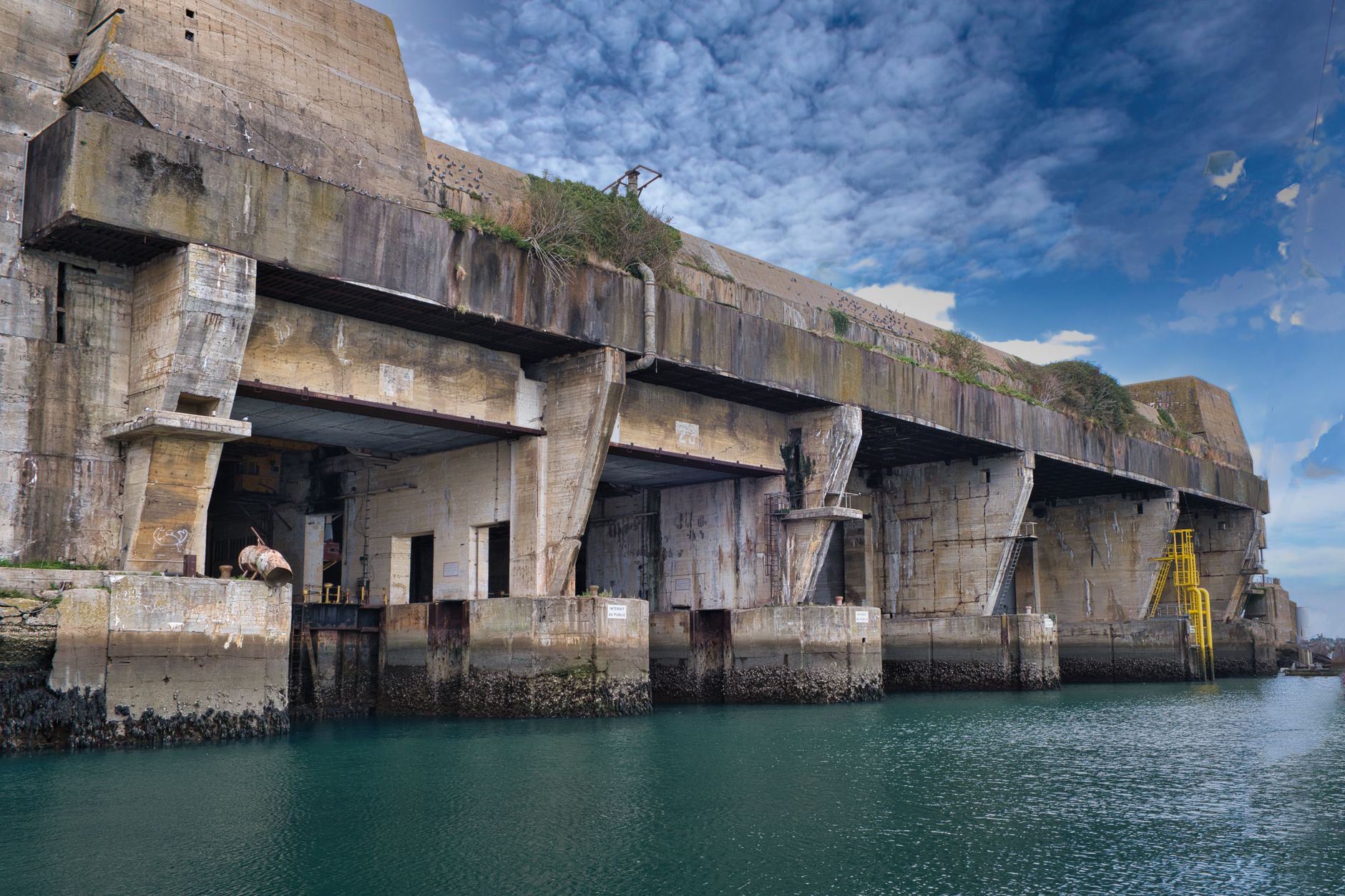
Lorient is a city that wears its destruction openly. Almost nothing here predates 1944 — the Allied bombing campaign that targeted the German U-boat base left barely a wall standing — yet the submarine pens themselves remain, vast and indestructible on the waterfront at Keroman, exactly as the Kriegsmarine built them. That contrast, between the concrete relics of occupation and the clean post-war grid rebuilt around them, gives Lorient a texture unlike anywhere else in Brittany.
The city began as a company town: in 1666, the French East India Company established its base at the confluence of the Scorff and Blavet rivers, and the name Lorient derives from those early trade routes to the Orient. The Hôtel Gabriel, one of the few 18th-century survivors, still stands in cut tuffeau and granite — a quiet reminder that before the warships and the submarines, this was a place where silks and spices came ashore.
💛 What travellers fall for
People who come back tend to do the Sous-Marin Flore on a second visit rather than a first — you need a little context before the 1960s submarine makes full sense. They also catch the water bus across the rade to Port-Louis, where the Citadelle sits above the bay and the €8 entry covers both museums inside. The morning market at the Halles de Merville is worth an early start.
Experiences you don't want to miss



Deals in Lorient
Book directly at the provider

How Lorient came to be
Lorient exists because Jean-Baptiste Colbert needed a port for his French East India Company, chartered in 1664. Louis XIV granted the land in 1666, and by 1690 the arsenal shipyards were running. The city was granted formal status in 1738, its thatched houses replaced by stone, its wharves extended along the Faouédic. In 1769, Louis XV bought out the Company's infrastructure for 17,500,000 livres tournois, and Lorient became a full naval base.
The 20th century was less orderly. In 1941 the Germans built their largest U-boat base here, sheltering the 2nd and 10th flotillas. Between 1943 and 1944, Allied bombers dropped 4,000 tons on the city — the pens survived; almost everything else did not. Reconstruction was rapid and pragmatic, producing the post-war modernist fabric you walk through today.
Who and what shaped it
People who shaped it
Landmark buildings
See Lorient in motion
Plan your visit
On the map
When to go
Lorient's oceanic climate keeps winters mild and summers cool, with rain spread fairly evenly across the year rather than concentrated in one season. July and August are the driest and warmest months, though a jacket remains useful most evenings.
Right now
Background & history adapted from Wikipedia (CC BY-SA) · specs from Wikidata (CC0) · weather from Open-Meteo · map data © OpenStreetMap contributors · photos from Wikimedia Commons / Unsplash with per-image credit. No third-party reviews or social posts reproduced.