
Longnor


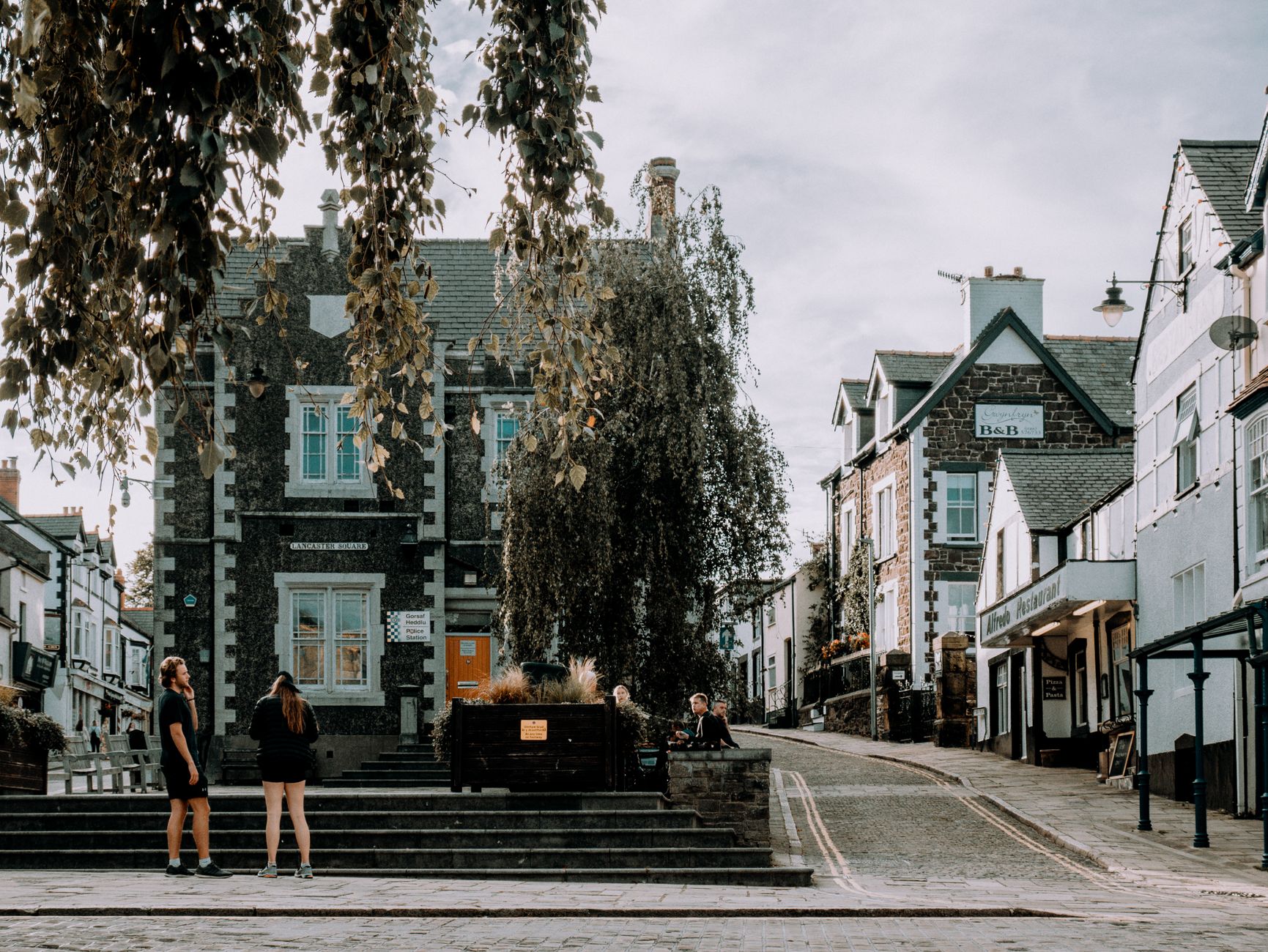
Stand in Longnor's cobbled Market Place and look up at the old Market Hall: carved into the stone above the entrance is the original schedule of market tolls, still legible after 150 years. This small Staffordshire village, sitting on a ridge where two counties meet, was once significant enough to appear in capitals on John Cary's 1787 road map — the same weight as Leek and Cheadle — with twice-weekly markets and four annual fairs drawing traders across the moorland.
That era is long gone, and Longnor's quiet is now its character. Thirty-three listed buildings line streets of local stone quarried at Daisy Knoll. Two pubs remain from what was once four. The Market Hall sells craft work and coffee. The village carries its past without performing it.
💛 What travellers fall for
People who come back tend to time it around a walk to Blakemere Pond — perched on the hilltop with open views across the moors — then a pint at the Horseshoe Inn or Ye Olde Cheshire Cheese. The Cheshire Cheese has been trading in some form since at least 1706, and it shows, in the best sense.
Deals in Longnor
Book directly at the provider


How Longnor came to be
The name comes from the Old English 'langen ofer' — long slope — and there is evidence of settlement here from around 700 AD. By 1086 it was recorded in the Domesday Book as Longenalre. St Bartholomew's Church was founded in 1223, around which a small community of roughly twenty households gradually formed. The Harpur Crewe family took the manor in the fifteenth century, and by the seventeenth the village had grown into a genuine market town.
The nineteenth century brought slow retreat. As roads to Buxton improved, Longnor was bypassed by commerce and then by modernity. The Methodist Chapel, built in 1780 and one of the oldest in the area, closed in 1996. What remains is a village that peaked early and has been quietly, stubbornly itself ever since.
Who and what shaped it
People who shaped it
Landmark buildings
See Longnor in motion
Plan your visit
On the map
When to go
The ridge position means Longnor catches weather from all directions — expect cool summers, cold winters and rain in any season. Late spring and September tend to offer the clearest skies and the best light on the stone.
Right now
Background & history adapted from Wikipedia (CC BY-SA) · specs from Wikidata (CC0) · weather from Open-Meteo · map data © OpenStreetMap contributors · photos from Wikimedia Commons / Unsplash with per-image credit. No third-party reviews or social posts reproduced.