
Logan Circle

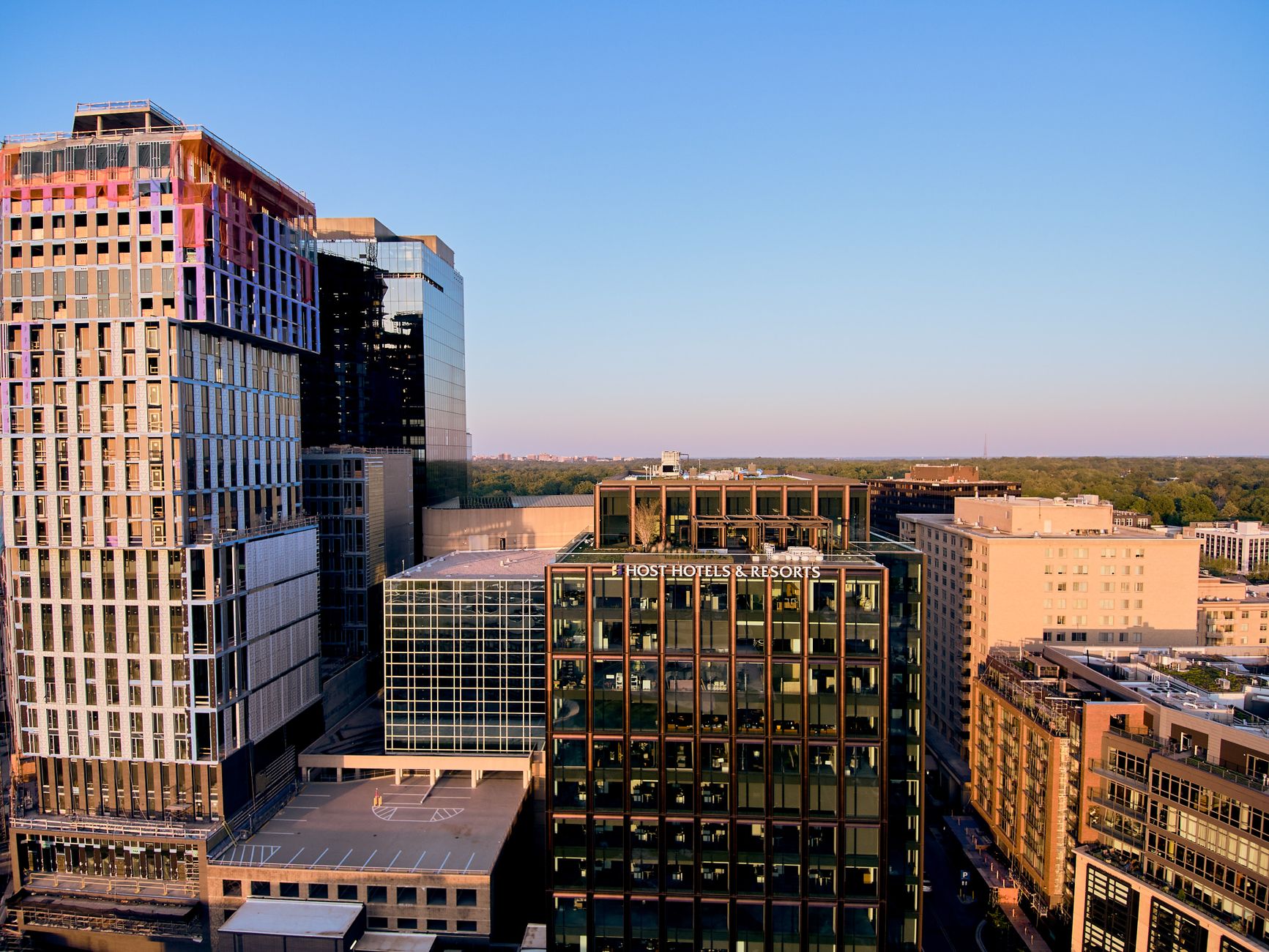
At the center of Logan Circle stands a bronze equestrian general, and around him, one of the most intact stretches of late-Victorian rowhouses in Washington — 135 of them, mostly built between 1875 and 1900, their Richardsonian Romanesque facades rising shoulder to shoulder along Rhode Island and Vermont Avenues. The park itself is just 1.8 acres: elm shade, bench-lined walks, a few dog walkers cutting across the grass.
What the circle holds, quietly, is a remarkable density of history. Formerly the site of Camp Barker — a Civil War-era refuge for newly freed enslaved people from Virginia and Maryland — the neighborhood later became home to figures who reshaped American culture, law, and civil rights. The addresses are still there. The plaques are easy to miss.
💛 What travellers fall for
People who come back tend to do a slow lap around the circle before anything else, reading the residential plaques properly rather than in passing. The Mary McLeod Bethune Council House on Vermont Avenue offers free NPS tours on Thursdays and Fridays — worth timing your visit around. Luther Place Memorial Church, just off the circle, is often unlocked on weekday mornings.
Deals in Logan Circle
Book directly at the provider

How Logan Circle came to be
Pierre L'Enfant's 1791 plan sketched this site as a large triangular plaza; the circular form came later, shaped by 1870s development under Mayor Alexander Robey Shepherd, who laid out streets and planted elms to draw Washington's growing middle class. Before that, during the Civil War, the land held Camp Barker, converted barracks that became a refuge for people escaping enslavement in Virginia and Maryland.
The circle was renamed in 1930 to honor General John A. Logan — Civil War commander, Illinois senator, and the man widely credited with establishing Memorial Day — whose equestrian statue had already stood at the center since 1901. Among the residents the historic district quietly commemorates: Alain LeRoy Locke, architect of the Harlem Renaissance; attorney Belford Lawson Jr., who argued a landmark civil rights case; and Ella Watson, the subject of Gordon Parks's American Gothic. The neighborhood spent the 1980s and '90s in serious decline before a slow, sustained recovery brought the Victorian fabric back into use.
Who and what shaped it
People who shaped it
Landmark buildings
See Logan Circle in motion
Plan your visit
On the map
When to go
Washington summers are humid and heavy — the circle's elm canopy earns its keep in July and August, but mornings are the time to walk. Spring (April–May) and fall (September–October) are the most comfortable seasons for lingering; winters are mild by northern standards but can turn raw, and the bare trees make the architecture easier to read.
Right now
Background & history adapted from Wikipedia (CC BY-SA) · specs from Wikidata (CC0) · weather from Open-Meteo · map data © OpenStreetMap contributors · photos from Wikimedia Commons / Unsplash with per-image credit. No third-party reviews or social posts reproduced.