
Loches
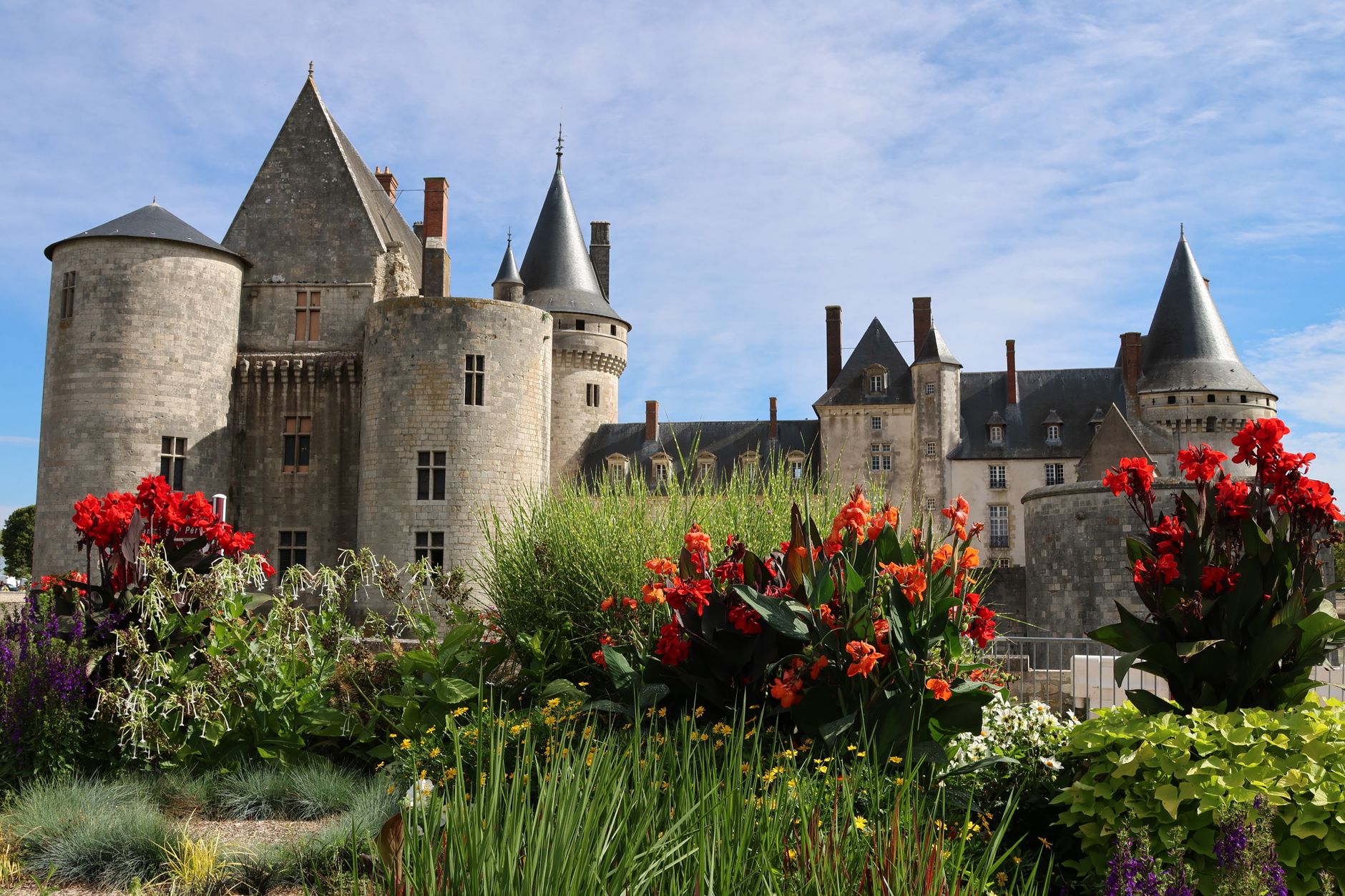
Stand at the base of the keep that Foulques III Nerra raised between 1013 and 1035 and the sheer arithmetic of it stops you: a 37-metre Romanesque tower, still intact, still reading as a statement of power across the Indre valley. Loches is a medieval citadel that never quite became a ruin — it became a royal residence, then a prison, then a courthouse, and is now a small French town of about 6,000 people going about their Tuesday errands in the shadow of two kilometres of old walls.
The Cité Royale sits on a ridge above the lower town, and the walk up through the Royal Gate earns you a concentrated piece of French history: Joan of Arc here in May 1429, Anne of Brittany's flamboyant Gothic oratory, the cage-cells where Ludovico Sforza scratched paintings onto his prison walls.
💛 What travellers fall for
People who come back tend to time it for a Wednesday or Saturday morning, when one of the largest markets in Touraine fills the lower town from 9:30 until half past noon. After that, the Lansyer Museum — the former home of landscape painter Emmanuel Lansyer — is rarely crowded and worth an unhurried hour with his 19th-century contemporaries on the walls.
Experiences you don't want to miss


Deals in Loches
Book directly at the provider

How Loches came to be
The site grew from a monastery founded around 500 by St. Ours, and the town's name echoes the Roman Leucae. The Counts of Anjou held it from 886; Foulques III Nerra built the keep in the early 11th century as a forward position in his long wars with the Counts of Blois. In 1205, Philip Augustus took it from King John of England, and the castle began its long second life as a French royal residence. Charles VII used it as his second stronghold after Chinon from 1418, and it was here that Joan of Arc arrived after Orléans to press him toward his coronation.
The prison chapters came later. Jean II, Duke of Alençon, Philippe de Commines and Ludovico Sforza all passed through its towers in the 15th and 16th centuries. By 1793 it held revolutionaries; by the 1920s it had become a sub-prefecture and civil court before the buildings passed into the care of the state.
Who and what shaped it
People who shaped it
Landmark buildings
See Loches in motion
Plan your visit
On the map
When to go
Summers are warm — August highs reach around 27°C — and the long evenings make the citadel walls glow. Winter is genuinely cold and often overcast, with February averaging around 9°C, so if you're choosing, aim for late spring through early autumn.
Right now
Background & history adapted from Wikipedia (CC BY-SA) · specs from Wikidata (CC0) · weather from Open-Meteo · map data © OpenStreetMap contributors · photos from Wikimedia Commons / Unsplash with per-image credit. No third-party reviews or social posts reproduced.