
Levallois-Perret
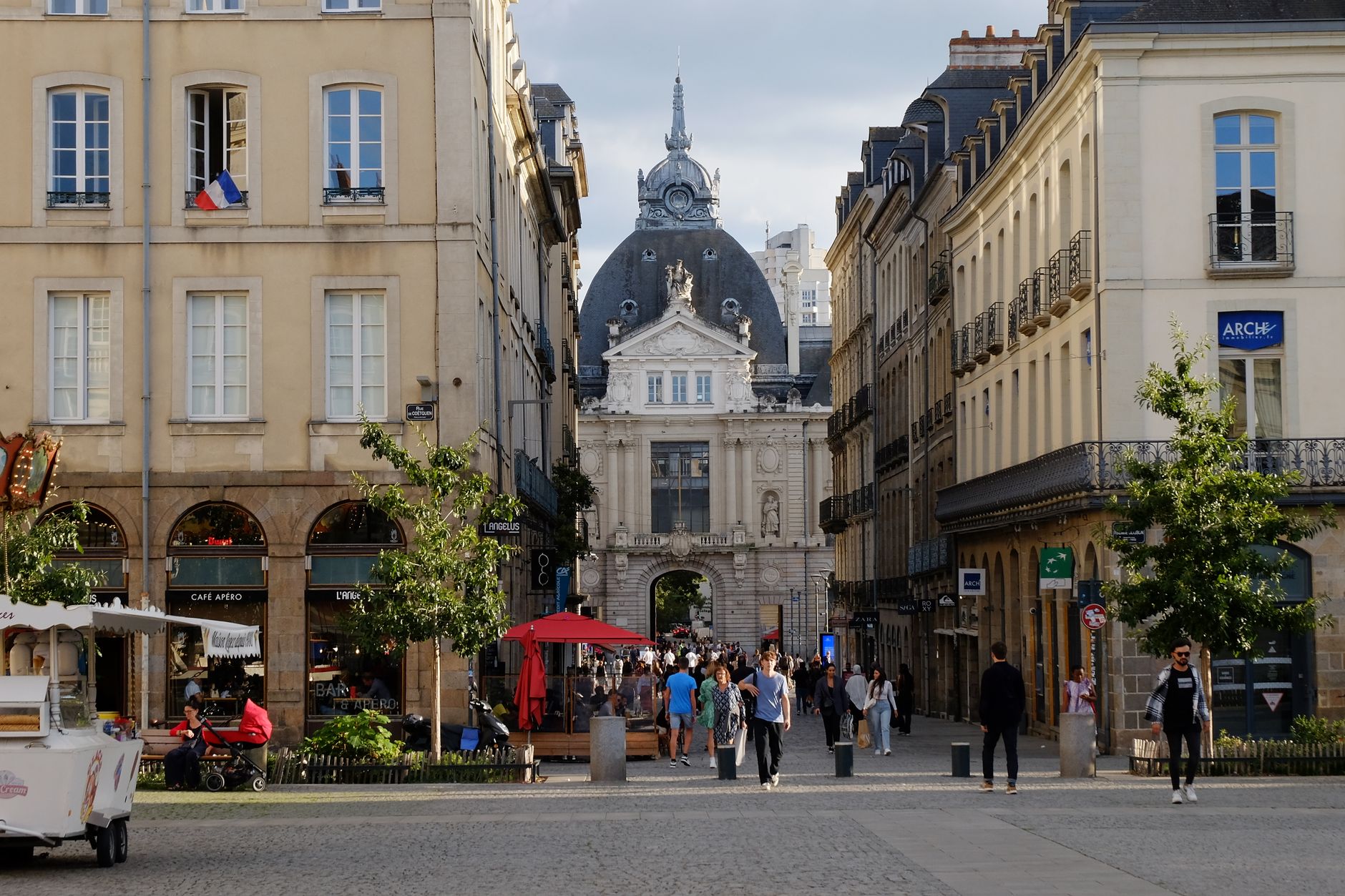
Levallois-Perret holds a quiet distinction: it packs more residents per square kilometre than any other town in Europe, yet its grid of perfectly perpendicular streets — laid out in the 1840s with the deliberate logic of a carpenter-turned-developer — gives it an unexpected calm. The roads run straight, the Haussmann-era facades line up tidily, and along the Seine the paths are wide enough for a slow morning walk.
What the town traded in industry — Citroën 2CVs rolled out here for nearly four decades, and Gustave Eiffel's workshops fabricated the iron skeleton of the Statue of Liberty on this ground — it has quietly converted into one of the more comfortable addresses just outside Paris's ring.
💛 What travellers fall for
People who come back tend to anchor themselves on Rue Henri Barbusse for the market and a coffee, then drift down to the Île de la Jatte, where the Seine narrows and the 18th-century Temple de l'Amour still stands in the overgrowth. The trompe l'œil murals on the residential blocks are easy to miss — worth slowing down for.
Deals in Levallois-Perret
Book directly at the provider
How Levallois-Perret came to be
The land was split in two by competing visions. In 1822, wealthy landowner Jean-Jacques Perret began parcelling his Champerret estate into plots. Then in 1845, a former carpenter and bistro owner named Nicolas-Eugène Levallois was commissioned to lay out a new worker's quarter from scratch — and he did it on a strict grid, every street meeting the next at a right angle. The two developments eventually merged, and on 1 January 1867, Napoleon III made it official: the commune of Levallois-Perret.
The 19th and early 20th centuries turned it into an industrial engine. The Eiffel company built structural elements for both the Eiffel Tower and the Statue of Liberty here. Automotive firms — Clément-Bayard, Delage, Chapron — set up factories, and Citroën eventually absorbed the Clément-Bayard plant, producing the 2CV there for close to four decades. The Hôtel de Ville, finished in 1898 to architect Léon Jamin's design, stands on Place de la République as a stone record of the town's confidence in that era.
Who and what shaped it
People who shaped it
Landmark buildings
See Levallois-Perret in motion
Plan your visit
On the map
When to go
Summers are warm and generally dry — the Seine-side paths are at their best from May through September. Winters are cool and grey, much like central Paris, but the compact grid means you're never far from a café on Rue Henri Barbusse.
Right now
Background & history adapted from Wikipedia (CC BY-SA) · specs from Wikidata (CC0) · weather from Open-Meteo · map data © OpenStreetMap contributors · photos from Wikimedia Commons / Unsplash with per-image credit. No third-party reviews or social posts reproduced.