
Lelystad
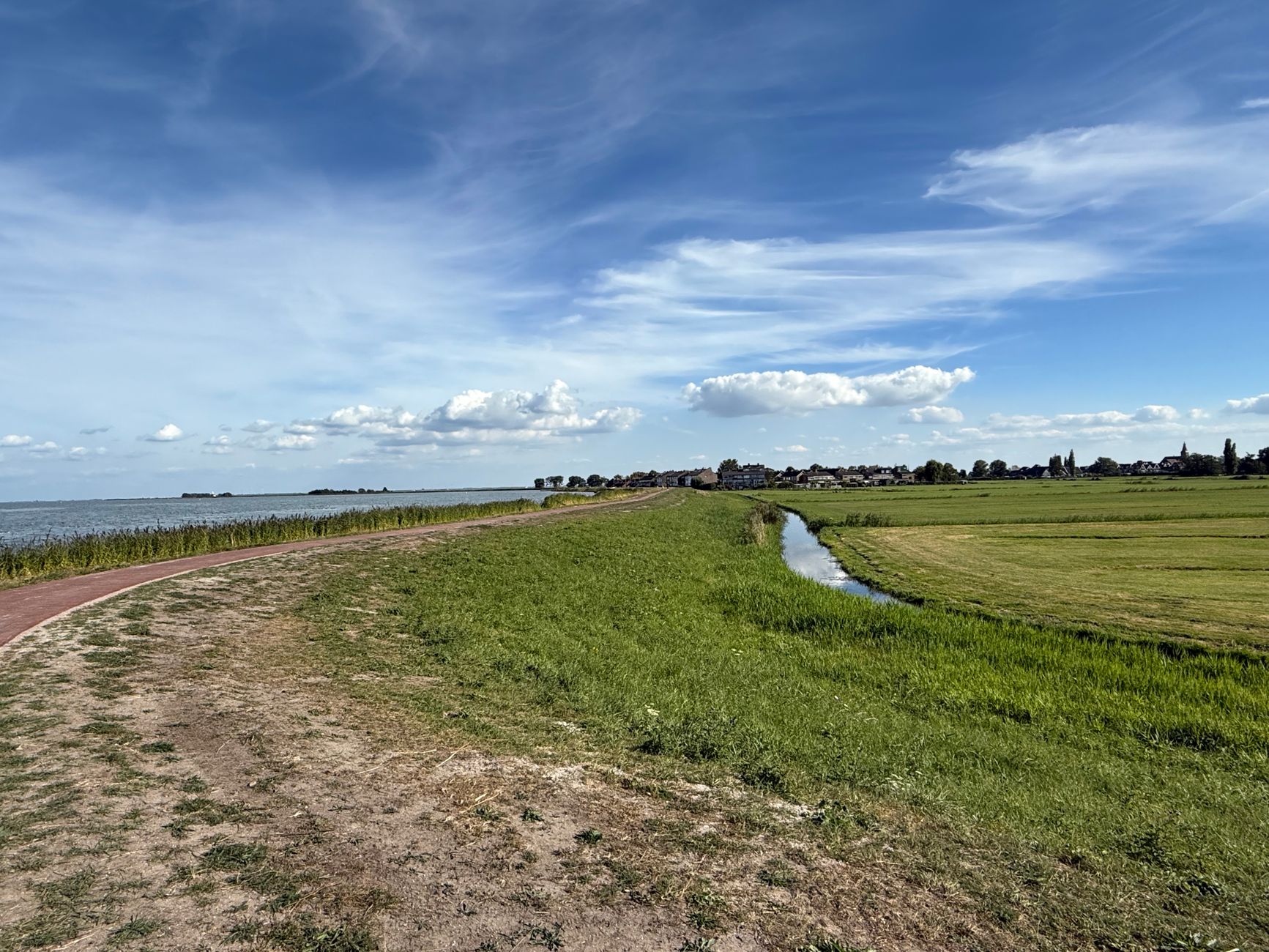
Lelystad is a city that did not exist sixty years ago. The ground beneath it was the bottom of the Zuiderzee until the East Flevoland Polder was drained in 1957, and the first residents only arrived in September 1967. That origin — engineered, deliberate, almost audacious — shapes everything here: the wide streets, the flat horizon in every direction, the sense that the whole place was willed into being by people who believed a problem could simply be solved.
What you find when you arrive is a city still figuring out its own mythology, and that makes it genuinely interesting. The Batavia replica sits in a shipyard on the edge of reclaimed water. A full-scale Boeing 747 was brought here by boat and road. An 85-foot crouching man by Antony Gormley stands on a breakwater, staring at the IJsselmeer.
💛 What travellers fall for
People who come back tend to time it around Oostvaardersplassen — the nature reserve that appeared spontaneously when the polder dried out, no planting required. Early morning in spring, before the outlet center crowds arrive, the reeds are worth the detour alone. Batavialand and the shipyard together take a solid half-day; don't try to rush them.
Deals in Lelystad
Book directly at the provider

How Lelystad came to be
The city owes its existence, and its name, to Cornelis Lely, the hydraulic engineer who drew up the Zuiderzee closure plan in 1891. He died in 1929, sixteen years before the Afsluitdijk he designed was finished, and nearly four decades before the polder he imagined became habitable land. Construction of Lelystad began in 1965, the city's first residents moved in during 1967, and in 1986 it became the capital of the newly created Flevoland province.
The decades since have added layer after layer of deliberate landmark-making: the Batavia VOC ship replica launched in 1995, the Hanzelijn rail link to Zwolle completed in 2011, the Marker Wadden artificial islands begun in 2016. The place is, in a literal sense, still being built.
Who and what shaped it
People who shaped it
Landmark buildings
See Lelystad in motion
Plan your visit
On the map
When to go
Lelystad sits fully exposed on flat polderland, which means wind is a constant companion in all seasons — factor that in for the outdoor sites and the breakwater walk. Summers are mild and pleasant for cycling the dike roads; winters are damp and grey, though the indoor museums make a reasonable case for a January visit.
Right now
Background & history adapted from Wikipedia (CC BY-SA) · specs from Wikidata (CC0) · weather from Open-Meteo · map data © OpenStreetMap contributors · photos from Wikimedia Commons / Unsplash with per-image credit. No third-party reviews or social posts reproduced.