
Leeds
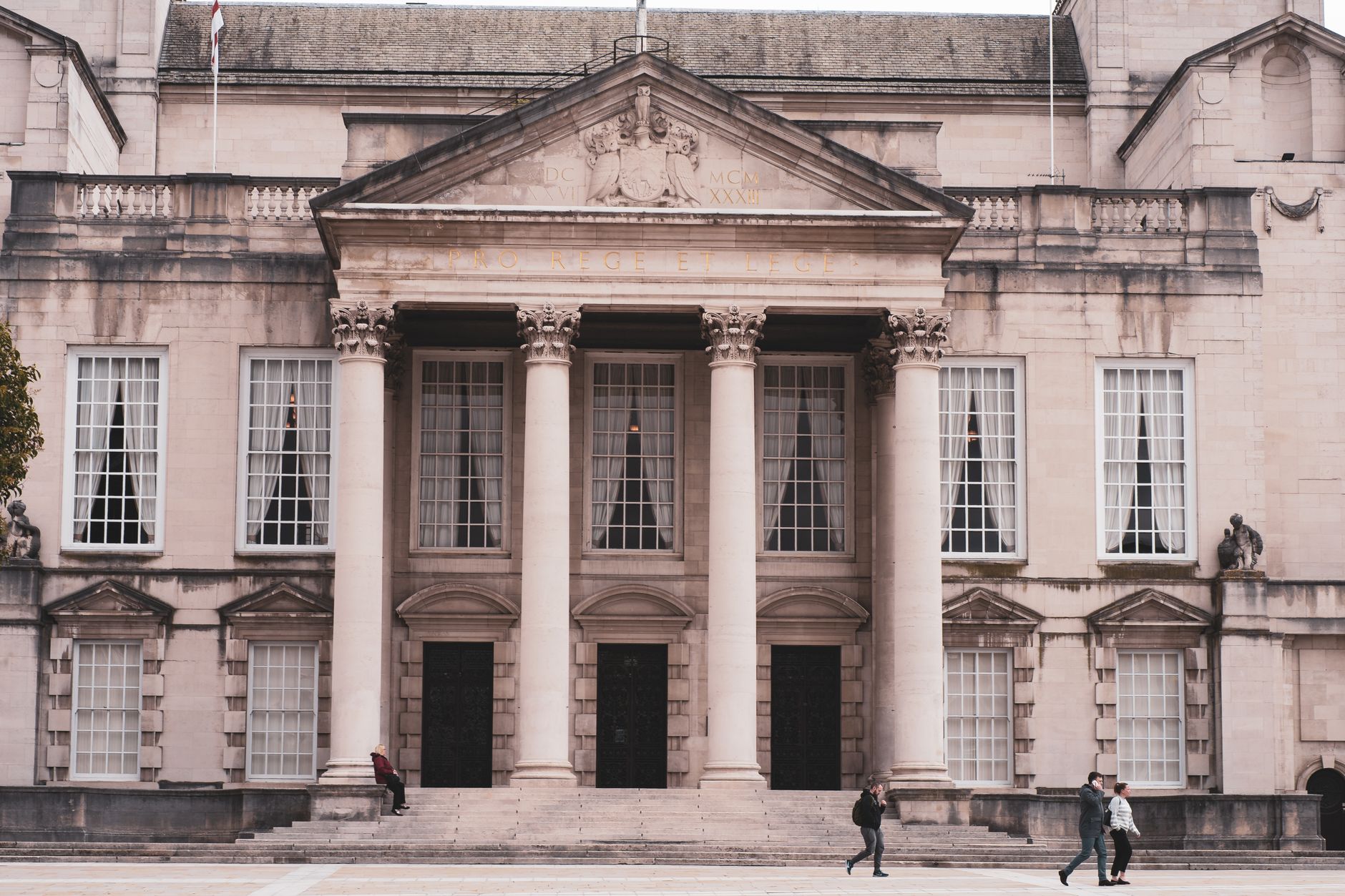
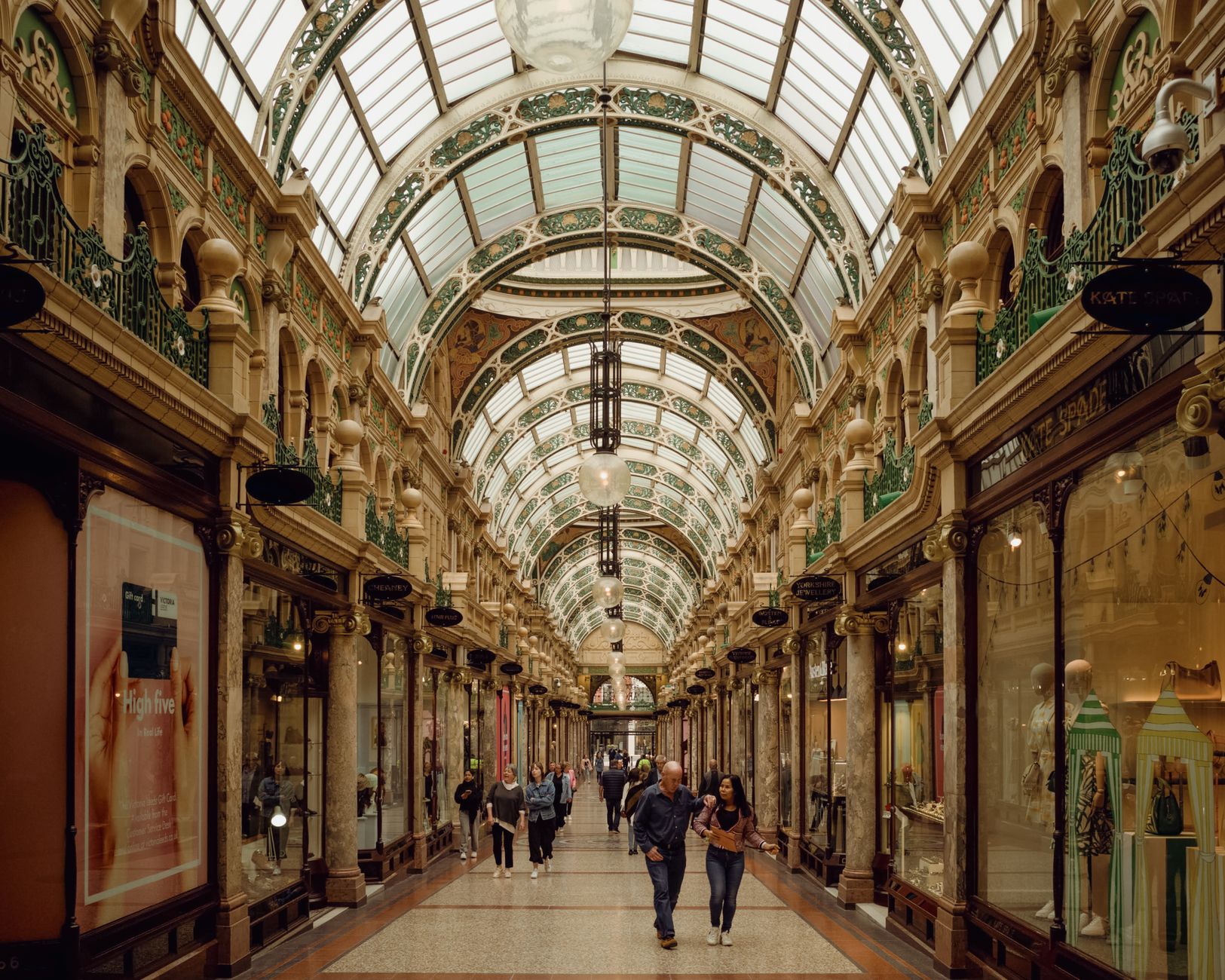
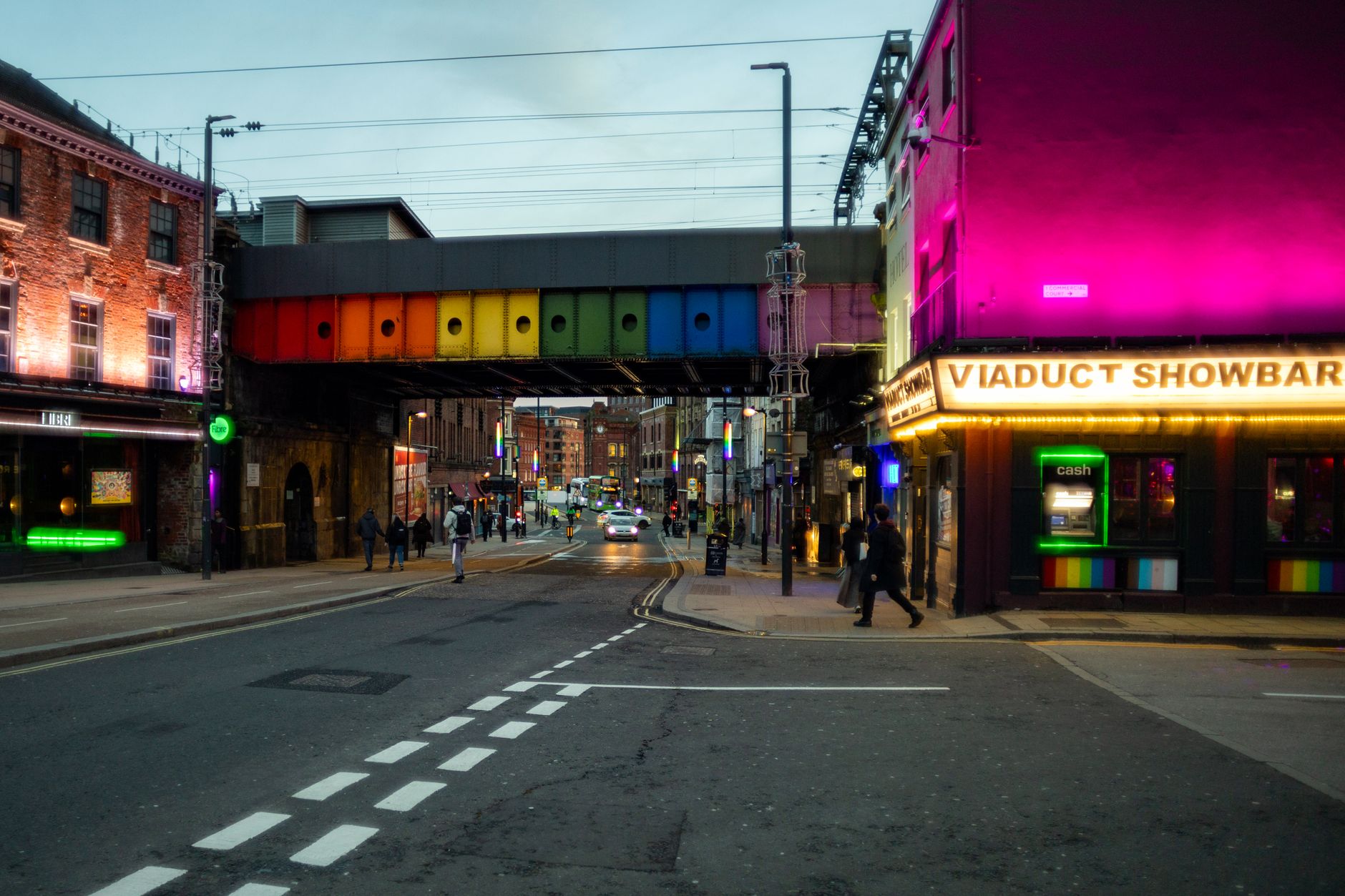
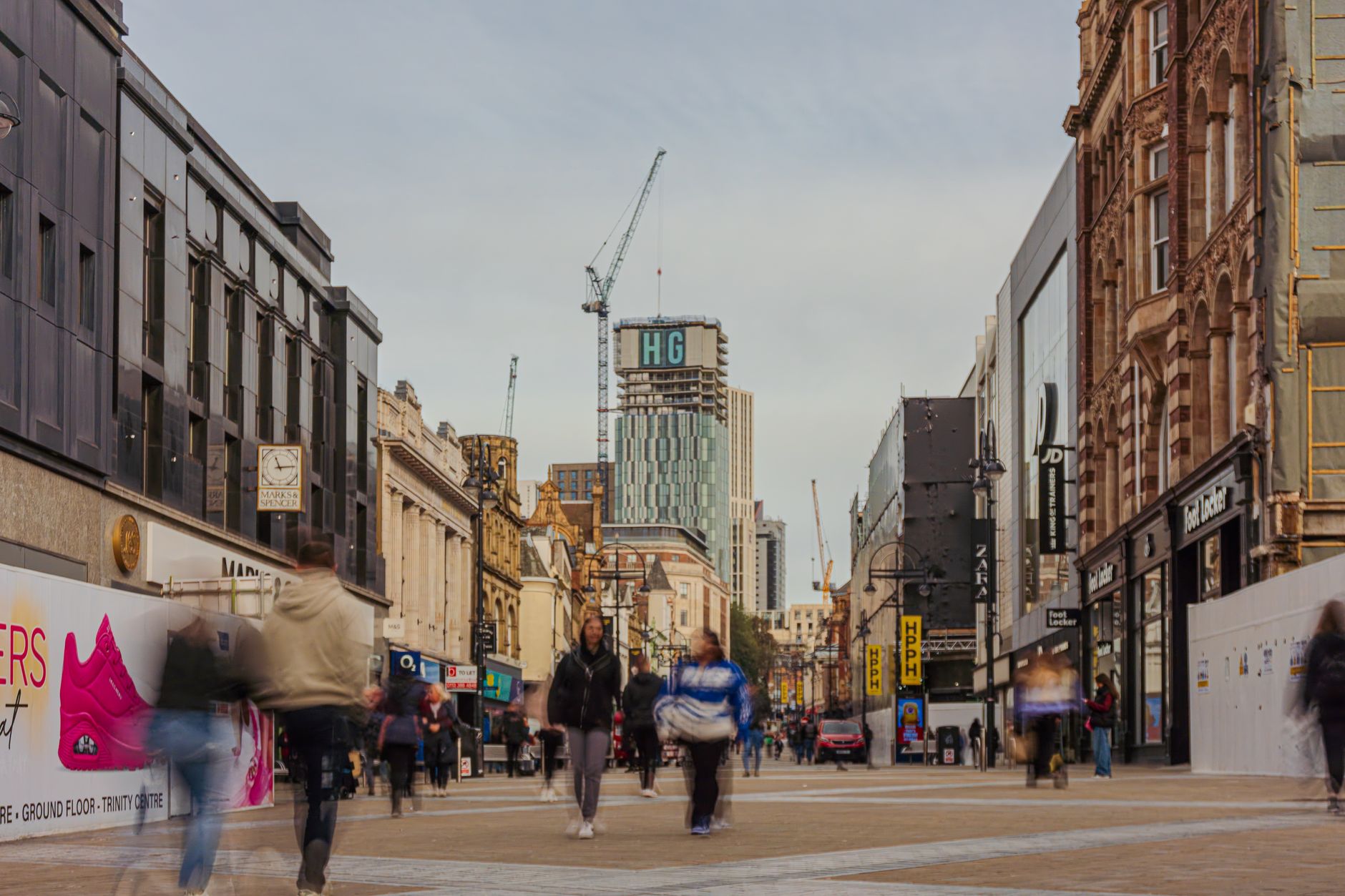
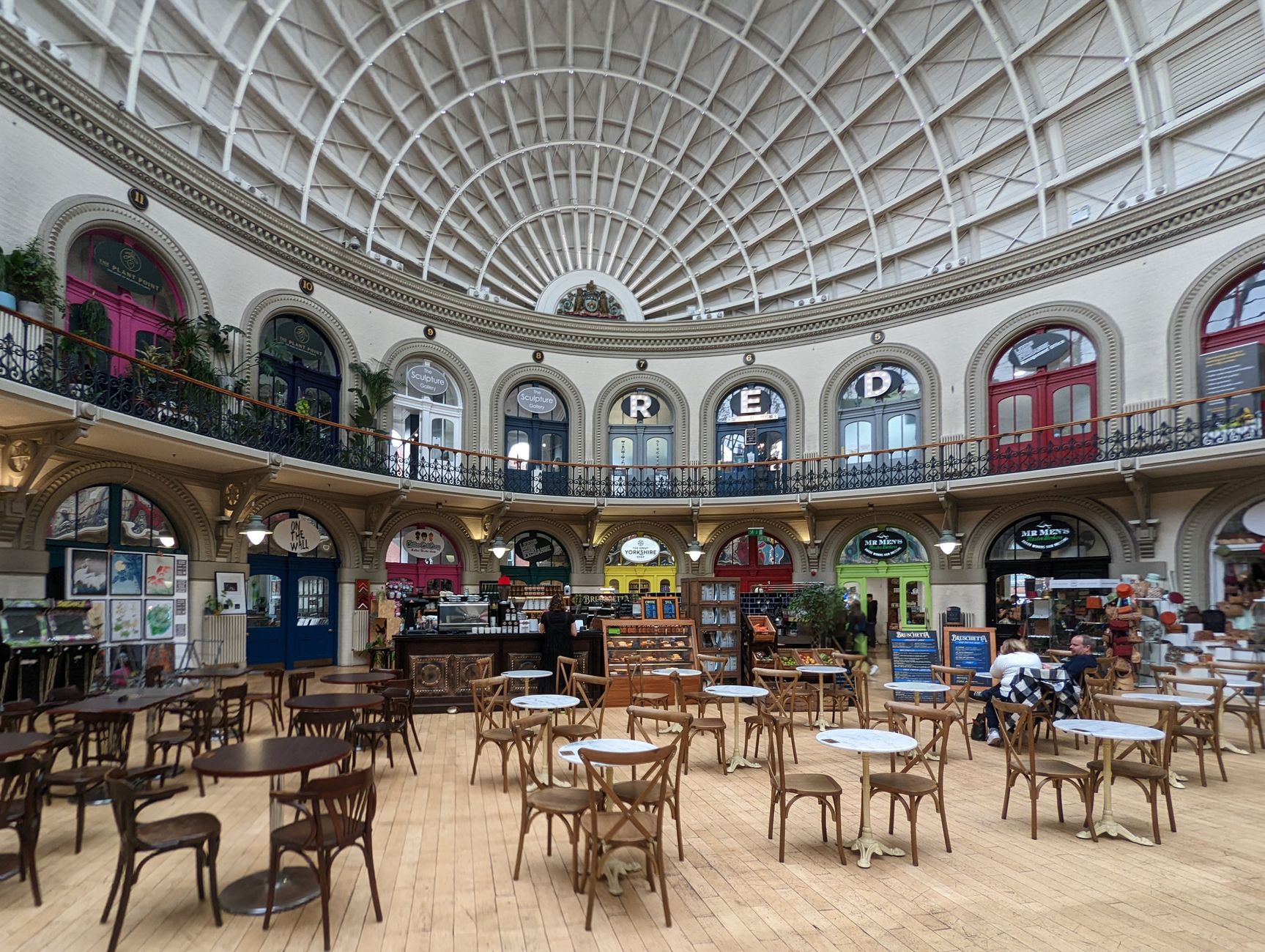
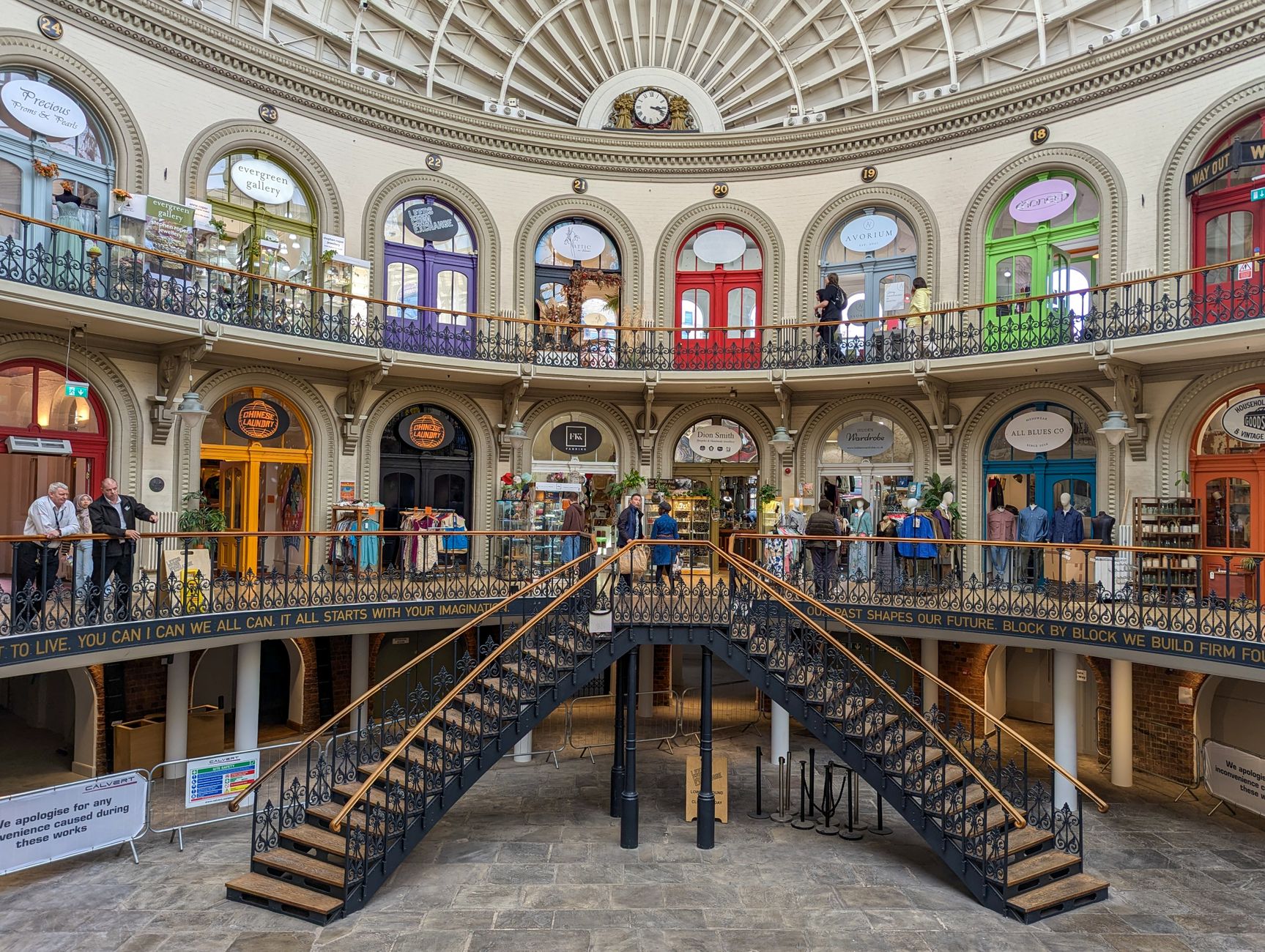
Leeds has a way of catching you off guard. Walk past the Corn Exchange — its elliptical dome designed by Cuthbert Brodrick in the 1860s — and you're looking at a building that spent decades derelict before anyone thought to save it. That pattern runs through the city: industrial ambition, long neglect, then something new taking root in the shell of what was. The cloth mills that drove Leeds to a population of 88,000 during the Industrial Revolution are mostly gone, but their scale and confidence left a skyline worth reading carefully.
This is Yorkshire's largest city, and it carries that weight without much fuss. The Victorian civic architecture is genuinely grand — Town Hall, Grand Theatre, Kirkstall Abbey a short ride from the centre — and the university gives the streets a low-level hum of purpose year-round.
💛 What travellers fall for
People who keep coming back to Leeds tend to mention Kirkstall Abbey unprompted — the Cistercian ruins by the river, founded 1152, where you can walk through roofless nave and cloister without a queue. They also mention the Corn Exchange on a quiet weekday morning, when the light falls through that great dome and the place feels almost ecclesiastical.
Deals in Leeds
Book directly at the provider

How Leeds came to be
Maurice De Gant, Lord of the Manor, laid out a new town at Leeds in 1207, its main street called Brigg Gata — bridge street. By the Domesday survey of 1086, the settlement had perhaps 200 people. The grammar school arrived in 1552; the wool merchant John Harrison replaced it in 1624, secured the 1626 royal charter, and in 1634 built St John's Church, still standing.
The Industrial Revolution transformed the place beyond recognition. Cloth mills drove the population past 88,000. By the early twentieth century, clothing factories employed a quarter of all women in the city, with one plant producing 30,000 suits a week by the 1930s. Leeds became a city in 1893, and its university — rooted in an 1831 medical school and an 1874 science college — opened formally in 1904.
Who and what shaped it
People who shaped it
Landmark buildings
See Leeds in motion
Plan your visit
On the map
When to go
Leeds has an oceanic climate: winters are cold and frequently grey, averaging around 4–5°C, with persistent cloud cover more than hard frost. Summers are mild rather than warm, and rain arrives in any season — late spring and early autumn tend to offer the most workable balance of light and temperature.
Right now
Background & history adapted from Wikipedia (CC BY-SA) · specs from Wikidata (CC0) · weather from Open-Meteo · map data © OpenStreetMap contributors · photos from Wikimedia Commons / Unsplash with per-image credit. No third-party reviews or social posts reproduced.