
Lechfall (Lech Waterfall)
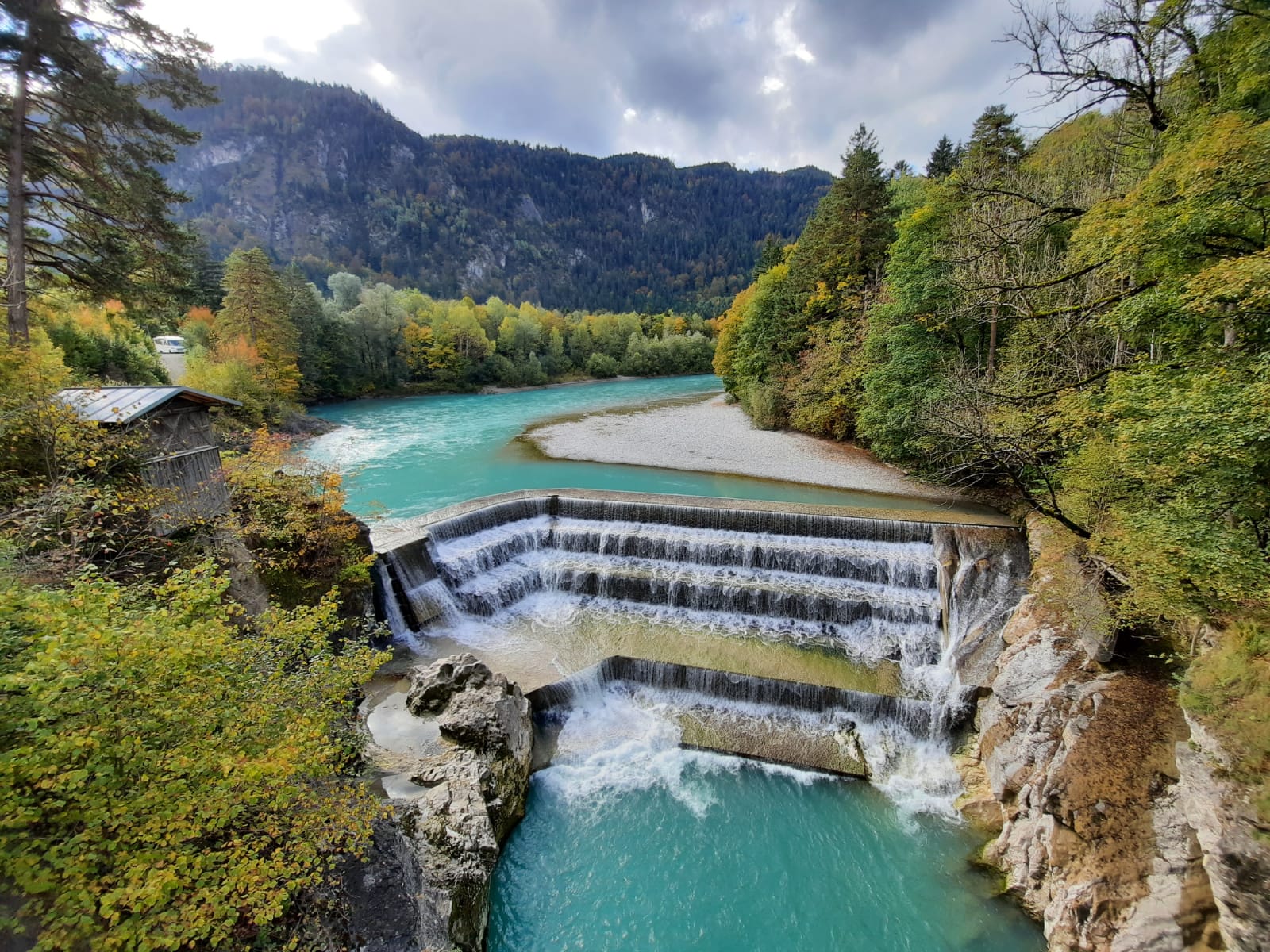
The Lech arrives here milky with glacial minerals, the kind of blue-green that stops you mid-step wondering if the colour is real. It is. The water runs cold year-round — around six degrees on average — and it's that chill, combined with the mineral load carried down from the Alps, that turns the river the shade of old sea glass.
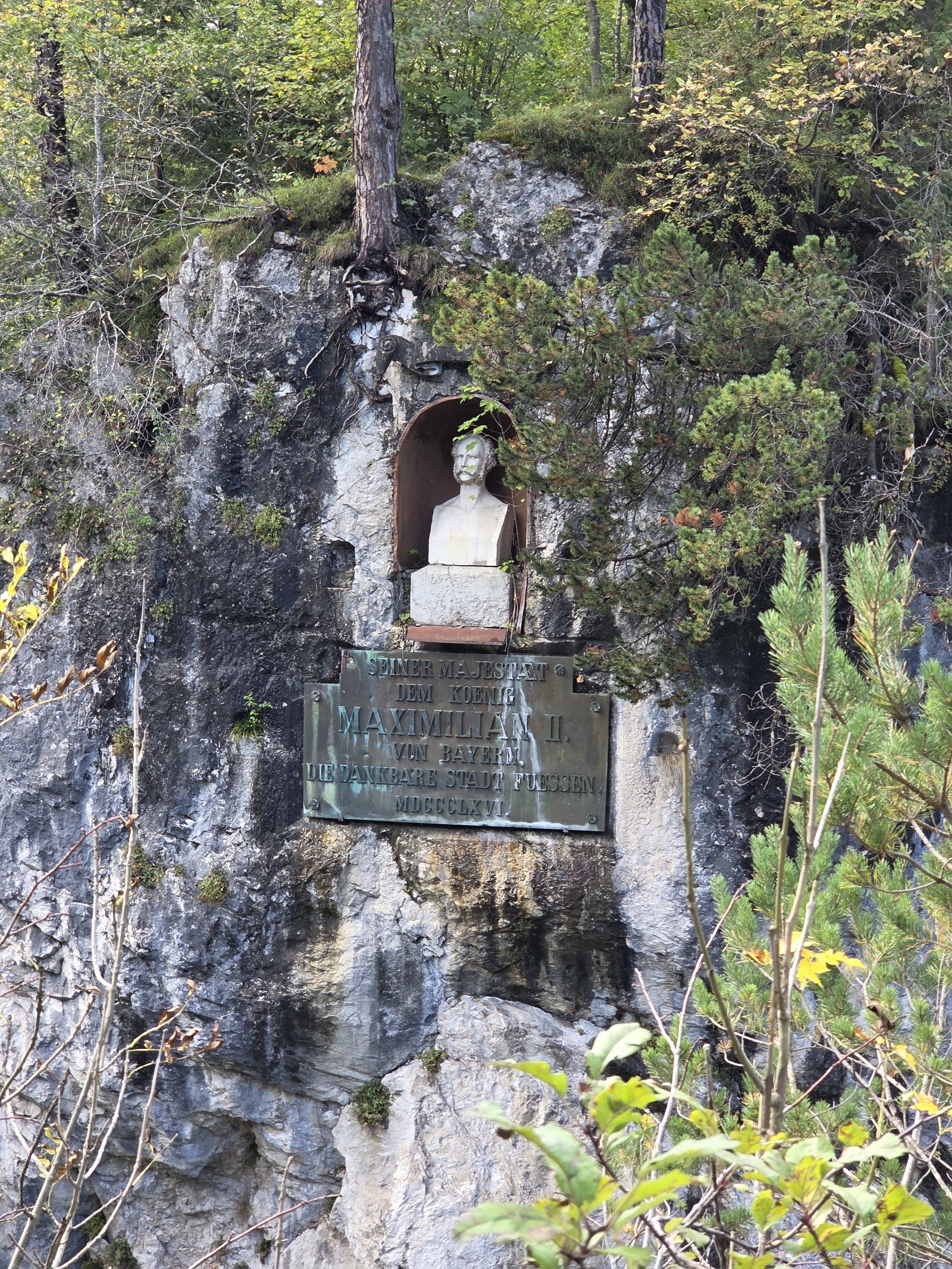
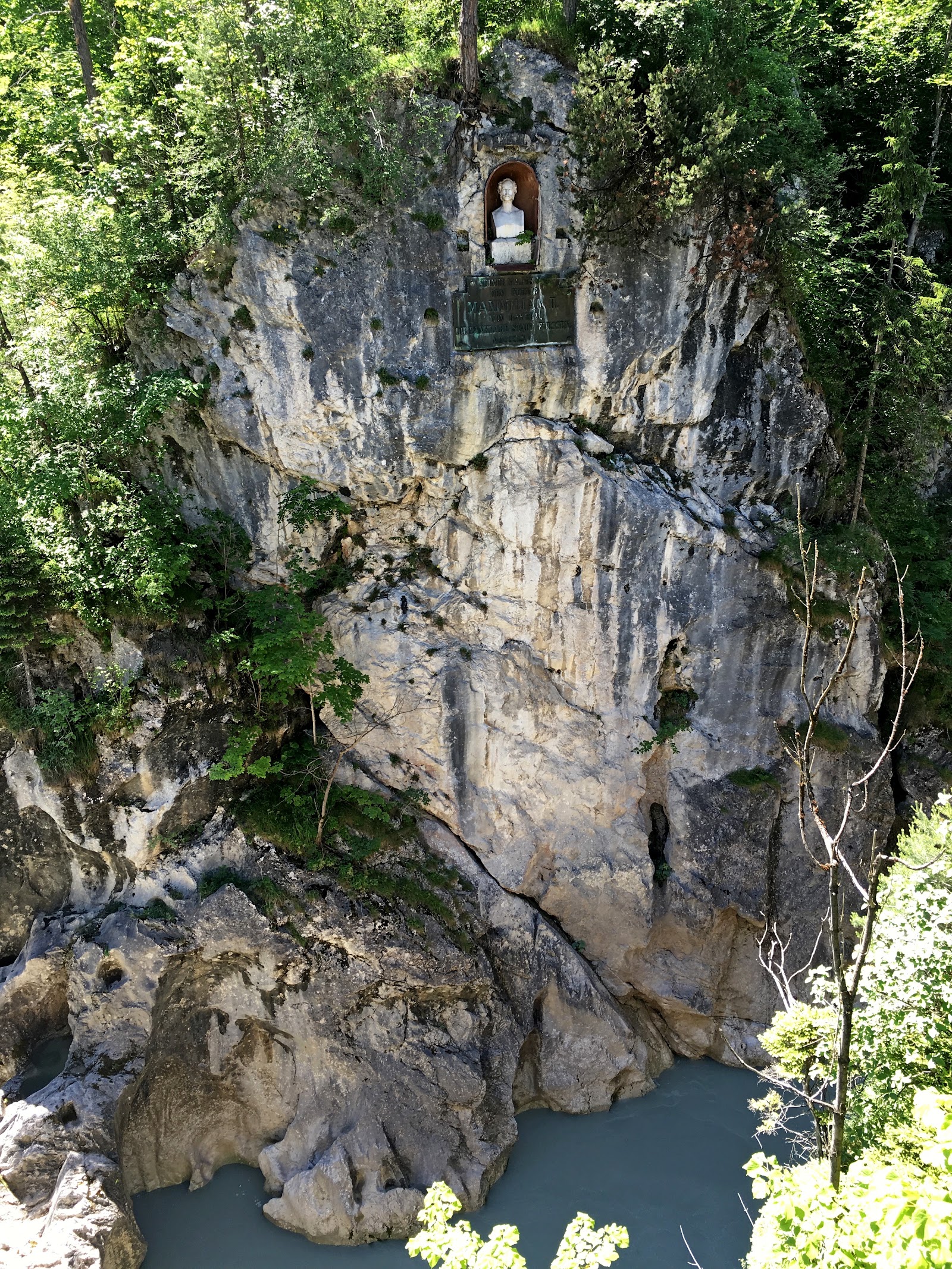
The falls themselves drop twelve metres over five stone steps before disappearing into the Lech Gorge below — the only gorge in the Bavarian Alps where an Alpine-fed river still moves without obstruction. A footbridge named for a Bavarian king spans the chasm, and on the rock beside it, that same king's bust looks out over the water.
💛 What travellers fall for
People who've been more than once tend to time it for spring snowmelt or after a heavy rain, when the volume of water is at its most dramatic. In winter, the falls only partially freeze — the current is too strong for that — and the ice formations around the edges are worth the cold. The 3-kilometre loop from the old town takes well under an hour.
The story behind Lechfall (Lech Waterfall)
What looks like a natural cascade is largely human-made. In 1787, five stone steps were cut into the Lech — partly to drive mills, partly to allow timber to be floated downstream. By the end of the 18th century, an artificial weir had been built to harness the river's power more fully, replacing the natural cataract that had existed before. That weir is the structure you see today.
At the turn of the 20th century, a hydroelectric power station was added and continues to generate electricity. The König-Max-Steg footbridge, built in 1895 and named for King Maximilian of Bavaria — father of Ludwig II — crosses the gorge just above the falls. A bust of Maximilian, set into the Marienfelsen rock nearby, marks the spot he was known to favour.
Good to know
Free parking is available, and the walk from Füssen's centre takes around fifteen minutes. The footbridge and main viewing platforms are wheelchair-accessible. Bring a euro for the restroom. No ticket, no gate — open all hours.
Spring and early autumn bring the highest water volumes — snowmelt and rain push the falls to their most forceful. Summer gives you the clearest turquoise colour when the sun is high and the water calmer. In winter the falls partially freeze at the edges, which has its own stark appeal, though the path can be icy.
Where is Lechfall (Lech Waterfall)?
More tickets & tours for Lechfall (Lech Waterfall)
Book directly at the provider
What travellers say about Lechfall (Lech Waterfall)
This was in the station Fussen; and you can walk around this beautiful town to get here. I went there on 27th May, on my way to the castles. It was bright and sunny that day. But the water was muddy. I don’t know how these other pictures are so turquoise . Have a look at the videos for yourself
I just love this place! The water looks clear and the surrounding snowy mountains just make it look more magical (well it depends on the season when you visit it) I would love to go back in summer!
Surprisingly beautiful and accessible from the city. We loved walking on the bridge and took many photos and videos. The white snow-laden trees made the whole experience magical.
Beautiful falls and a great hike. We found parking just off the road. We had no problem with finding parking. The bridge and trail were not crowded. However, it was a cool day with rain on and off. We only took the trail a short distance, however, had the weather been better we would have happily gone farther. Highly recommend seeing the falls!
After visiting Neuschwanstein Castle we went there and very close to the castle. there is a bridge can take pictures from there and can enjoy the beauty of water fall. there is a also option for short walking and hiking. Really a worth place in this winter. but please take proper winter clothing and shoes!
More of Füssen
Discover where to stay, what to do and the best deals for your trip.
Explore Füssen →More attractions in Füssen
All of Füssen →
Background adapted from Wikipedia (CC BY-SA) · map data © OpenStreetMap contributors · ratings & place photos via Google · other photos with per-image credit. Ticket links may earn us a commission at no extra cost to you.