City

Lecce

Lecce
Photo by AXP Photography on Pexels
Lecce
Photo by AXP Photography on Pexels
Lecce
Photo by AXP Photography on Pexels
Lecce
Photo by AXP Photography on Pexels
Lecce
Photo by AXP Photography on Pexels
Lecce
Photo by merwak. raw on Pexels

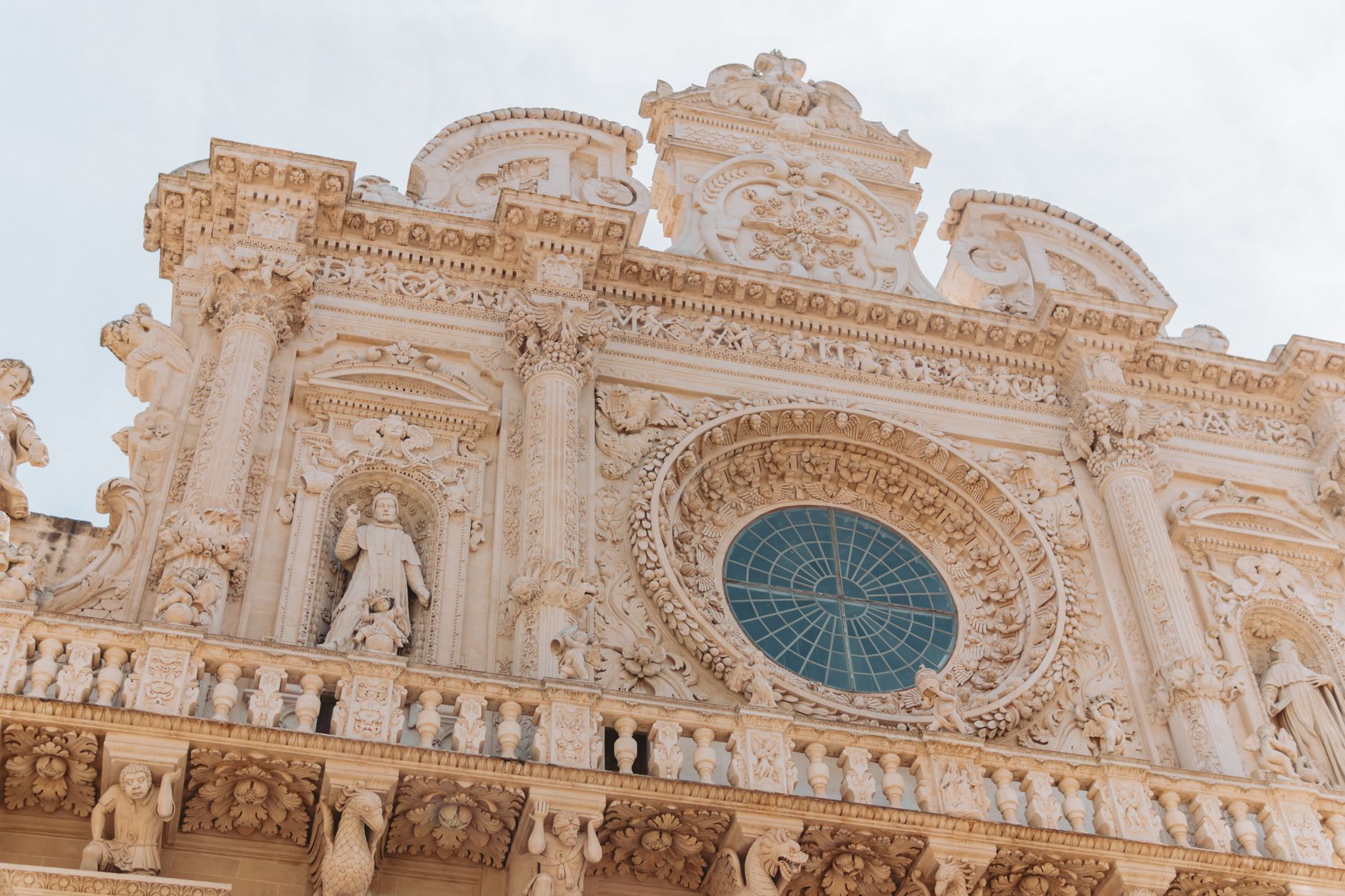
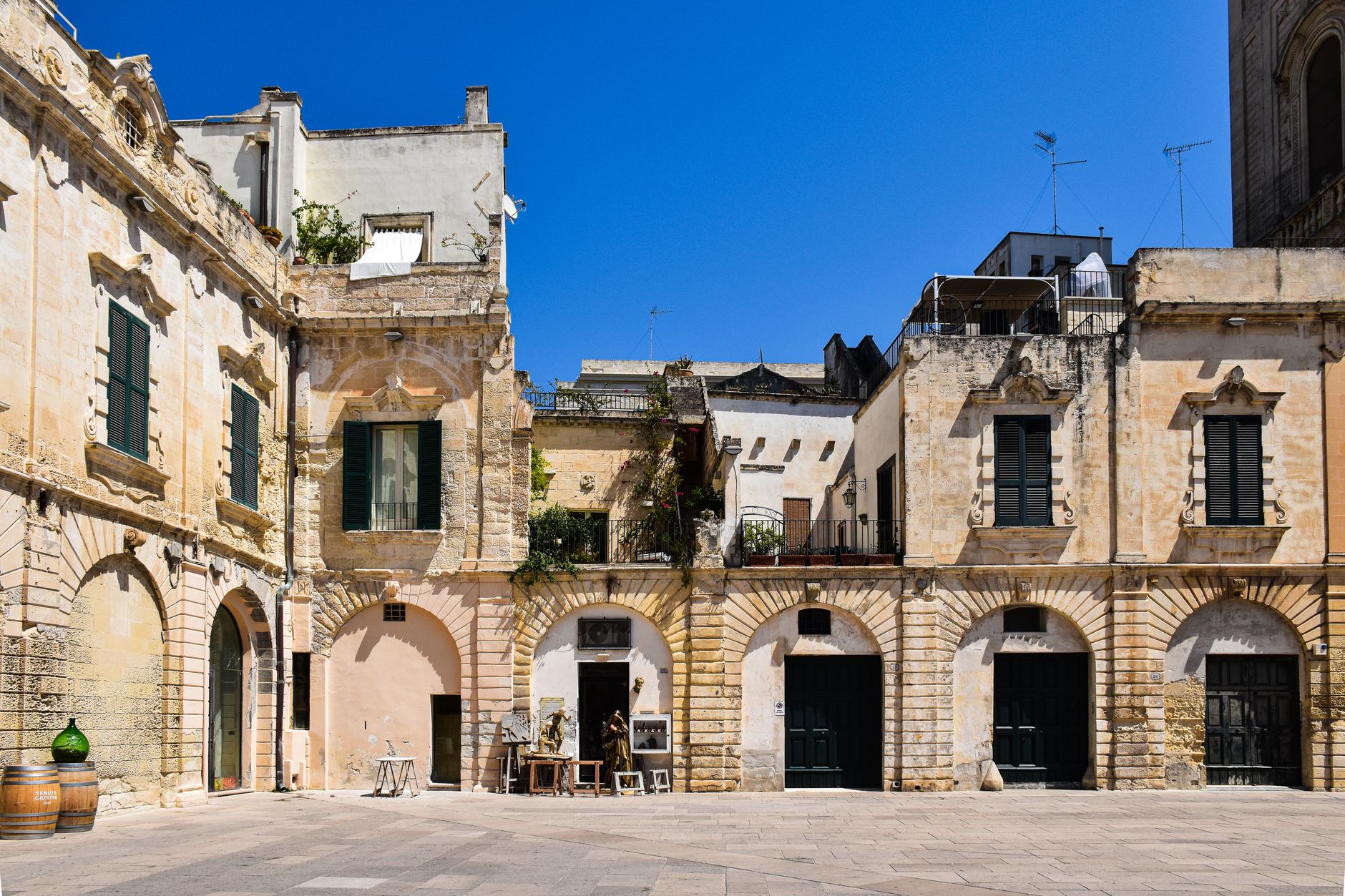
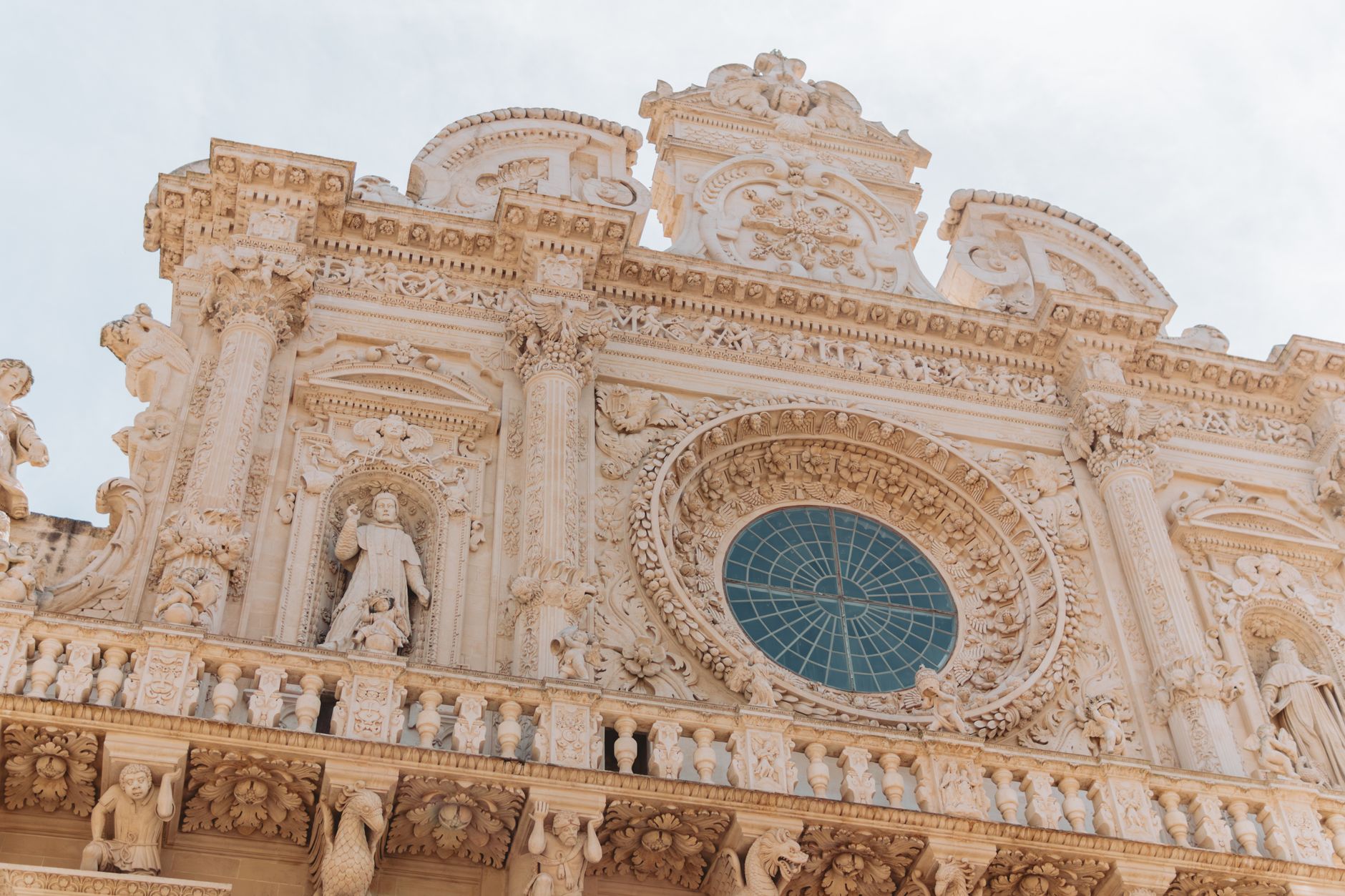
The stone here does something unusual. Pietra leccese — the soft, honey-coloured limestone quarried from the Salentine earth — takes a chisel the way wood takes a knife, and the Baroque architects who arrived in the 1630s used that fact to startling effect. Facades erupt into cherubs, garlands, grotesque masks and half-figures stacked two storeys high, all cut from the same warm block as the walls beneath them.

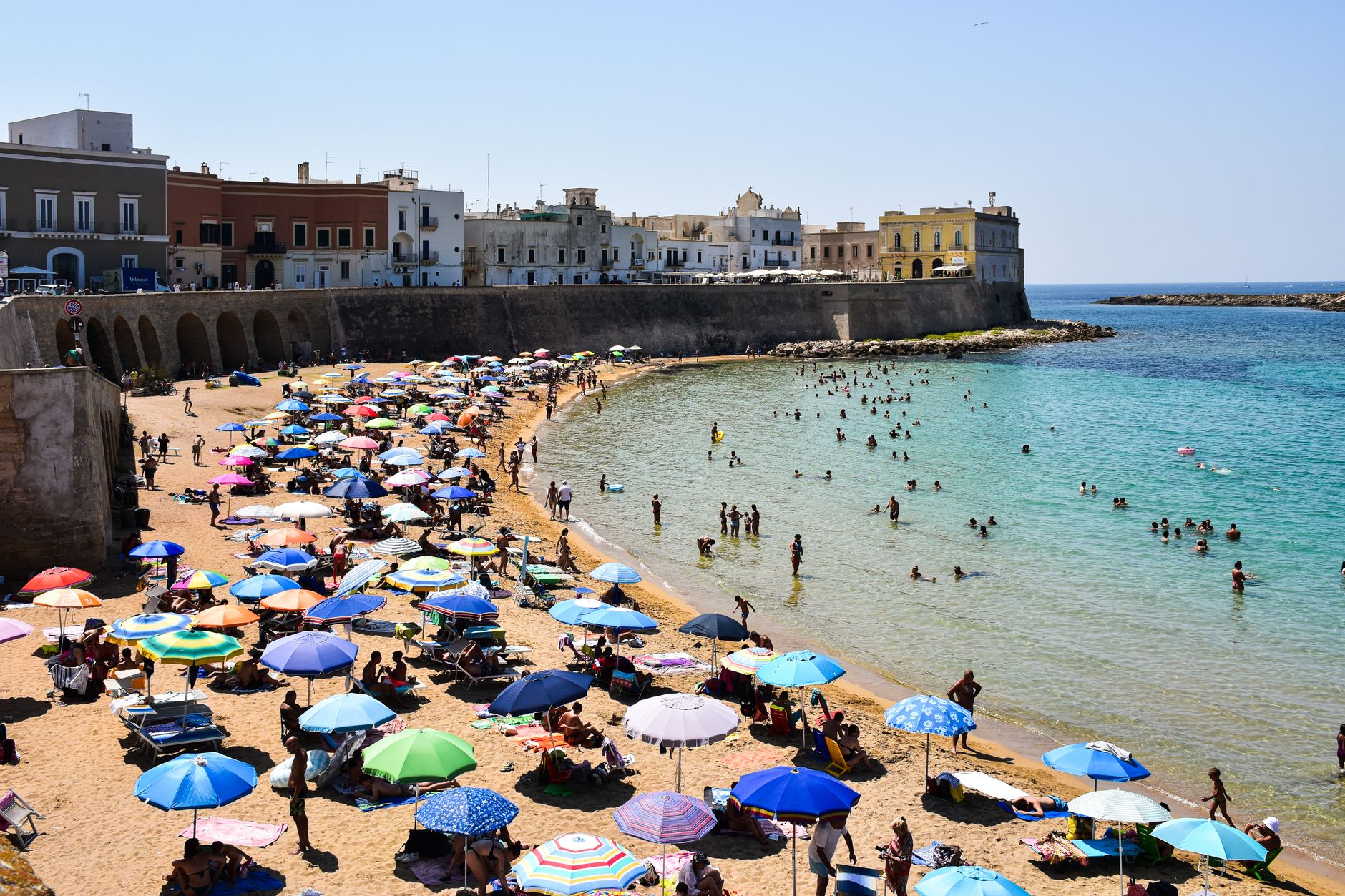
Lecce sits at the heel of Italy's boot, the capital of a long peninsula that tapers into the Adriatic and Ionian seas. The city is compact enough to cover on foot, old enough to have Roman ruins under its piazzas, and sufficiently removed from the main tourist corridor to feel like somewhere people actually live.

💛 What travellers fall for

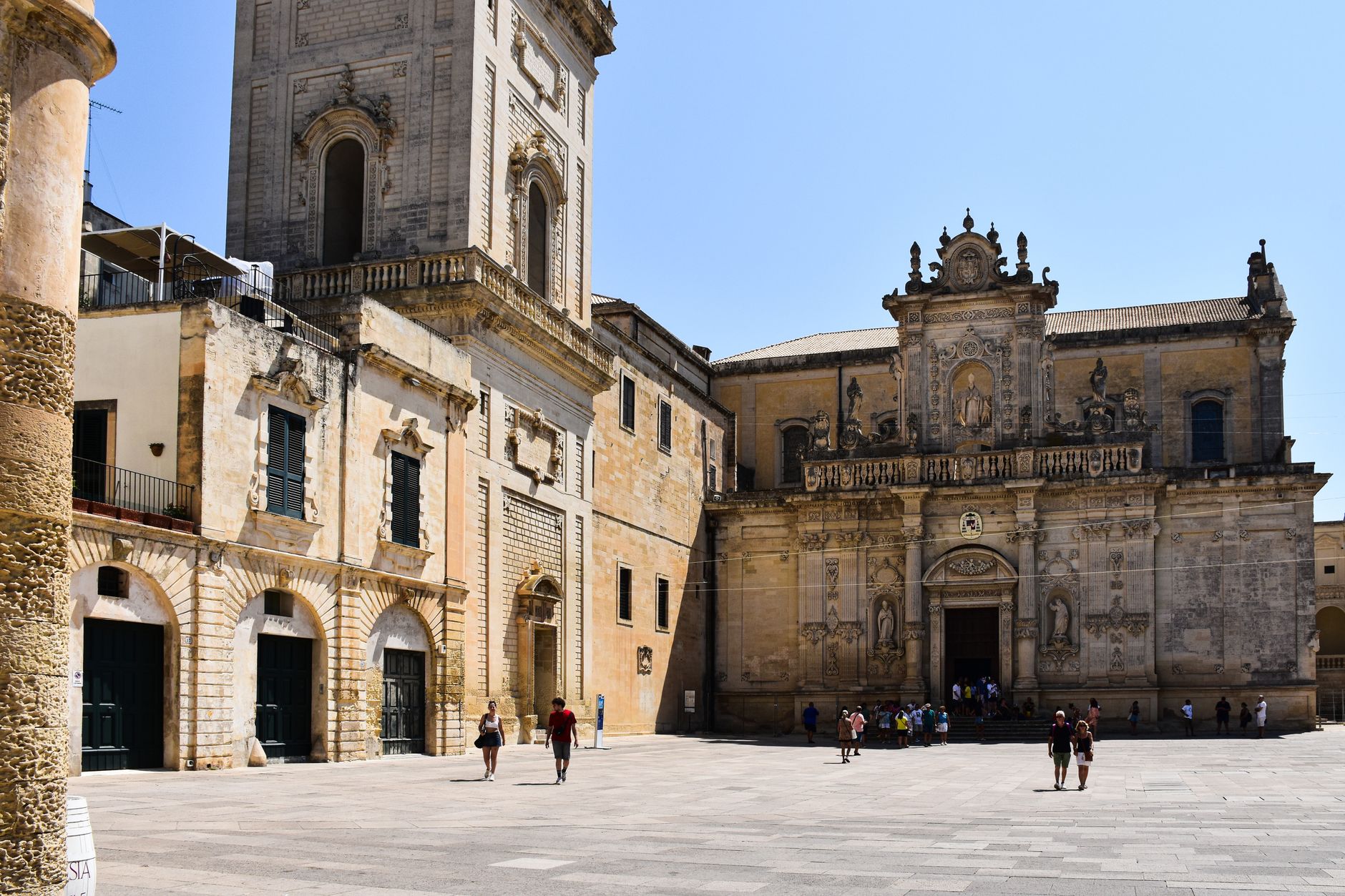
People who come back tend to time a morning around the Roman Theatre on Via Arte della Cartapesta — the small adjacent museum holds theatrical masks and architectural fragments that the amphitheatre crowds never find. Late afternoon, Piazza del Duomo empties of tour groups and the three Baroque facades catch the low light at their best.

Good to know
Lecce is the southern terminus of the Adriatic Railway, with direct trains from Bari, Rome, Milan and Venice — the station opened in 1866 and remains the practical gateway. Spring and early autumn are the easiest seasons for walking the city. July and August are hot and considerably more crowded.

Deals in Lecce

Book directly at the provider
The story

How Lecce came to be

The Messapii were here first, settling the area around the 8th century BCE. Rome absorbed the town as Lupiae, and under Hadrian it gained a theatre, an amphitheatre, and a road connecting it to the port at San Cataldo. The Normans arrived in the 11th century — Roberto il Guiscardo established the County of Lecce — and Tancred of Sicily founded the Church of San Niccolò and Cataldo in 1180, a building that still stands.

The city's defining chapter opened in 1539, when Charles V commissioned a new defensive circuit and Lecce became the capital of Puglia. Then, from the 1630s onward, a generation of local architects — Giuseppe Zimbalo above all, alongside Gabriele Riccardi, Cesare Penna and Francesco Grimaldi — remade the city centre in pietra leccese Baroque. The Cathedral, Santa Croce, Santa Irene, San Matteo: most of what stops you in the street dates to those decades.

People & landmarks

Who and what shaped it

People who shaped it

Giuseppe Zimbalo
Baroque architect who designed the Cathedral of Sant'Oronzo (1659–1682) and built the Celestine Convent (1549–1695).
Gabriele Riccardi
Architect who designed the courtyard of the Celestine Convent and contributed to the lower façade of Santa Croce.
Francesco Grimaldi
Architect of the Santa Irene church, commissioned in 1591 by the Theatines.
Cesare Penna
Completed the upper portion of the Basilica di Santa Croce.
Sant'Oronzo
Patron saint of Lecce, credited with saving the city from plague in 1566.

Landmark buildings

Lecce Cathedral (Cathedral of Sant'Oronzo)
Originally built 1144, totally restored 1659–1670 by Giuseppe Zimbalo; 70-metre bell tower with octagonal loggia completed 1682.
Basilica di Santa Croce
Construction spanned 1549–1695 on the site of a 14th-century monastery; considered the pinnacle of Barocco Leccese style.
Church of San Niccolò and Cataldo
Founded by Tancred of Sicily in 1180; façade rebuilt 1716 with statues while maintaining the original Romanesque portal.
Santa Irene
Commissioned 1591 by the Theatines, dedicated to Saint Irene; completed in 1639 after nearly 50 years of construction.
San Matteo
Built 1667 on a compact corner plot; curving façade incorporates innovations of Francesco Borromini.
Roman Amphitheatre
Uncovered during Banca d'Italia foundation excavation; properly excavated after 1945, approximately half now exposed.
Roman Theatre
2nd-century theatre on Via Arte della Cartapesta; partially excavated with visible orchestra, seating tiers, and adjacent museum of theatrical finds.
Piazza del Duomo
Three sides of unified Baroque composition built mid-17th century in pietra leccese: Cathedral, Bishop's Palace, and Seminary.
Palazzo del Seminario
Built 1694–1709 in Lecce Baroque style; became the Diocesan Museum of Sacred Art and library in 2004.
Porta Rudiae
Rebuilt 1703 with busts of Lecce's founders and patron Saint Orontius.
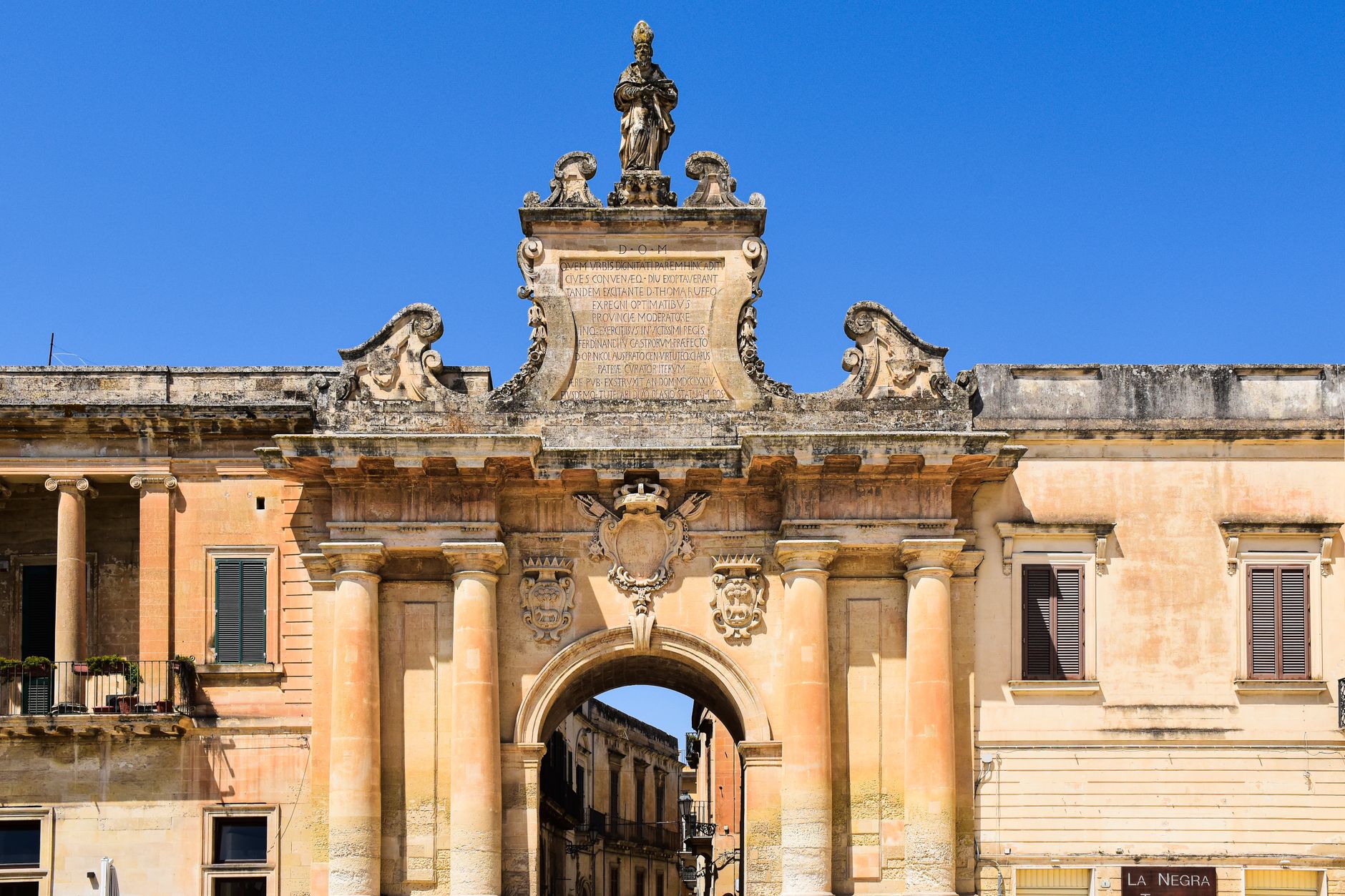
Porta San Biagio
Rebuild completed 1774; features coat of arms of King Ferdinand IV and sculpture of San Biagio.
Porta Napoli
Rebuilt 1548 to commemorate war successes in honor of King Charles V.
Piazza Sant'Oronzo
Central plaza containing a Roman column; vibrant heart of the city.
Practical

Plan your visit

On the map

When to go

Summers are long, dry and genuinely hot — street-walking at midday in July is uncomfortable. Spring (April to early June) and autumn (September to October) bring mild temperatures and clear light that suits the stone well; winters are short and rarely severe.

Right now

☀️
25°C
Clear
Sat
38°
25°
Sun
38°
25°
Mon
40°
25°
Tue
33°
25°
Weather data: Open-Meteo

Background & history adapted from Wikipedia (CC BY-SA) · specs from Wikidata (CC0) · weather from Open-Meteo · map data © OpenStreetMap contributors · photos from Wikimedia Commons / Unsplash with per-image credit. No third-party reviews or social posts reproduced.

Top