
Le Suquet (Old Town)
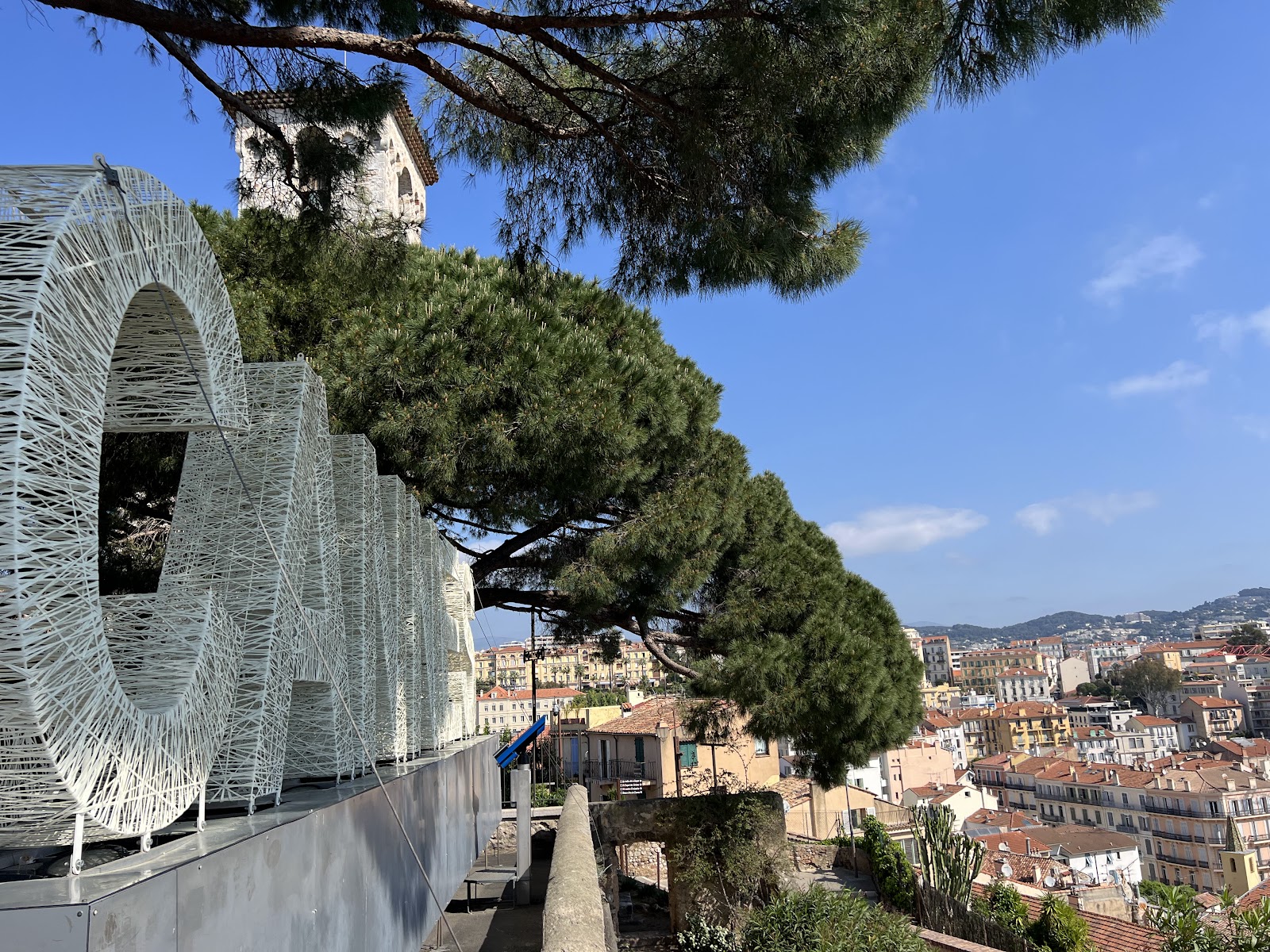
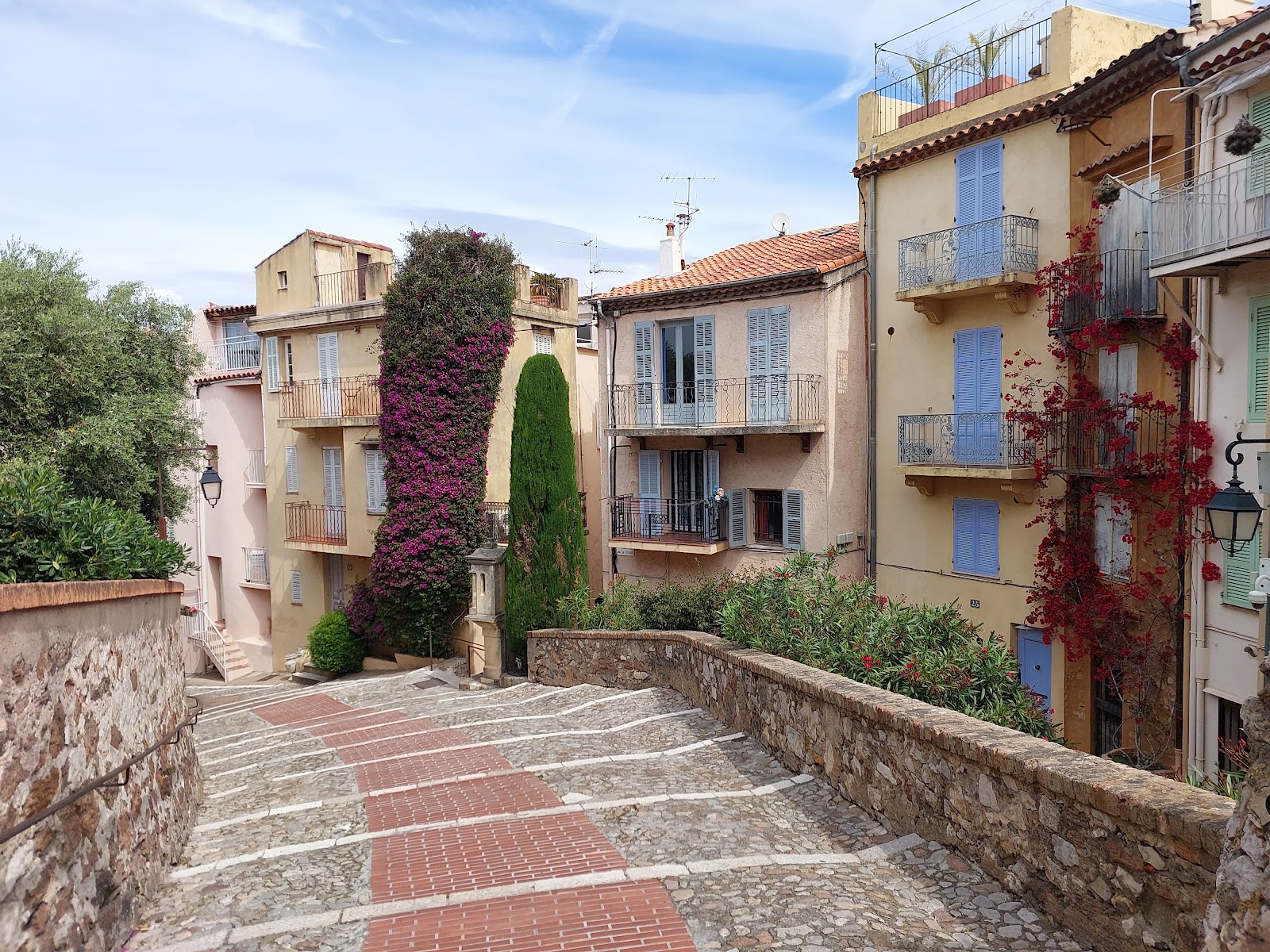
Before Cannes was a film festival or a promenade, it was Le Suquet — a fishing village climbing a 66-metre hill above the bay, its streets laid out at least four centuries ago. Rue Saint-Antoine, the oldest lane in the city, still winds upward between restaurant façades strung with bougainvillea, and the view from the top takes in the whole arc of the coast.
The quarter holds a medieval castle, a church that took 121 years to build, a former mortuary turned contemporary art space, and the oldest restaurant in Cannes, a Provençal inn called Da Bouttau that opened in 1860. The Croisette is visible from here, but feels distant.

💛 What travellers fall for
People who come back tend to time a July evening for the Nuits musicales du Suquet, when the square in front of Notre-Dame d'Espérance fills with a summer concert crowd — locals included. They also note the electric shuttle, the Navette du Suquet, running every 25 minutes for €0.90 all day, which saves the climb for when you actually want it.
The story behind Le Suquet (Old Town)
The hill was a Roman camp before it was anything else, occupied for five centuries. In the 12th century, monks built a castle on the summit — the structure that now houses the Musée de la Castre, whose art collection was donated by Baron Lycklama in 1877. Construction of the Church of Notre-Dame d'Espérance began in 1521 but stalled repeatedly — wars, a plague epidemic — and wasn't completed until 1642, with the Renaissance bell tower finished fifteen years earlier, in 1627.
By the early 19th century, when British and Russian visitors began arriving on the Côte d'Azur for the winter season, Cannes was still essentially this: Le Suquet, a quiet fishing village. The rest of the city grew out from the hill's base.
Good to know
The Navette du Suquet shuttle runs 9am–7pm from the Hôtel de Ville and costs €0.90 for the day. Alternatively, walk west from the train station toward the old port and follow signs up via Rue Saint-Antoine. The streets are free to explore; budget €7 for the Musée de la Castre, which closes Mondays.
Summer brings warm evenings well-suited to the uphill walk, though the exposed hilltop can be sharp in winter winds. Spring and autumn offer the clearest light and the thinnest crowds.
Where is Le Suquet (Old Town)?
More tickets & tours for Le Suquet (Old Town)
Book directly at the provider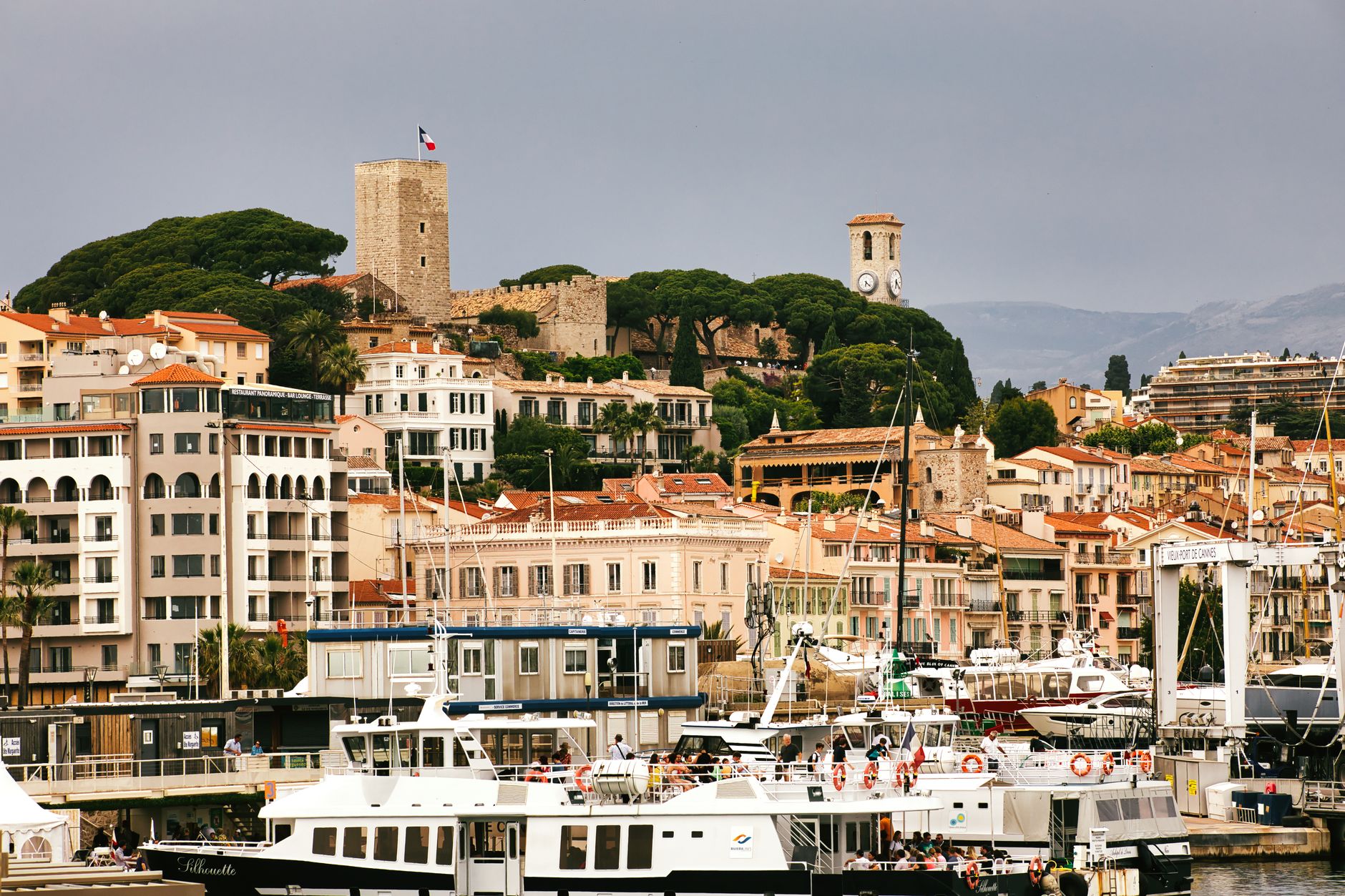
What travellers say about Le Suquet (Old Town)
This part of the city is definitely worth a visit, though you should be prepared for a fair number of stairs. The view from the top is spectacular, and along the old winding streets you’ll even find hidden gems, including some friendly cats.
Nice landmark overlooking Canne! It was a little bit tough with a stroller but it is possible 😂
Nice view with spending around 15 minutes.
Beautiful view of Cannes!! I went there with a tourist little train near the Casino, it was so worth it. A must see!
After a good little jog uphill, one gets rewarded with a stunning view over Cannes. The surroundings really gives one a mediterranean feeling. I enjoy this especially because it gives you a break from all the luxus yachts and film stuff, to give you a different perspective over Cannes - and perhaps the people and nature locally.
More of Cannes
Discover where to stay, what to do and the best deals for your trip.
Explore Cannes →More attractions in Cannes
All of Cannes →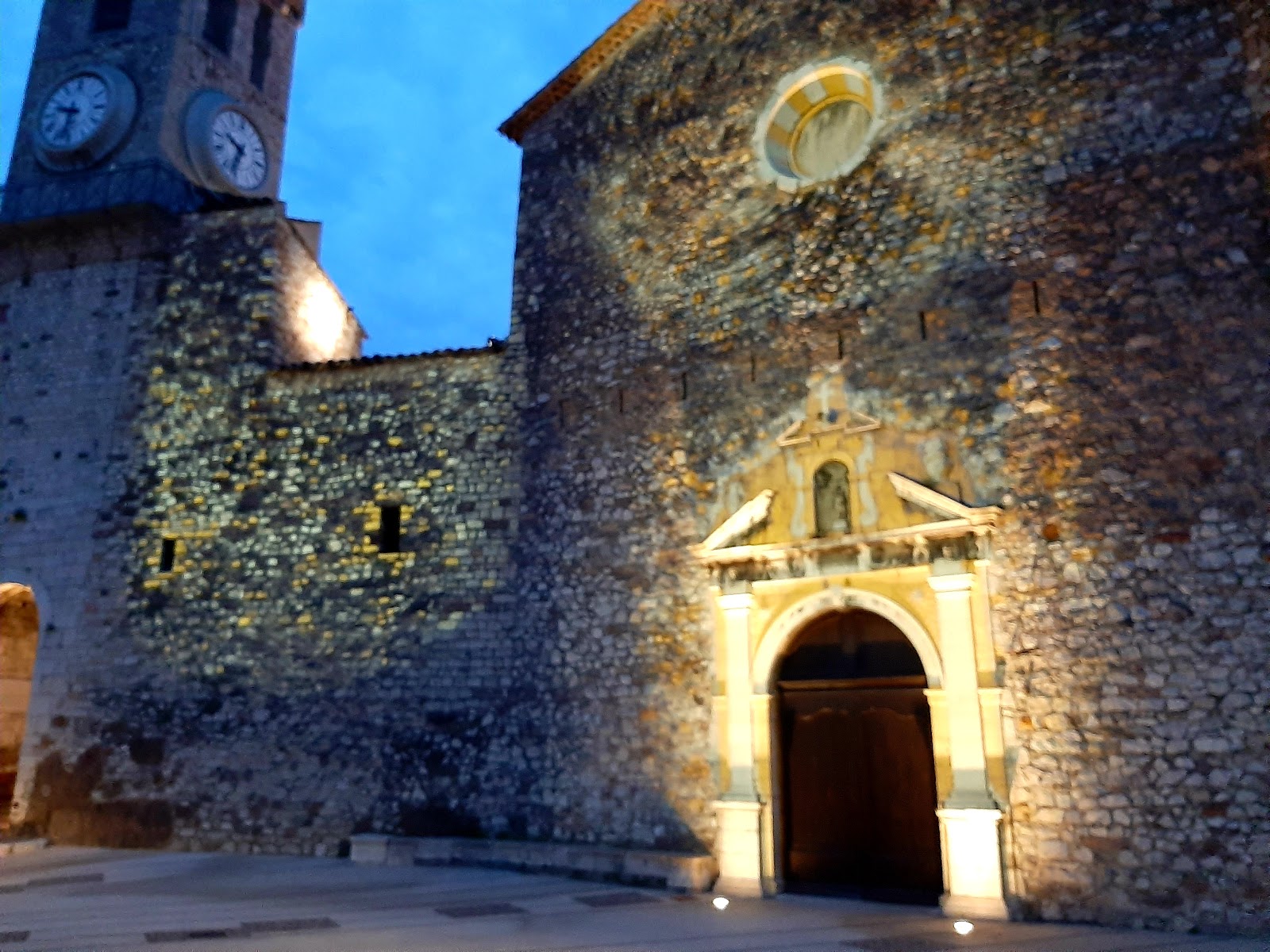

Background adapted from Wikipedia (CC BY-SA) · map data © OpenStreetMap contributors · ratings & place photos via Google · other photos with per-image credit. Ticket links may earn us a commission at no extra cost to you.