
Le Panier (historic quarter)
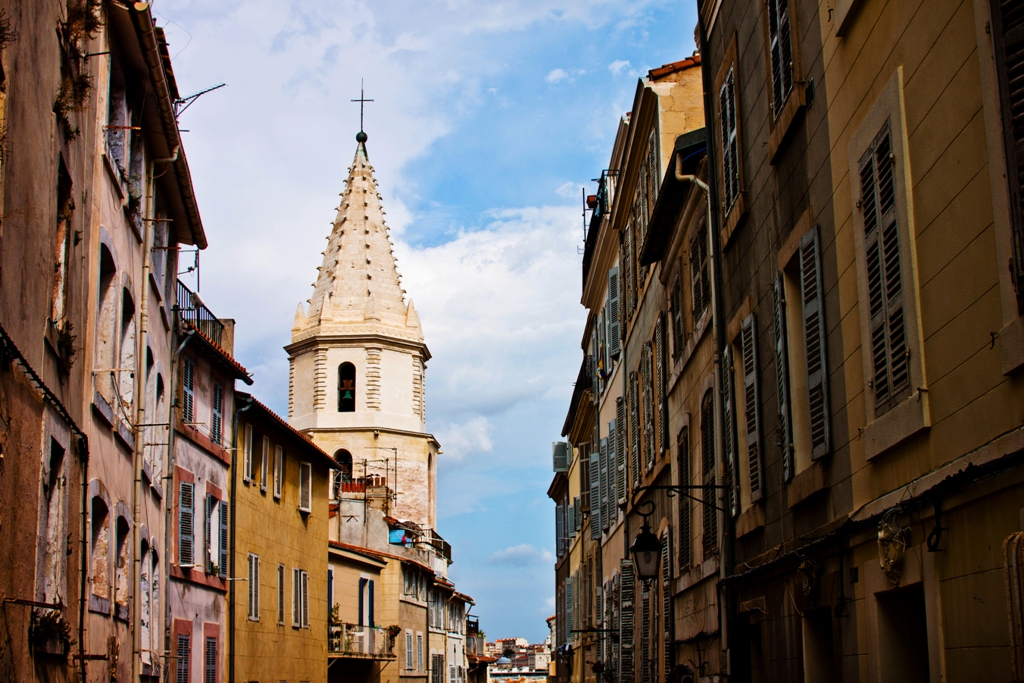
Le Panier sits on the northern hill above the Old Port, on ground that Greeks from Phocaea first settled around 600 BC — making it the oldest inhabited quarter in France. The name itself comes from a 17th-century inn, Le Logis du Panier, whose sign gave the whole neighbourhood its identity.
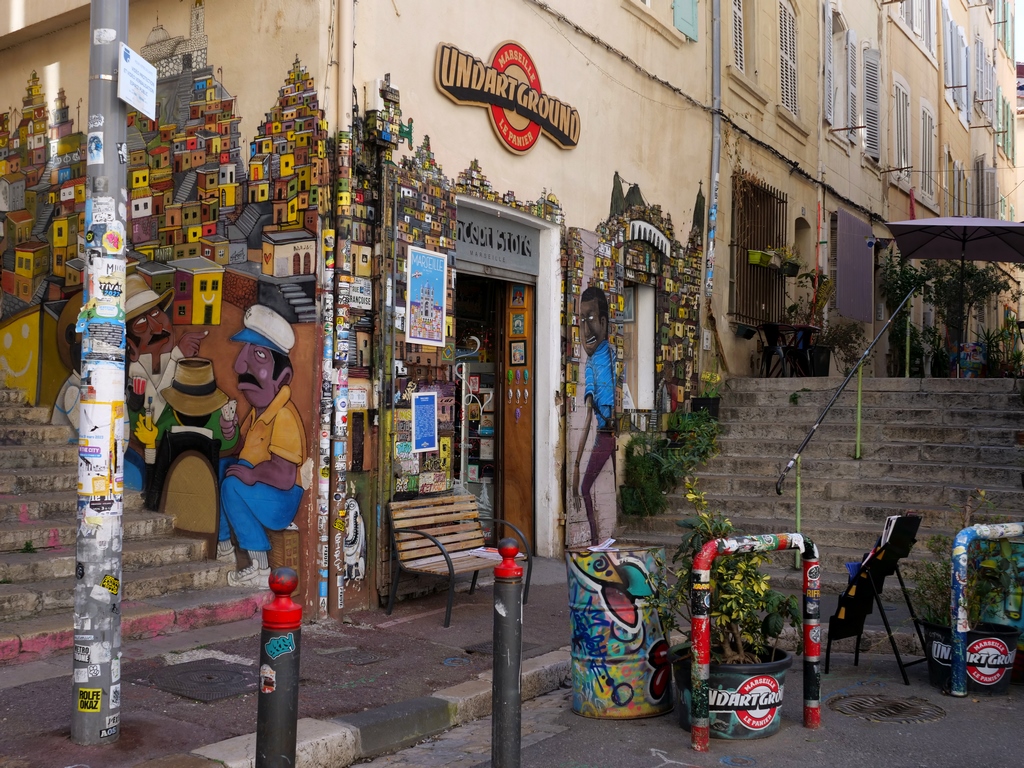
The streets are narrow and steep, the walls are plastered in street art, and the buildings tell radically different stories depending on which century built them. A Renaissance merchant's house here, a baroque almshouse there, and between them the ordinary life of a quarter that has lurched from poverty to destruction to slow, deliberate reinvention.
💛 What travellers fall for
People who keep coming back tend to anchor their wandering at Place de Lenche — a square built over the ancient Greek agora where you can look straight down to the port, just as citizens did two millennia ago. From there, every wrong turn is a reasonable one. Bring cash for the Vieille Charité entrance; the courtyard alone is worth it.
The story behind Le Panier (historic quarter)
Greeks from Phocaea founded Massalia here around 600 BC, and Le Panier has been continuously inhabited ever since — a claim almost no other European neighbourhood can make. In the 12th century a charitable fraternity founded a hospital on the hill; by 1670 that impulse had become the Vieille Charité, built to Pierre Puget's plans to house the city's poor. The Maison Diamantée, raised by Spanish and Italian merchants in the 16th century and listed as a Historic Monument in 1925, survived by luck — between 22 and 24 January 1943, German forces destroyed 1,500 buildings in the quarter, erasing centuries of fabric in two days.
What remained was patched and left to decline for decades. Then, around the turn of the 21st century, a sustained renovation brought artists, studios and independent shops into the surviving shells — not erasure, but a slow change of use that left the bones visible.
Good to know
Tram T2 or T3 to Sadi Carnot is the easiest approach; the Petit Train runs if the slopes put you off. Morning is quieter and the light on the Maison Diamantée façade is sharper. Individual monuments charge separate admission — check before you go.
Summer afternoons on the hill can be genuinely hot, though a port breeze usually arrives by late afternoon. Winter is mild but the Mistral wind can turn sharp and fast — up to 100 kph — so a layer is worth carrying even in March.
Where is Le Panier (historic quarter)?
More tickets & tours for Le Panier (historic quarter)
Book directly at the provider
What travellers say about Le Panier (historic quarter)
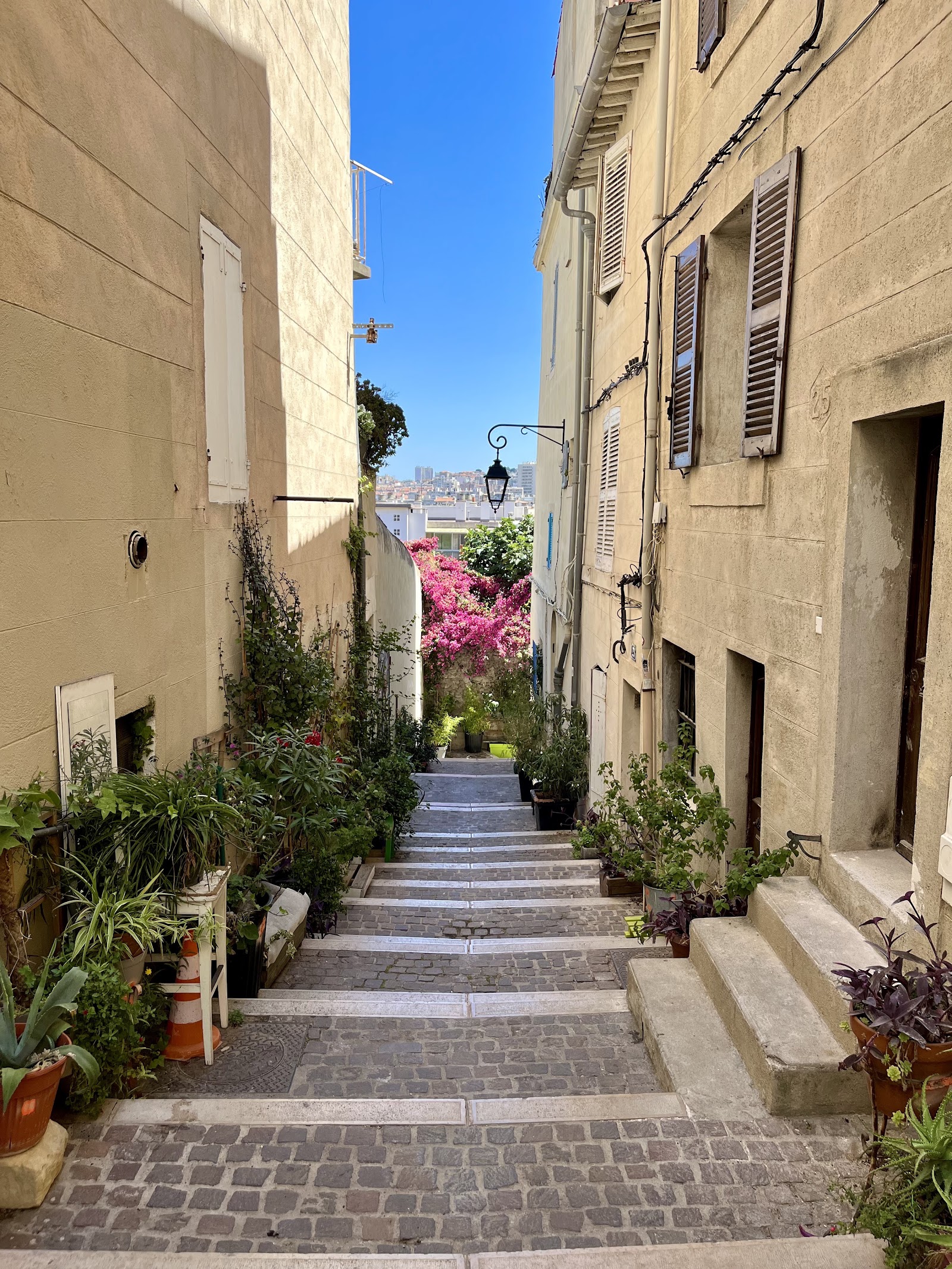
I loved the urban artwork scattered throughout this historic district of Marseille. There is something uniquely beautiful about the contrast between the vibrant street art and the neighborhood's centuries old character. Colorful murals stand alongside cobblestone streets and historic buildings, creating a blend of old and new that feels distinctly Marseille. If there is one place in the city where you should simply wander without a plan, this is it. The district is filled with stairways, narrow lanes, and hidden alleys that invite exploration. Around every corner, there is another piece of artwork, charming facade, or unexpected view waiting to be discovered. It is easy to lose track of time as you soak in the atmosphere and appreciate the way contemporary creativity has become woven into the historic landscape. The area is also home to plenty of excellent cafes, restaurants, and local shops. During the day, the streets are lively with both visitors and locals, adding to the neighborhood's energy and charm. This is one of Marseille's most captivating districts.
Amazing area with typical France vibe, art and good weather. Perfect tourist attraction and iconic place. If you like the street arts and graffiti this is your place.
It's a really cozy place. If you're ready to climb the stairs, please start. There was a lot of graffiti, but unfortunately, most of the shops closed early. Wandering through the maze-like alleys, you lose track of time. Old Town is the historic center of Marseille, giving it the feeling of a village where colorful appearances, the charm of the old world, and modern artistic sensibilities harmonize. I highly recommend you visit at least once!
I loved getting lost in Le Panier. The area has this mix of old houses, bright colors, and street art that makes every corner feel different. I wandered around without following a map and kept finding little surprises — a quiet square, a tiny shop, a staircase covered in murals. It feels lived-in and authentic, not staged for tourists. The atmosphere is relaxed and a bit bohemian, and it’s one of the places where Marseille’s personality really shows.
Le Panier is Marseille’s oldest and most picturesque neighborhood — a maze of narrow streets, colorful facades, and artistic charm. Once a working-class district, it’s now a creative hub filled with boutiques, art studios, and cozy cafés tucked between pastel-painted buildings. Street art decorates nearly every corner, adding a vibrant contrast to its ancient architecture. Highlights include La Vieille Charité, a stunning 17th-century monument, and the panoramic views over the port. Wandering through Le Panier feels like stepping into a lively open-air gallery — authentic, bohemian, and full of southern French spirit
More of Marseille
Discover where to stay, what to do and the best deals for your trip.
Explore Marseille →More attractions in Marseille
All of Marseille →
Background adapted from Wikipedia (CC BY-SA) · map data © OpenStreetMap contributors · ratings & place photos via Google · other photos with per-image credit. Ticket links may earn us a commission at no extra cost to you.