
Le Mont-Saint-Michel
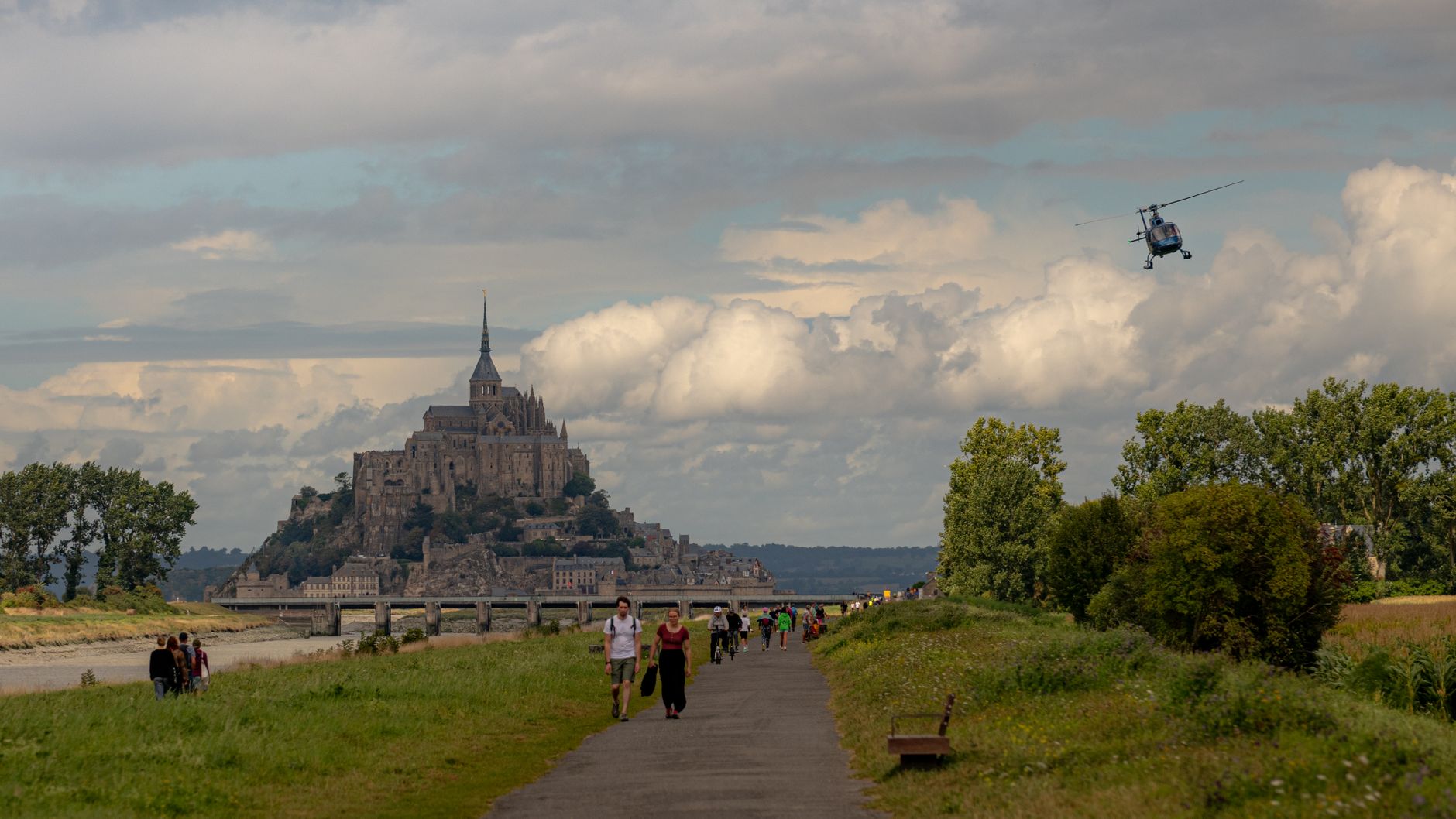
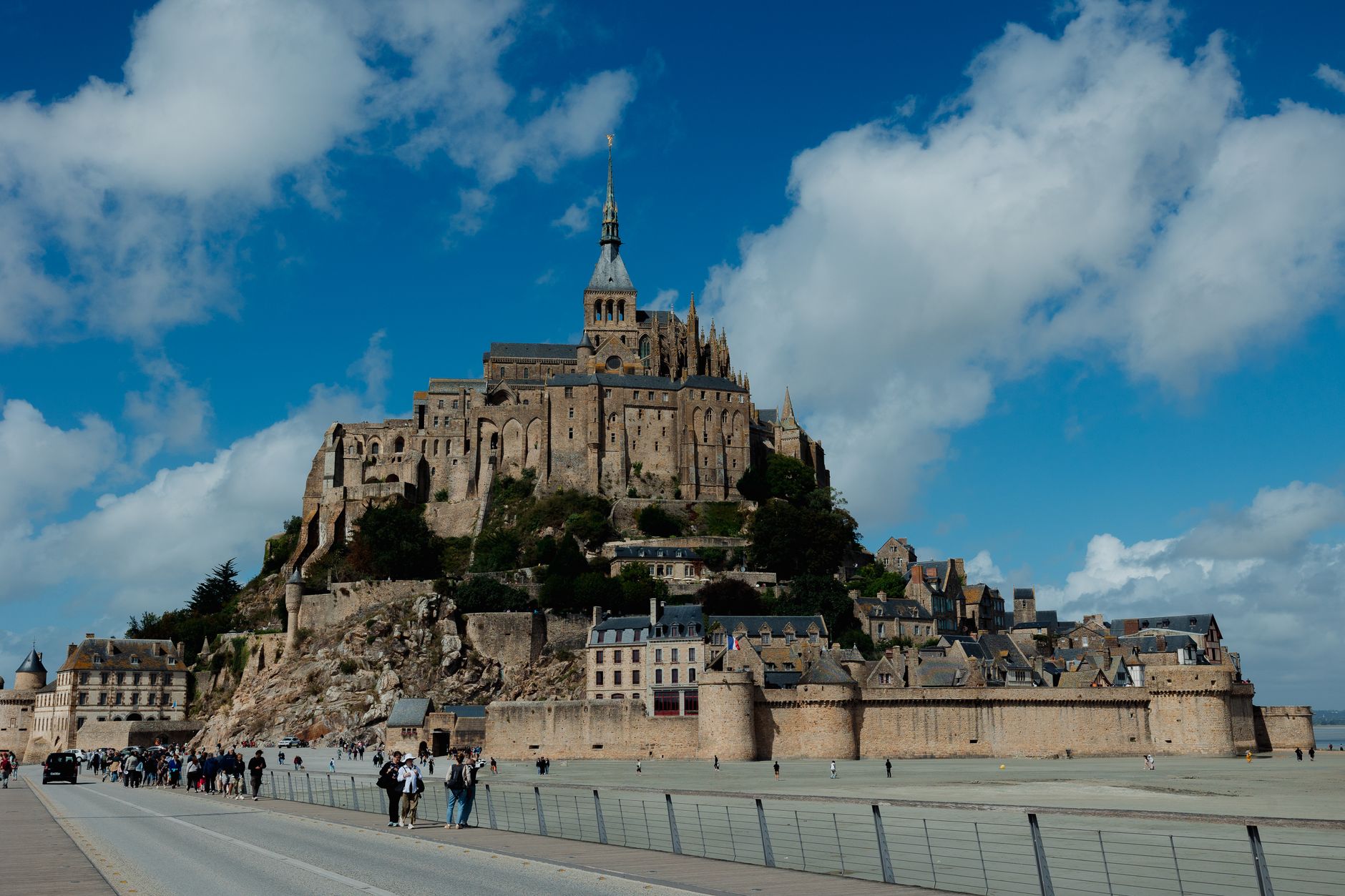
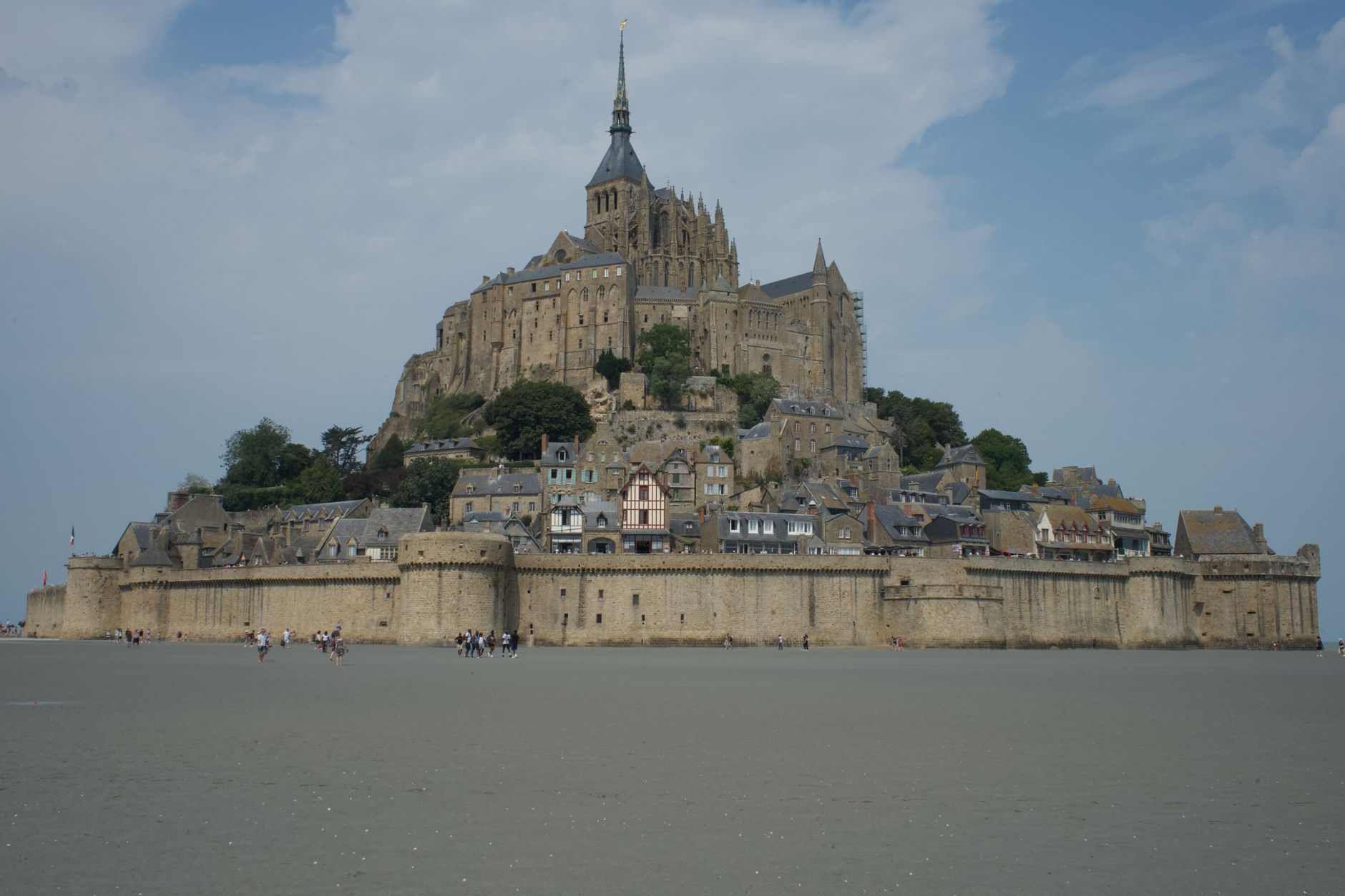
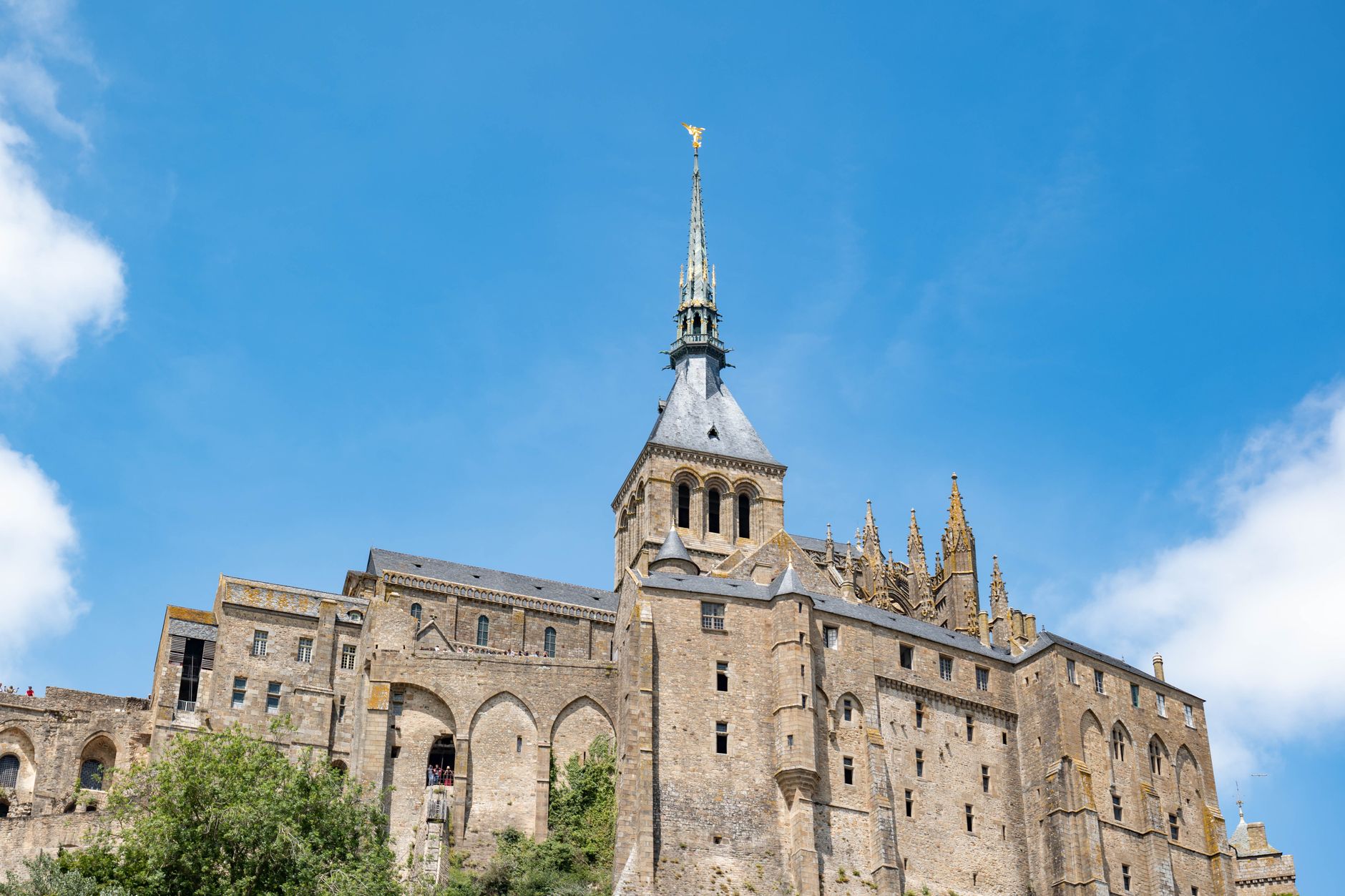
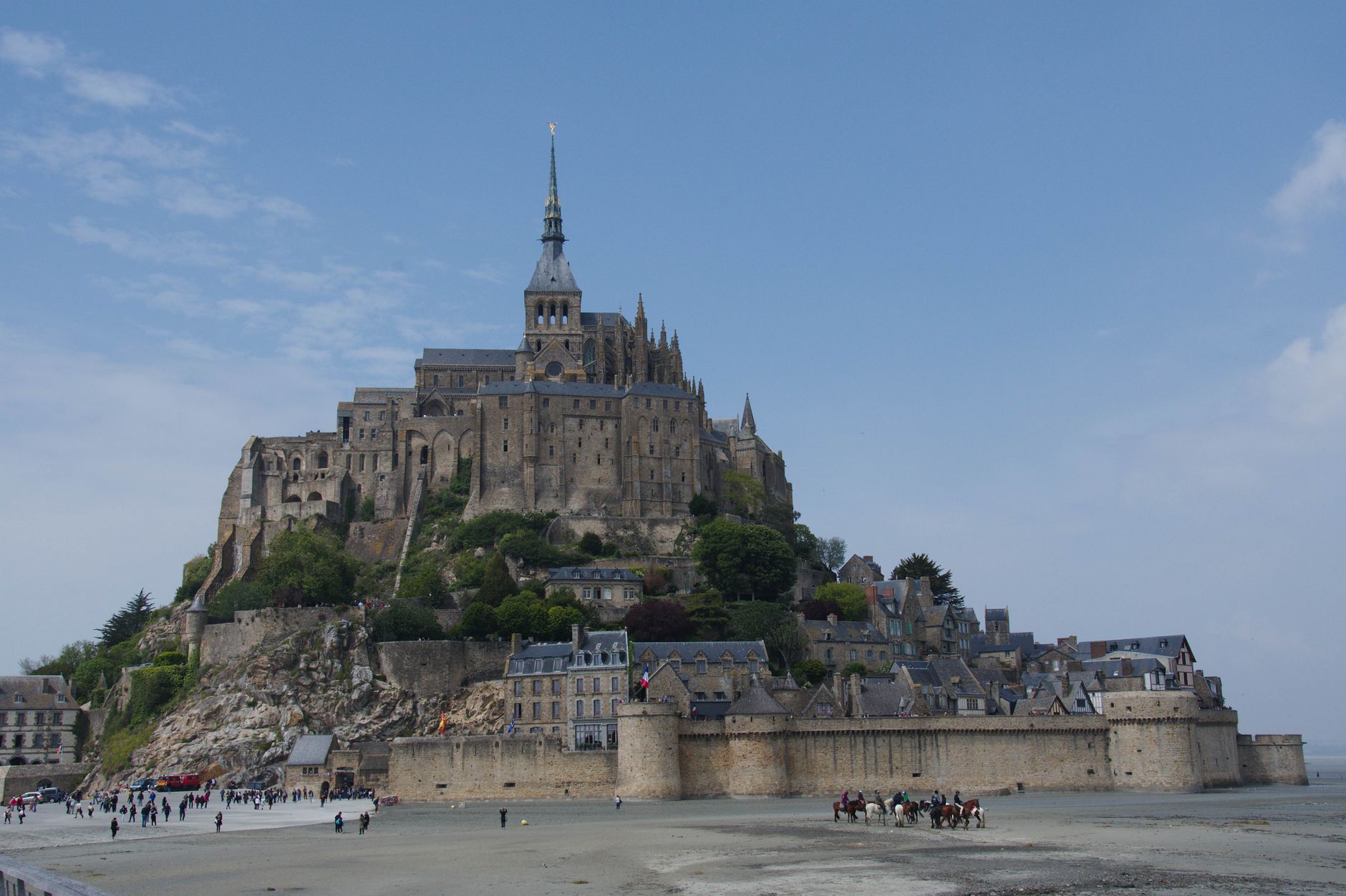
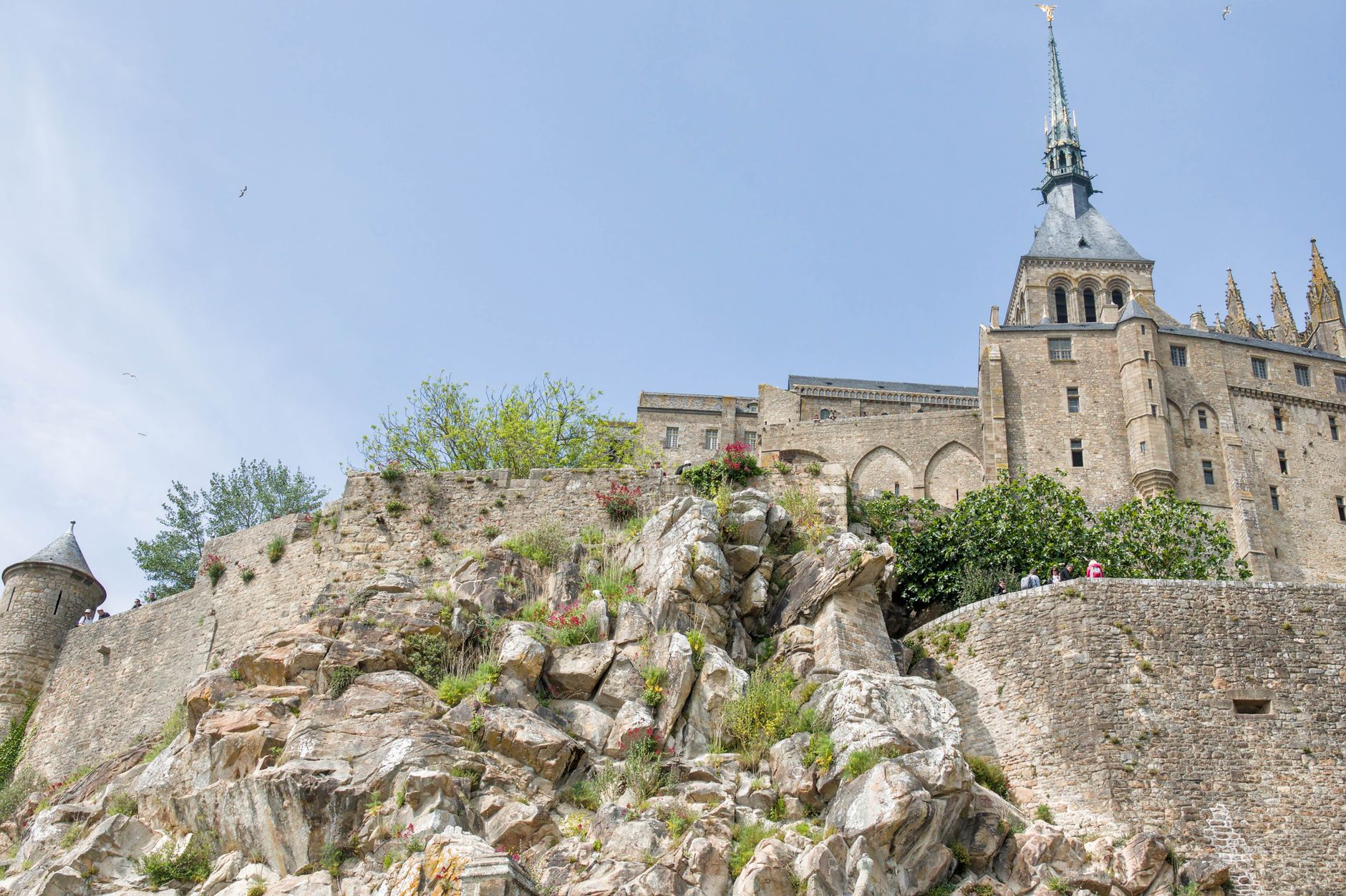
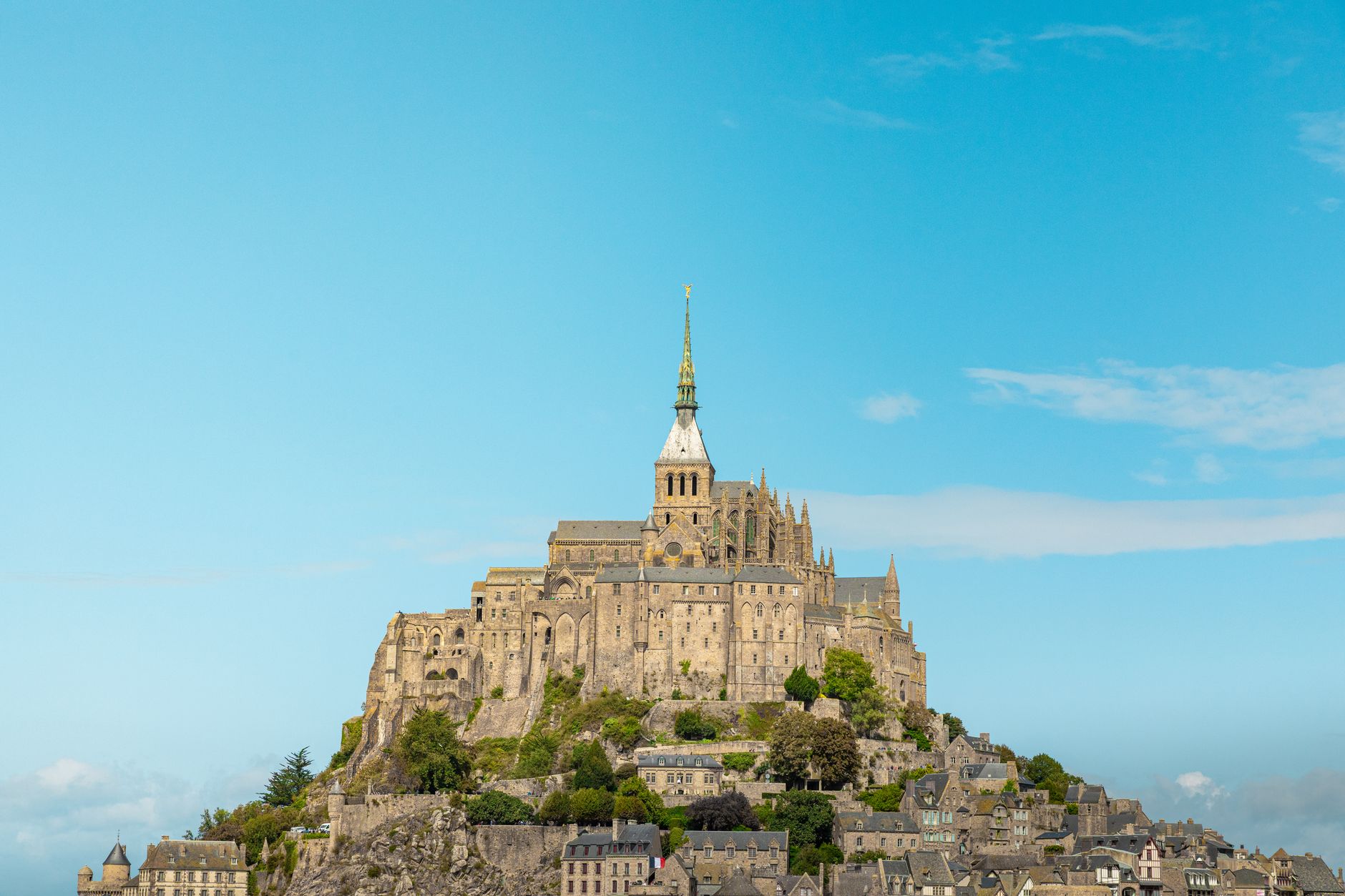
At high tide, Le Mont-Saint-Michel becomes what it has always been at its core: an island. The causeway disappears, the bay fills with one of Europe's most powerful tidal surges, and the abbey — all granite spire and medieval weight — rises from the water as though it has no interest in the mainland at all. A gilded archangel, cast by Emmanuel Frémiet and planted atop the bell tower in 1897, catches whatever light is left in the sky.
The single street climbing toward the abbey is lined with buildings that date, in some cases, to the 15th century. It's narrow, it's steep, and in summer it fills early. Get up before nine and you'll have the cobblestones mostly to yourself.
💛 What travellers fall for
People who return tend to say the same thing: come back at dusk, after the day-trippers have gone. The shuttle from the mainland runs until midnight. The ramparts are quieter than you'd expect, the tide sounds different in the dark, and the abbey floodlights do something to the granite that daylight simply doesn't.
Experiences you don't want to miss




Deals in Le Mont-Saint-Michel
Book directly at the providerHow Le Mont-Saint-Michel came to be
The story starts with a dream — three of them, in fact. In 708, the archangel Michael appeared to Aubert, Bishop of Avranches, and instructed him to build a sanctuary on a tidal island called Mont-Tombe. Aubert founded the first church on October 16 of that year. In 966, Duke Richard I of Normandy replaced the original community with Benedictine monks, and by 1023 construction of the Romanesque abbey church was underway, with the Italian architect William de Volpiano placing the transept at the very summit of the rock.
War shaped the mount as much as faith did. King Philip II's attack in 1203 caused a fire but also funded La Merveille — the vast three-tiered granite structure built entirely between 1203 and 1228 that remains the architectural centerpiece of the abbey complex. The Hundred Years' War brought walls and three successive fortified gates; the Revolution brought prisoners in place of monks. The abbey served as a prison until 1863, after which Victor Hugo and others campaigned for its restoration. It was declared a historic monument in 1874, inscribed as a UNESCO World Heritage Site in 1979, and reconnected to the sea between 2006 and 2015 when a major engineering project restored the tidal flow that had been slowly silting up the bay.
Who and what shaped it
People who shaped it
Landmark buildings
See Le Mont-Saint-Michel in motion
Plan your visit
On the map
When to go
Normandy weather is changeable in all seasons — overcast skies are the norm rather than the exception, and the bay wind has an edge to it even in July. Summer brings the longest days and the largest crowds; spring and autumn offer softer light and a quieter mount, though you'll want a waterproof layer regardless of the month.
Right now
Background & history adapted from Wikipedia (CC BY-SA) · specs from Wikidata (CC0) · weather from Open-Meteo · map data © OpenStreetMap contributors · photos from Wikimedia Commons / Unsplash with per-image credit. No third-party reviews or social posts reproduced.