
Launceston


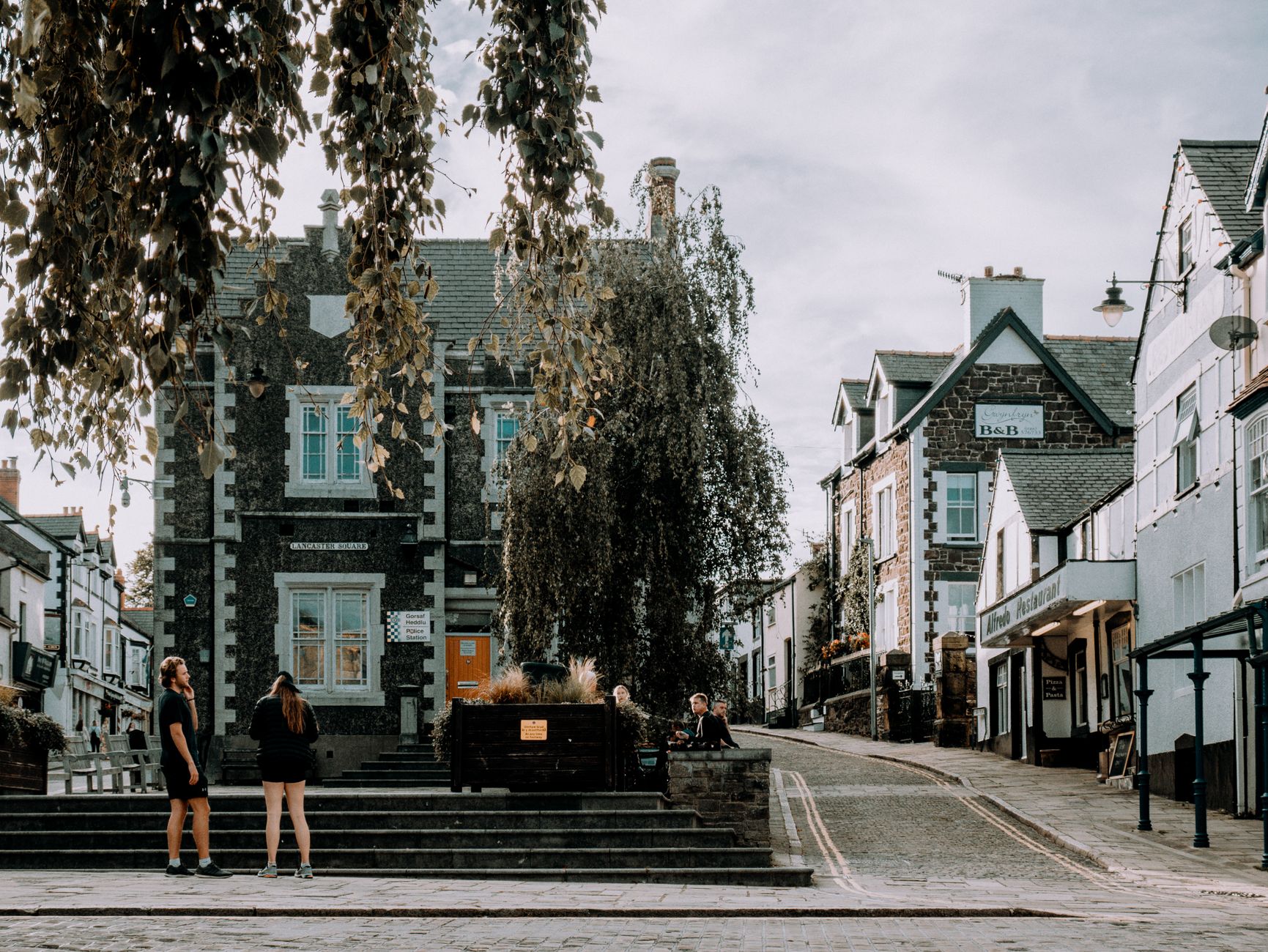
Launceston sits at the eastern edge of Cornwall where the A30 first crosses into the county, and the castle on its hill makes sure you notice. Built around 1070 by Robert, Count of Mortain — half-brother to William the Conqueror — the stone shell keep still dominates the town below, and climbing to its inner tower gives you a view that explains exactly why someone chose this particular hill. Below it, Castle Street holds what John Betjeman called the most perfect collection of eighteenth-century townhouses in Cornwall.
This is a working Cornish market town, not a coastal resort. Its streets carry centuries of administrative weight — it was Cornwall's county town until 1838 — and that history is still legible in the architecture, the surviving Southgate Arch, and the granite church whose carved facade took thirteen years to complete.
💛 What travellers fall for
People who come back tend to time it for a Saturday morning, when the town is at its most itself. The Lawrence House Museum on Castle Street is easy to underestimate — give it an hour. And if the steam railway is running, take the ride along the Kensey Valley to Newmills: it's only 2.5 miles, but the Victorian locomotives make it worth it.
Deals in Launceston
Book directly at the provider

How Launceston came to be
The name comes from the Cornish 'Lannstevan' — church enclosure of St Stephen — though the Saxons knew it as Dunheved, roughly 'hill summit', and had a settlement here by around 900. The Normans understood the strategic logic immediately: Robert of Mortain raised a castle on the hill within a few years of the Conquest, and Launceston became the administrative centre of the Earldom of Cornwall.
It was Richard, Earl of Cornwall — one of the wealthiest men in thirteenth-century Europe — who rebuilt the castle in stone. The town received its charter of incorporation in 1555, and its motto, 'Royale et Loyale', dates from its loyalty to the Cavalier cause in the 1640s. In 1656, George Fox, founder of the Quaker movement, was held in the castle for eight months. Cornwall's county status eventually passed to Bodmin in 1838, leaving Launceston to carry its history quietly.
Who and what shaped it
People who shaped it
Landmark buildings
See Launceston in motion
Plan your visit
On the map
When to go
Southwest England keeps winters mild — rarely brutal, often grey and wet — and summers cool rather than warm, typically in the mid-teens Celsius. Rain is a reasonable expectation in any month; the castle and church give you good reason to be outside regardless.
Right now
Background & history adapted from Wikipedia (CC BY-SA) · specs from Wikidata (CC0) · weather from Open-Meteo · map data © OpenStreetMap contributors · photos from Wikimedia Commons / Unsplash with per-image credit. No third-party reviews or social posts reproduced.