
Lastres
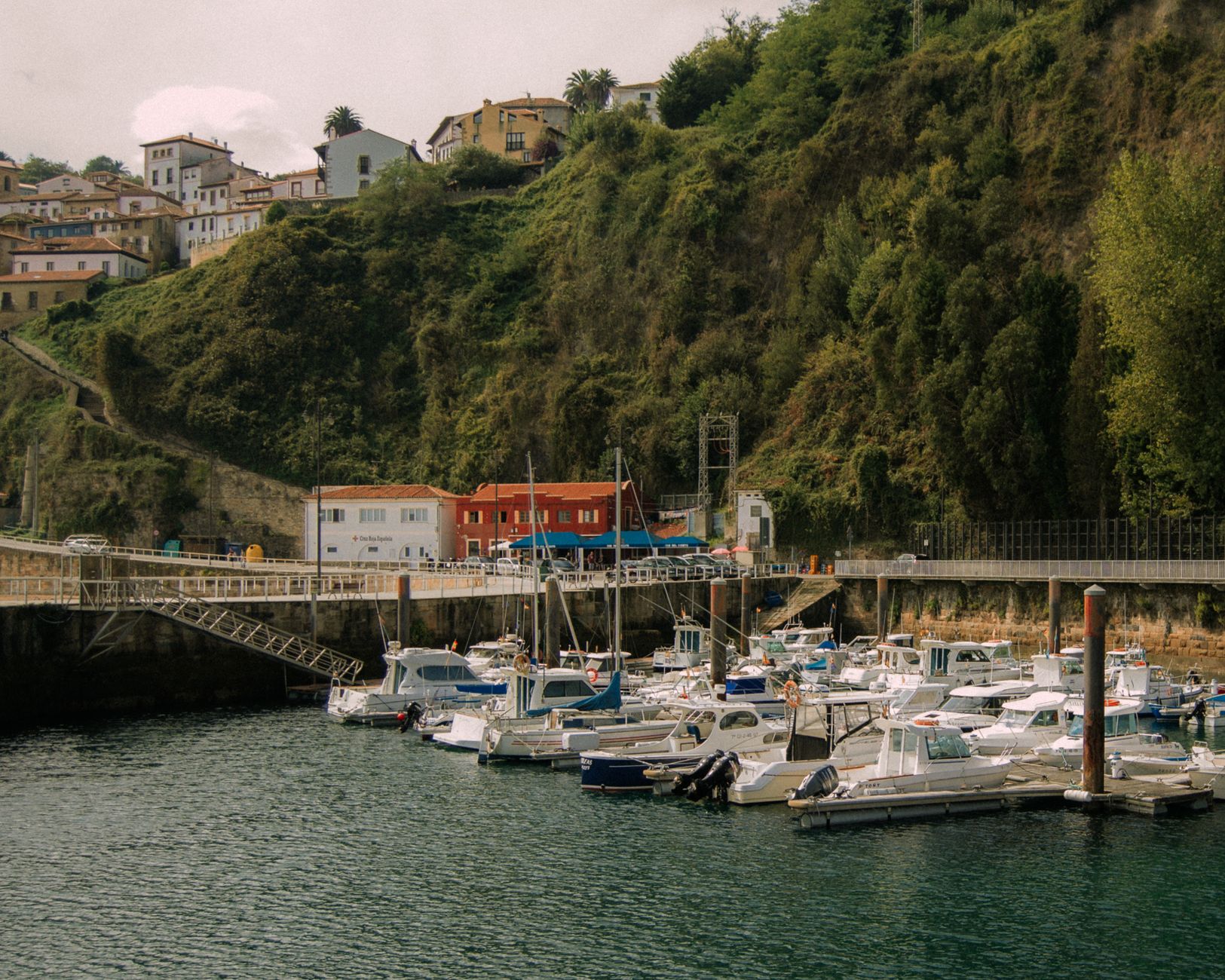
Lastres climbs a steep Asturian headland in tiers of stone houses and terracotta rooftiles, its narrow cobbled lanes spilling down toward a small working port where around fifty boats still go out. On weekday mornings the fish auction runs at the harbour — a practical, unhurried ritual that has nothing to do with tourism and everything to do with why the village exists.
This is a place built by the sea and perpetually renegotiated with it. The port was remodelled as recently as 1995 after centuries of storms; the beach below, once the site of a whaling-era shipyard, still carries that name in local memory. The hill above belongs to San Roque, a viewpoint and a baroque chapel, and the whole thing is small enough to walk in an afternoon.
💛 What travellers fall for
People who come back tend to time it for a weekday — the fish market is the thing. They park at the top of the village and walk down through the lanes rather than driving in circles. The Mirador de San Roque, reached early before any coach arrives, gives you the whole geometry of the place: rooftops, port, open Atlantic.
Experiences you don't want to miss




Deals in Lastres
Book directly at the provider
How Lastres came to be
The bay was known in 943 when King Ramiro II granted lands including a place then called Sábada to the Basilica of San Salvador de Oviedo — the earliest written trace of the settlement. Serious habitation came later, in the 13th and 14th centuries, when families moved down from the inland village of Luces to work the sea directly from Lastrina bay.
By the 17th century the fishing catch was being sold into Castile. The 18th century brought trading companies, warehouses, and ships making runs to England, Holland and France. That commercial confidence is still visible in the architecture: the Clock Tower, originally 15th century and significantly rebuilt in 1751, and the church of Santa María de Sabada, built in neoclassical baroque style in the 18th century with its belltower added a hundred years later. The chapel of San Roque, with its small baroque altarpiece of 1619, predates both. The village was declared a Historic Site in 1992.
Who and what shaped it
People who shaped it
Landmark buildings
See Lastres in motion
Plan your visit
On the map
When to go
Asturias is genuinely green because it genuinely rains — expect mild, damp conditions for much of the year. August is the warmest month at around 23°C, making summer the most comfortable time to sit by the port, though July and August also bring the most visitors. February averages 13°C; the winter coast is raw and atmospheric if you dress for it.
Right now
Background & history adapted from Wikipedia (CC BY-SA) · specs from Wikidata (CC0) · weather from Open-Meteo · map data © OpenStreetMap contributors · photos from Wikimedia Commons / Unsplash with per-image credit. No third-party reviews or social posts reproduced.