
La Concha Beach
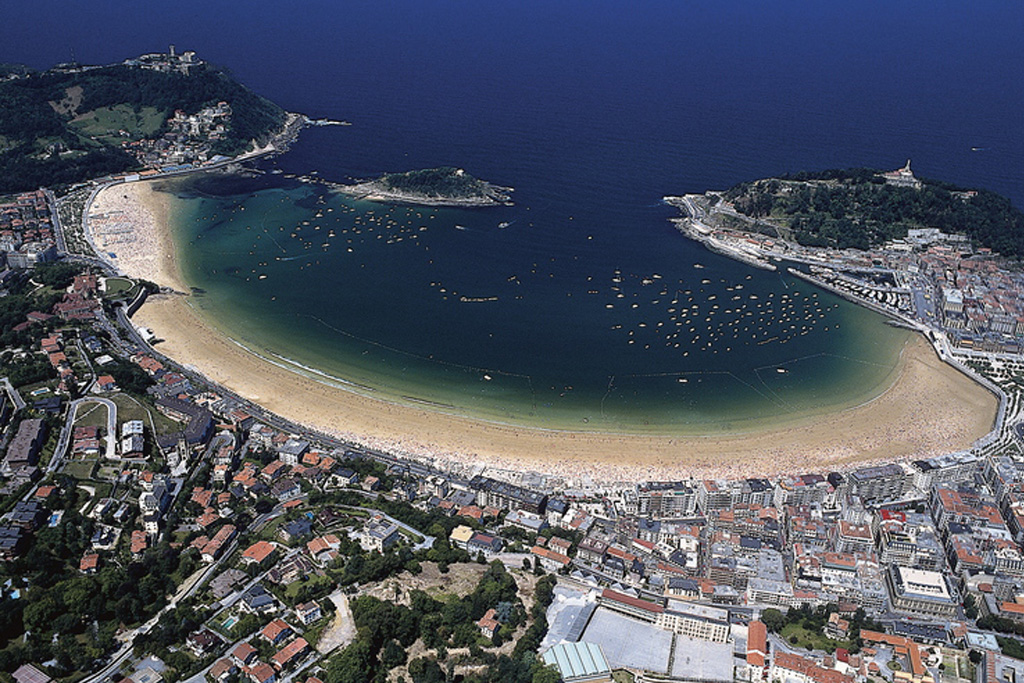
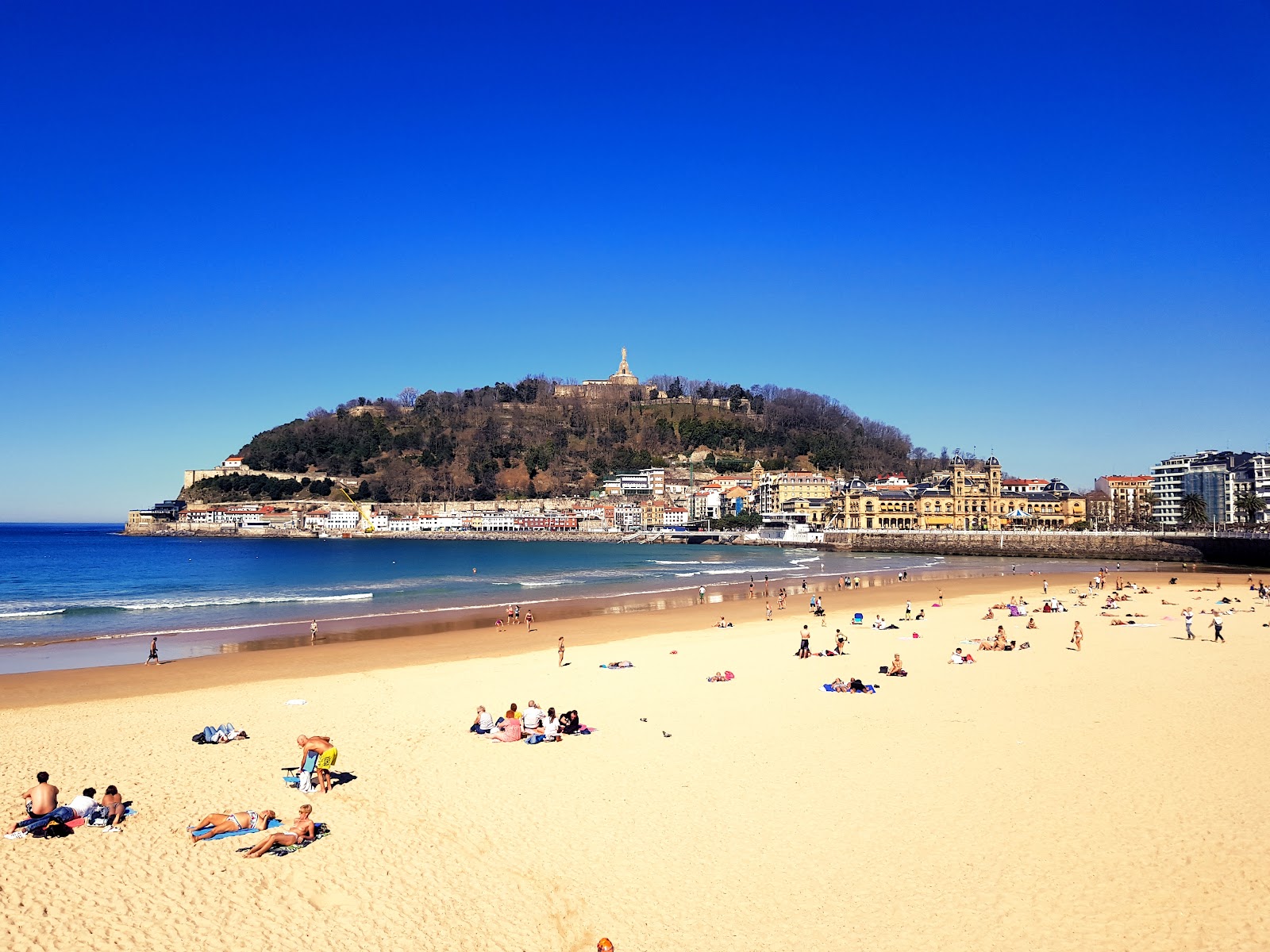
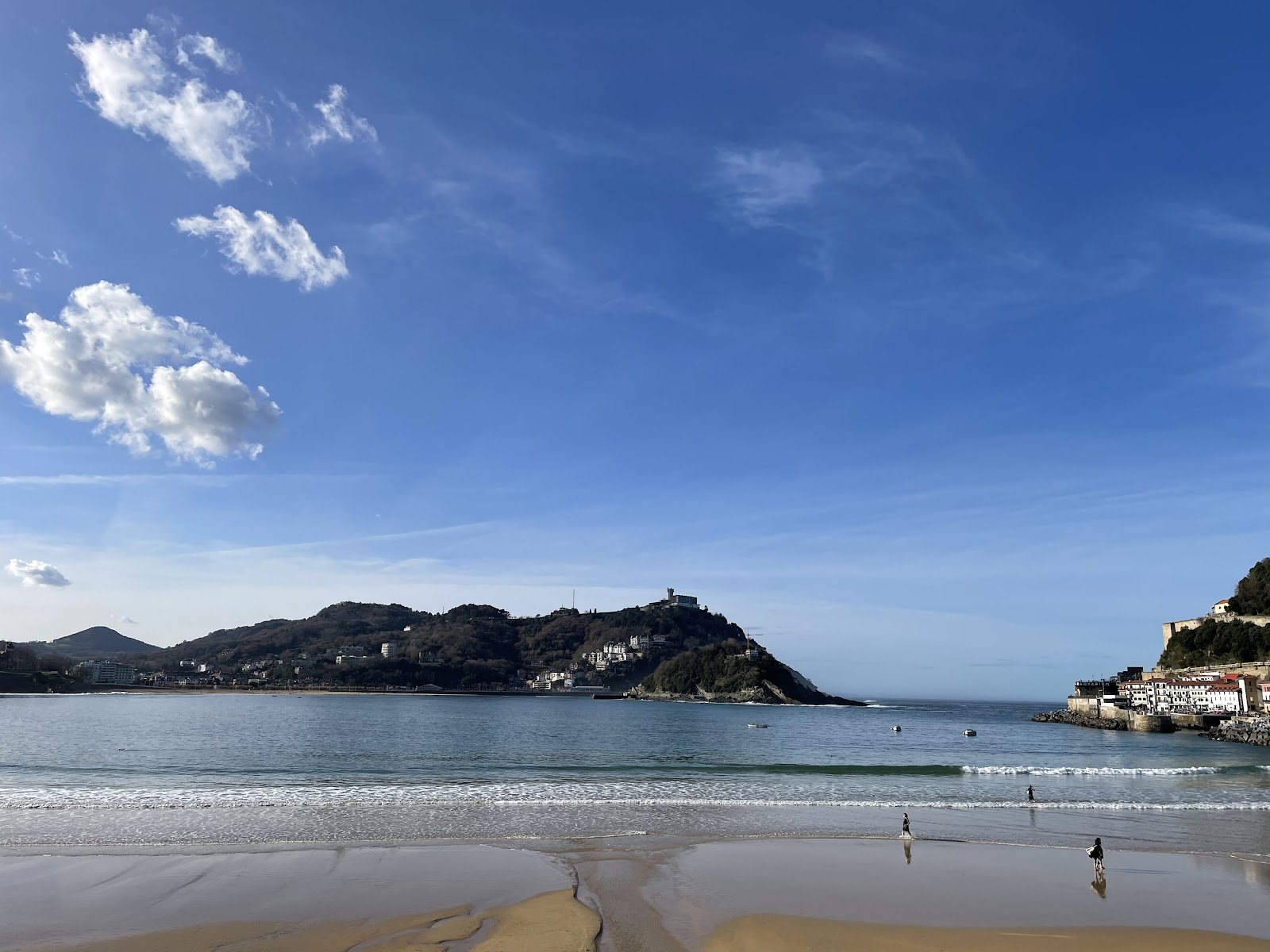
The white iron railing along Paseo de la Concha — designed by Juan Rafael Alday in the 1910s — is one of those details that stops you mid-stride. It curves the full length of the bay in ornate loops, and on a clear morning the light off the water turns everything a particular shade of silver. Below it, a crescent of sand stretches roughly a kilometre between Monte Igueldo and Monte Urgull, with the small island of Santa Clara sitting in the middle distance like a full stop.
This is a city beach that has been taken seriously for well over a century. The promenade, the gardens, the rationalist Nautical Club building moored at the water's edge — none of it happened by accident.
💛 What travellers fall for
People who come back tend to do the promenade walk at either end of the day, when the light is low and the crowds have thinned. The Alderdi Eder Gardens, with their tamarisk trees and old carousel, make a good turning point at the eastern end. La Perla Spa, on the sand itself, is worth knowing about if the water is too cold for swimming.
The story behind La Concha Beach
San Sebastián was founded around 1180 as a fishing and trading port, and La Concha remained a working shore for most of its existence. That changed in 1845 when Queen Isabel II arrived on doctors' orders — sea bathing was prescribed for a skin condition — and the court followed. Within a generation, the bay had acquired the architecture of ambition: the Grand Casino (inaugurated 1887, now the City Hall), Miramar Palace commissioned in 1893 by Queen María Cristina from English architect Selden Wornum, and La Perla, which opened as the 'Baños del Príncipe Alfonso' in 1868.
The Belle Époque pushed the transformation further. The Real Club Náutico, built in 1929 by architects José Manuel Aizpurua and Joaquín Labayen, brought a harder-edged architectural rationalism to the waterfront — the building is now a protected Item of Cultural Interest. Eduardo Chillida's 'Homage to Fleming,' first made in 1955, stands on terraces added in 1991, a quieter landmark than his more famous work along the coast.
Good to know
Buses 8, 9, 13 and 14 stop within 250 metres; the beach is also an easy walk from Parte Vieja. Seasonal facilities — showers, lockers, sunshades — run April through October. July and August are crowded; May, June and September offer the better balance of warmth and space.
San Sebastián is genuinely Atlantic in character: summers are warm rather than hot, with sea temperatures reaching a swimmable level by late June. Spring and autumn bring frequent rain and strong winds off the bay. Winter visits are atmospheric but bracing, and the water is cold enough that the promenade walk replaces the swim entirely.
Where is La Concha Beach?
More tickets & tours for La Concha Beach
Book directly at the provider
What travellers say about La Concha Beach
Easily one of the best beaches in Europe. It offers some breathtaking view worth a visit. The beach is always happening at whichever time you may visit. Lots and lots of cafes, bars, pubs and restaurants located across the coast. The vibe here is crazy. This has to be a photographers heaven. The connectivity of public transport to the beach is excellent. You can see a couple of mountains at the back drop which makes it picture perfect. One must surely not miss visiting this beach.
This is one of the most popular beach destinations in the northern Spain Basque country. Located in the city of San Sebastian. Amazing location. Loved the color of the blue sea. Usually crowded with both local and foreign tourist coming for sun bathing. Great location to chill.
One of the most beautiful urban beaches I’ve visited in Europe. La Concha Beach has an amazing combination of ocean views, elegant architecture, and a relaxing atmosphere. The promenade is perfect for walking, especially during sunset. The beach is very clean, peaceful, and well organized. A must-visit place in San Sebastián for both relaxing and photography.
Beautiful & Well-Maintained: A truly magnificent, well-maintained sandy beach with breathtakingly beautiful water. Walking along the shore was wonderful and deeply relaxing. Off-Season Atmosphere: Since it wasn't swimming season, dogs were running around and swimming, looking very happy.
I walked along La Concha Beach and really loved it. The views are beautiful, with hills and a small island in the bay, which makes it quite unique compared to many famous beaches around the world. The beach is clean, and the atmosphere is calm but lively. It’s a great place to relax and take photos. Definitely worth visiting in San Sebastián.
More of San Sebastián
Discover where to stay, what to do and the best deals for your trip.
Explore San Sebastián →More attractions in San Sebastián
All of San Sebastián →

Background adapted from Wikipedia (CC BY-SA) · map data © OpenStreetMap contributors · ratings & place photos via Google · other photos with per-image credit. Ticket links may earn us a commission at no extra cost to you.