
Koreatown
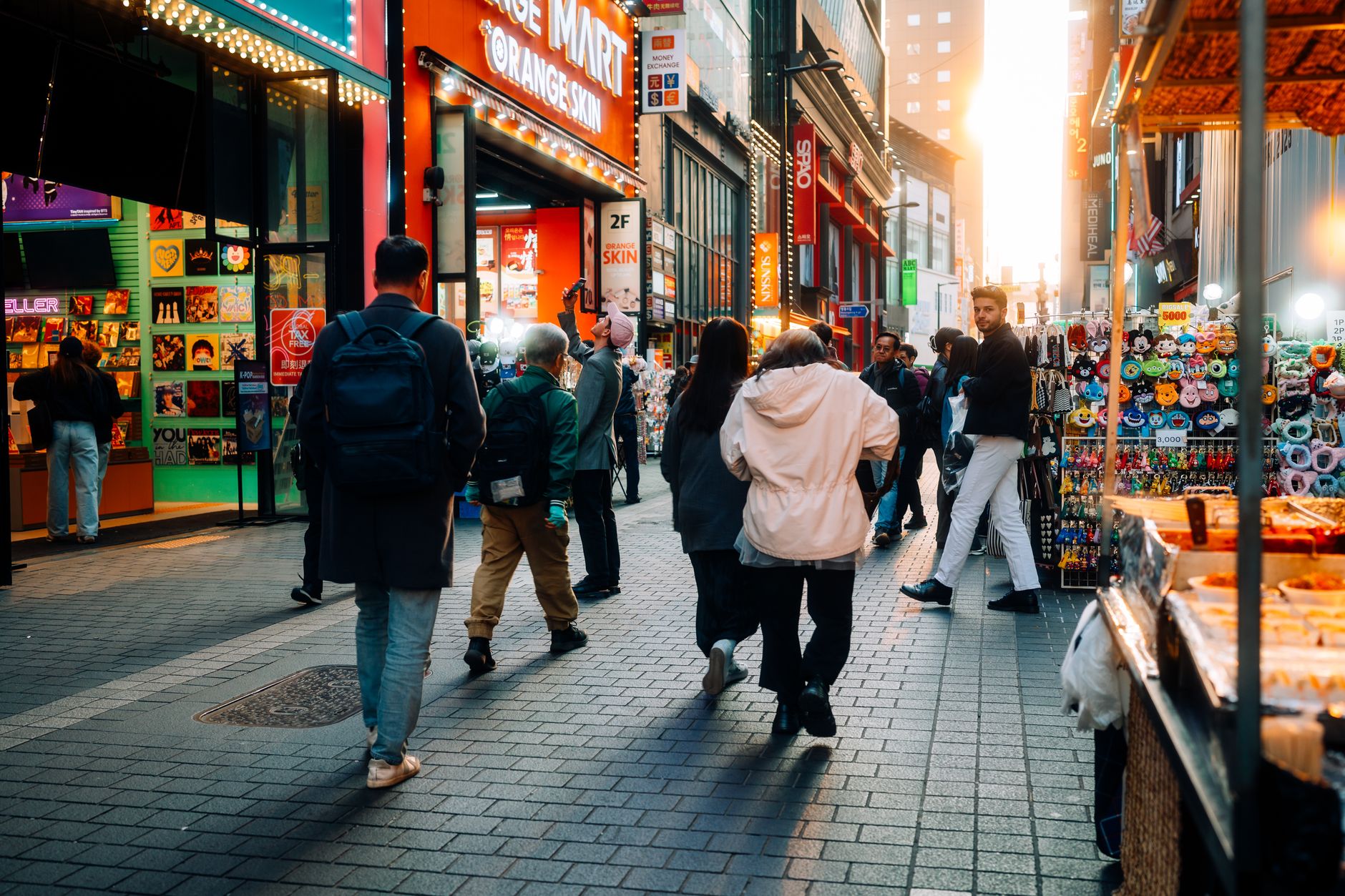
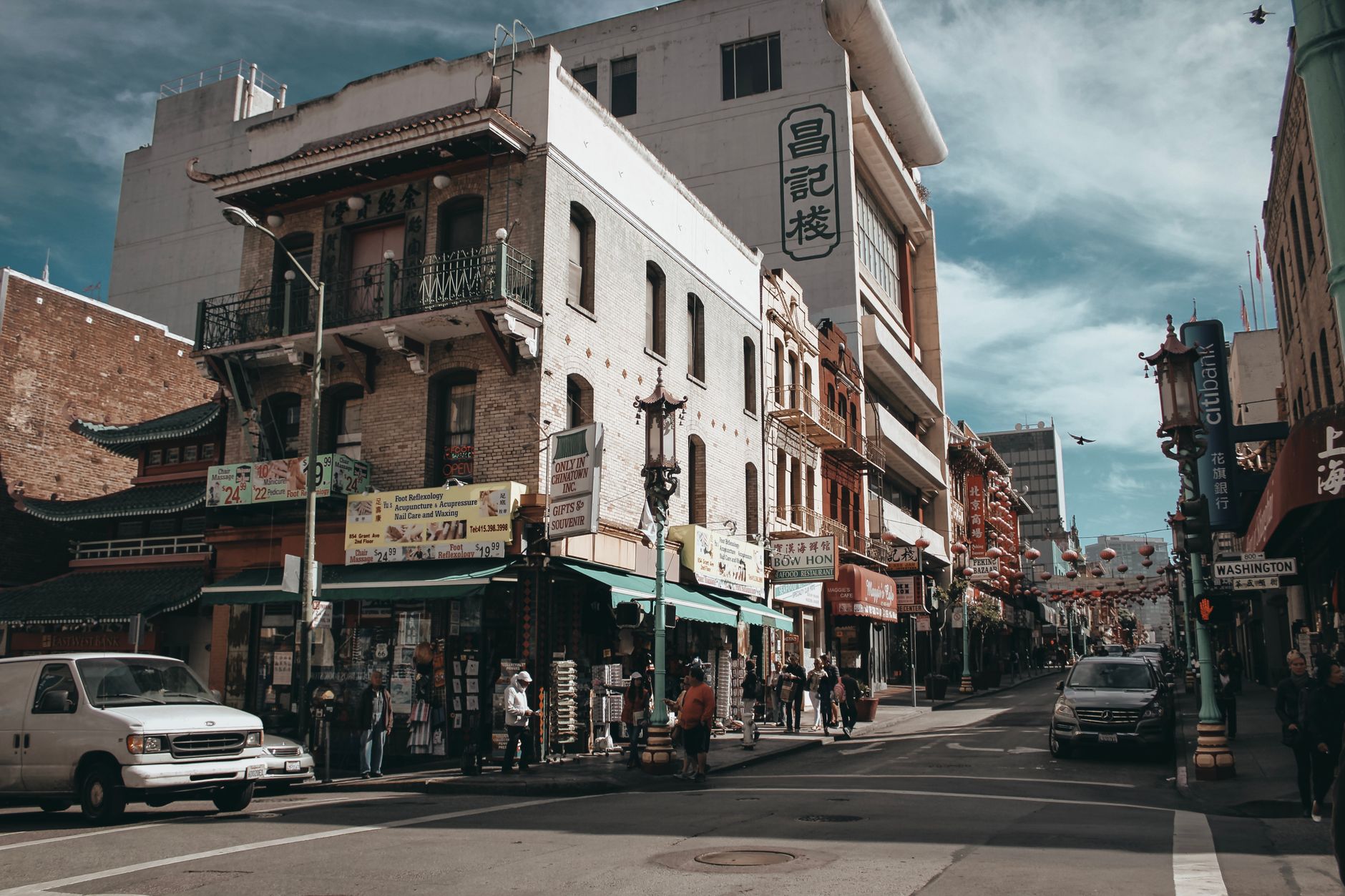
Somewhere around Olympic and Normandie, the city shifts register. Korean neon stacks up against mid-century strip malls, valet parkers work the curb outside restaurants that won't close until dawn, and the smell of charcoal from a dozen barbecue vents drifts across a sidewalk with a walk score of 93. Koreatown is one of the densest, most self-sufficient neighborhoods in Los Angeles — not a district that shuts down at ten, but one that's only fully itself after midnight.
The 39-lane bowling alley at Vermont and 4th has barely changed since 1954 — beige checkered floors, Googie roofline, lanes that still feel like they belong to a different city entirely. That kind of layering is everywhere here: French Gothic Revival and Art Deco on Wilshire, a pavilion with blue Korean roof tiles built in 1975, a 2006 garden across from where the first Korean grocery opened decades before.
💛 What travellers fall for
Regulars tend to land on a few anchors: the Kim Bang Ah bakery on its third generation of family ownership, where the rice cakes are made with flour you won't find at a chain; the Wiltern for a show, then something to eat at 2 a.m. because the options are genuinely good at that hour. The D Line gets you in without thinking about parking.
Deals in Koreatown
Book directly at the provider

How Koreatown came to be
Korean settlement in Los Angeles traces back to 1902, when activist Dosan Ahn Chang Ho and his wife Hye Ryeon Lee arrived and established roots on Jefferson Boulevard — founding a Presbyterian church and the Korean National Association that anchored the early community. Immigration remained modest until the Hart-Celler Act of 1965 opened the door to a far larger wave of arrivals.
The neighborhood's commercial identity took shape through individual enterprise. Businessman Lee Hi Duk, who arrived in 1968, opened the Olympic Market stocked with Korean brands and eventually bought five blocks around Normandie and Olympic to build V.I.P. Plaza, a center for Korean-owned businesses. In 1980, Koreatown received official recognition as a Los Angeles neighborhood; the signs near the 10 freeway followed in 1982. The Bullocks Wilshire building, damaged in the 1992 riots, was later restored — one of many reminders that the neighborhood's story includes rupture as well as accumulation.
Who and what shaped it
People who shaped it
Landmark buildings
See Koreatown in motion
Plan your visit
On the map
When to go
Summers are warm, dry and nearly rain-free — highs around 85°F — which makes evening street life easy from June through September. Winter days are mild at around 69°F, though January and February bring the year's only meaningful rain, usually a few inches spread across both months.
Right now
Background & history adapted from Wikipedia (CC BY-SA) · specs from Wikidata (CC0) · weather from Open-Meteo · map data © OpenStreetMap contributors · photos from Wikimedia Commons / Unsplash with per-image credit. No third-party reviews or social posts reproduced.