
Königssee
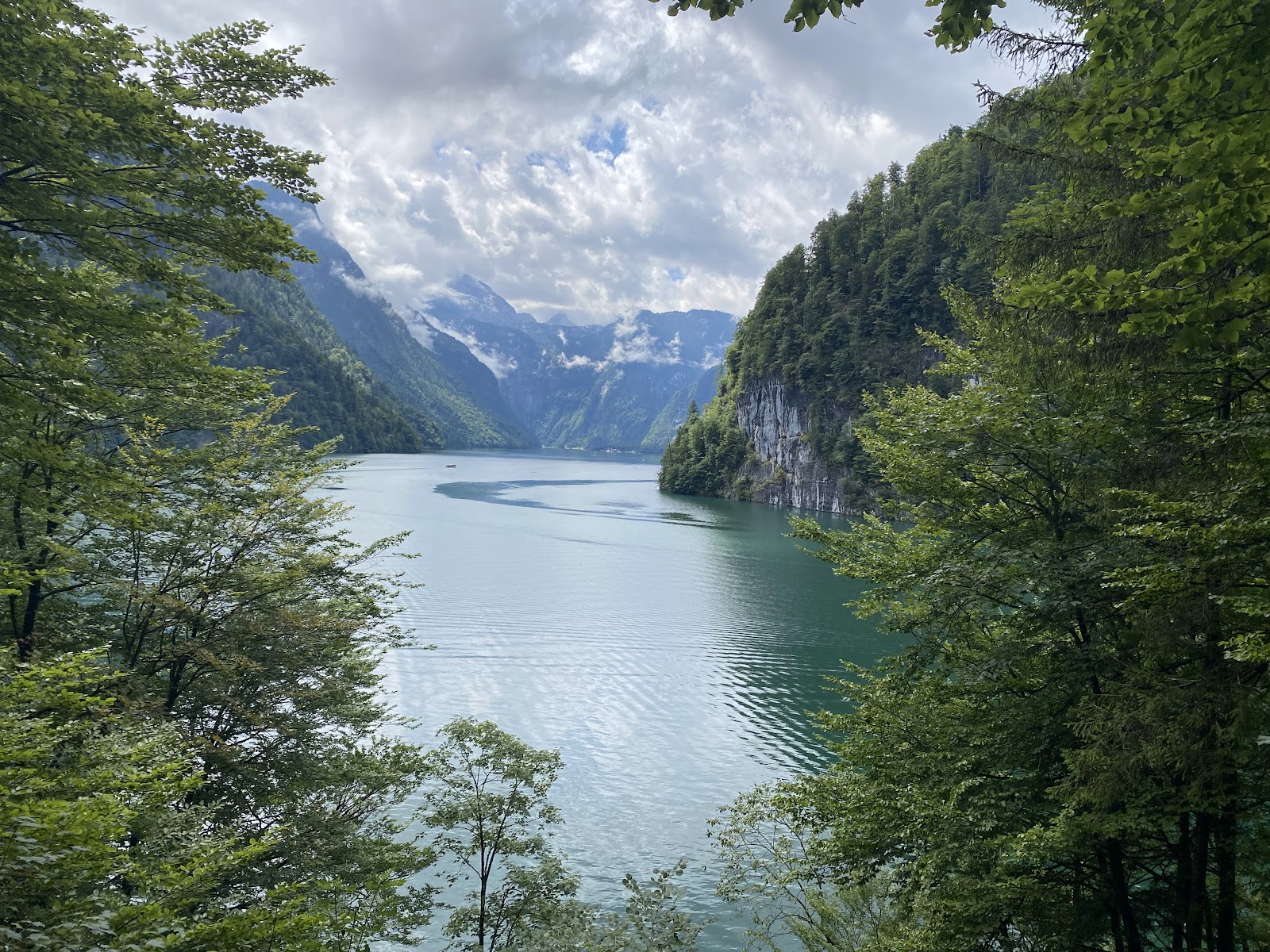
The boat leaves the dock in near silence — electric motors, no fumes — and within minutes the road, the car park and the rest of Bavaria seem to belong to another world. Königssee is a glacial lake pressed between limestone walls that rise almost sheer from the water, and the scale of it only becomes clear once you're out on the surface.
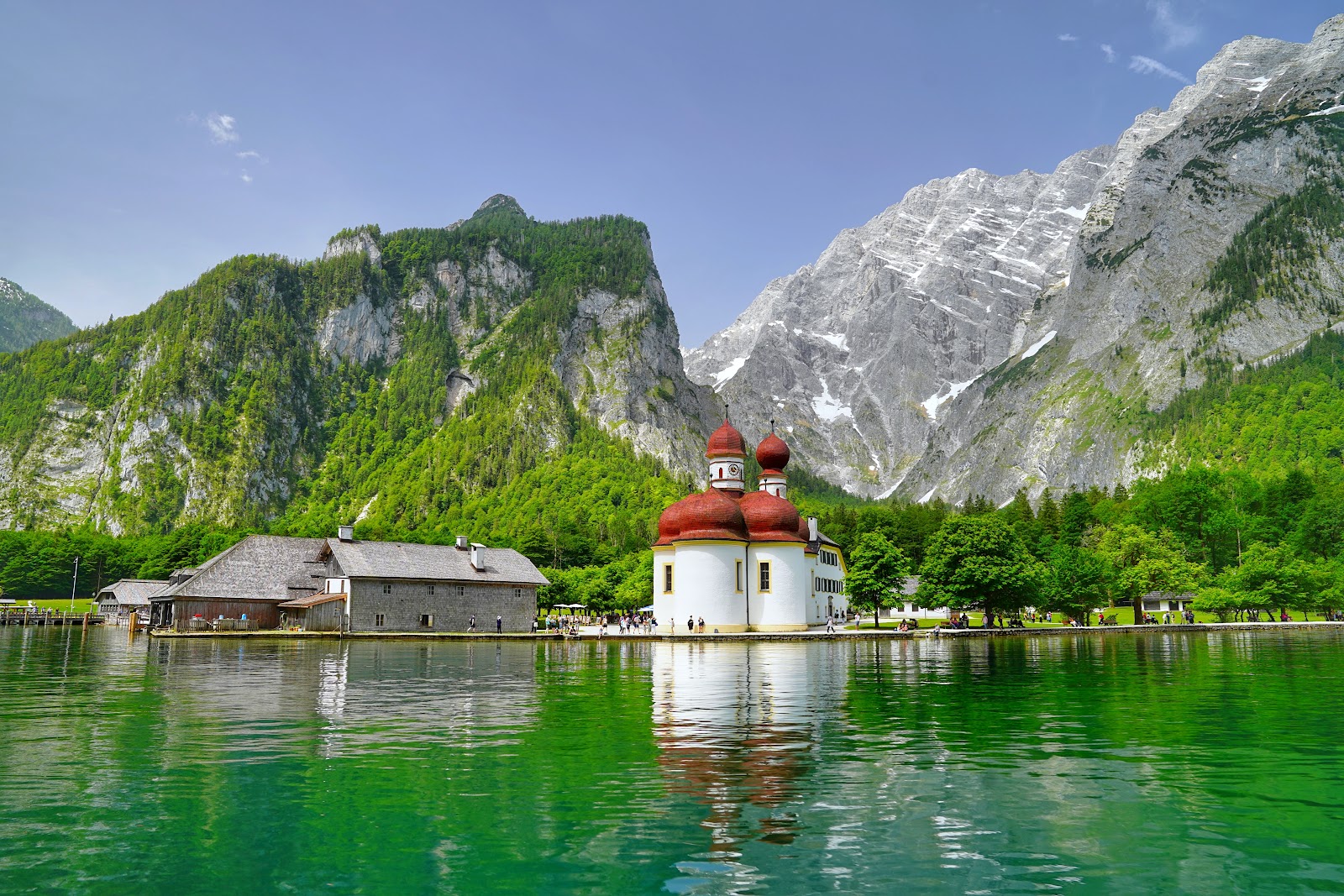
The destination most people aim for is the Hirschau peninsula, where the red-domed twin towers of St. Bartholomä stand against the cliff face with the composure of something that has been there a very long time — which it has, in one form or another, since 1134. The Röthbach waterfall, at 470 metres, drops into the Obersee beyond the final stop at Salet.
💛 What travellers fall for
People who return tend to book the earliest boat and aim for Salet rather than stopping at St. Bartholomä — the walk from Salet to the Obersee is short and the waterfall there rewards it. May and September come up repeatedly as the months worth rearranging a trip for: the same scenery, a fraction of the queue.
The story behind Königssee
Königssee sits along a Jurassic rift and owes its present shape to glaciers; people have been living around its shores since roughly 1000 BC. The name derives from Kunigsee, linked to a local noble named Kuno mentioned in twelfth-century documents relating to the Berchtesgaden Provostry. The Augustinian monks of that provostry built the first chapel at St. Bartholomä in 1134, and the hunting lodge nearby followed shortly after.
In 1697 the chapel was rebuilt in Baroque style — Joseph Schmidt of Salzburg did the stucco work and the three-apse choir — and the Wittelsbach dynasty had by then long since claimed the lodge as a royal hunting retreat. The 19th century brought the first tourist wave; electric boats have been running since 1909. The Berchtesgaden National Park, founded in 1978, now centres on the lake.
Good to know
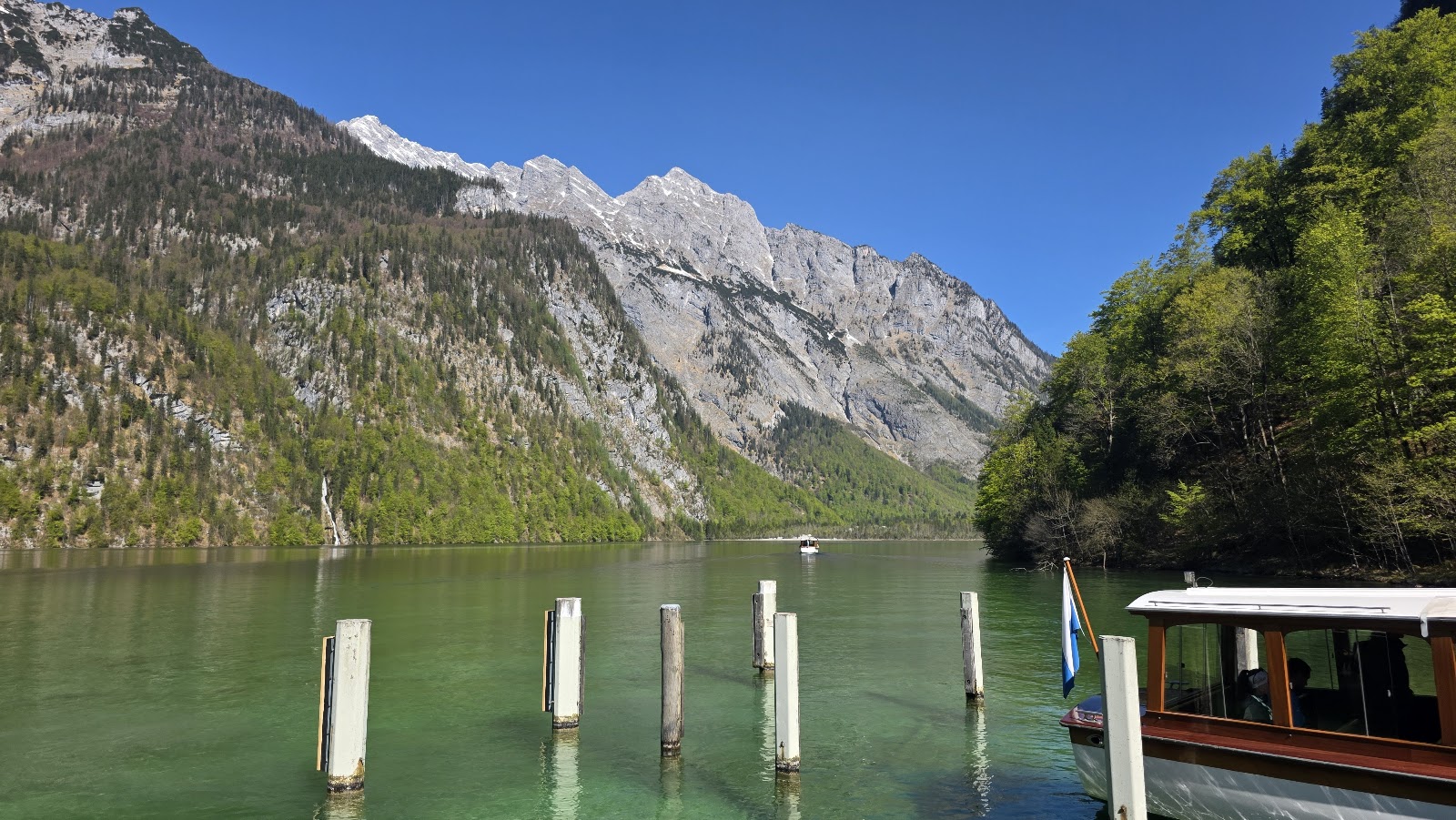
Bus 841 or 842 from Berchtesgaden takes around ten minutes. Arrive before 09:30 in summer or face a ticket queue of up to 80 minutes. A return to Salet costs €29.80 (2026); under-fives travel free. Boats to Obersee run Easter to mid-October only. A full day is the right allocation.
Summers are warm but the surrounding peaks create their own weather, and afternoon storms are common from June through August. Winter visits are possible — boats run unless the lake freezes — but the light is low and some services are reduced; spring and early autumn offer a cleaner balance of conditions and thinner crowds.
Where is Königssee?
More tickets & tours for Königssee
Book directly at the provider
What travellers say about Königssee
Beautiful alpine lake and boat ride. There are two lakes and the second one ends up connecting to a waterfall at the top of the valley. If you take the boat the tour guide often asks for a tip/ collection part way through the journey so be prepared if you want to contribute any change. The boat is every 15 minutes or so.
It's one of the beautiful lakes in Germany. The emerald water and mountain views are breathtaking. You can take a boat trip, walk along the shore, or just relax and enjoy the scenery. If you wanna get here with public transportation, I would recommend going to Salzburg Hbf and taking the bus to here.
The boat ride with ticket is approx €30 and takes 30 mins to reach there and 30 mins back . There is only one restaurant at St Bartholomew’s church . Toilet facilities available at the St Bartholomew . Sit on the right side of the boat on your way there .
An absolutely stunning lake surrounded by majestic mountains. The water is so clear and the scenery feels unreal.
Recently, I visited Königssee on a public holiday, and it was absolutely beautiful. If you're planning a trip on a sunny holiday or weekend, expect large crowds and long queues. Arriving early in the morning is highly recommended. One piece of advice: plan your nearby destinations carefully before you start driving. If you have multiple places to visit around Berchtesgaden, check the map and arrange them in the most efficient order. A little planning can save a lot of time and energy throughout the day. The drive to Königssee itself is part of the experience. The roads pass through stunning Alpine scenery, with mountains, forests, and charming Bavarian villages along the way. There are several 30 km/h and 50 km/h zones, and some sections are narrow and winding, so drive carefully and enjoy the journey. Near Königssee, you'll find both the Jennerbahn cable car station and the boat departure area. There is a very large parking facility nearby, consisting of both covered and open-air parking spaces. It fills up quickly during peak periods, but there are plenty of spots and even EV charging facilities available. From the parking area, it's about a 400-meter walk to the boat station. The path is stroller and wheelchair friendly. Along the way, there are numerous bakeries, cafés, restaurants, beer gardens, ice cream shops, souvenir stores, and even accommodation options. The boat ticket area has several service counters, but queues can become very long during busy periods. Online booking is available, but only a limited number of tickets are released online, so don't rely solely on that option. If tickets are sold out online, you'll need to join the queue at the counter. The electric boat ride itself is the highlight of the visit. We purchased a round-trip ticket to Salet. The journey across Königssee is spectacular, with towering mountain cliffs rising directly from the lake. During the trip, the boat operators often demonstrate the famous echo of Königssee using a trumpet, a tradition that has fascinated visitors for generations. Salet is the gateway to Obersee, one of Germany's most picturesque alpine lakes. Surrounded by steep mountains and crystal-clear water, the scenery feels almost unreal. On our return journey, we stopped at St. Bartholomä, the iconic pilgrimage church with its distinctive red onion domes. The church dates back to the 12th century and is dedicated to Saint Bartholomew, the patron saint of alpine farmers and mountain people. Located on a peninsula beneath the imposing Watzmann massif, St. Bartholomä is one of the most photographed landmarks in Bavaria. The combination of historic architecture, dramatic mountain scenery, and the peaceful lakeside setting makes it a truly memorable stop. Overall, Königssee is one of the most beautiful places I have visited in Germany. With good planning and an early start, it offers an unforgettable experience for nature lovers, photographers, families, and anyone looking to experience the beauty of the Bavarian Alps.
More of Berchtesgaden
Discover where to stay, what to do and the best deals for your trip.
Explore Berchtesgaden →More attractions in Berchtesgaden
All of Berchtesgaden →

Background adapted from Wikipedia (CC BY-SA) · map data © OpenStreetMap contributors · ratings & place photos via Google · other photos with per-image credit. Ticket links may earn us a commission at no extra cost to you.