
Koblenz
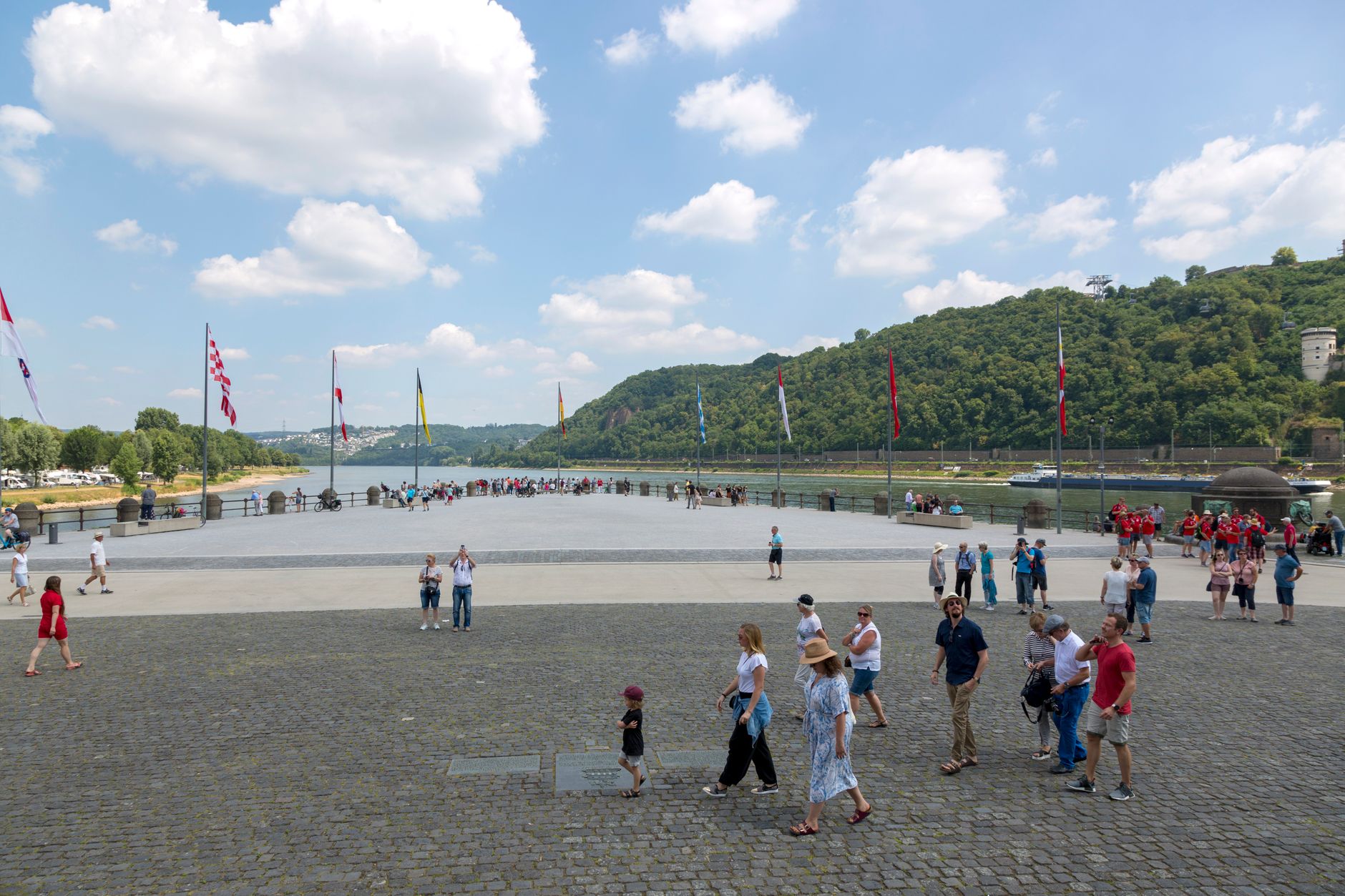
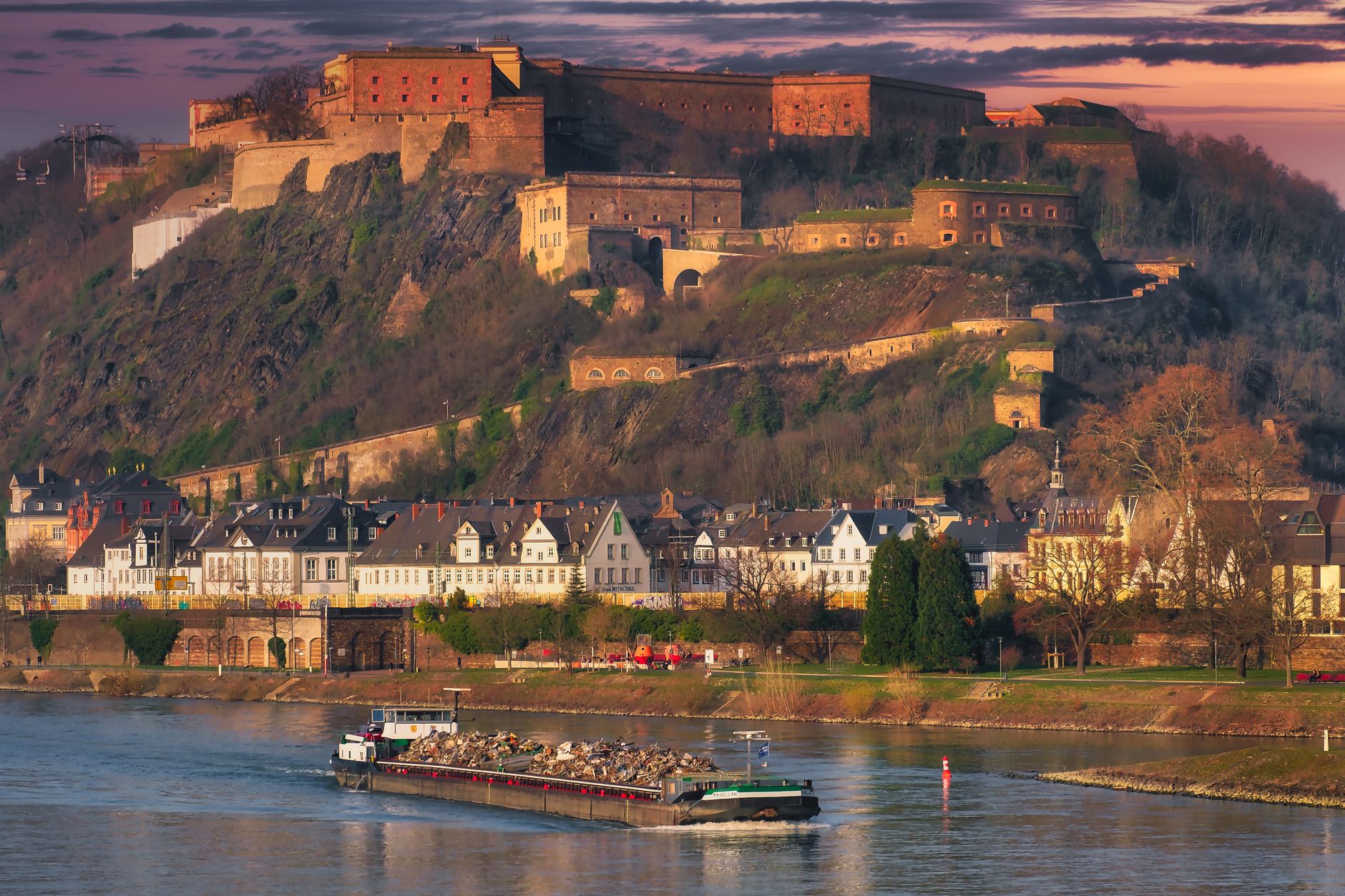
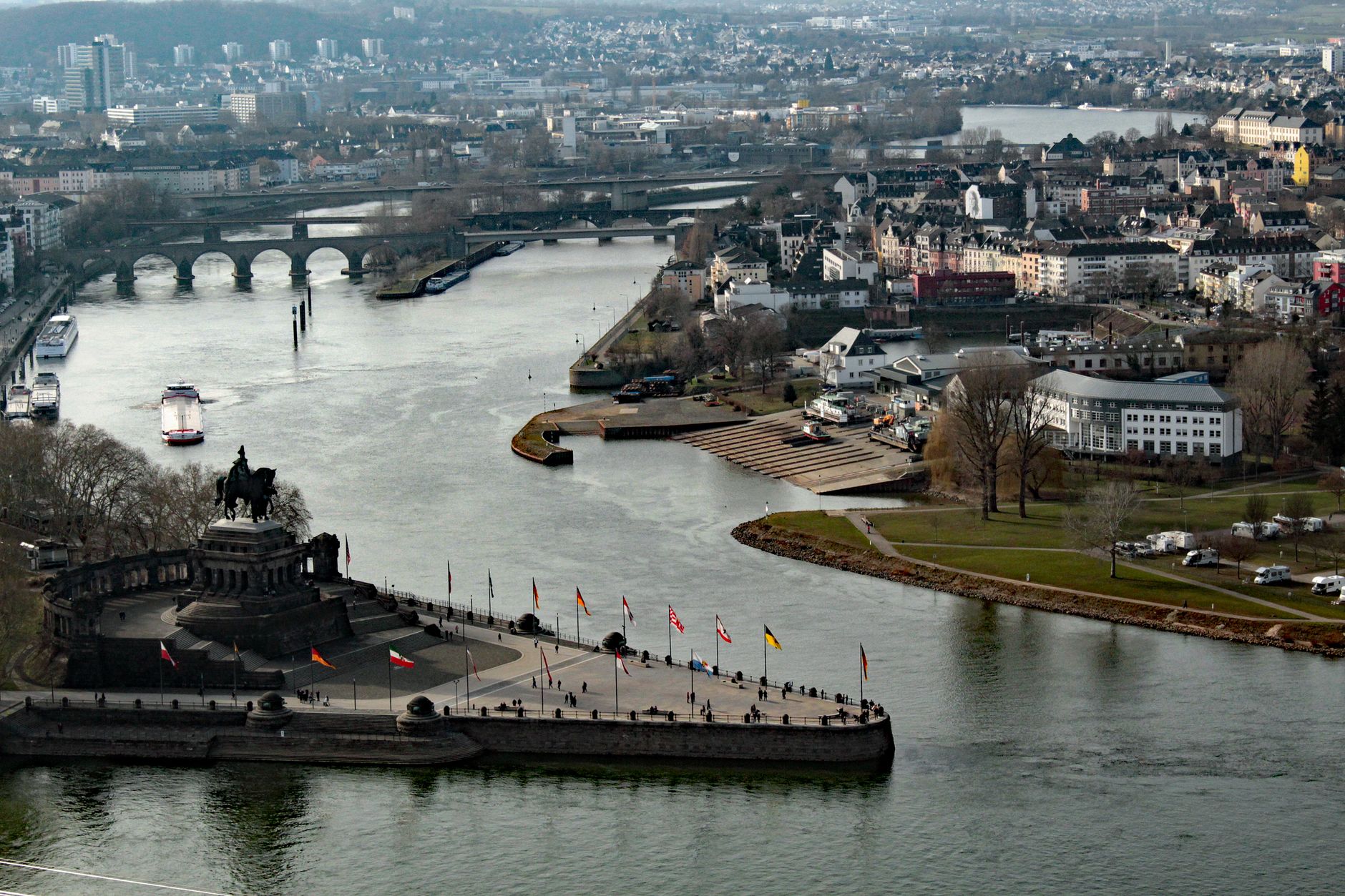
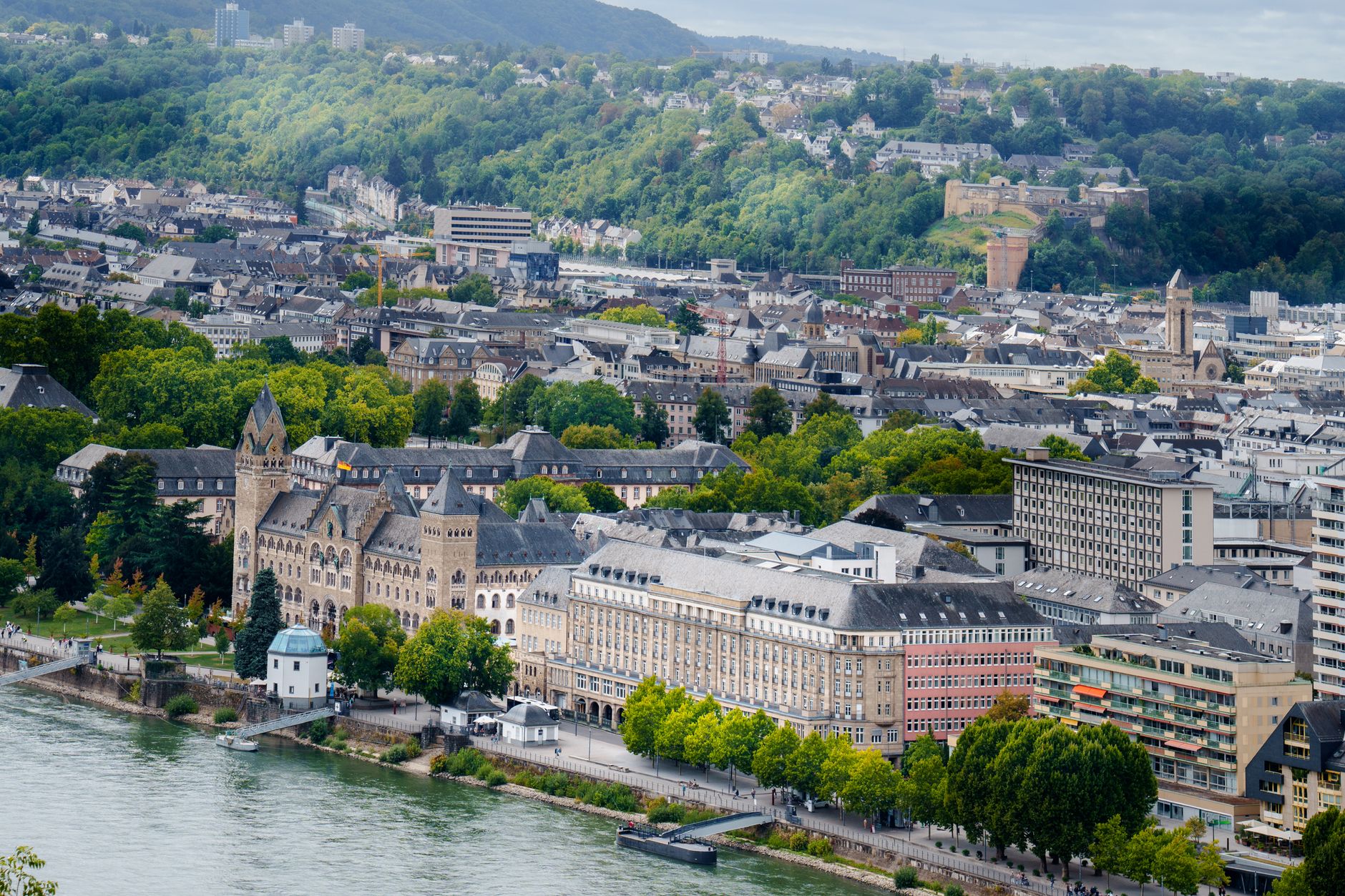
Two rivers meet at Koblenz — the Moselle sliding in from the west, the Rhine already wide and purposeful — and the city has spent two thousand years arranging itself around that fact. Stand at the Deutsches Eck, the wedge of land where the waters merge, and you can see Ehrenbreitstein Fortress rising 118 metres on the opposite bank, its Prussian stonework still looking like it means business.
Koblenz rewards a slow pace. The historic centre is compact enough to cover on foot, the cable car across the Rhine is a genuine pleasure rather than a gimmick, and the Basilica of St. Castor has been standing since 836 — long enough that the Gothic vaulting added in 1498 counts as a recent renovation.
💛 What travellers fall for
People who come back tend to time it around Rhein in Flammen in August, when fireworks reflect off both rivers at once. They also mention the cable car at dusk, crossing to Ehrenbreitstein when the crowds have thinned, and eating on the fortress terrace before the evening access hours begin.
Deals in Koblenz
Book directly at the provider


How Koblenz came to be
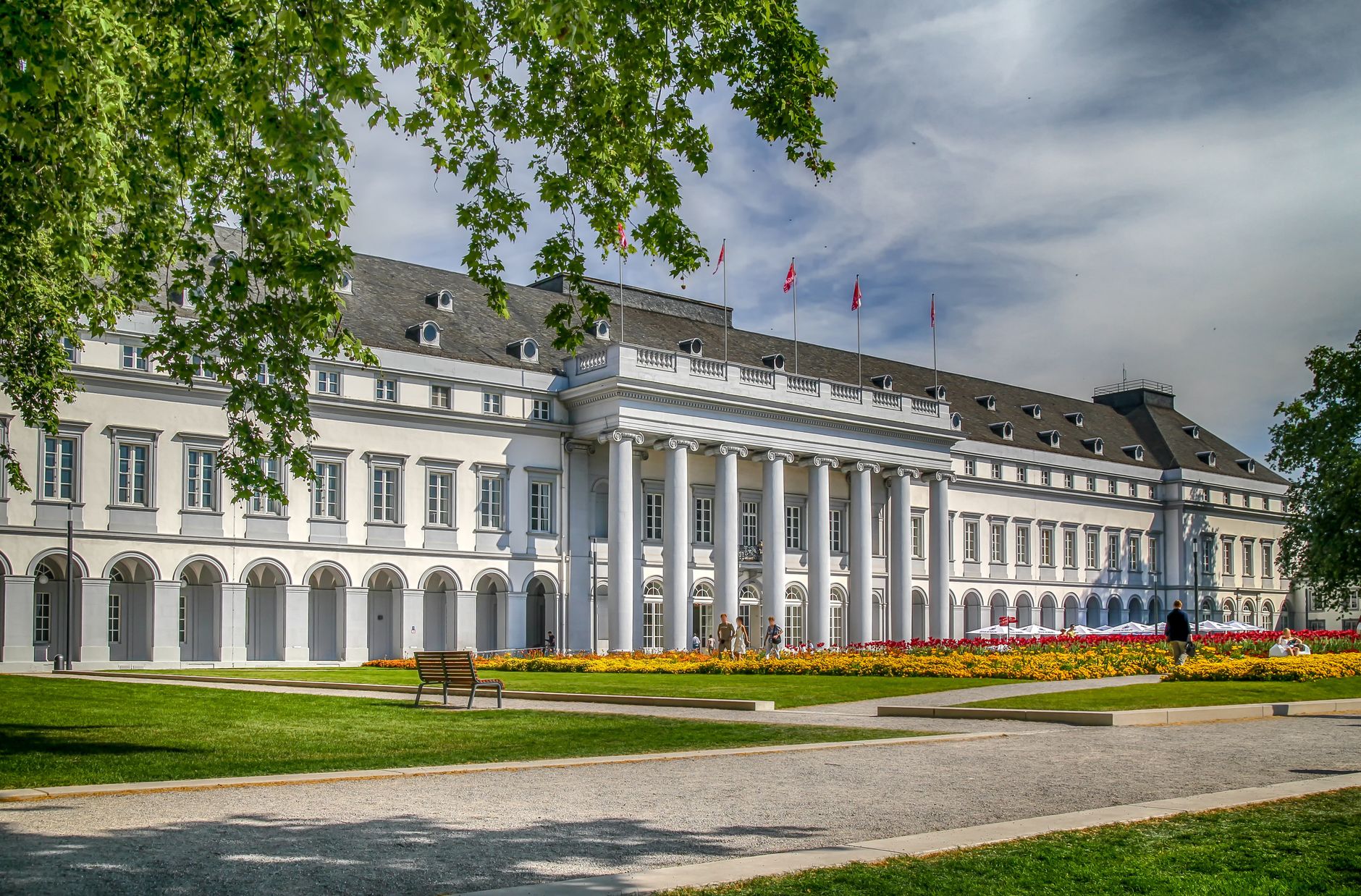
Rome planted a military post here in 9 BCE — the name Koblenz derives from the Latin Confluentes, meaning the confluence. After the empire receded, Frankish kings used it as a royal seat, and in 1018 Holy Roman Emperor Henry II handed the town to the archbishops of Trier, whose influence shaped it for centuries. The Teutonic Knights established a bailiwick here around 1231; the Baldwin Bridge went up in 1343; the last Elector of Trier built himself a neoclassical palace between 1777 and 1793.
Prussia arrived in 1815 and left its mark most visibly on Ehrenbreitstein — the fortress the French had demolished in 1801 was rebuilt between 1817 and 1828 into the structure you see today. The city became capital of the Prussian Rhine Province, then seat of the Inter-Allied Control Commission after 1919. Much of Koblenz was destroyed in World War II; the historic core has since been carefully restored.
Who and what shaped it
People who shaped it
Landmark buildings
See Koblenz in motion
Plan your visit
On the map
When to go
Koblenz has a temperate oceanic climate — mild rather than dramatic. Summers sit around 19°C and are the most visited season; winters are cool and grey, hovering near 2°C, but the Christmas market across six city locations and the light installation at Ehrenbreitstein give the colder months their own character.
Right now
Background & history adapted from Wikipedia (CC BY-SA) · specs from Wikidata (CC0) · weather from Open-Meteo · map data © OpenStreetMap contributors · photos from Wikimedia Commons / Unsplash with per-image credit. No third-party reviews or social posts reproduced.