
Kettle's Yard
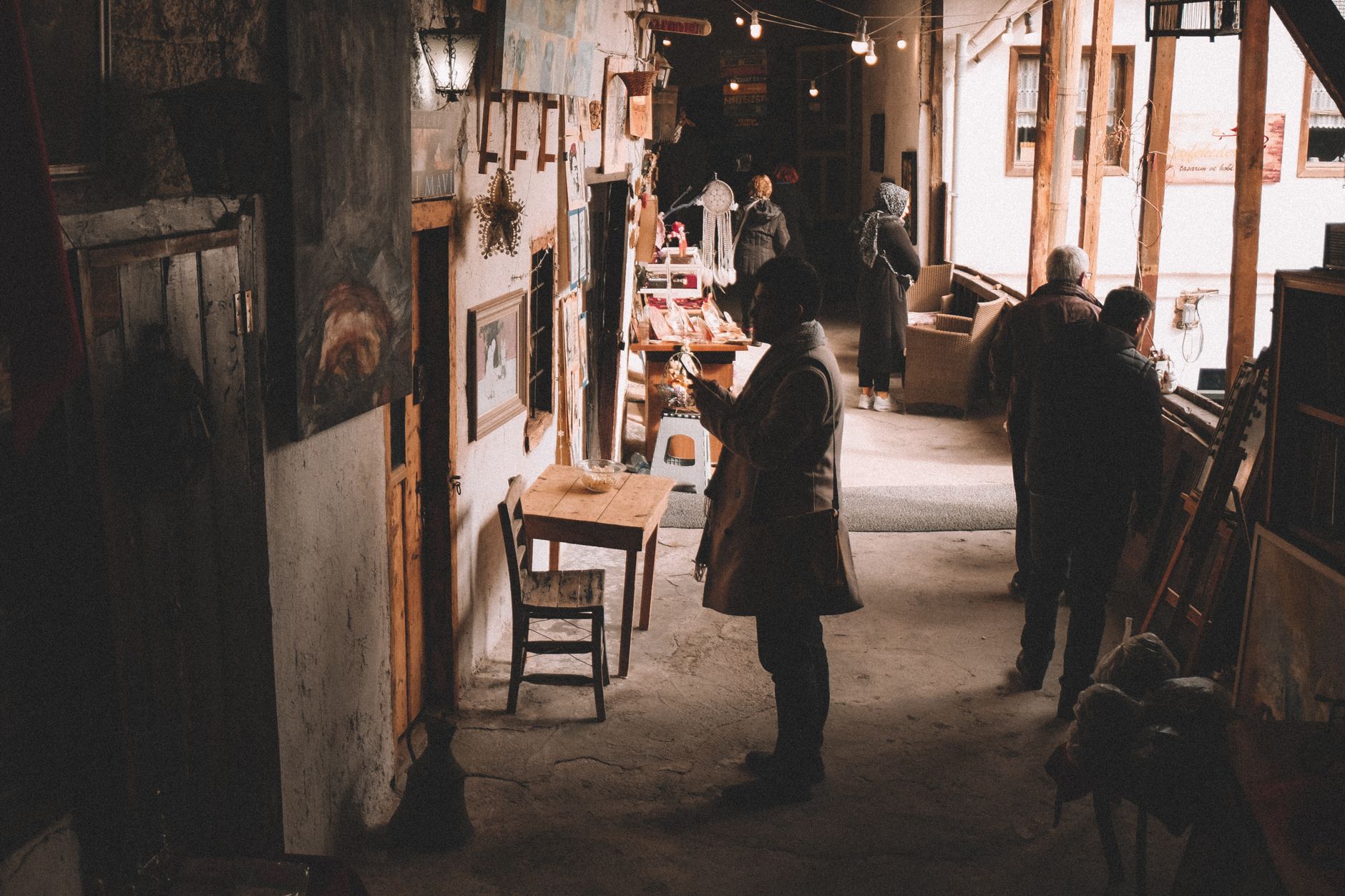
There are no labels on the art at Kettle's Yard. That's the first thing you notice, and the point. Jim Ede, who lived here with his wife Helen from 1957 to 1973, arranged his collection of early twentieth-century work — Ben Nicholson, Alfred Wallis, Christopher Wood — among furniture, pebbles and dried flowers, as if you'd simply wandered into a home where someone with very good eyes had been paying attention for decades.
The house on Castle Street began as four derelict cottages. Ede bought them in 1957, had them quietly stitched together, and then opened his afternoons to anyone who knocked — students especially. That habit of openness is still the place's defining quality.
💛 What travellers fall for
People who come back tend to go straight to the house before the galleries. The set-interval entry keeps the rooms uncrowded, and without labels you spend time actually looking. The round room with the spiral stair repays a second visit once you've stopped trying to catalogue everything and started noticing how the light moves across the Nicholsons.
Deals in Kettle's Yard
Book directly at the provider

How Kettle's Yard came to be
The Kettle name goes back to an eleventh-century merchant family who traded on this corner of Cambridge. The four cottages Jim Ede found in 1956 were in serious disrepair, saved from demolition by the Cambridge Preservation Society when housing was built nearby. Ede, who had spent the 1920s and 30s as a curator at the Tate in London — befriending Miró, the Nicholsons, Wallis and Wood along the way — bought the cottages in 1957 and had architect Winton Aldridge turn them into a single, idiosyncratic dwelling.
In 1966 Ede gave the house and collection to the University of Cambridge, though he and Helen continued living there until 1973. Sir Leslie Martin and David Owers added a gallery extension in 1970. A larger project by Jamie Fobert Architects, costing £11 million and completed in 2018, brought a new entrance, education wing and café without touching the interior of the original house.
Who and what shaped it
People who shaped it
Landmark buildings
See Kettle's Yard in motion
Plan your visit
On the map
When to go
Right now
Background & history adapted from Wikipedia (CC BY-SA) · specs from Wikidata (CC0) · weather from Open-Meteo · map data © OpenStreetMap contributors · photos from Wikimedia Commons / Unsplash with per-image credit. No third-party reviews or social posts reproduced.