
Karon
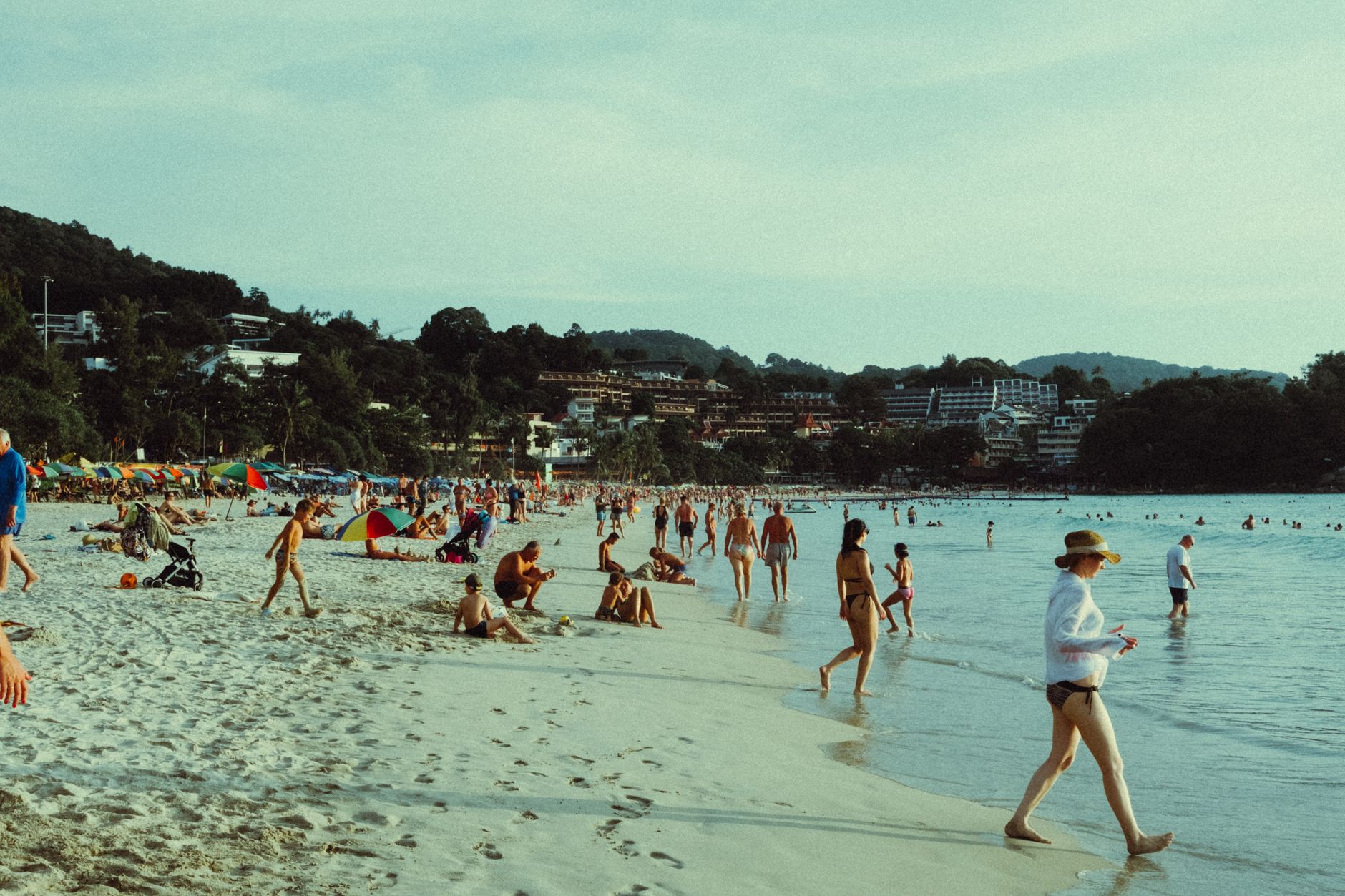
Walk barefoot on Karon Beach and you'll notice something odd: the sand squeaks underfoot. That's the silica content, unusually high, and it's one of those small true things that makes this three-kilometre stretch distinct from Phuket's other west-coast beaches. The sand is white and coarse-grained, the Andaman stretches flat to the horizon, and the scale of the place — wide, unhurried — gives it a different rhythm from its neighbours.
Karon is a proper beach town rather than a resort enclave. A circle roundabout anchors the main drag, the temple market sets up twice a week, and the Big Buddha watches from the ridge above — reachable on foot if you're willing to climb through the forest behind town.
💛 What travellers fall for
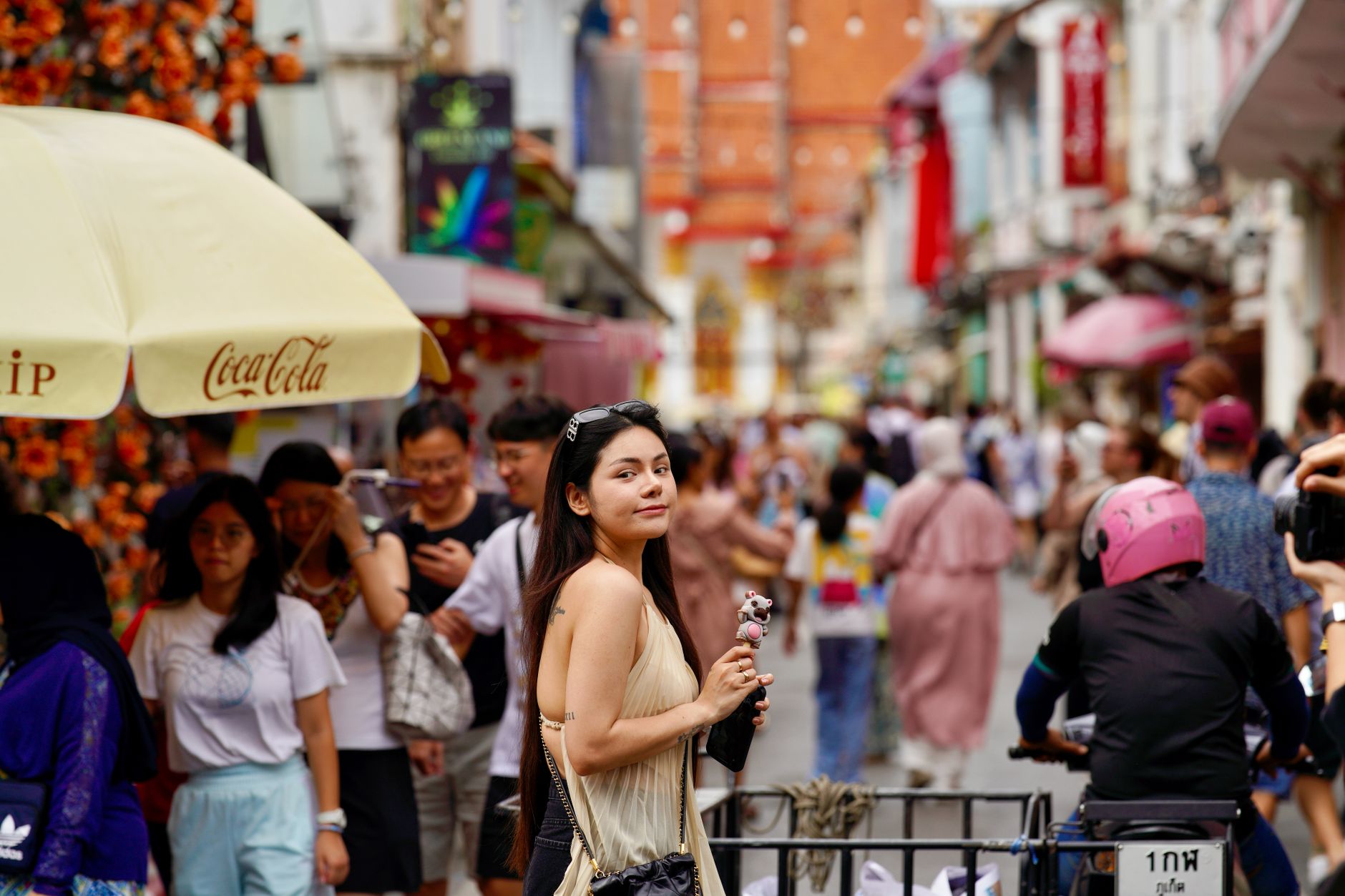
People who come back tend to time a Tuesday or Friday evening for Wat Suwan Khiri Khet's market — street food, local traders, the naga-flanked temple lit up after dark. They also mention the free beach volleyball at Khlong Bangla Park, run daily by the Phuket Beach Volleyball Club, as the kind of thing you stumble into and end up staying for.
Deals in Karon
Book directly at the provider

How Karon came to be
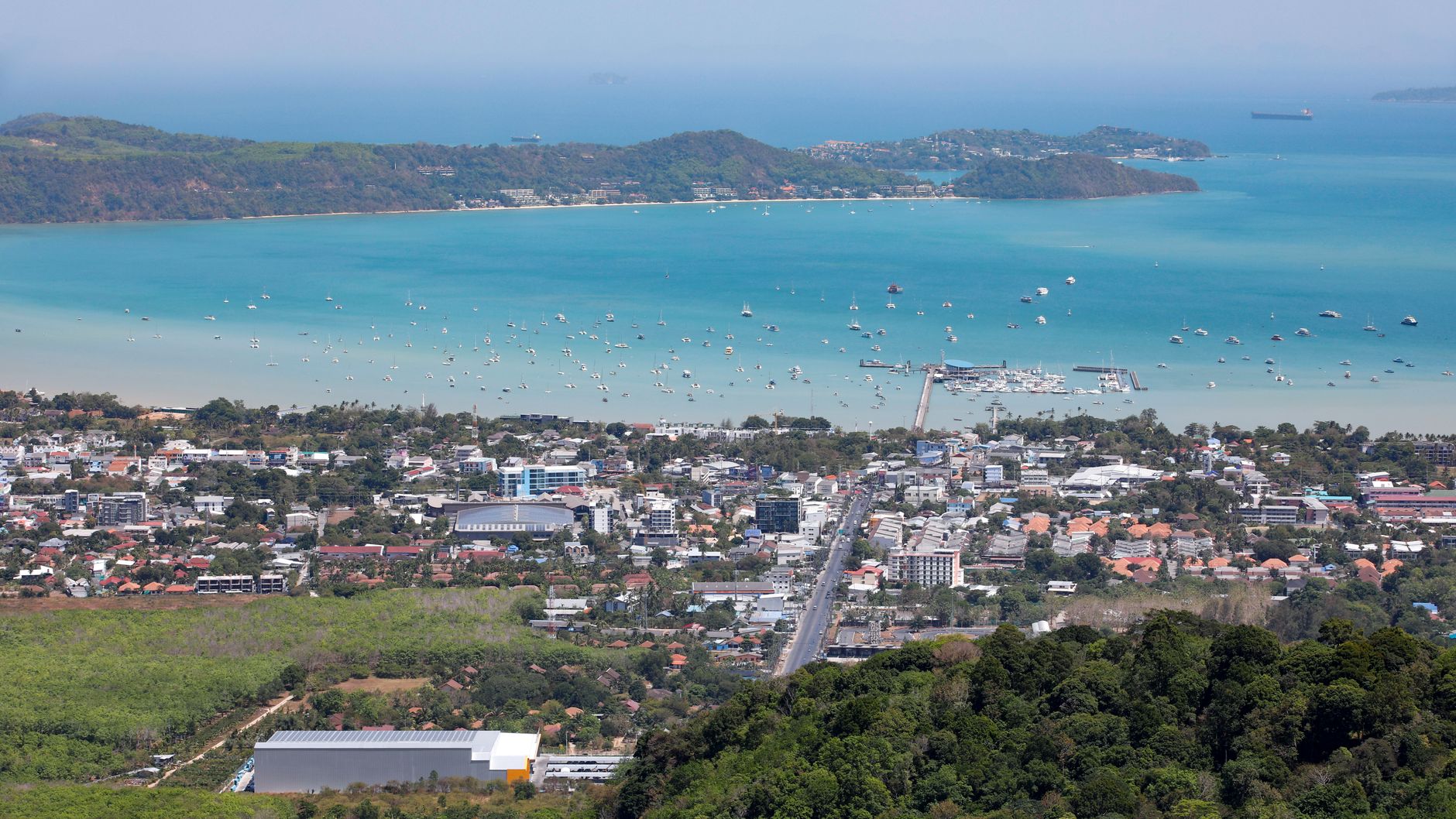
As recently as 1994, Karon was described as genuinely isolated — an empty beach separated from the main road by a river where buffaloes bathed, open land between the sand and any sign of town. The development that transformed Phuket's western shores into a global destination came largely through the 1980s, and Karon grew steadily within that wave.
The 2004 Indian Ocean tsunami struck the beach hard, particularly its southern end. Recovery took several years, with the area largely rebuilt by 2008. Construction of the Big Buddha — the 45-metre statue on Nakkerd Hill above town — began that same year the tsunami hit, 2004, and the project became a long community undertaking visible from much of southern Phuket.
Who and what shaped it
Landmark buildings
See Karon in motion
Plan your visit
On the map
When to go
November through April brings clear skies and manageable humidity — the months when the sea is calm enough to swim without checking the flags. May to October is monsoon season on this west-facing coast: afternoon downpours, strong currents, and waves that close the beach to swimmers but attract surfers, with August and September delivering the heaviest rainfall, sometimes over 300mm in a single month.
Right now
Background & history adapted from Wikipedia (CC BY-SA) · specs from Wikidata (CC0) · weather from Open-Meteo · map data © OpenStreetMap contributors · photos from Wikimedia Commons / Unsplash with per-image credit. No third-party reviews or social posts reproduced.