
Karnak
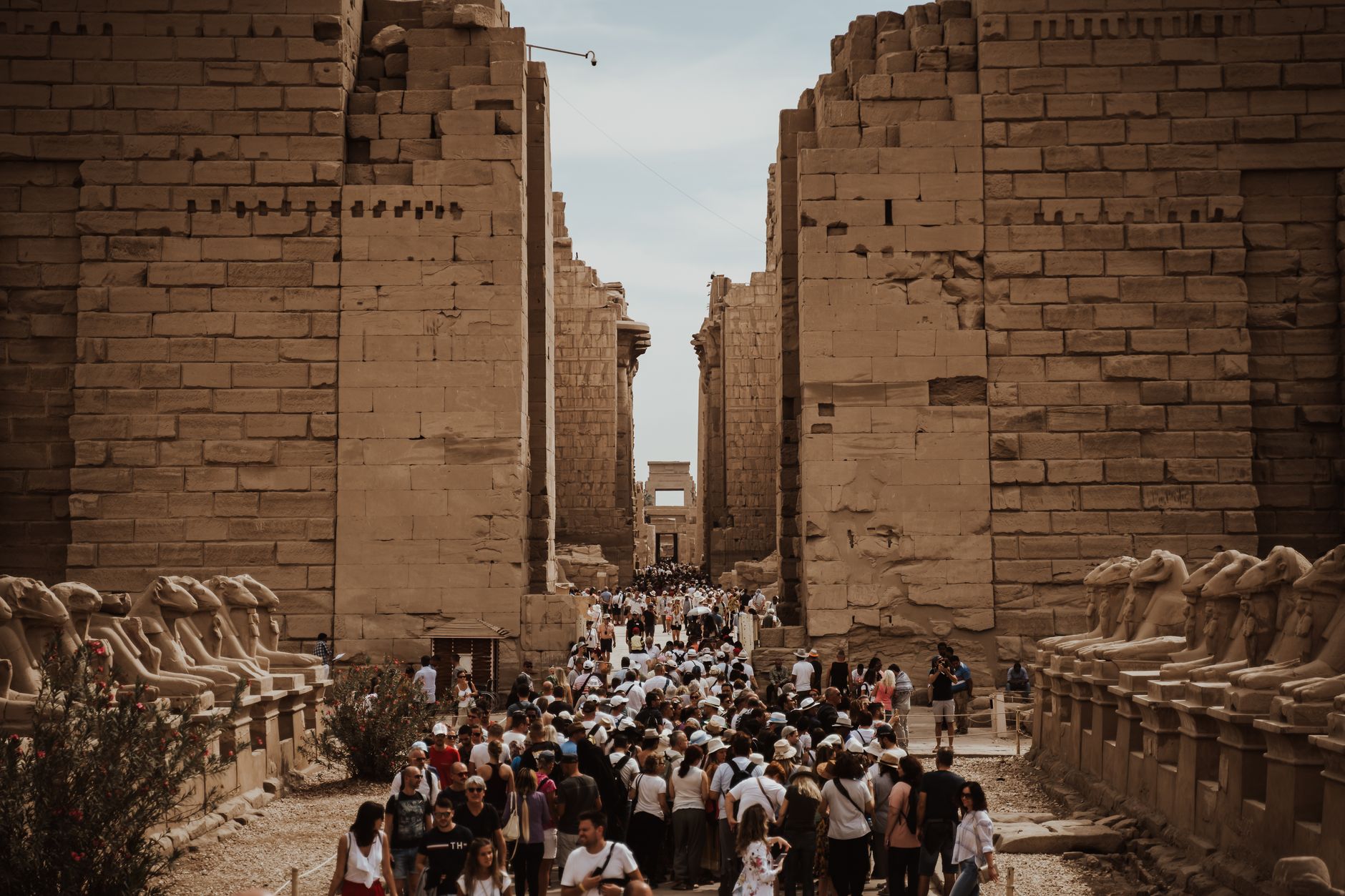
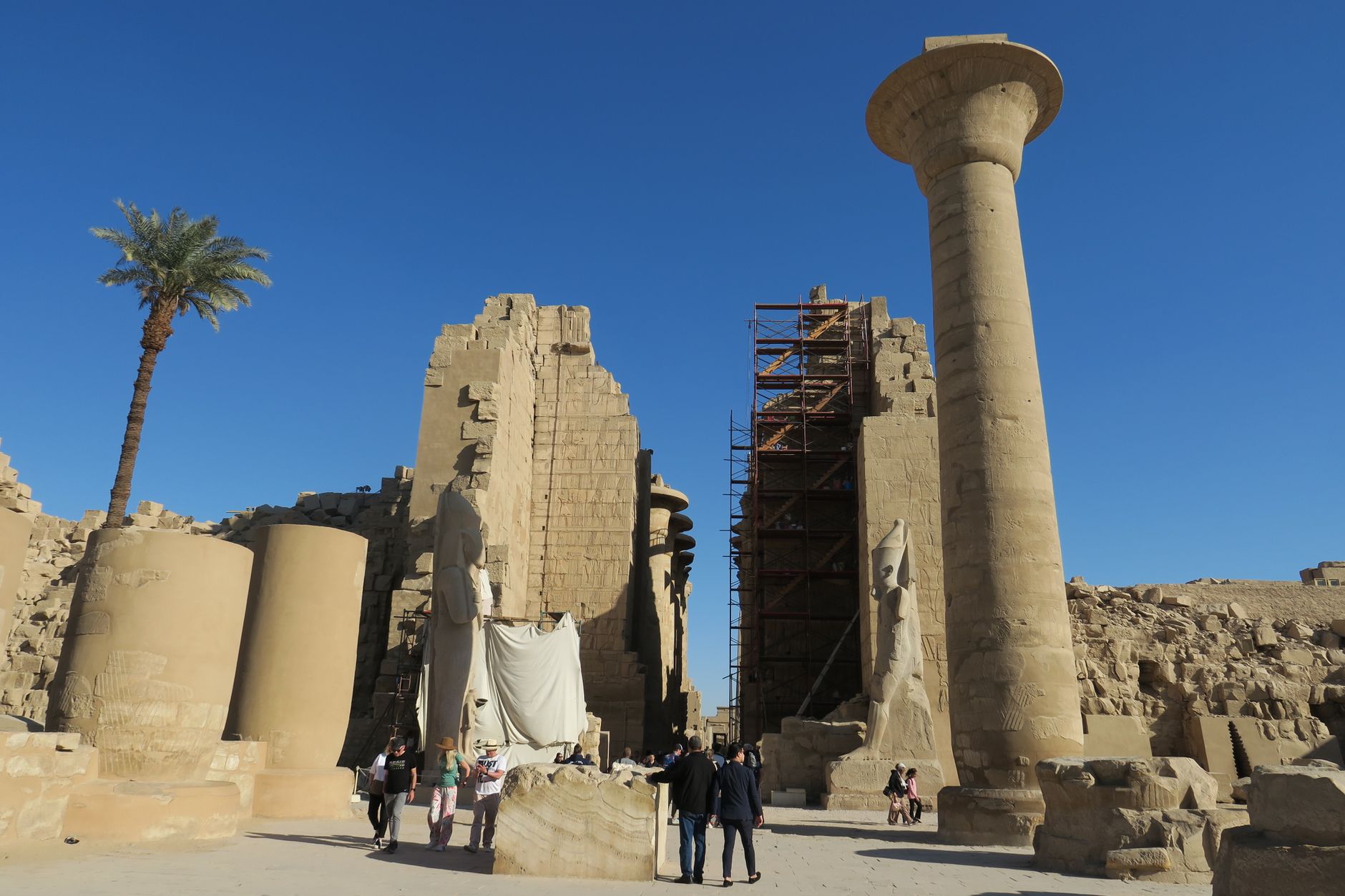
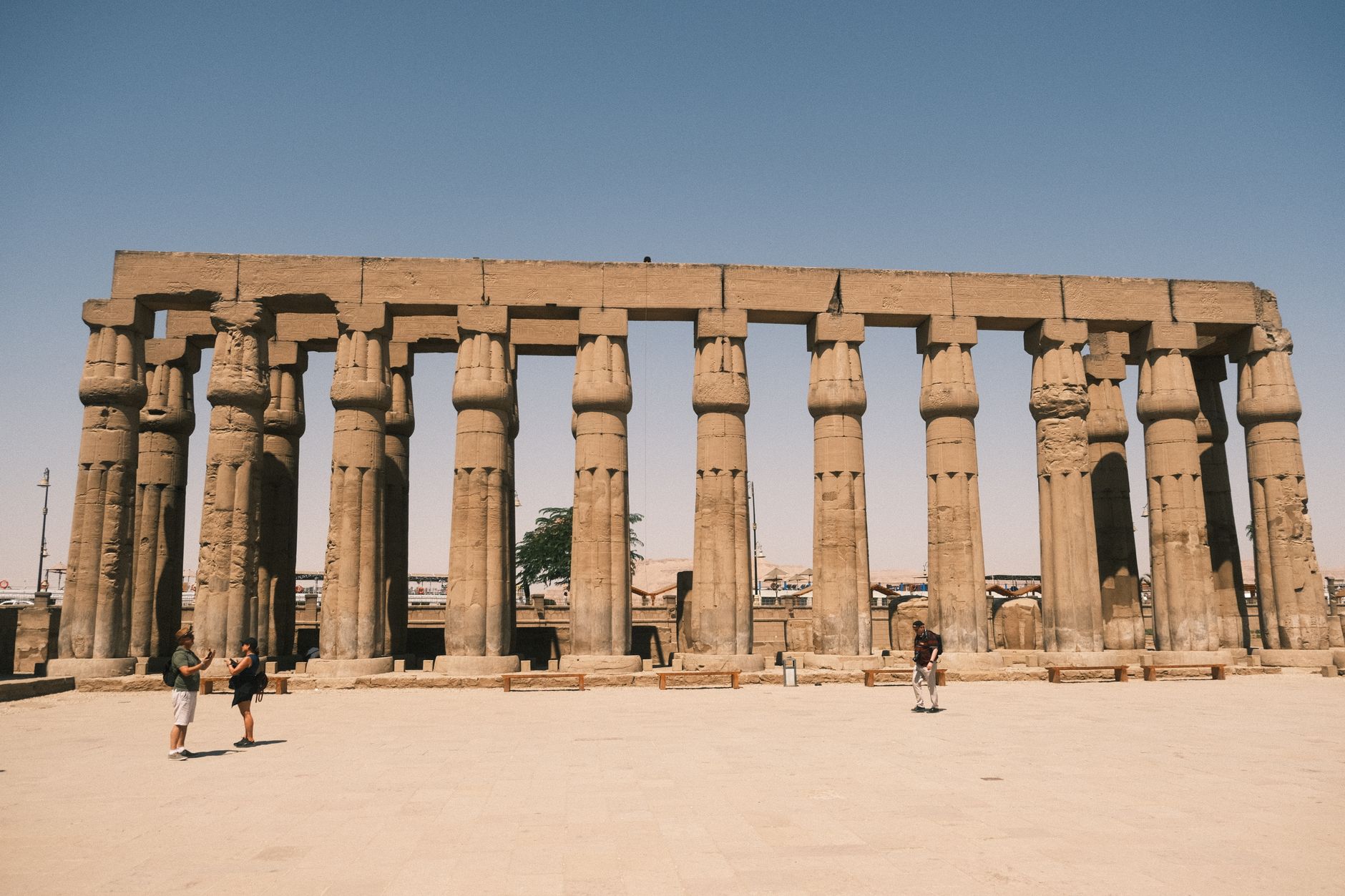
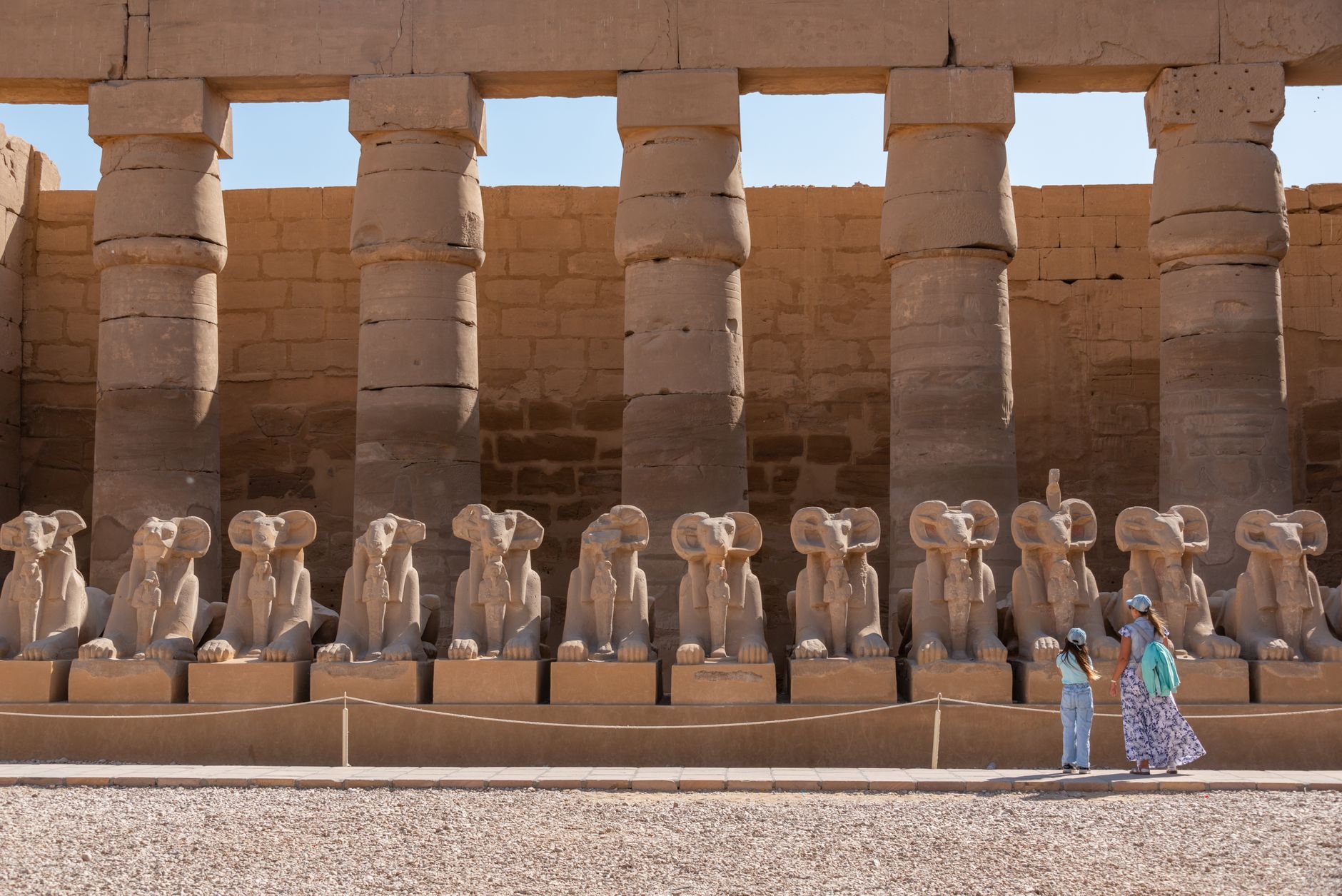
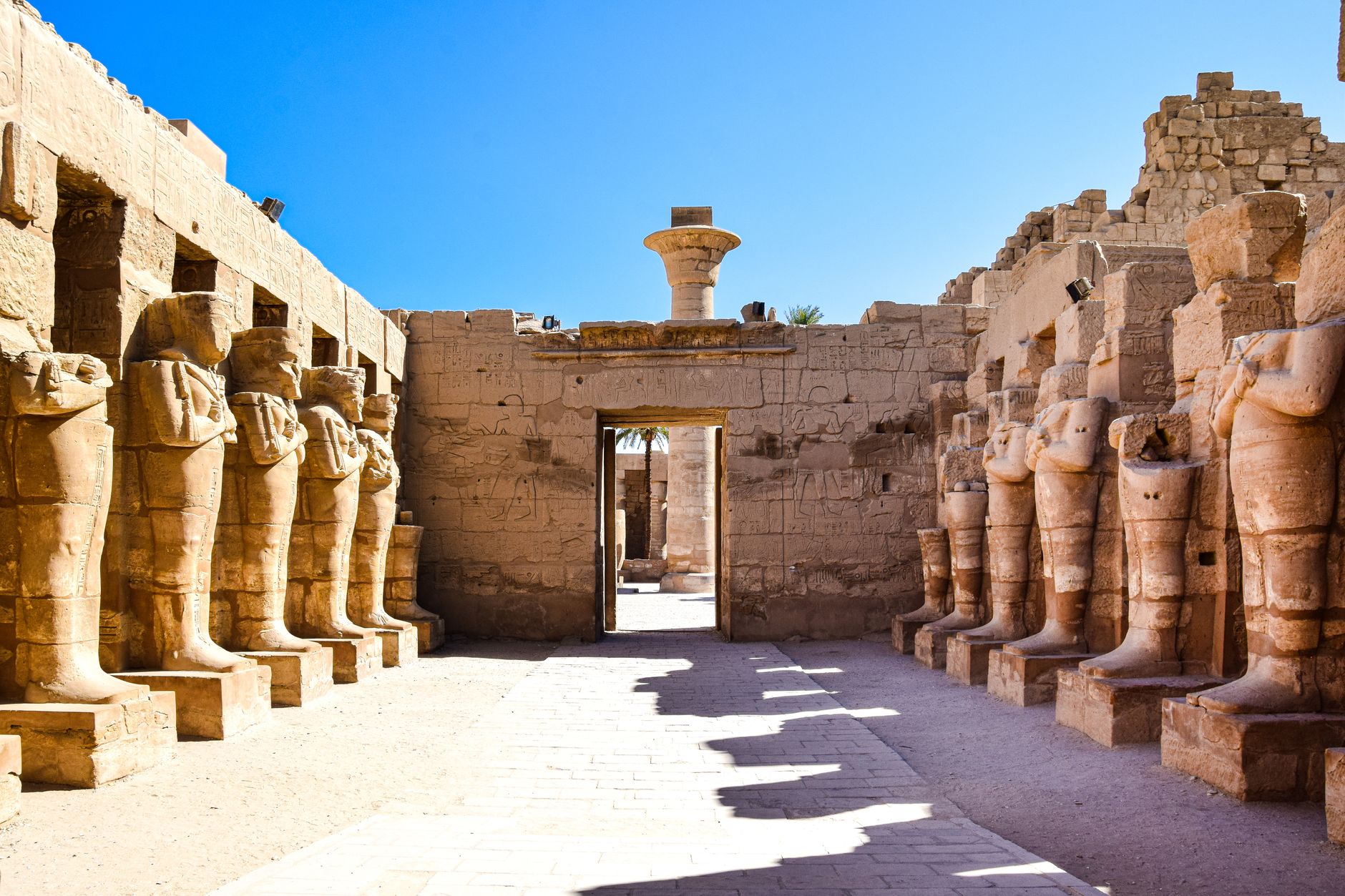
Stand inside the Great Hypostyle Hall and the scale takes a moment to process: 134 columns, each one carved from floor to capital, the twelve along the central axis rising 24 metres and wide enough that three people linking hands couldn't circle one. Seti I and Ramesses II raised this forest of stone, and the reliefs still hold traces of pigment — ochre, blue, the faintest red — if you look at the upper registers in the right light.
Karnak is not a single temple but a city of temples, accumulated by more than thirty pharaohs across roughly two thousand years, from Senusret I in the Middle Kingdom to the Ptolemies. Only the Precinct of Amun-Ra is open to visitors, which is, by any measure, more than enough.
💛 What travellers fall for
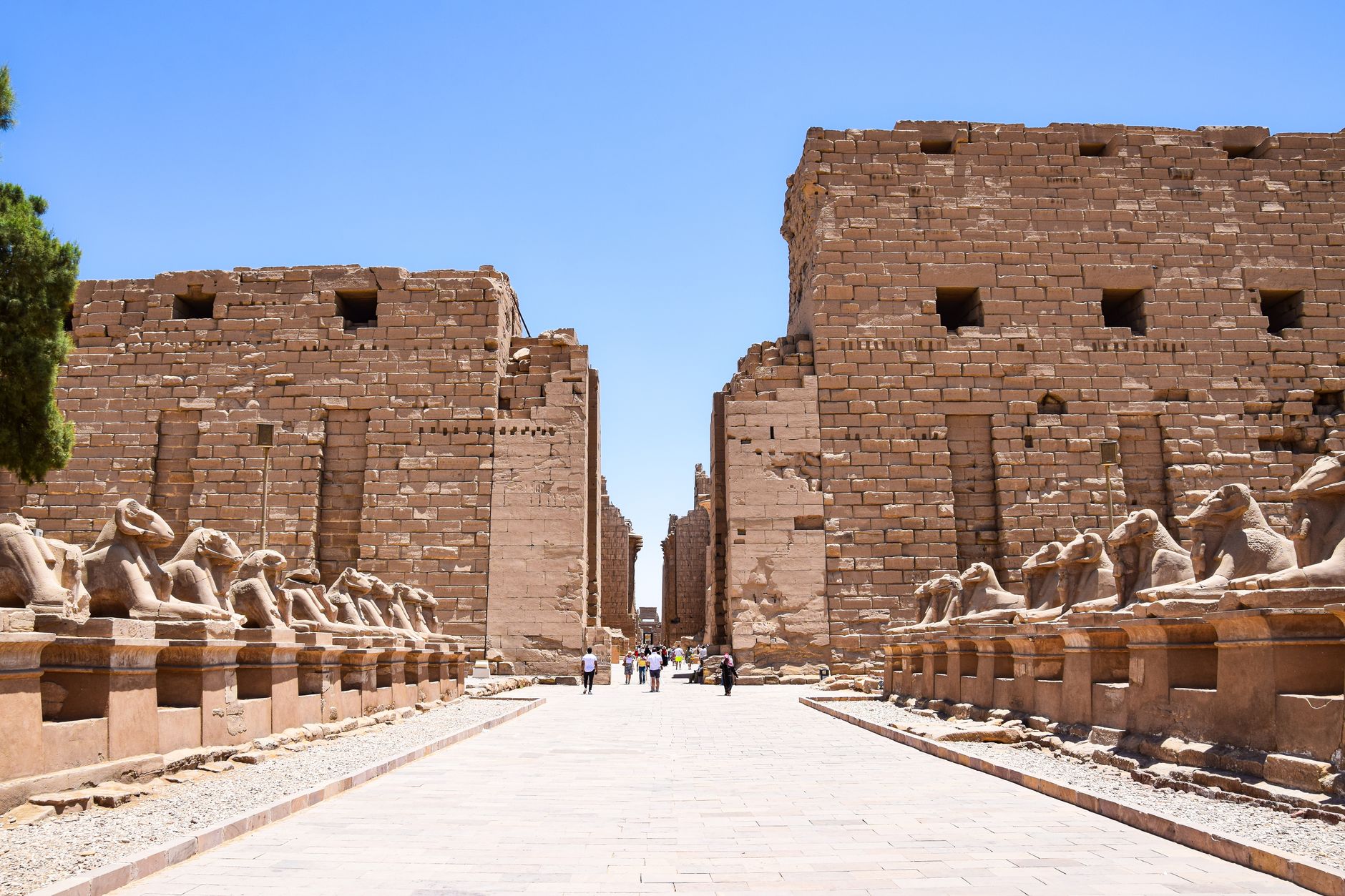
People who come back tend to arrive at opening, 6 am, when the light is low and the tour groups haven't yet filled the Hypostyle Hall. They also make a point of walking the full length of the Avenue of Sphinxes toward the Sacred Lake, and of finding Hatshepsut's surviving obelisk — the second-tallest ancient obelisk still standing on earth — before the midday glare flattens everything.
Deals in Karnak
Book directly at the provider

How Karnak came to be
The earliest surviving trace of royal construction here dates to Wahankh Intef II, around 2063 BCE, but it was Senusret I, early in the Middle Kingdom, who built the first substantial temple to Amun on this site. What followed was two millennia of layering: Thutmose I enclosed the Fourth and Fifth Pylons; Hatshepsut raised twin obelisks, at the time the tallest in the world; Thutmose III added a sixth pylon and carved his campaign annals into the walls. Amenhotep III built the Third Pylon. Akhenaten erected a temple to Aten just east of the complex — Horemheb dismantled it the moment Akhenaten died.
By 356 CE, when Constantius II ordered pagan temples closed across the Roman Empire, Karnak was already largely abandoned. Christian congregations built churches among the ruins. The name Karnak itself isn't recorded until 1668, when two Capuchin missionaries passed through and wrote it down.
Who and what shaped it
People who shaped it
Landmark buildings
See Karnak in motion
Plan your visit
On the map
When to go
Winters (November to February) are the most comfortable, with daytime temperatures in the low-to-mid twenties Celsius and cool mornings. Summer visits are possible but the heat between 10 am and 4 pm is punishing — if you go in June or July, the 6 am opening time is not optional.
Right now
Background & history adapted from Wikipedia (CC BY-SA) · specs from Wikidata (CC0) · weather from Open-Meteo · map data © OpenStreetMap contributors · photos from Wikimedia Commons / Unsplash with per-image credit. No third-party reviews or social posts reproduced.