
Kamari
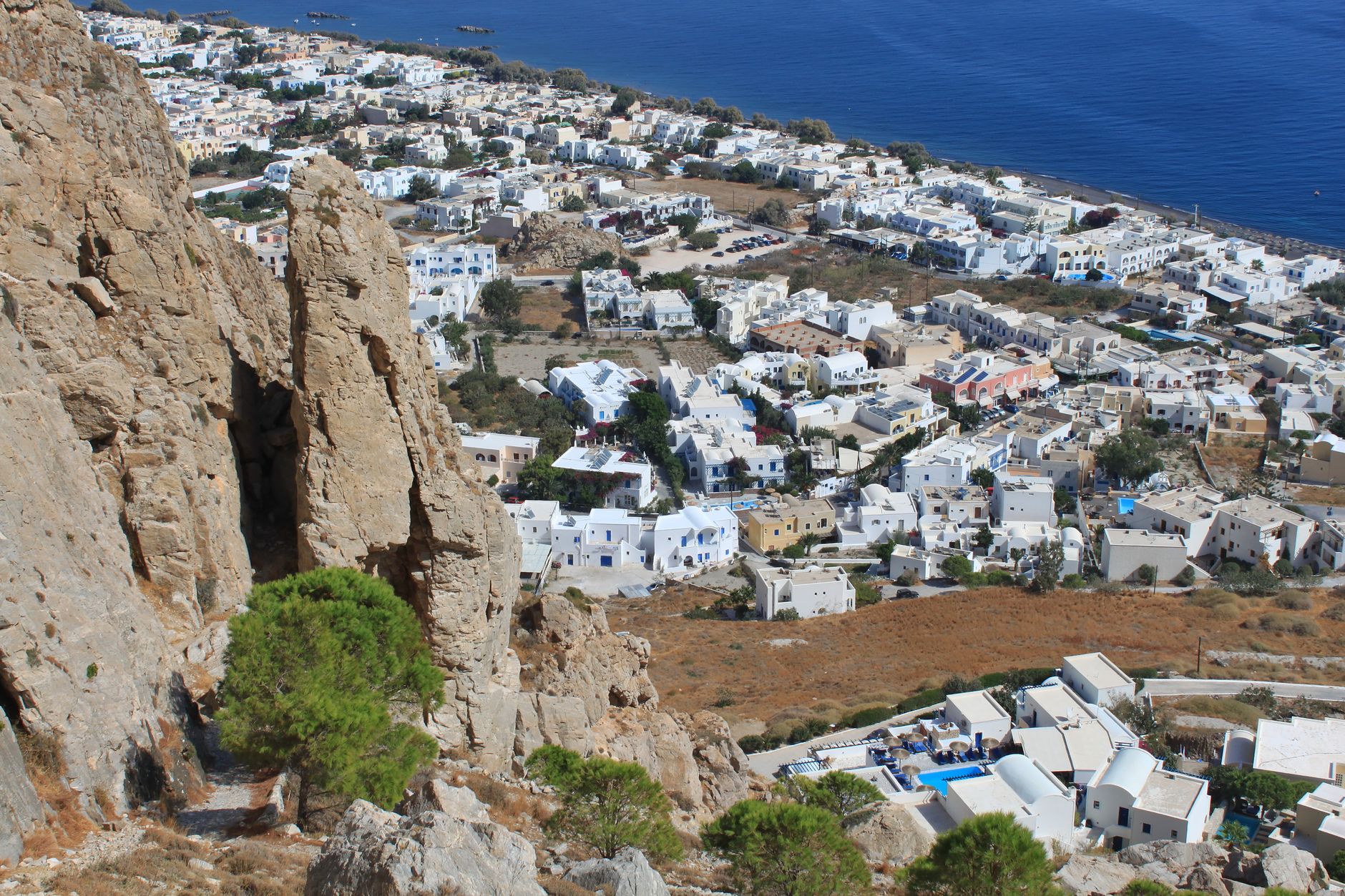
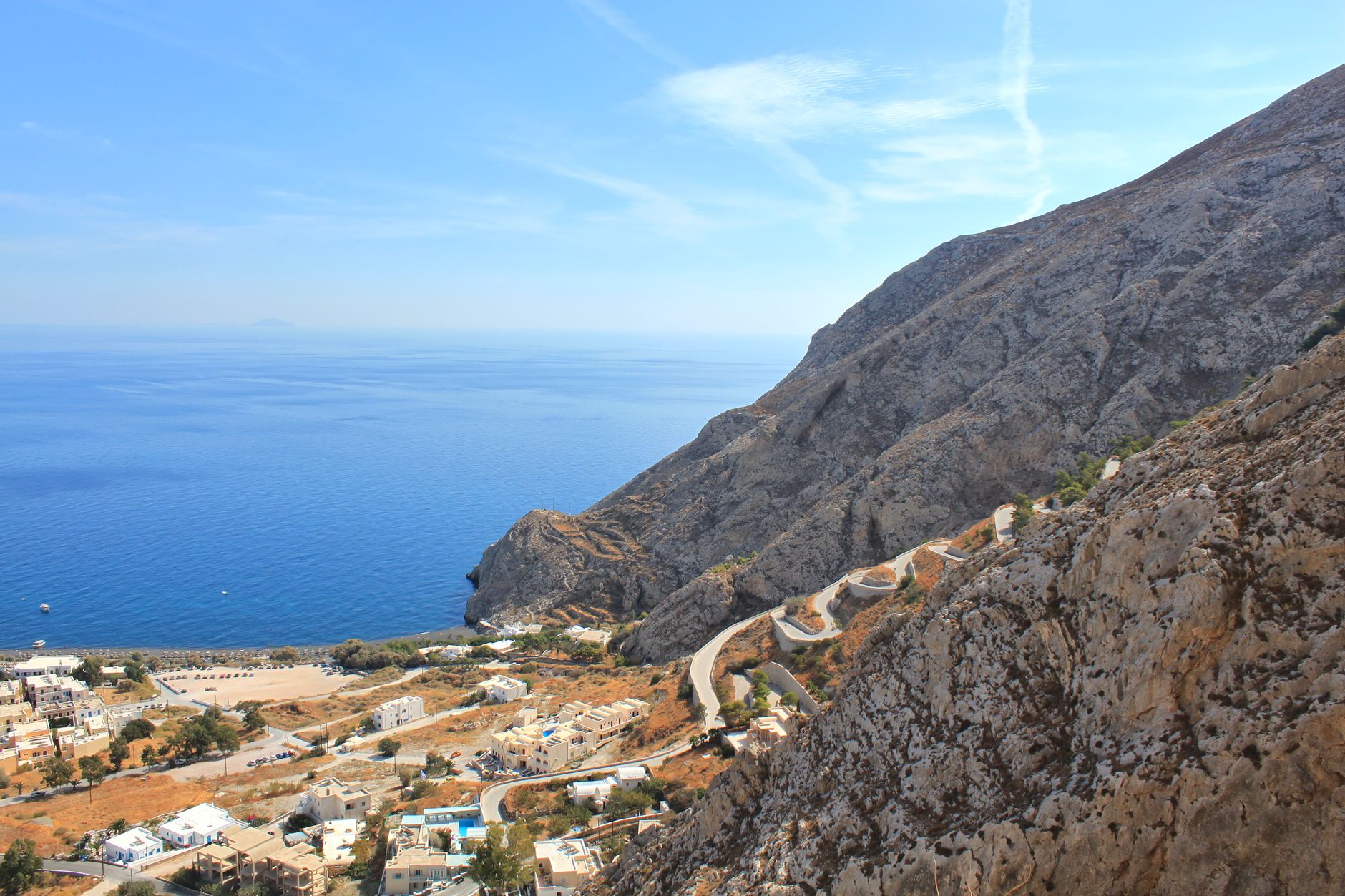
The black pebbles of Kamari's beach aren't black in the way a photograph suggests — they're closer to charcoal and iron, warm underfoot by midday and cooled fast once the sun drops behind Mesa Vouno, the 400-metre peak that closes off the southern end of the shore. That mountain is the reason Kamari exists at all: it sheltered this stretch of coast, and it still holds, on its upper ridge, the ruins of Ancient Thera, a city that was already old when Alexander was born.
Kamari itself is a working resort village — tavernas, sun loungers, a strip of shops — rebuilt after the 1956 earthquake levelled its predecessor. It's unpretentious in a way the caldera villages rarely are, and the five-kilometre beach, repeatedly Blue-Flag-certified, runs all the way north to Monolithos without a cliff in sight.
💛 What travellers fall for
People who come back tend to pair the beach with an afternoon climb to Ancient Thera — the winding road starts right at Kamari. They also mention the open-air cinema, which shows films after dark in the way only a warm Greek night makes possible. One practical note repeated often: bring cash for the bus, cards aren't accepted.
Deals in Kamari
Book directly at the provider
How Kamari came to be
The village takes its name from a small stone arch — kamara in Greek — at the southern end of the beach, the surviving remnant of a customs house built somewhere between 1537 and 1650. That arch still marks the Epiphany blessing of the waters each year. Most of modern Kamari, though, dates only to after July 1956, when an earthquake destroyed the older settlement of Episkopi Gonias nearby and its residents rebuilt here on lower ground.
Above the village, the ruins of Ancient Thera tell a longer story. The Dorian leader Theras founded the colony in the 9th century BC, and the site — temples, theatre, cemetery, market — remained inhabited until a volcanic eruption in 726 AD buried it in pumice. German archaeologists excavated the main cemetery between 1895 and 1902. In 2002, a dig in Kamari itself uncovered an archaic sanctuary dedicated to Achilles.
Who and what shaped it
Landmark buildings
See Kamari in motion
Plan your visit
On the map
When to go
Summers are hot and dry, with the beach season running comfortably from late May through September. Spring is gentler — around 19°C in April, 22°C in May — and a good time to visit Ancient Thera before the midday heat makes the climb uncomfortable.
Right now
Background & history adapted from Wikipedia (CC BY-SA) · specs from Wikidata (CC0) · weather from Open-Meteo · map data © OpenStreetMap contributors · photos from Wikimedia Commons / Unsplash with per-image credit. No third-party reviews or social posts reproduced.