
Kailua-Kona
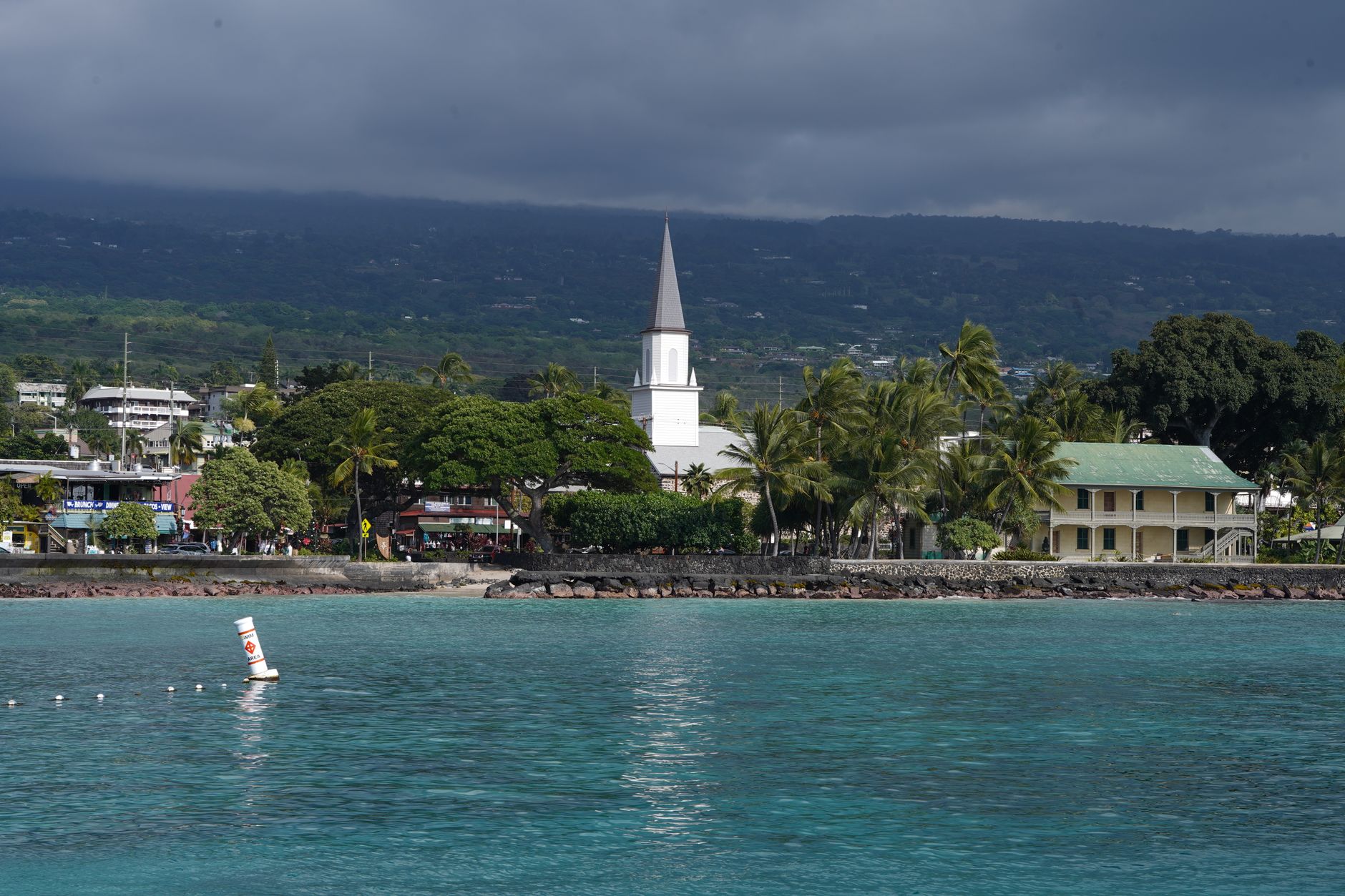
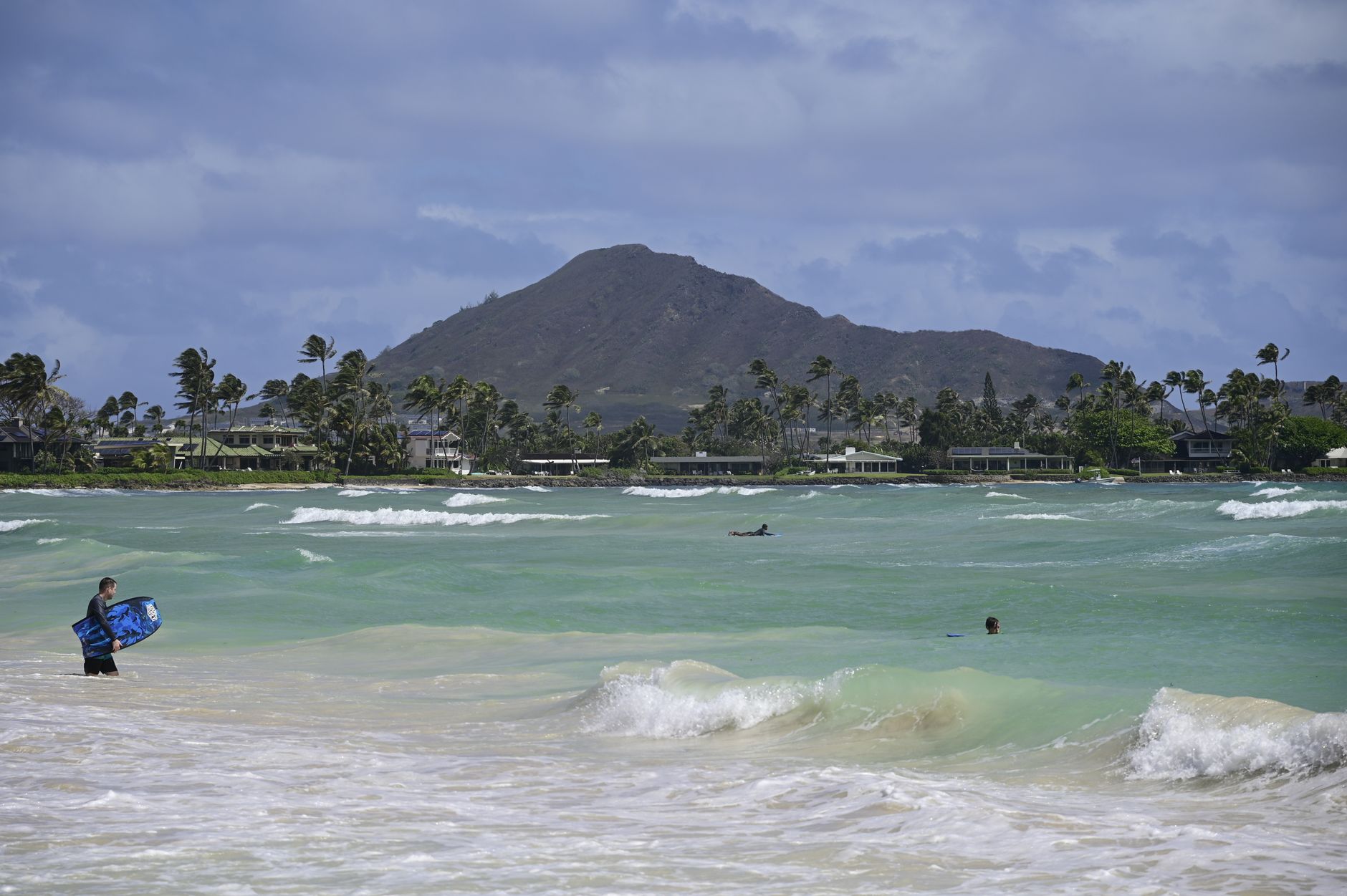

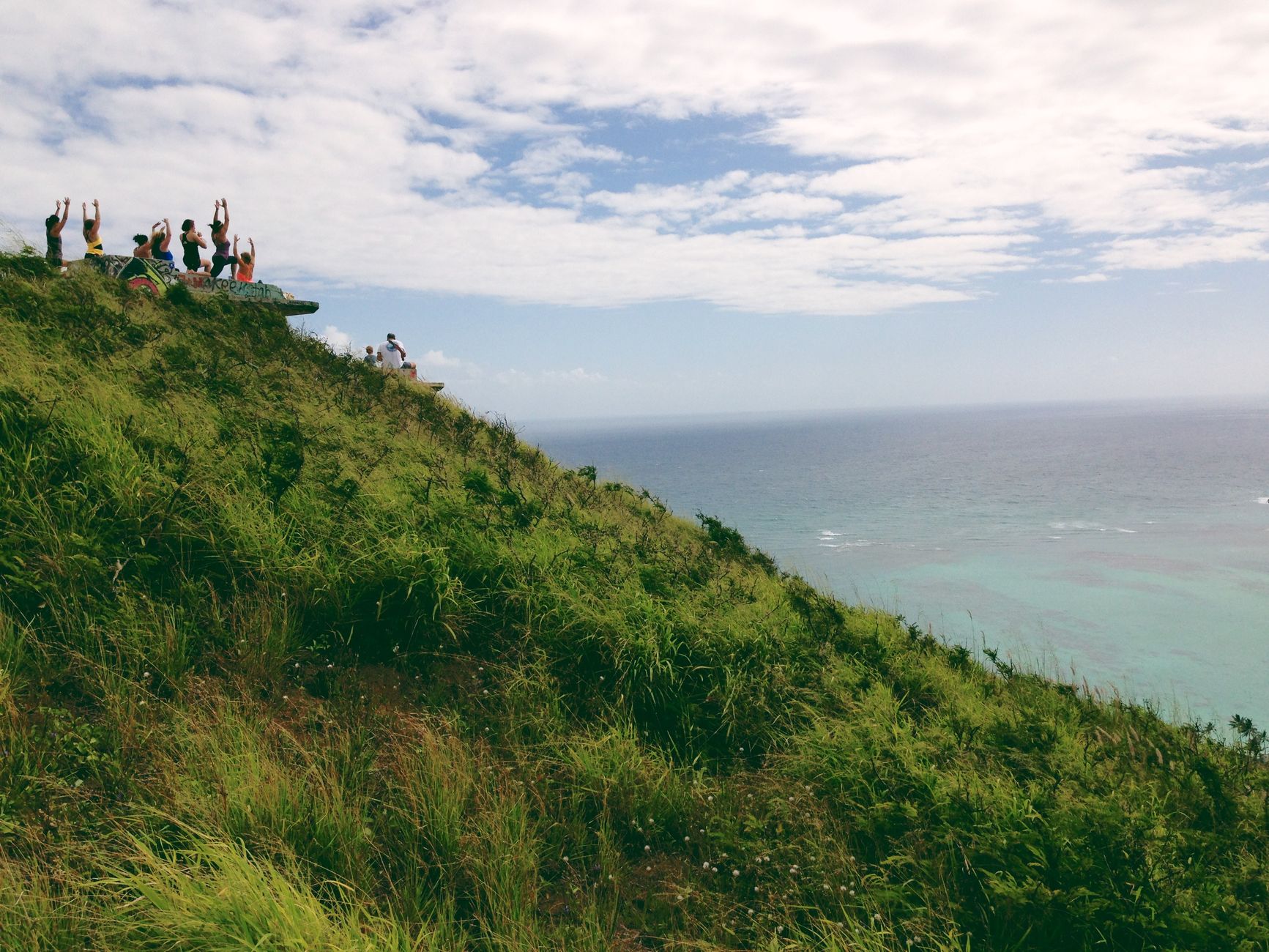
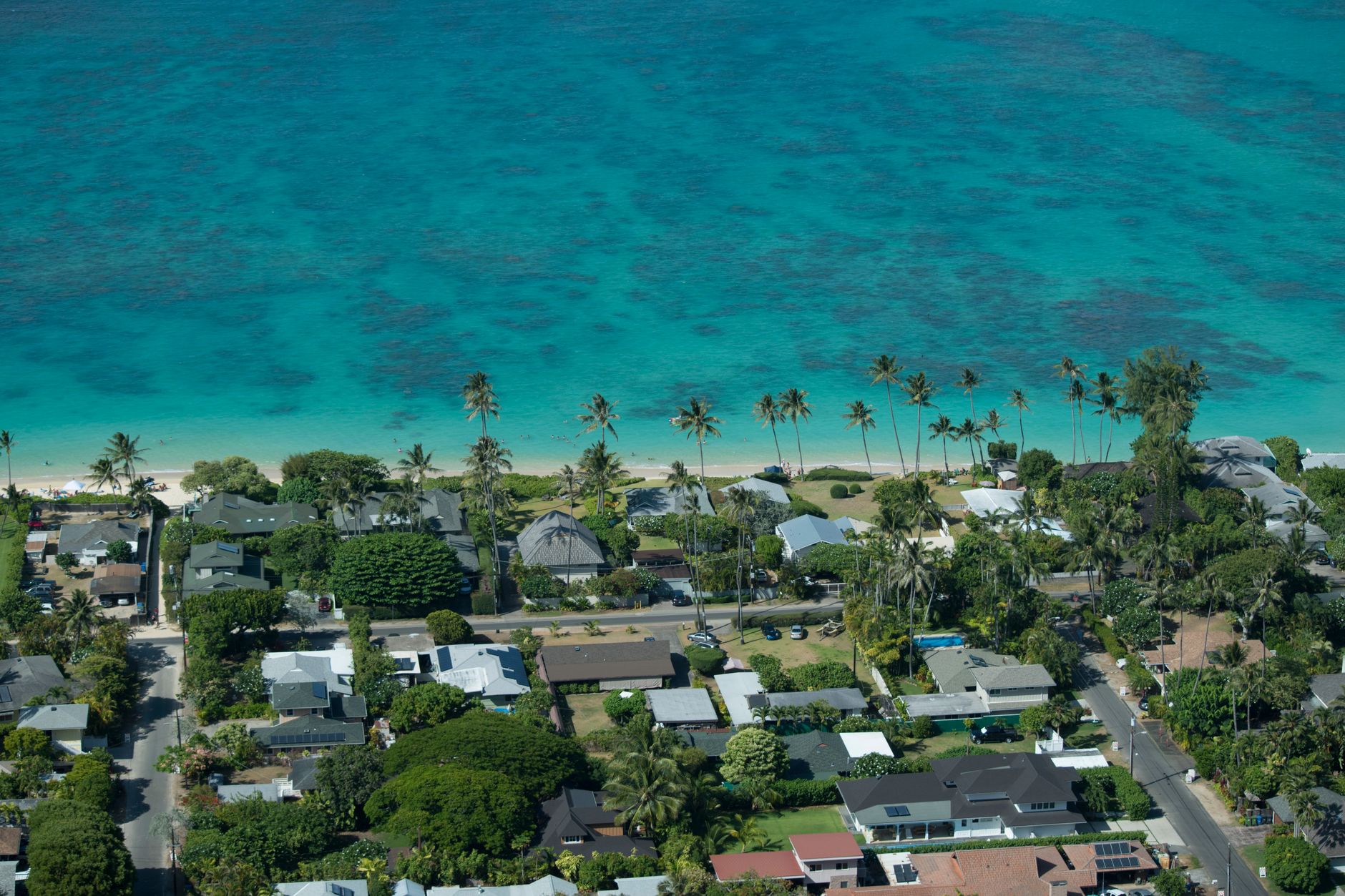
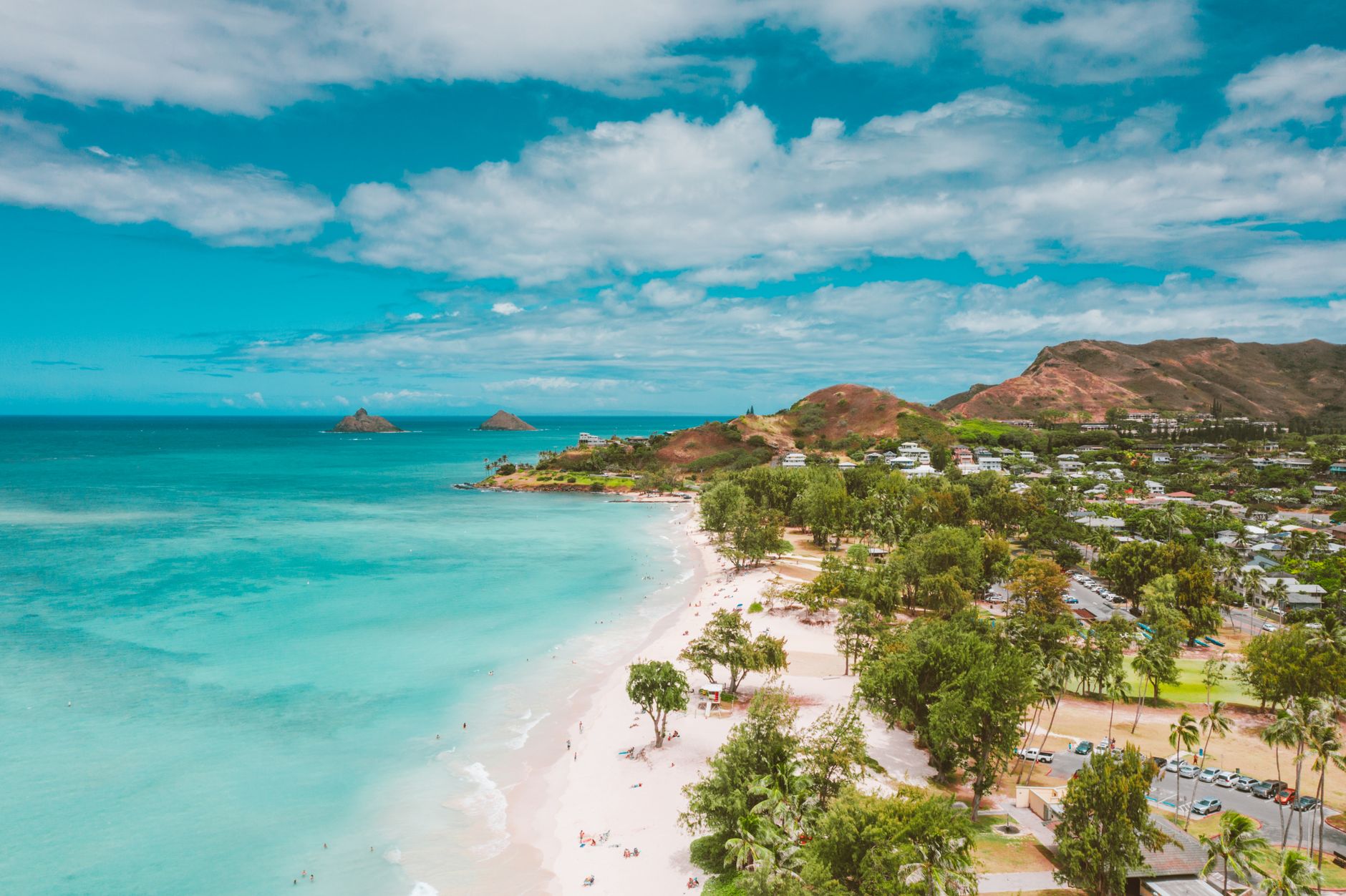
Ali'i Drive runs right along the water, and on most mornings the only thing between you and the Pacific is a low seawall and the smell of salt. Kailua-Kona is the west side of the Big Island — dry, sun-bleached lava fields giving way to a compact downtown where a royal palace and Hawaii's oldest Christian church sit within a short walk of each other, and where the Ironman World Championship starts and finishes at the pier every October.
This is a working town that happens to have an extraordinary past. Kamehameha I governed his unified kingdom from this bay. Captain Cook arrived here in 1779 and died just south of it. The Kona coffee trade began in the hills above town in 1828. All of that history is still visible, not reconstructed.
💛 What travellers fall for
People who keep coming back tend to be up early at Kahaluʻu Bay before the tour groups arrive — the snorkeling is genuinely good, and sea turtles are a reliable presence. They also figure out that the Kona Coffee Festival in November is worth timing a trip around, and that sunset from Kailua Pier requires no effort and no fee.
Deals in Kailua-Kona
Book directly at the provider

How Kailua-Kona came to be
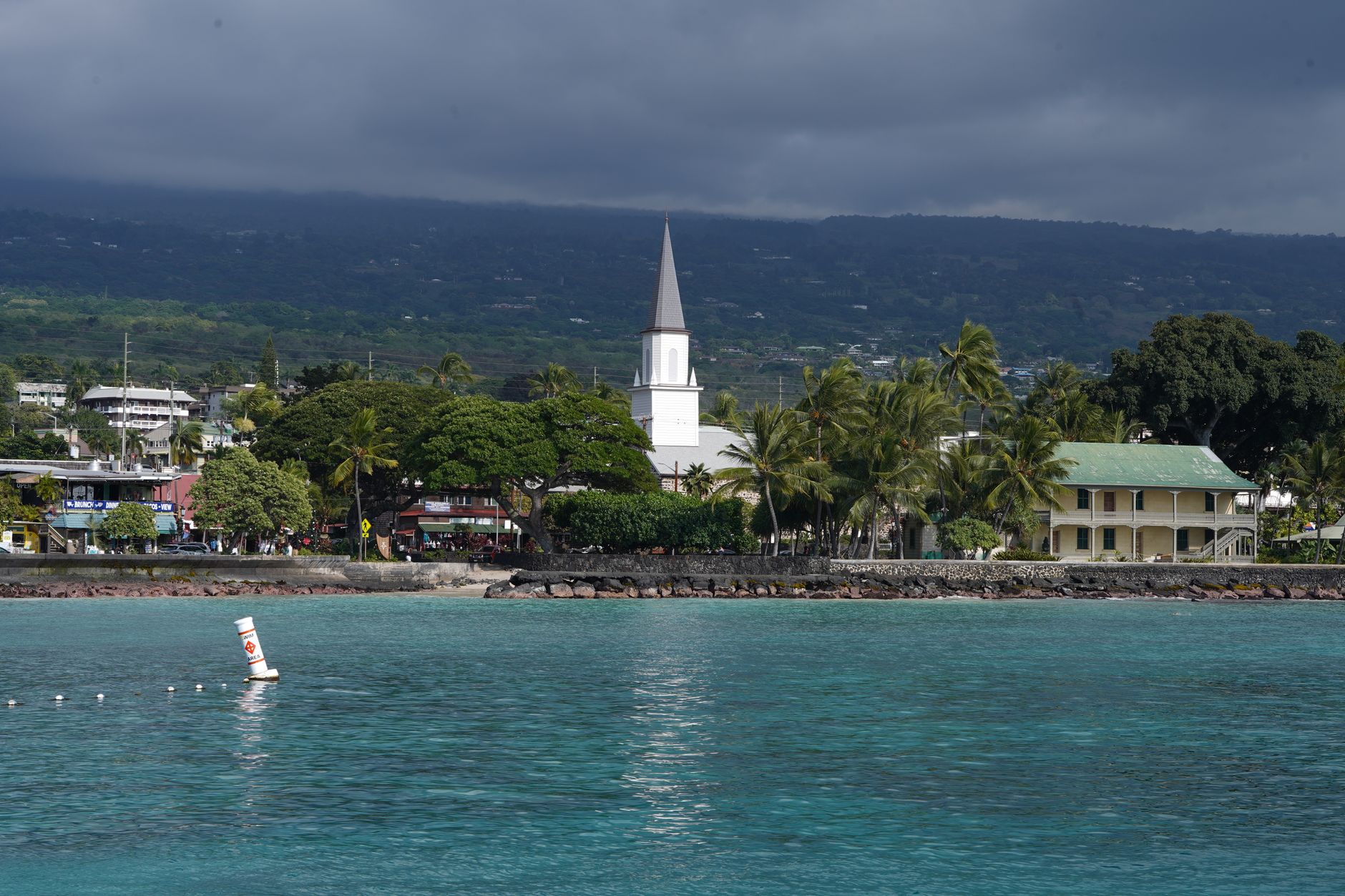
Kailua Bay was already the seat of power when Kamehameha I consolidated rule over the Hawaiian Islands in 1795. He lived and governed from Kamakahonu, the royal compound at the north end of the bay, where Ahuʻena Heiau still stands. When the first Protestant missionaries from New England sailed into the same bay in 1820 on the brig Thaddeus, they were met by a kingdom in transition. Missionary Asa Thurston settled here for over four decades, overseeing the construction of Mokuaikaua Church — completed in stone in 1837 and still standing as Hawaii's first Christian church.
Governor John Adams Kuakini built Hulihe'e Palace in 1838, a year after the church was finished; it became the summer residence of the Hawaiian royal family, including Princess Ruth Ke'elikōlani, the largest private landowner in 19th-century Hawaii. When the capital shifted to Honolulu, Kailua contracted into a fishing village. It stayed that way for decades before tourism and the Ironman era remade it again.
Who and what shaped it
People who shaped it
Landmark buildings
See Kailua-Kona in motion
Plan your visit
On the map
When to go
The west side of the Big Island sits in the rain shadow of Mauna Kea and Mauna Loa, so Kailua-Kona is sunny and dry almost every day of the year, with temperatures holding between the low 70s and mid-80s Fahrenheit. Brief afternoon showers are more common in winter but rarely last long.
Right now
Background & history adapted from Wikipedia (CC BY-SA) · specs from Wikidata (CC0) · weather from Open-Meteo · map data © OpenStreetMap contributors · photos from Wikimedia Commons / Unsplash with per-image credit. No third-party reviews or social posts reproduced.