
Juhu
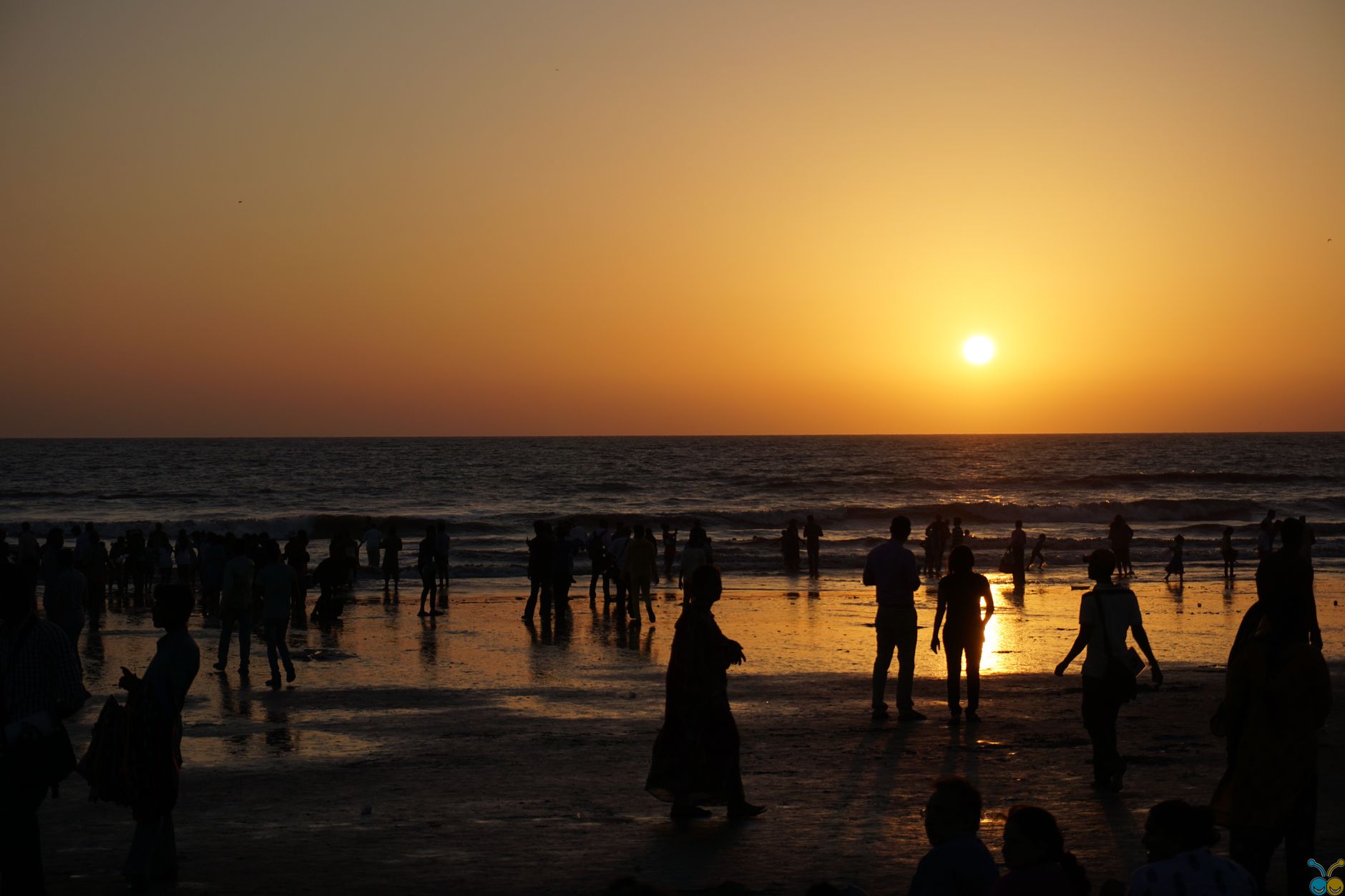


Juhu is where Mumbai comes to exhale. The beach runs five kilometres along the Arabian Sea, and on any given evening you'll find chaat vendors, kite flyers, and film crews sharing the same stretch of sand without apparent friction. The water is not for swimming — high tide ends that conversation quickly — but the shore itself is a kind of open-air living room that the city has claimed entirely as its own.
Behind the beach, the neighbourhood holds more than the seaside reputation suggests. There's a 1853 Portuguese church, an aerodrome that predates India's independence, and a 200-seat theatre that has quietly shaped the country's performing-arts culture since 1978.
💛 What travellers fall for
People who keep coming back tend to arrive at the beach before seven in the morning, when the sand is still cool and the vendors are just setting up. Most also find their way to Prithvi Theatre at least once — check what's on before you go, since the 500-plus shows a year mean something is almost always running.
Deals in Juhu
Book directly at the provider


How Juhu came to be
The Portuguese knew this spit of land as Juvem, and it was home to Koli fisherfolk, Agri salt traders, and Kunbi cultivators long before the city arrived. The Church of St. Joseph went up in 1853. The island only connected to the mainland in 1846, when Sir Jamsetjee Jeejeebhoy funded a causeway — without which Juhu might have remained a fishing village indefinitely.
In the 1890s, Jamsetji Tata bought land here with plans for a 1,200-acre seaside resort and 500 individual plots, a vision that died with him in 1904. What took shape instead was India's first civil aviation airport, founded in 1928; J.R.D. Tata landed there on 15 October 1932 carrying airmail from Karachi in a Puss Moth, inaugurating the country's first scheduled air service. In 1937, Gandhi walked this beach — a photograph of him gently poking his grandson Kanaa mid-stride became one of the more intimate images of his later years.
Who and what shaped it
People who shaped it
Landmark buildings
See Juhu in motion
Plan your visit
On the map
When to go
December through February brings the most agreeable conditions, with daytime temperatures between 18 and 32°C. The monsoon from June to September is serious — July alone can deliver over 600 mm of rain — and the summer months of March to May push well past 40°C.
Right now
Background & history adapted from Wikipedia (CC BY-SA) · specs from Wikidata (CC0) · weather from Open-Meteo · map data © OpenStreetMap contributors · photos from Wikimedia Commons / Unsplash with per-image credit. No third-party reviews or social posts reproduced.