
Jardin Japonais de la Compagnie

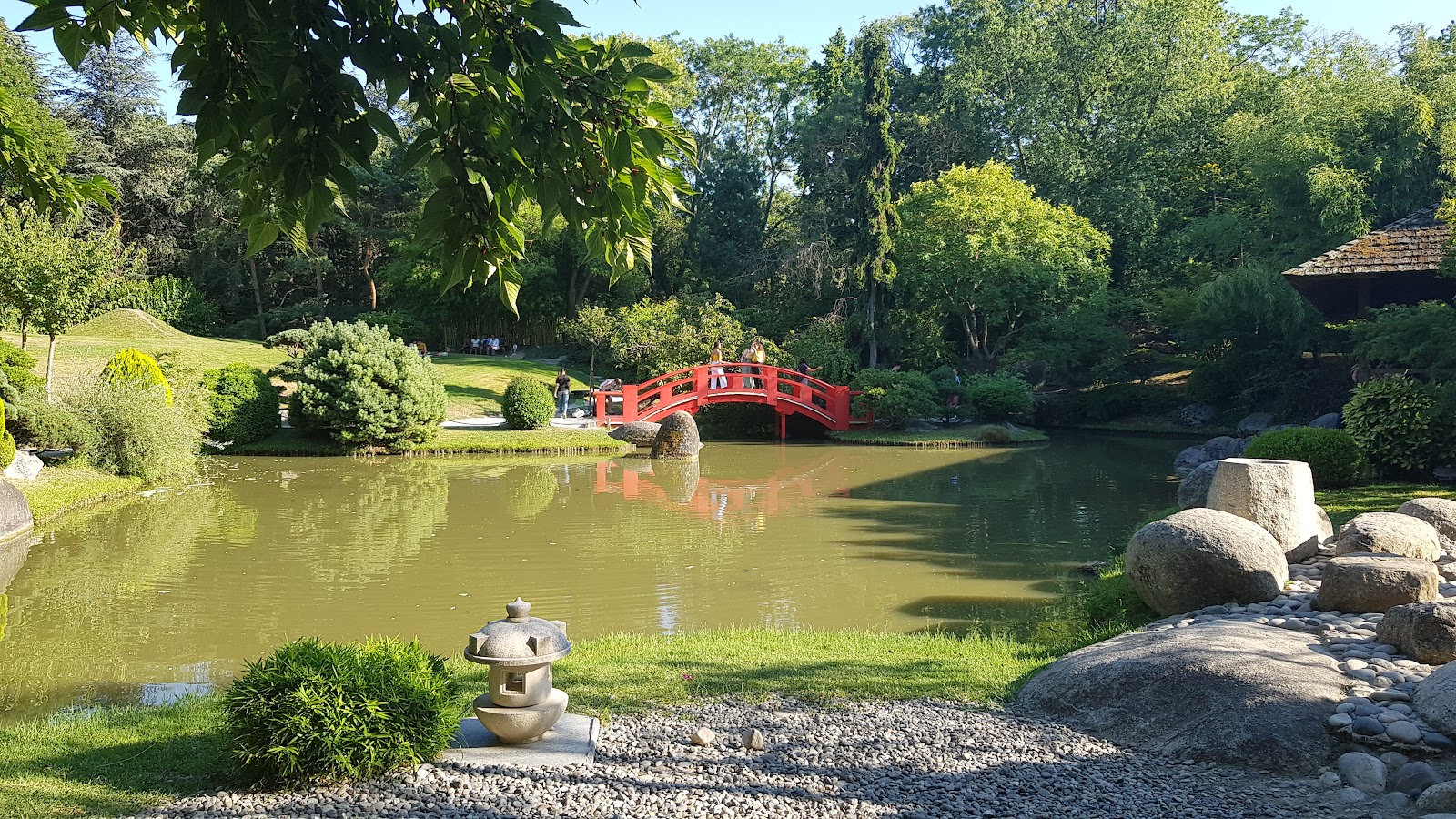
You find it by getting a little lost first. The Jardin Japonais de la Compagnie sits inside the larger Compans Caffarelli park, and there are no signs pointing you toward it — just shaded paths that eventually open onto 7,000 square metres of raked gravel, cloud-pruned trees, and a pond where koi move slowly beneath the surface and turtles climb onto rocks to warm themselves.
This is a Japanese garden designed on the model of the Katsura villa in Kyoto, with a dry garden, a tea pavilion, a red bridge, stepping stones, and a representation of Mount Fuji. In one corner of the perimeter pond, a steampunk dragon submarine by sculptor Tom Petrusson breaks the serenity in the best possible way.
💛 What travellers fall for
People who come back tend to time it for cherry blossom season — late March into early April — when the garden hosts Hanami celebrations and the flowering trees do what they do. The entrance through Compans Caffarelli genuinely has no signage, so orient yourself before you arrive, or just follow the sound of frogs.
The story behind Jardin Japonais de la Compagnie
In 1981, Toulouse mayor Pierre Baudis — who had been struck by a Japanese garden he visited in Dublin — commissioned a garden of the same spirit for the city. The design came from the Toulouse City Parks and Green Spaces Department and was built by a local firm, Espaces Verts du Languedoc. The model was the Katsura villa in Kyoto.
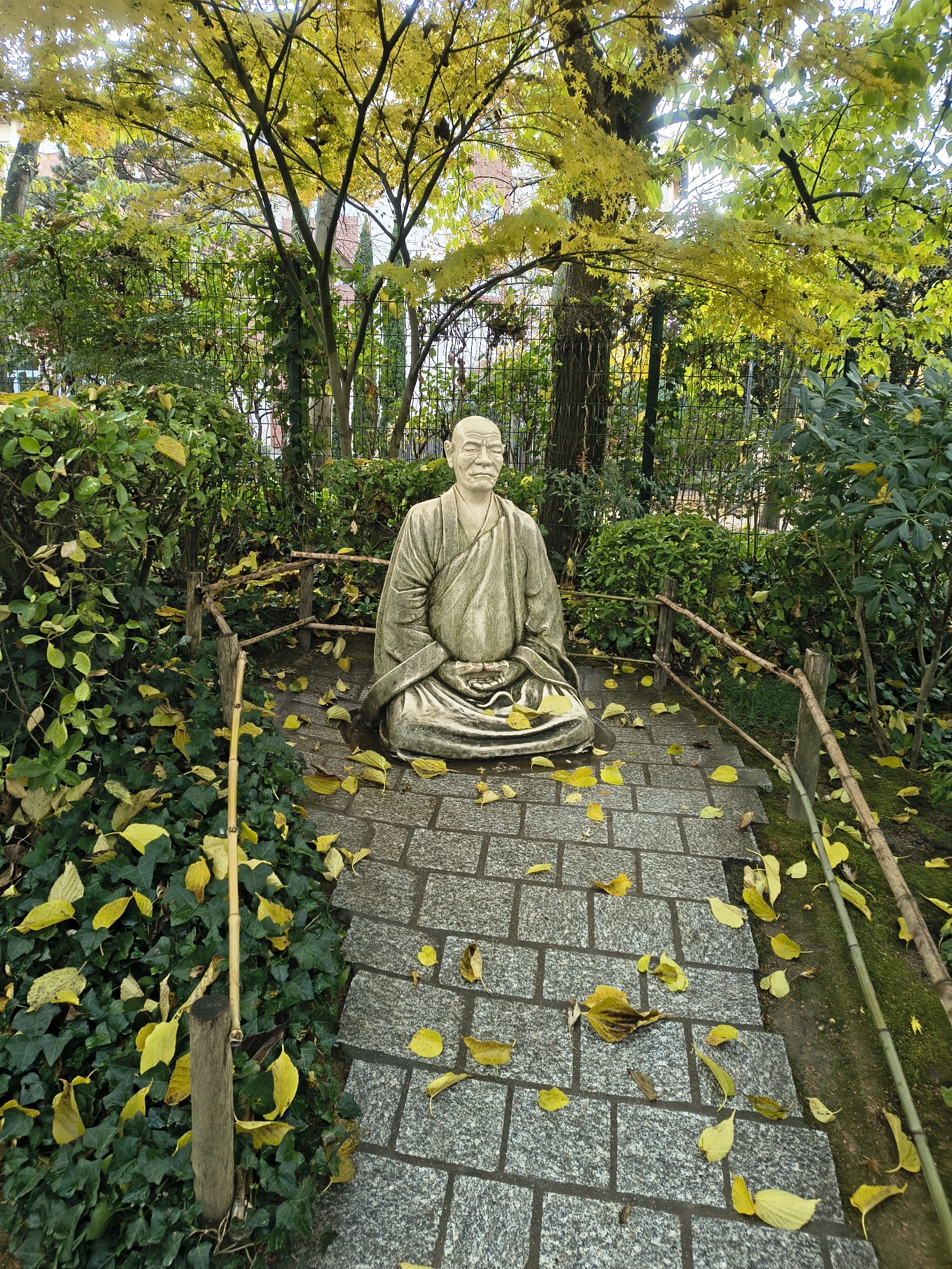
By 1993, the garden had earned both the grand national prize for flowering and the label Jardin remarquable de France. That same year, Tom Petrusson installed his dragon submarine sculpture in the perimeter pond. In 2016, the garden was formally renamed in honour of Pierre Baudis. A bust of Taisen Deshimaru, who established Zen dojos across France in the 1970s, stands on the grounds.
Good to know
Free and open every day from 7:45 a.m.; closing times run from 18:00 in winter to 21:00 in summer. The nearest metro stop is Compans-Cafferelli. May and September are the calmest, most comfortable months. Allow at least an hour.
Spring is the garden's most photogenic season — cherry blossoms peak late March to early April, and temperatures climb gently through May. Summers are warm (highs around 28–29°C in July and August) with long evening hours, since the garden stays open until 21:00. The garden closes during wind alerts above 60 km/h, which can occur in any season.
Where is Jardin Japonais de la Compagnie?
More tickets & tours for Jardin Japonais de la Compagnie
Book directly at the provider
What travellers say about Jardin Japonais de la Compagnie
A beautiful garden! Full of peace, order, and serenity, surrounded by the city. I love the red candlesticks hanging from trees, marking a path to the entrance. I didn't know what to expect when this place was recommended. But it surpassed what I imagined. There was a rock zen garden that inspired me to share Reiki. The energy from this place was amazing. If I lived close it would be a must stop for meditating 🧘🏾♂️ I also noticed that some people carved into the bamboo shutes growing along the path. Please partake in this beautiful place. It fills the soul.
Worth to spend time. Awesome clean park with small lake and ducks around. Very beautiful and quiet place to visit . Must see for toulouse
A wonderful gem in Toulouse. The Japanese garden is done wonderfully and has a little Japanese house which explains the design of the garden. There’s a little bridge with fish in the pond. There’s also a raked zen garden. A tranquil place.
A beautiful and free to visit Japanese style garden that really worths a visit.
The garden itself is really peaceful and well-kept, with a nice layout that makes it easy to wander around and enjoy the scenery. It didn’t feel too crowded despite being a weekend. Overall, a really pleasant spot to relax for a bit if you’re in the area.
More of Toulouse
Discover where to stay, what to do and the best deals for your trip.
Explore Toulouse →More attractions in Toulouse
All of Toulouse →
Background adapted from Wikipedia (CC BY-SA) · map data © OpenStreetMap contributors · ratings & place photos via Google · other photos with per-image credit. Ticket links may earn us a commission at no extra cost to you.