
Ilmenau

Ilmenau sits at the edge of the Thuringian Forest where a university town, a mining past, and a long Goethe obsession all quietly overlap. The poet came here 28 times, the first time in 1776 at the Duke of Weimar's request, and the town has been making sense of that ever since. His handwritten lines from "Wandrers Nachtlied" were scratched onto the wall of a hunting lodge on the Kickelhahn mountain in 1780 — a detail that turns a pleasant forest walk into something else entirely.
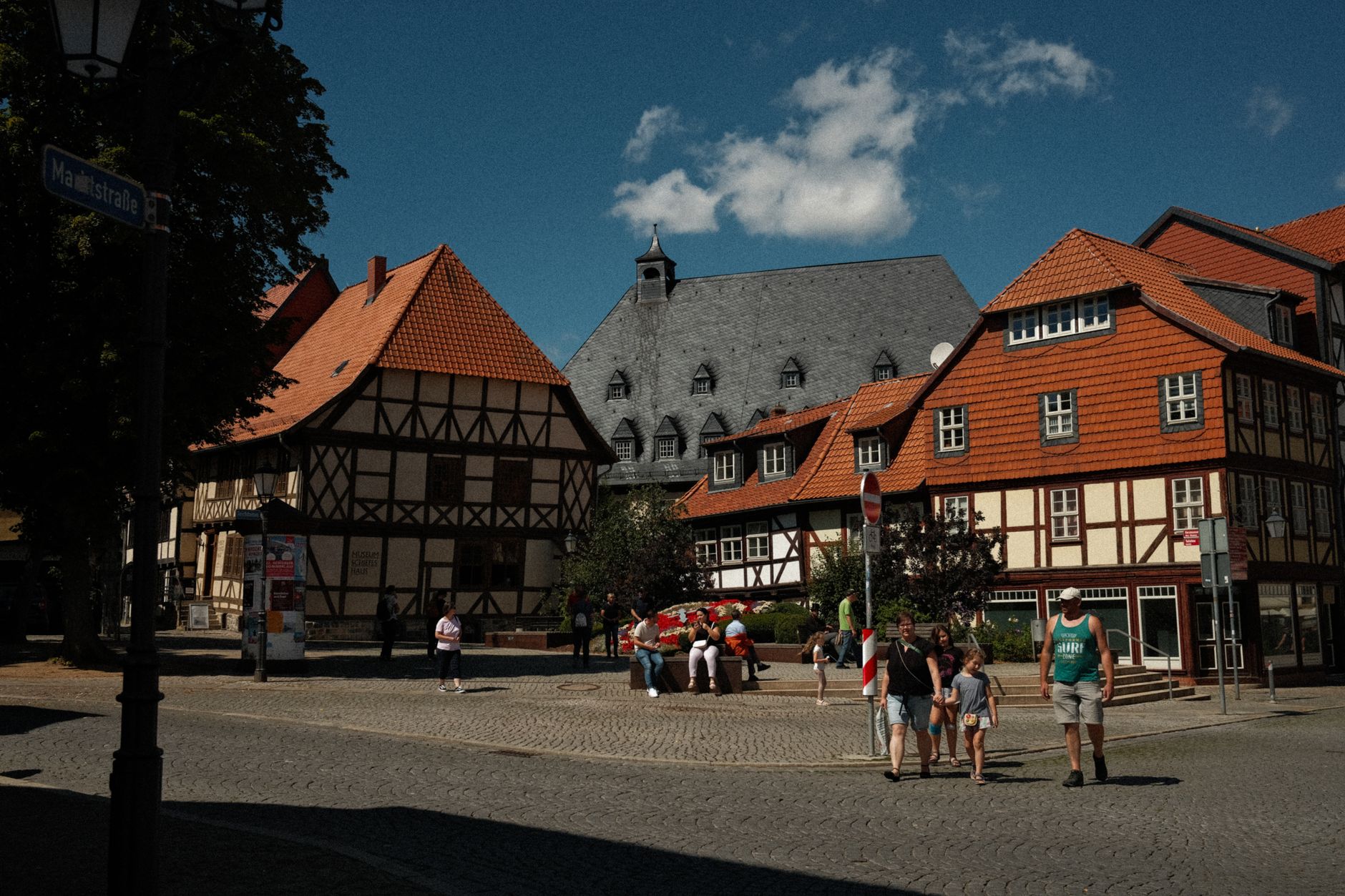
Below the mountain, the town centre was almost entirely rebuilt after a fire in 1752 levelled it, giving Ilmenau its late-Baroque bones: the church on Marktstraße, the Amtshaus, the street plan itself — all shaped by architect Gottfried Heinrich Krohne. The Technische Universität, whose roots go back to 1894, keeps the place younger and livelier than its history alone might suggest.
💛 What travellers fall for
People who come back tend to do the Kickelhahn walk early, before the day hikers arrive. The tower gives you the forest canopy in every direction. They also mention the Walcker organ in the Church of St James — 4,000 pipes, and if there happens to be a rehearsal on, you'll hear it before you reach the door.
Deals in Ilmenau
Book directly at the provider


How Ilmenau came to be
The town appears in records as early as 1273 and received its formal establishment in 1341. It passed through Ludovingian, Henneberg, and then Wettin hands before settling into the duchy of Saxe-Weimar in 1661. A mint operated here between 1690 and 1705, striking silver Talers and copper coins from locally mined silver. When the mines gave out in 1739 and fire destroyed most of the town in 1752, Ilmenau had to reinvent itself almost from scratch.
Architect Krohne drew up the new church, town hall, and street grid. The town became a spa in 1838, and the railway arrived in 1879, opening the door to glass and porcelain manufacturing — industries that defined Ilmenau through much of the 20th century before the factories closed in the 1990s. The private technical school founded by Eduard Jentzen in 1894 eventually became the Technische Universität Ilmenau in 1992.
Who and what shaped it
People who shaped it
Landmark buildings
See Ilmenau in motion
Plan your visit
On the map
When to go
The Thuringian Forest location means cooler summers than much of central Germany — pleasant for walking but worth a layer in the evenings. Winters are cold and often snowy, which suits the bobsleigh track but can make the Kickelhahn path icy.
Right now
Background & history adapted from Wikipedia (CC BY-SA) · specs from Wikidata (CC0) · weather from Open-Meteo · map data © OpenStreetMap contributors · photos from Wikimedia Commons / Unsplash with per-image credit. No third-party reviews or social posts reproduced.