
Honfleur
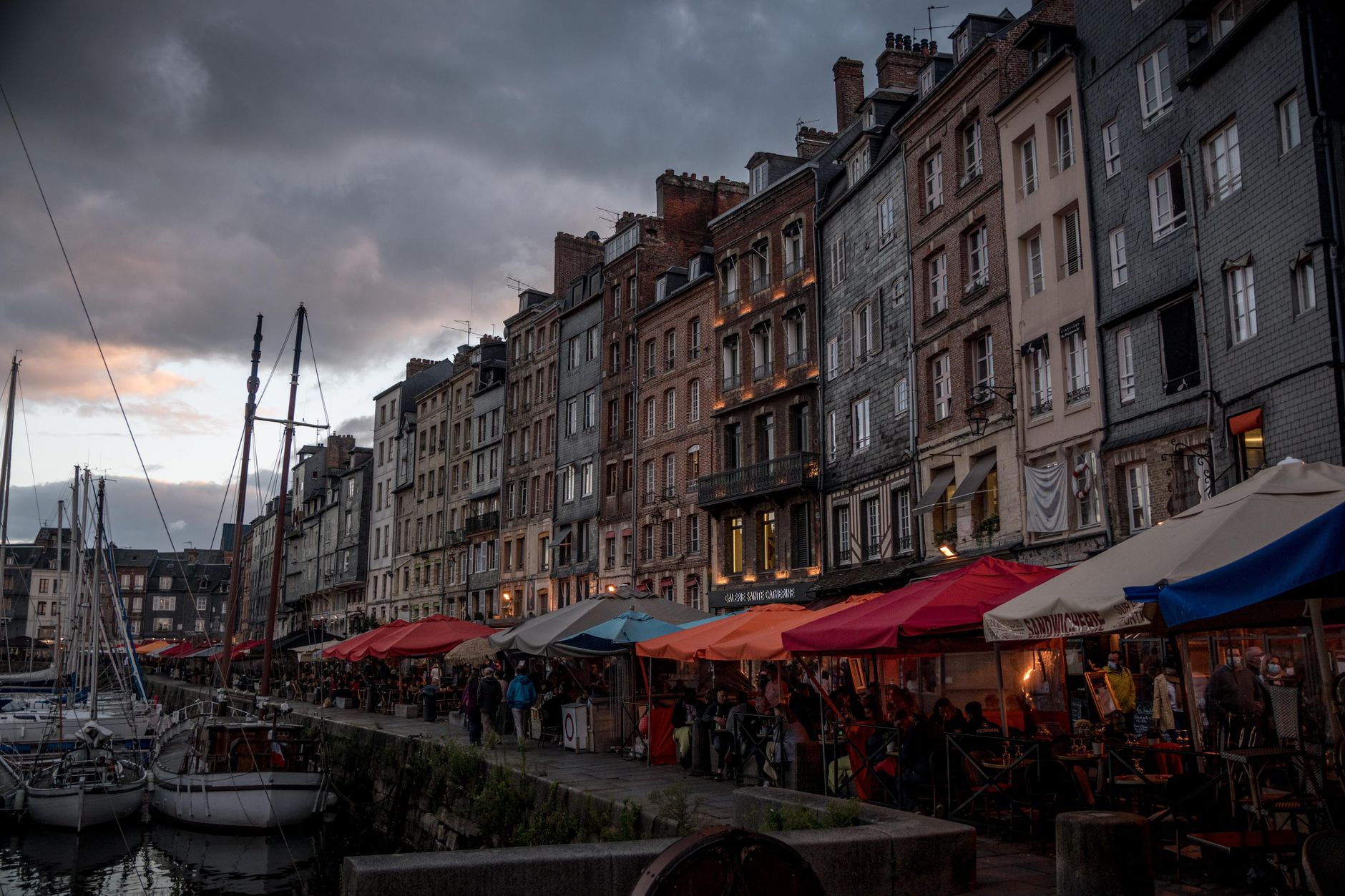
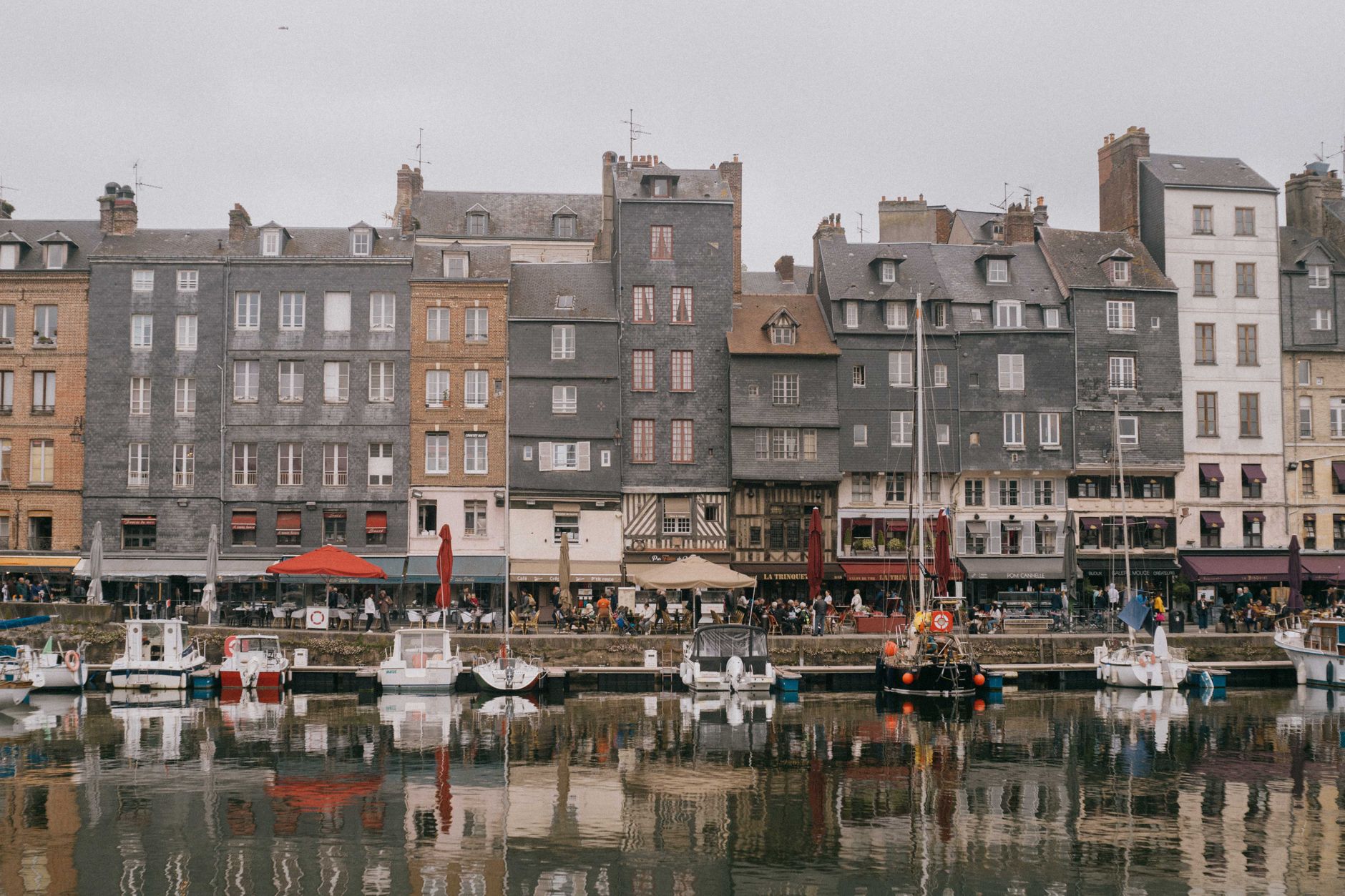
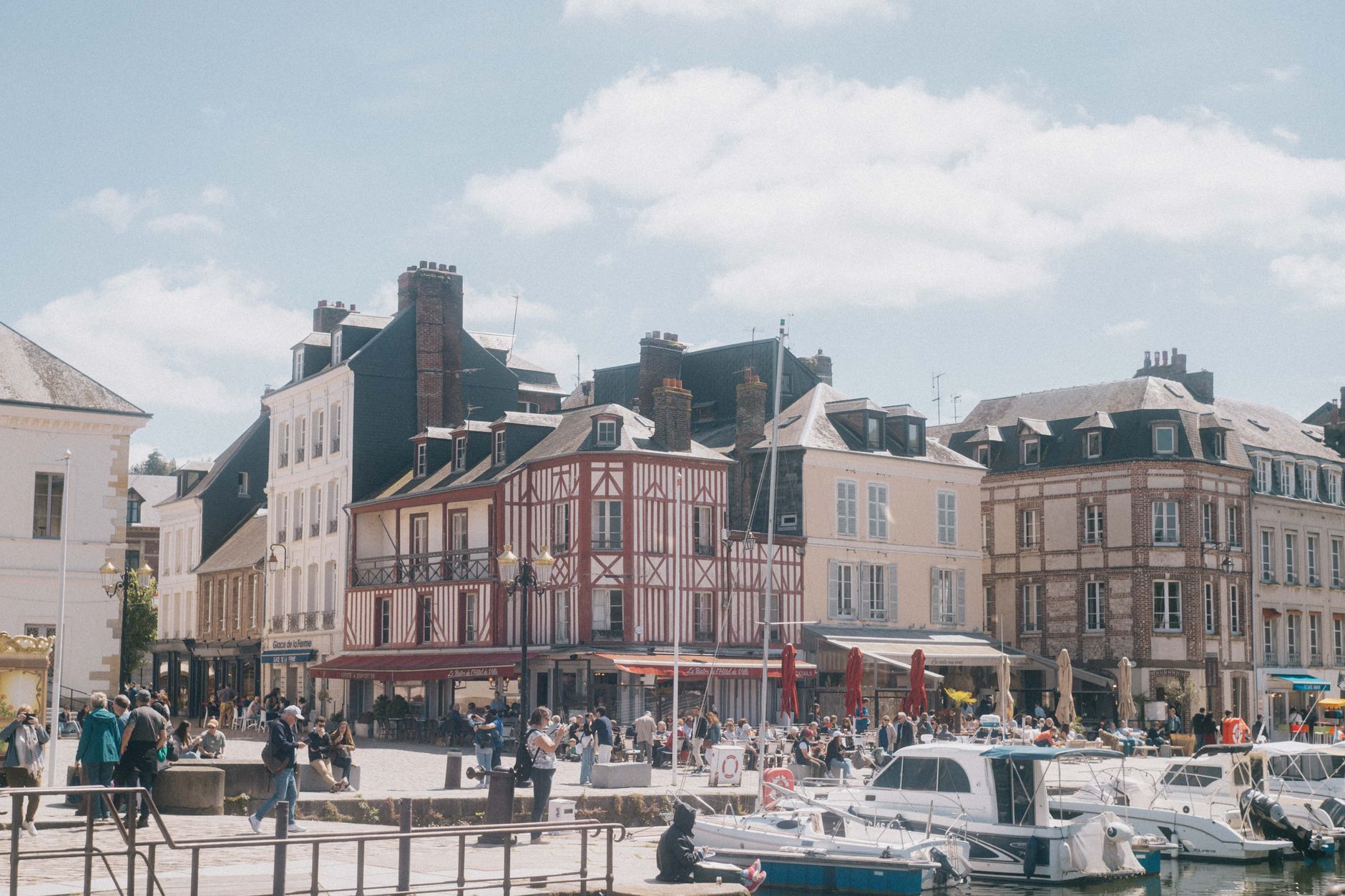
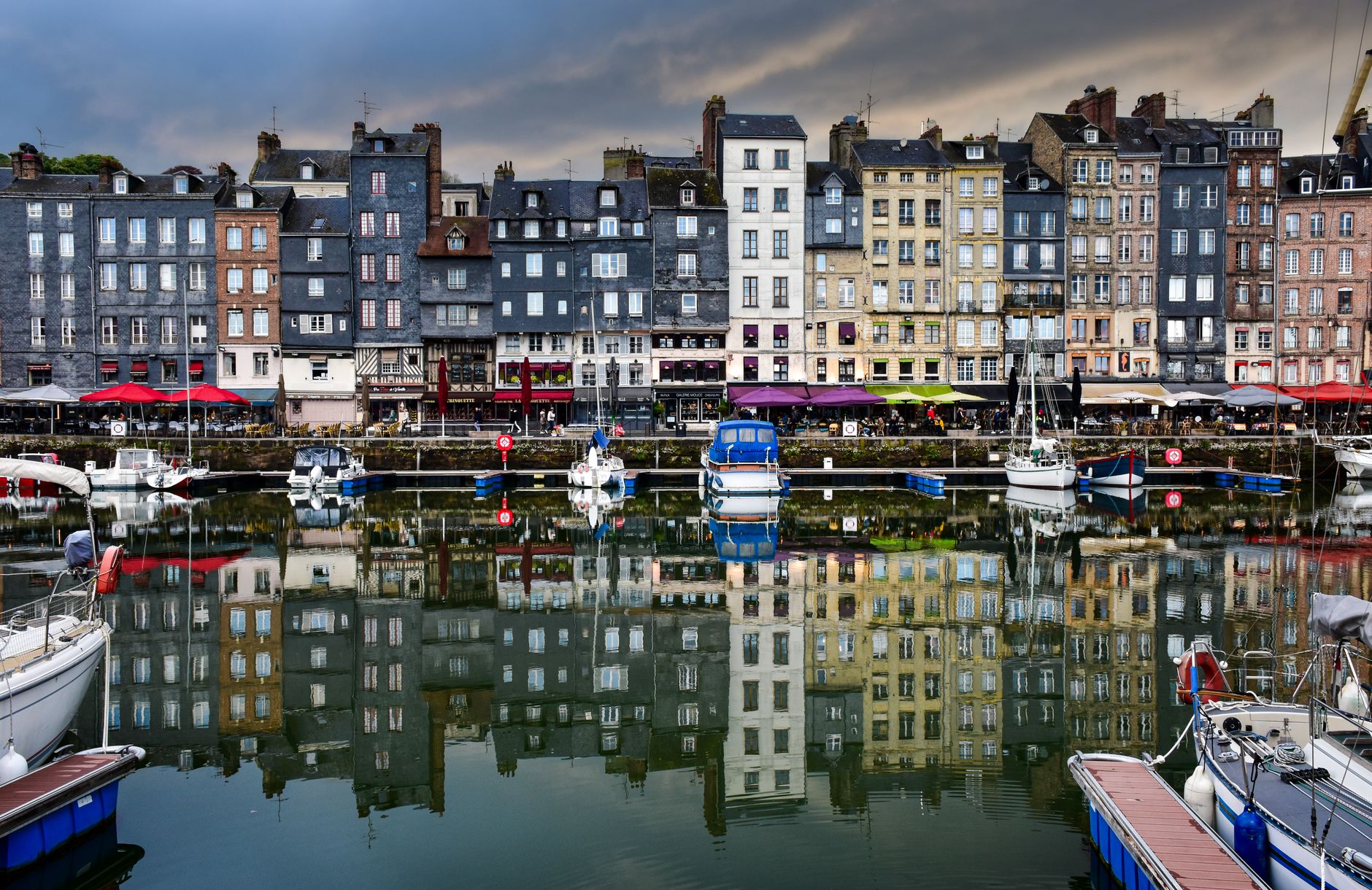
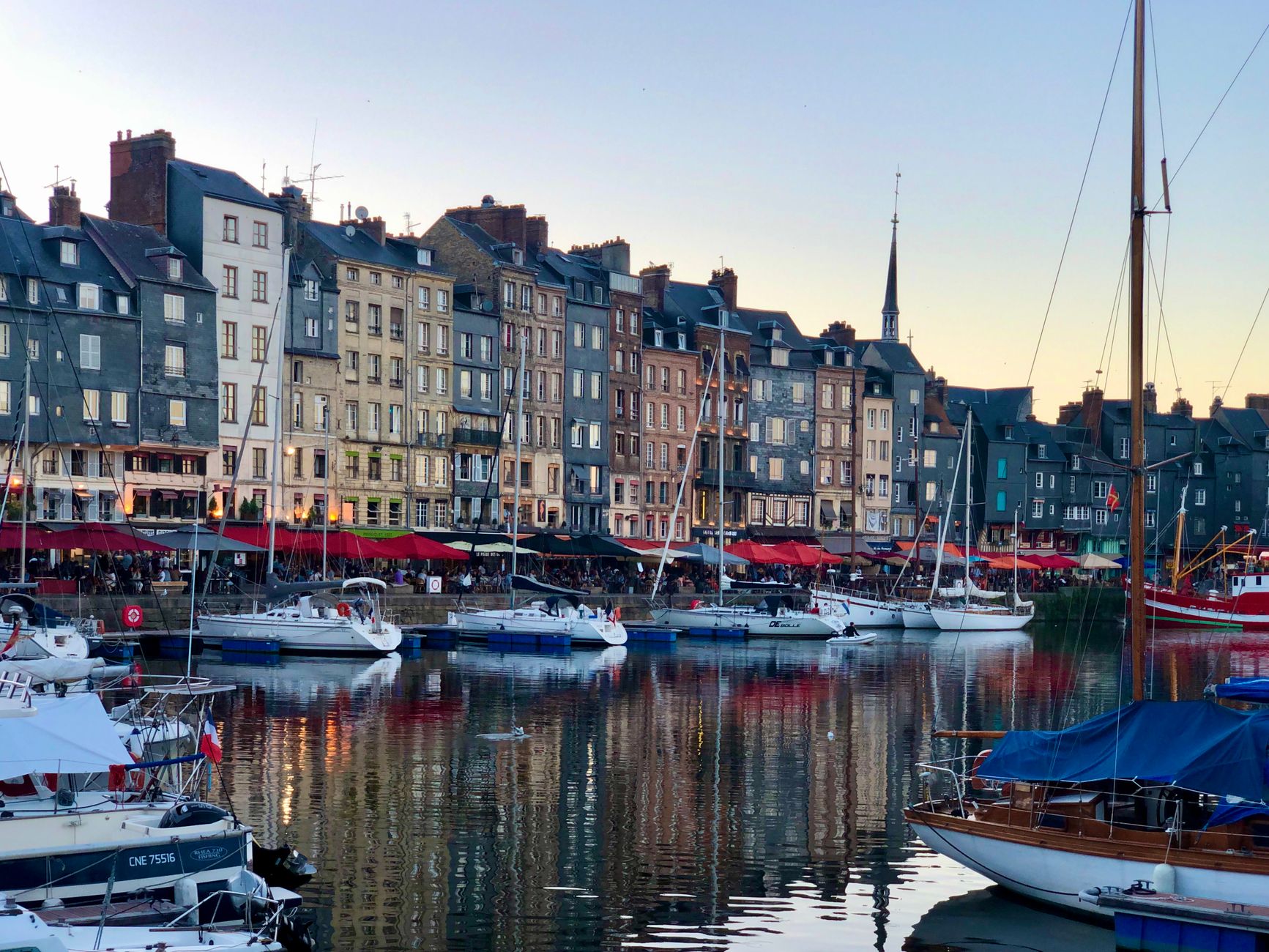
The thing that stops you at Le Vieux Bassin is the height of the houses. Slate-fronted, pencil-thin, six storeys tall, they crowd the old harbour like a wall of cards that somehow hasn't fallen since the 17th century. Honfleur sits at the mouth of the Seine where it opens into the Channel, and for centuries that position made it consequential — a launching point for expeditions to Canada, a hub for trade with the West Indies and Africa, and, eventually, a place painters couldn't leave alone.
The town's relative smallness is deceptive. Sainte-Catherine church, built by shipwrights after the Hundred Years' War, is the largest wooden church in France. Erik Satie was born here. So was Eugène Boudin, who first persuaded a young Claude Monet to paint outdoors.
💛 What travellers fall for
People who come back tend to do the Eugène Boudin Museum early, before the coach groups arrive, then walk up to Chapelle Notre-Dame de Grâce for the view over the estuary. The Maisons Satie rewards a slow hour — the audio-visual rooms are genuinely strange, in the best way. Most regulars eat away from the harbour quay itself.
Experiences you don't want to miss


Deals in Honfleur
Book directly at the provider


How Honfleur came to be
Honfleur's first written record dates to 1025, though Viking settlers were here well before that. Charles V fortified it during the Hundred Years' War to hold the Seine estuary against English attack — the English occupied the town in 1357 and again from 1419 to 1450. Recovery came through the sea: in 1608, Samuel de Champlain sailed from this harbour and founded Québec City, opening a long chapter of transatlantic trade with Canada, the West Indies, and the African coasts. The old harbour, Le Vieux Bassin, was built in 1681 specifically to handle that commerce.
The 19th century was harder. The Napoleonic wars disrupted trade, and when the railway reached Le Havre in 1847, Honfleur had to wait until 1867 for its own branch line — one that no longer exists. The town's decline as a working port is precisely what preserved it, and what drew Boudin, Monet, Courbet, and Jongkind to gather at La Ferme Saint Siméon and work toward what would become Impressionism.
Who and what shaped it
People who shaped it
Landmark buildings
See Honfleur in motion
Plan your visit
On the map
When to go
Normandy's Channel coast means mild, damp weather year-round, with the best light — and the light is genuinely particular here, which is why the painters came — arriving in spring and early autumn. Summer is warm but often overcast; winter is raw and quiet, with the harbour largely to yourself.
Right now
Background & history adapted from Wikipedia (CC BY-SA) · specs from Wikidata (CC0) · weather from Open-Meteo · map data © OpenStreetMap contributors · photos from Wikimedia Commons / Unsplash with per-image credit. No third-party reviews or social posts reproduced.