
Hollywood
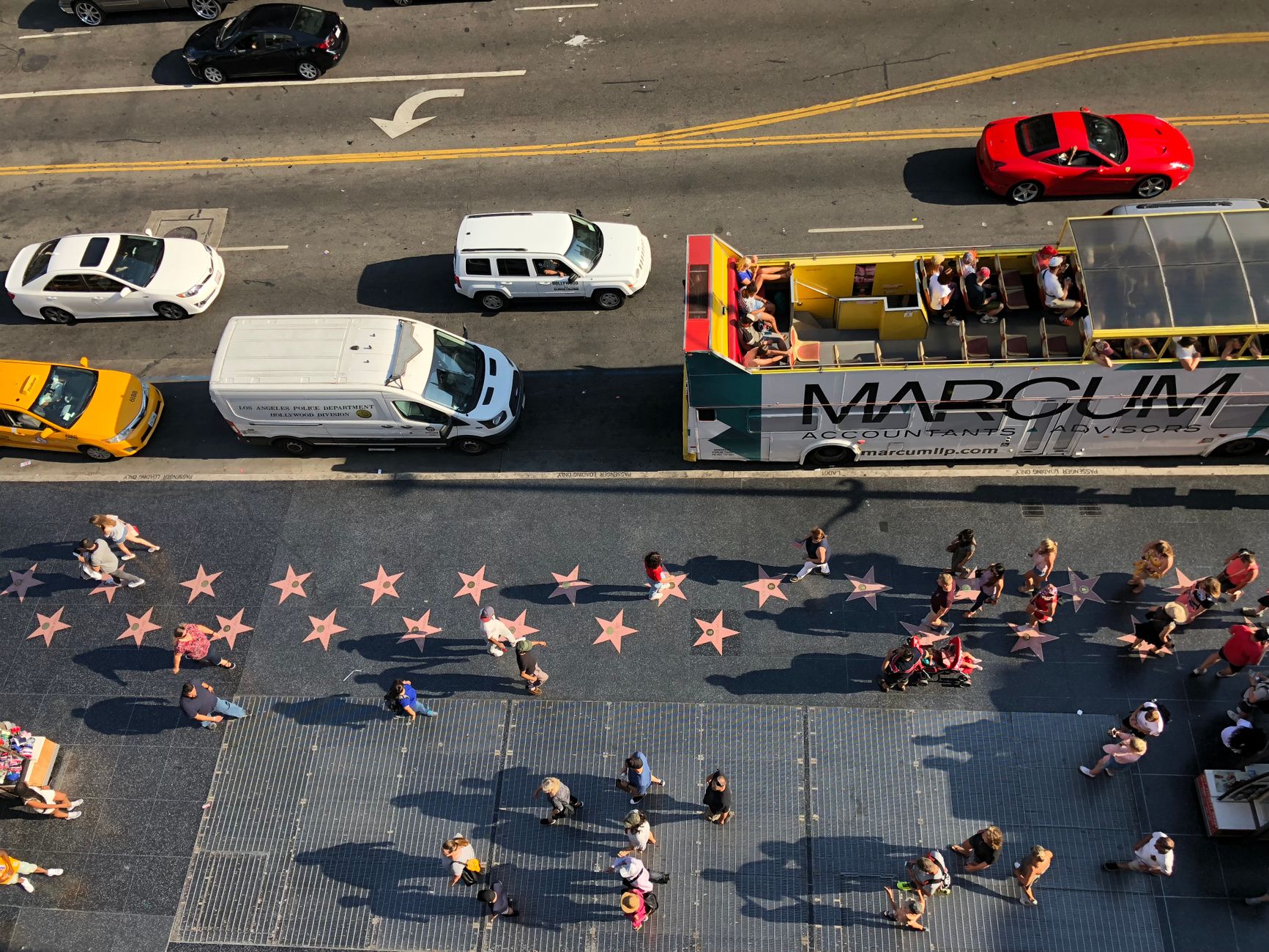
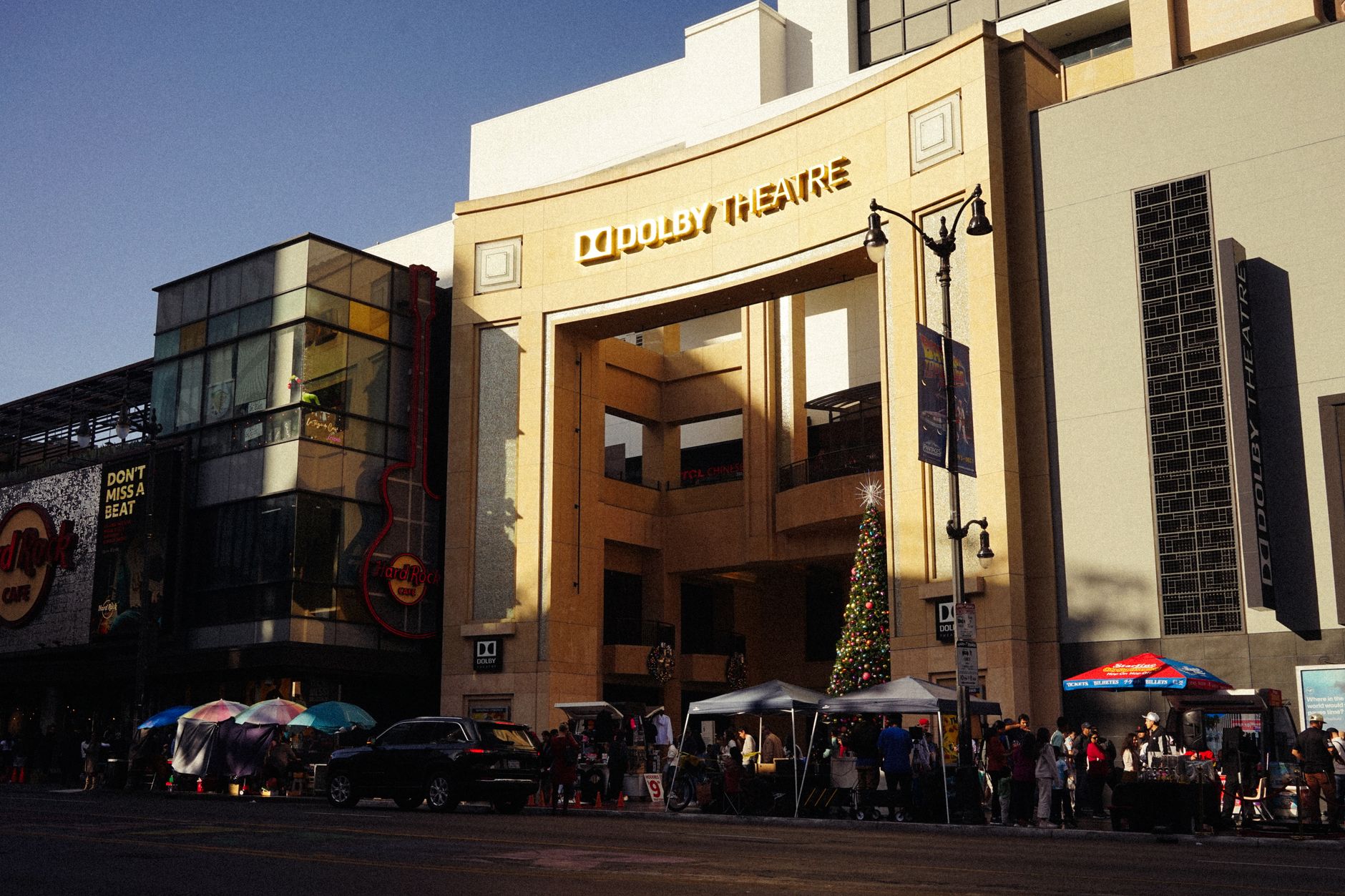
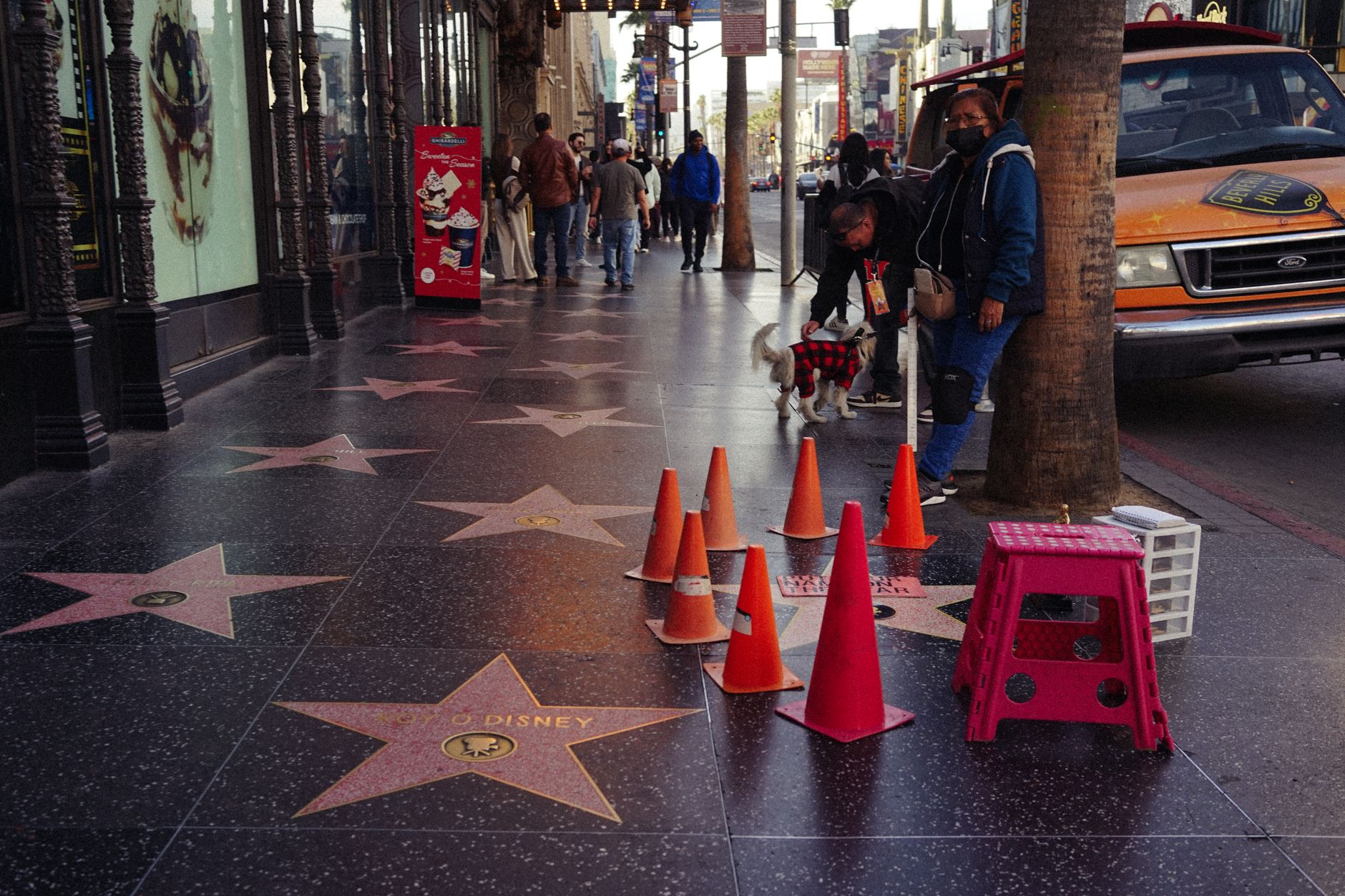
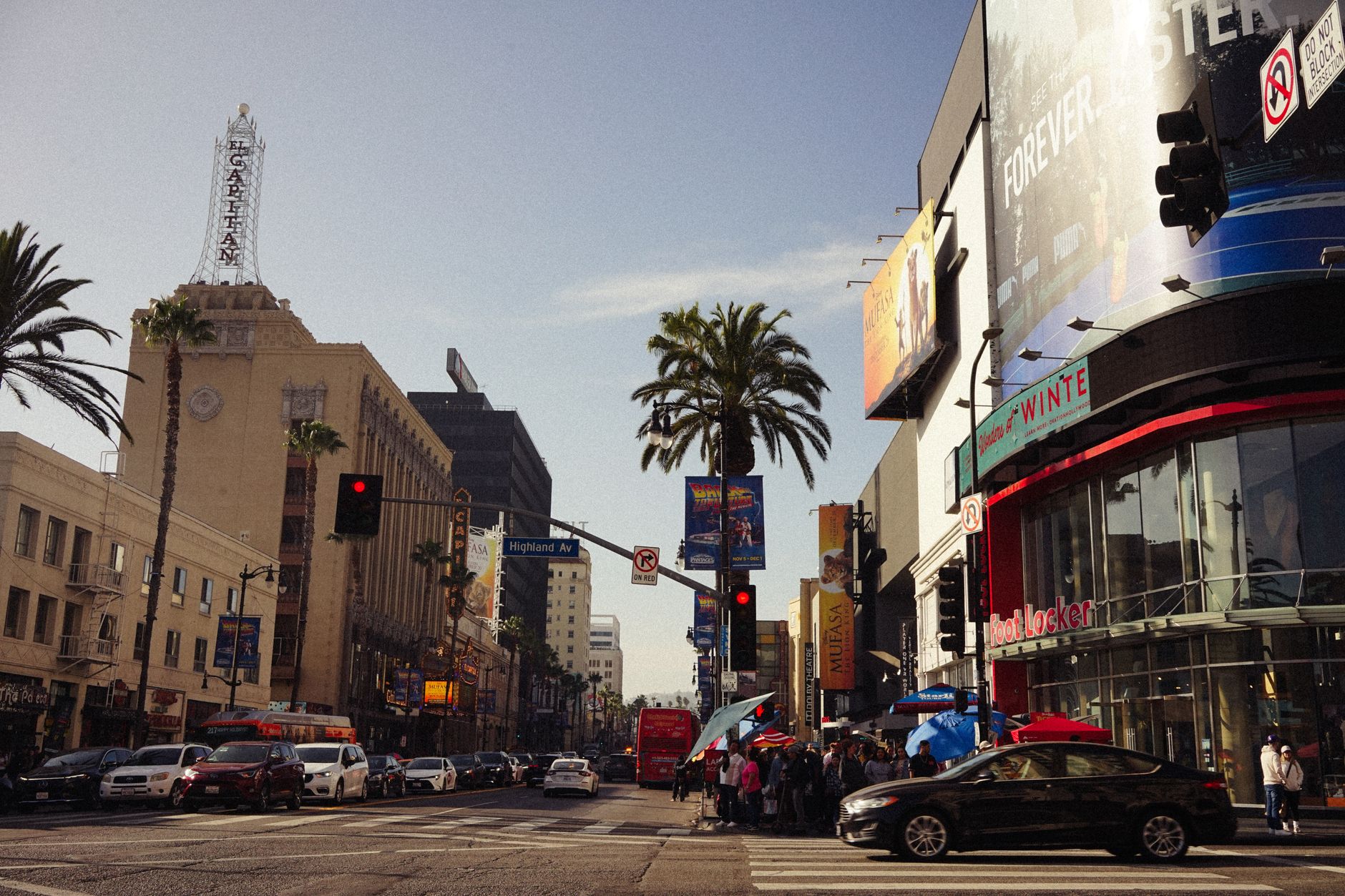
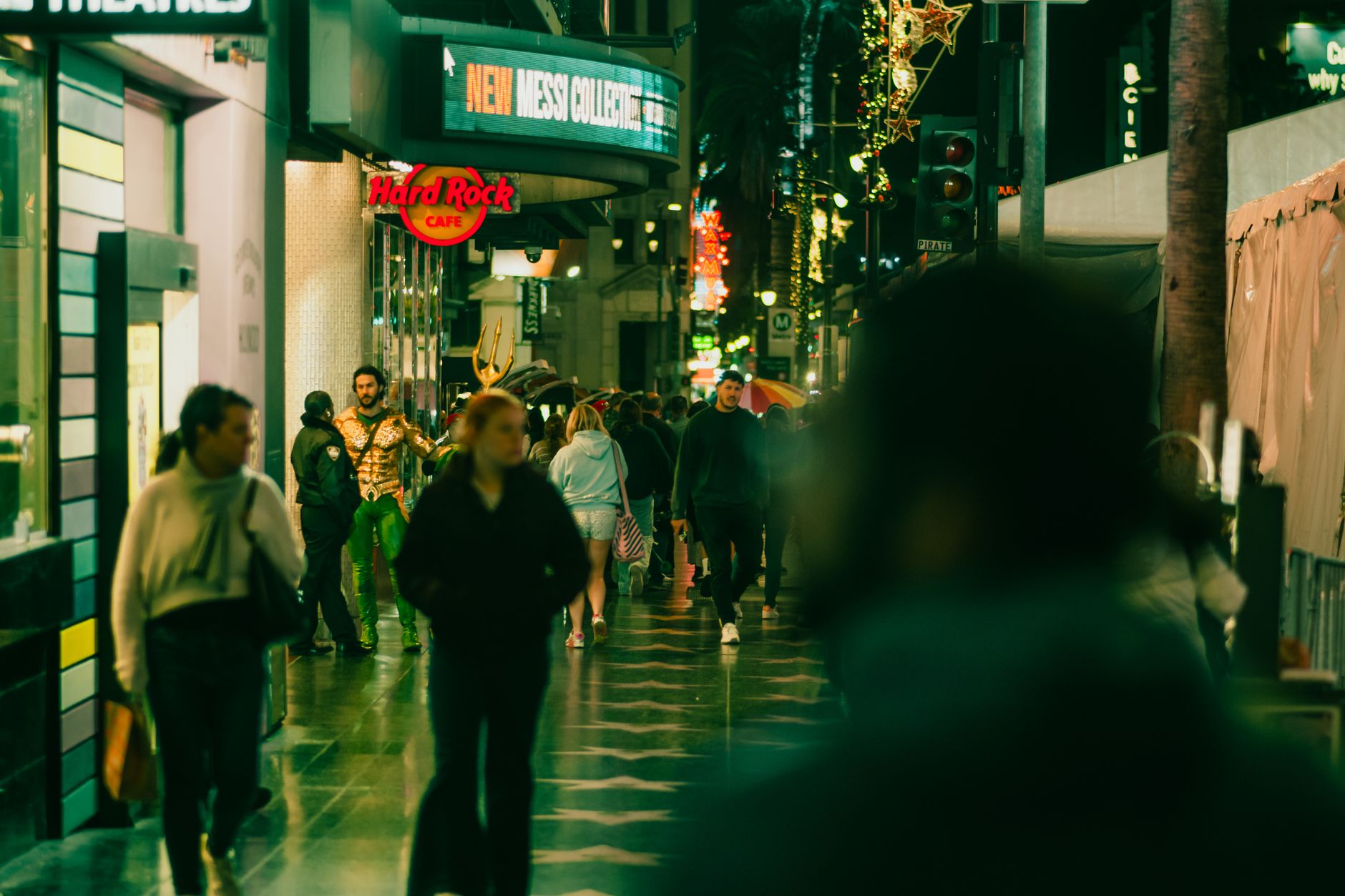
The Hollywood Sign reads differently up close than it does in photographs — the letters are bolted metal, weathered and enormous, perched on a hillside above a neighborhood that has long since traded glamour for grit. Down on Hollywood Boulevard, the Walk of Fame's terrazzo stars get walked over by tourists, street performers in superhero suits, and people who live here and have somewhere to be. The gap between the myth and the place is the thing worth paying attention to.
The movie industry planted itself here in 1910, and the boulevard still carries the bones of that era — the Chinese Theatre's pagoda roofline, the Dolby's red-carpet entrance — even as the blocks between them feel lived-in and unpolished in ways the postcards don't show.
💛 What travellers fall for
People who come back tend to time it right: arrive at TCL Chinese Theatre before 10 a.m., when the forecourt is quiet enough to actually crouch down and find the handprints you're looking for. The Hollywood/Vine Metro station gets you onto the boulevard without the parking spiral, and the walk from there past the Capitol Records Building sets the scene before the crowds do.
Deals in Hollywood
Book directly at the provider

How Hollywood came to be
Hollywood started as a real-estate subdivision platted in 1887 by Harvey Wilcox, a Kansas prohibitionist who wanted a sober, orderly town. His wife Daeida gave it the name. It incorporated in 1903 and merged with Los Angeles in 1910 — the same year D. W. Griffith shot In Old California here for the Biograph Company, the first motion picture filmed on this soil. The first studio opened on Formosa Avenue in early 1913.
H. J. Whitley, later called the "Father of Hollywood," opened the Hollywood Hotel in 1902 on the site where the Dolby Theatre now stands. Sid Grauman broke ground on his Chinese Theatre in January 1926; it opened May 18, 1927, with the premiere of Cecil B. DeMille's The King of Kings. The Hollywood Sign went up the year before, in 1923, originally reading "Hollywoodland" — a real-estate advertisement that outlasted its purpose and lost its last four letters in the 1940s.
Who and what shaped it
People who shaped it
Landmark buildings
See Hollywood in motion
Plan your visit
On the map
When to go
Summers are dry and warm, with August pushing around 30°C and almost no rain between June and August — good weather for walking, though the boulevard crowds peak then too. Winters are mild (December sits around 19°C) with the year's most rainfall, but still largely pleasant; spring and autumn offer the most comfortable temperatures with thinner crowds.
Right now
Background & history adapted from Wikipedia (CC BY-SA) · specs from Wikidata (CC0) · weather from Open-Meteo · map data © OpenStreetMap contributors · photos from Wikimedia Commons / Unsplash with per-image credit. No third-party reviews or social posts reproduced.