
Hohenzollern Bridge
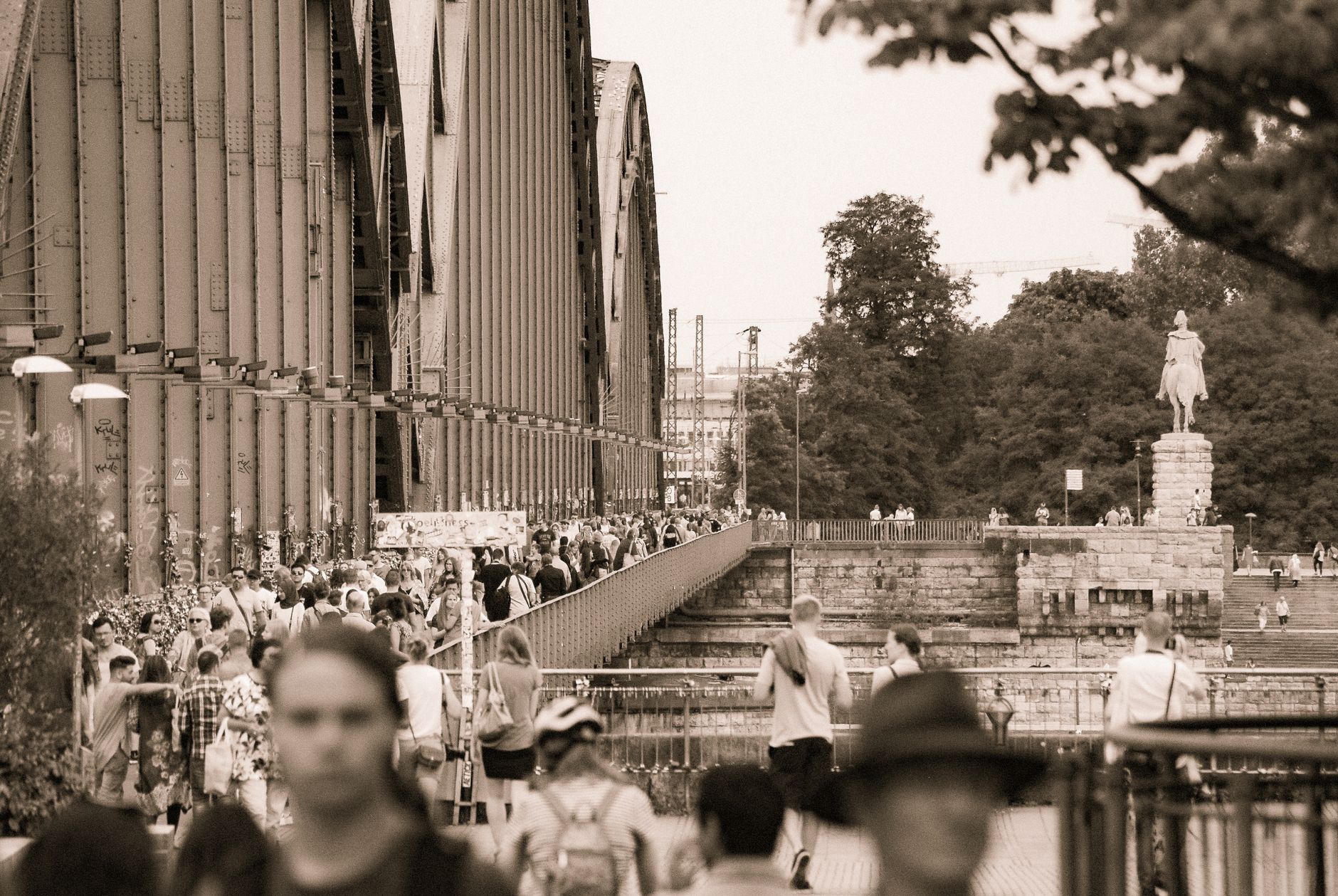
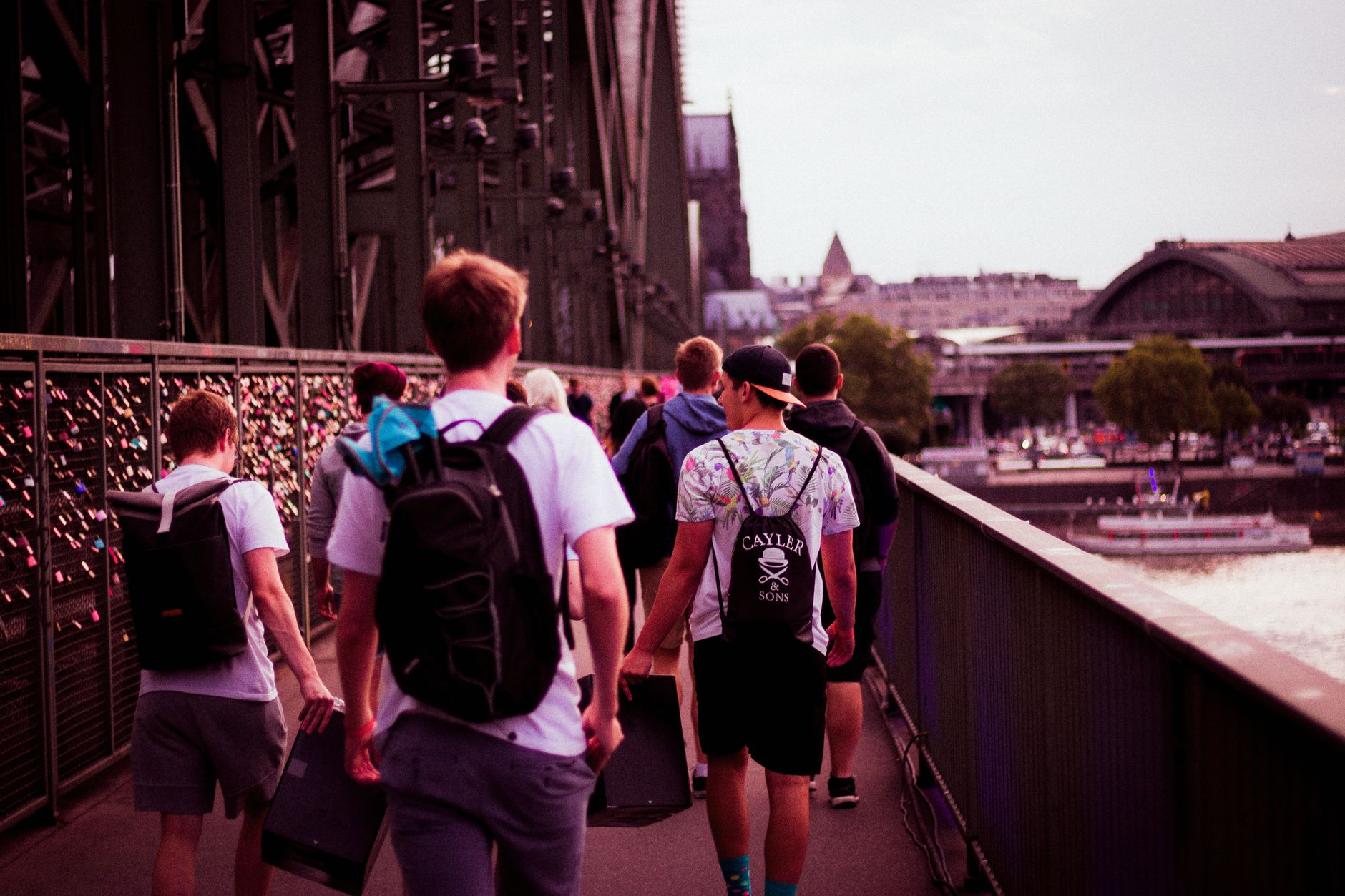
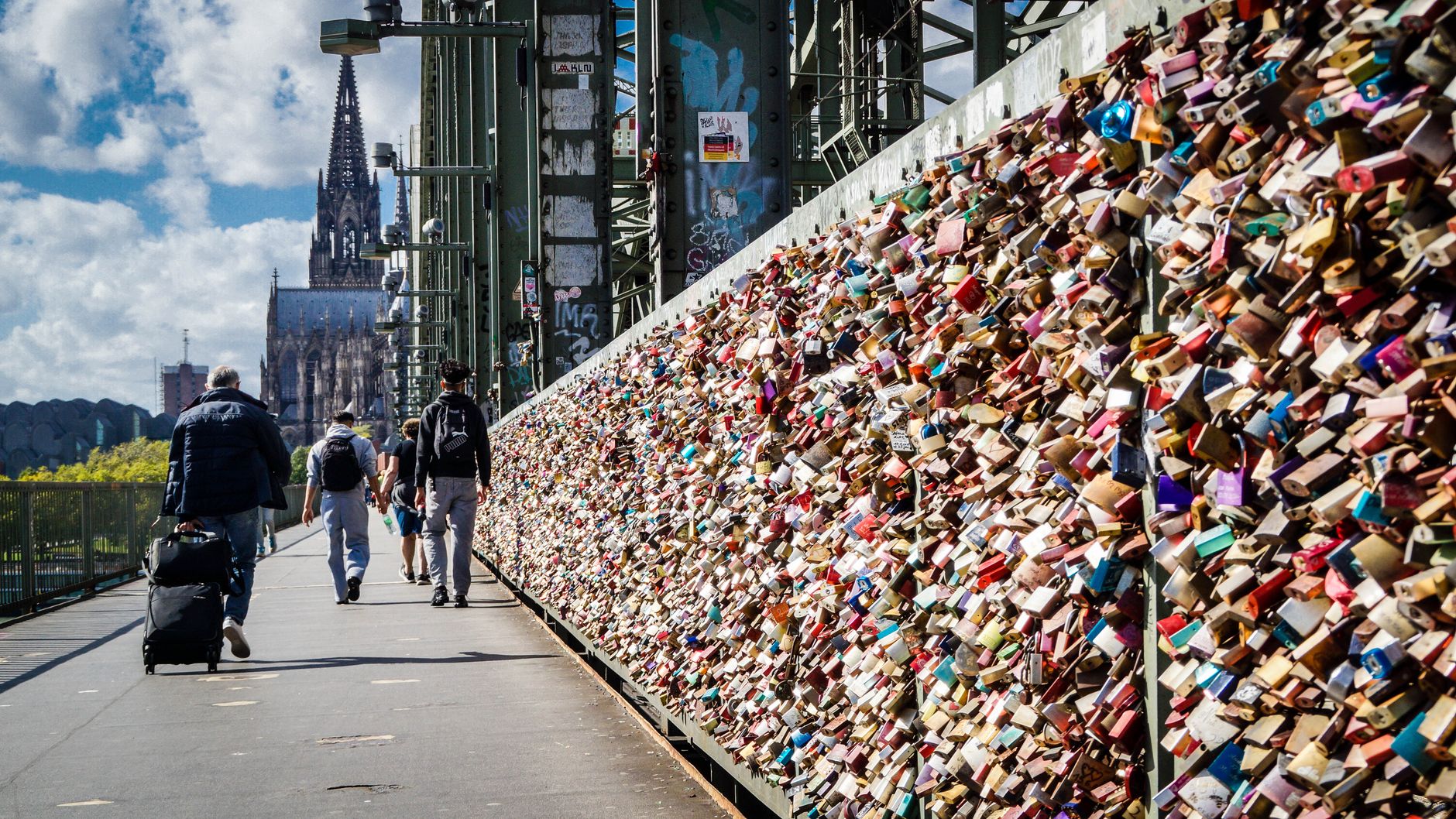
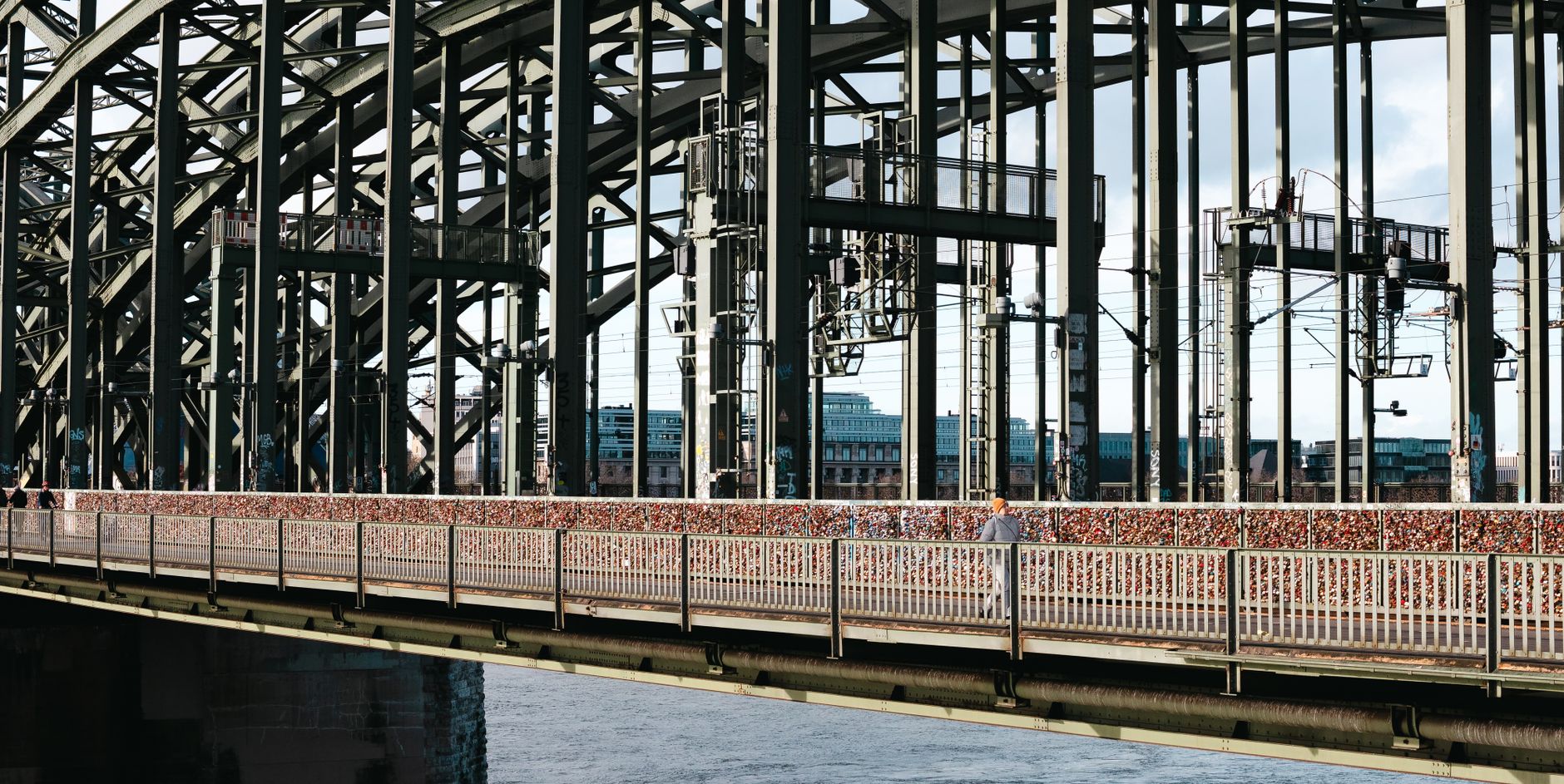
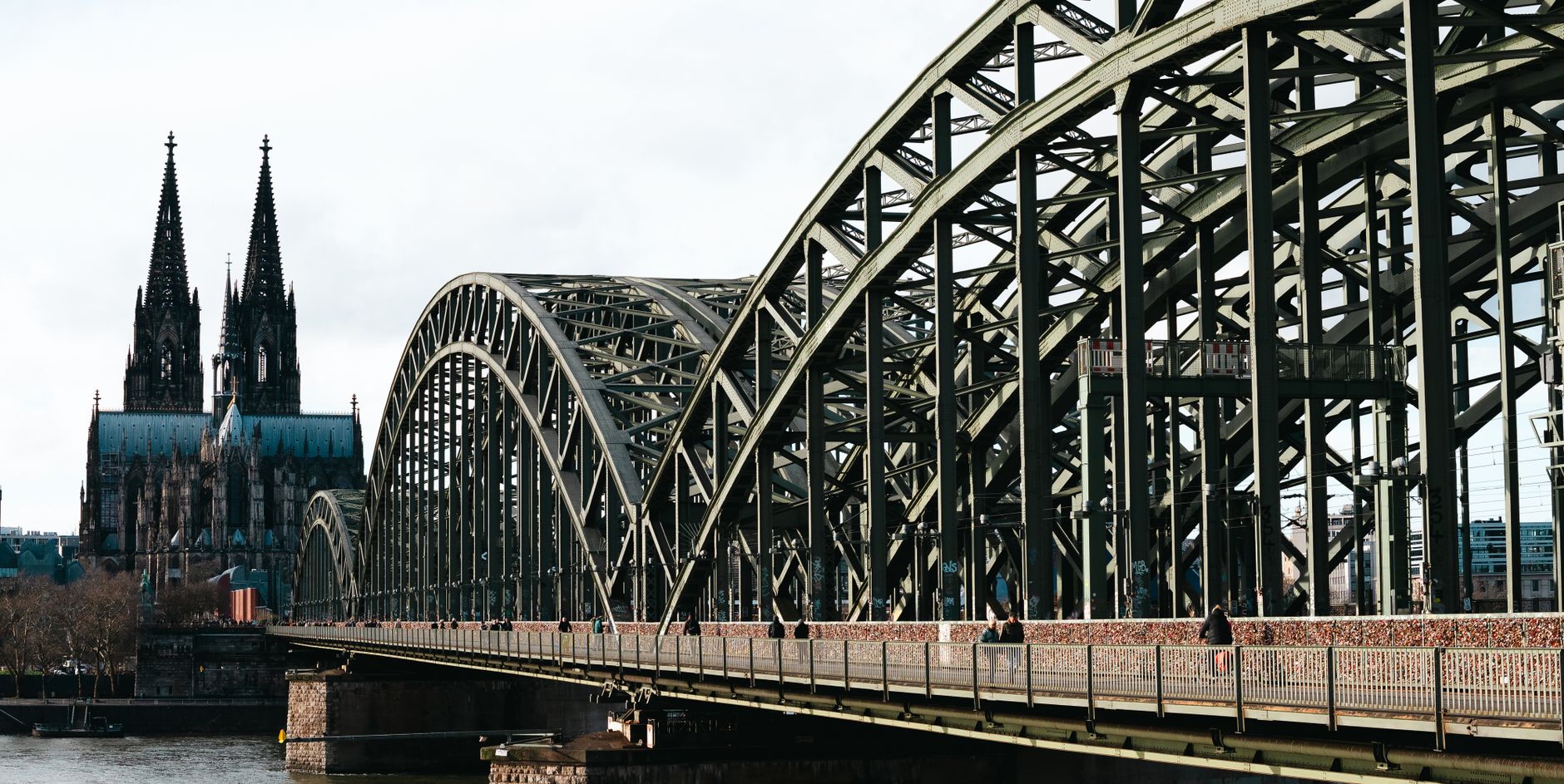
At 409 metres long and carrying more than 1,200 trains a day, the Hohenzollern Bridge is the most heavily used railway bridge in Germany — and yet people walk across it for pleasure, stopping mid-span while the steel arches shudder beneath a passing ICE. The pedestrian path begins just behind Museum Ludwig, and from the Deutz side you get the view Cologne is famous for: the twin spires of the Cathedral framing the Old Town across the water.
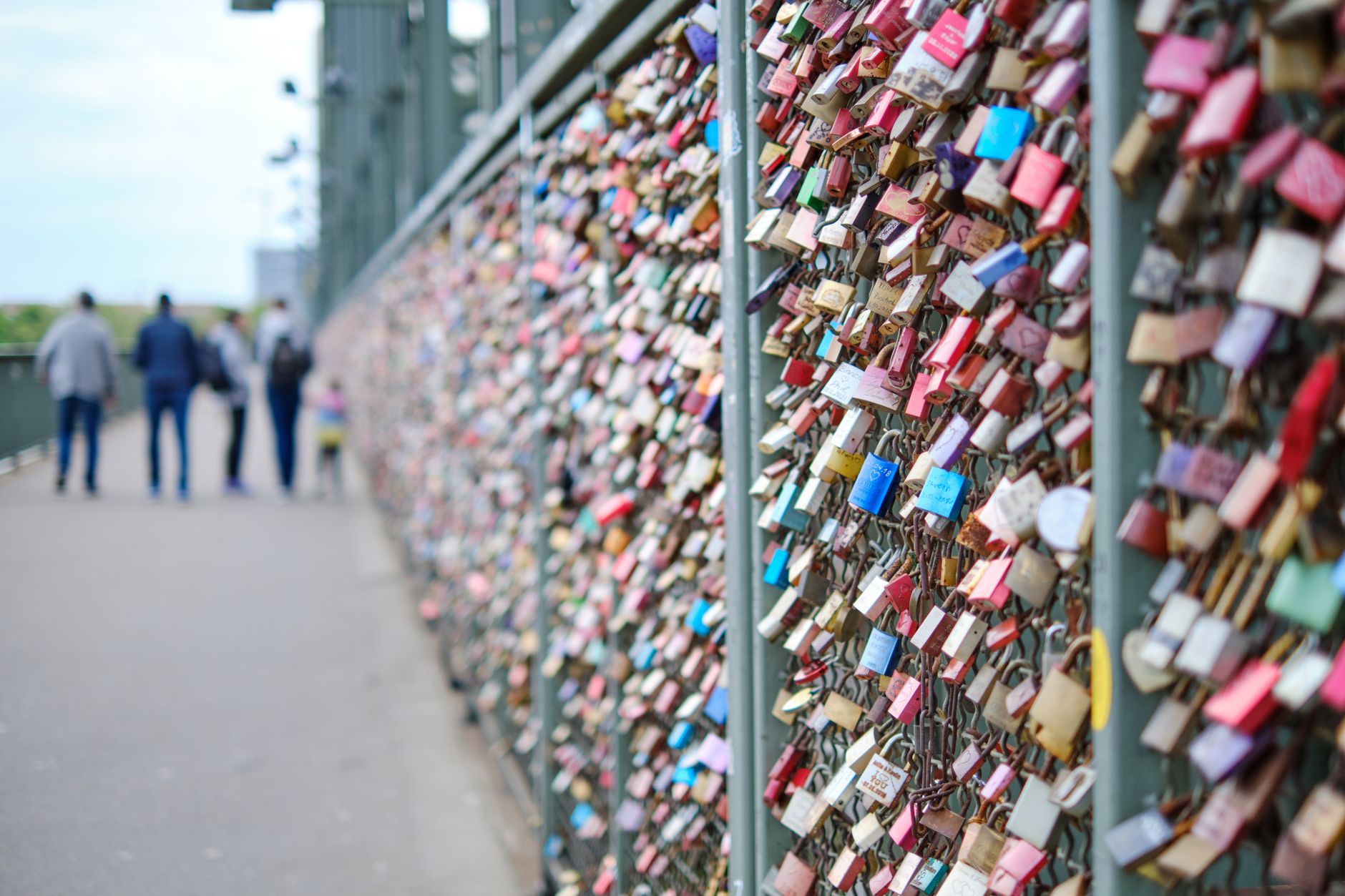
The bridge's other life is quieter and stranger. Since 2008, couples have been fastening padlocks to its railings. By some counts, half a million locks now cling to the ironwork — a slow accumulation of weight that Deutsche Bahn has officially declared no structural problem.
💛 What travellers fall for
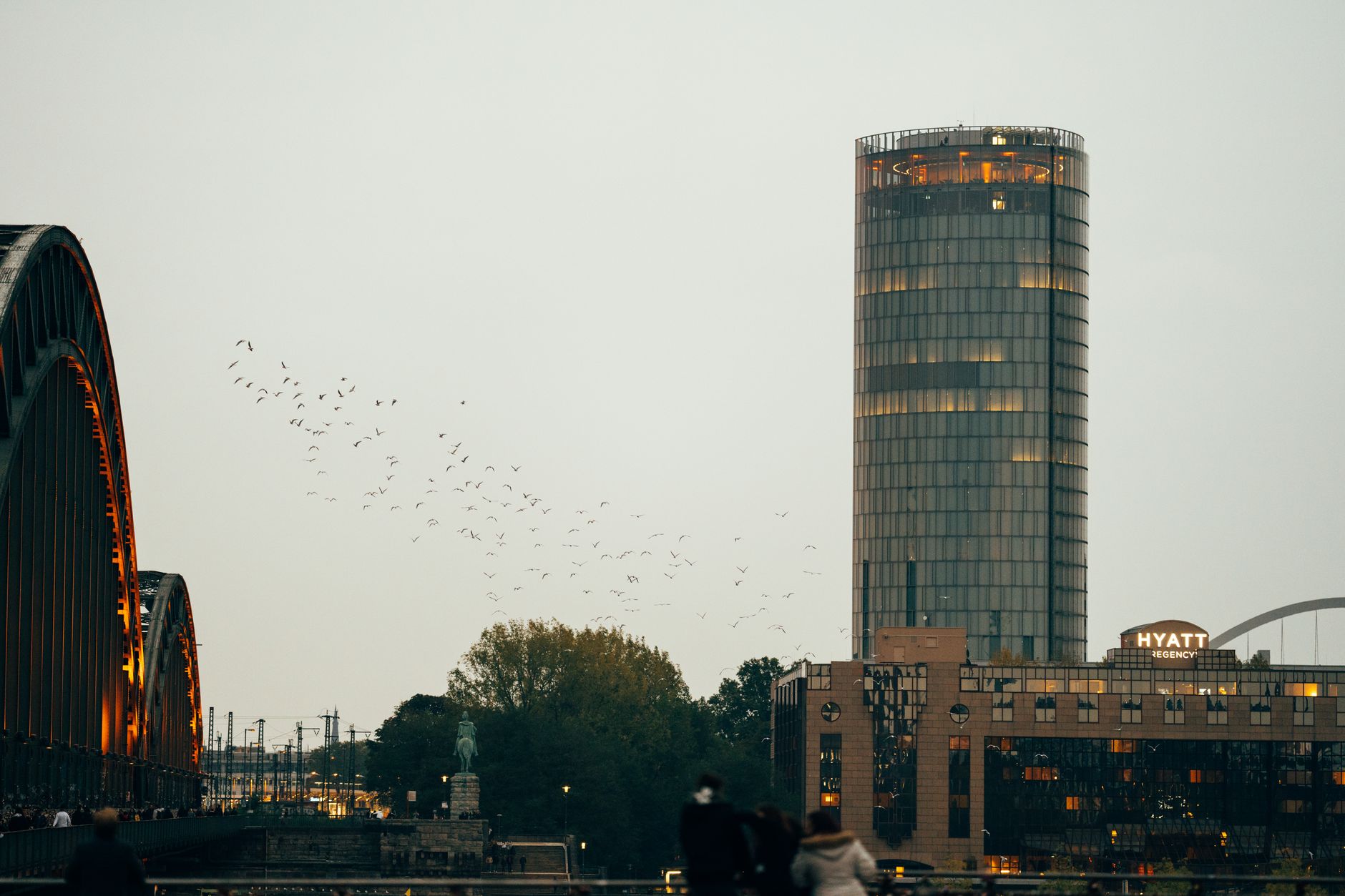
People who cross it more than once tend to try both footpaths. The southern side fills up with locks earlier; the northern walkway still has stretches of bare railing. Coming back at night is worth the detour — the arches are lit and the trains, somehow, feel faster in the dark.
Deals in Hohenzollern Bridge
Book directly at the provider

How Hohenzollern Bridge came to be
The bridge replaced the old Dombrücke, which could no longer handle the rail traffic generated by the new Köln Hauptbahnhof after 1894. Planning was initiated by Paul von Breitenbach at the Railway Directorate; his successor Rudolf Schmidt oversaw the handover in 1906, with engineer Fritz Beermann heading construction and Friedrich Dirksen as designer. Kaiser Wilhelm II inaugurated it on 22 May 1911.
On 6 March 1945, German military engineers destroyed the bridge as Allied forces approached. Pedestrians were crossing again by May 1948; full reconstruction finished in 1959. The original portal towers came down in 1958 and were never rebuilt. Ernst Ludwig Kirchner had already fixed an earlier version of this crossing in paint — his 1914 Expressionist rendering predates the destruction by three decades.
Who and what shaped it
People who shaped it
Landmark buildings
See Hohenzollern Bridge in motion
Plan your visit
On the map
When to go
Cologne has a temperate oceanic climate: summers are mild and can bring rain; winters are grey and damp but rarely severe. Spring and autumn offer the clearest light for the Cathedral-and-bridge view from Deutz, though the crossing is worthwhile in any season.
Right now
Background & history adapted from Wikipedia (CC BY-SA) · specs from Wikidata (CC0) · weather from Open-Meteo · map data © OpenStreetMap contributors · photos from Wikimedia Commons / Unsplash with per-image credit. No third-party reviews or social posts reproduced.