
High Line
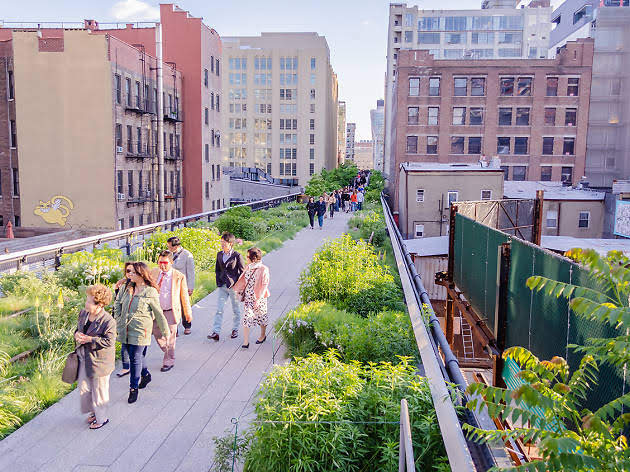
The railings here are painted Sherwin-Williams 'Greenblack' — a specific, almost military shade that tells you this park takes its industrial past seriously. You're walking a former freight line that once hauled butter, flour, and shortening to the National Biscuit Company factories along West 14th Street, the same trains that brought raw materials for Oreos and Animal Crackers. Piet Oudolf's planting shifts with the seasons, wild grasses and seedheads giving way to bloom, while cast-stone floor planks echo the original rails beneath your feet.
The High Line runs 1.45 miles from Gansevoort Street through Chelsea to 34th Street — elevated, car-free, and free to enter. The amphitheater at West 17th Street hangs directly over Tenth Avenue, framing the traffic below like a slow film.
💛 What travellers fall for
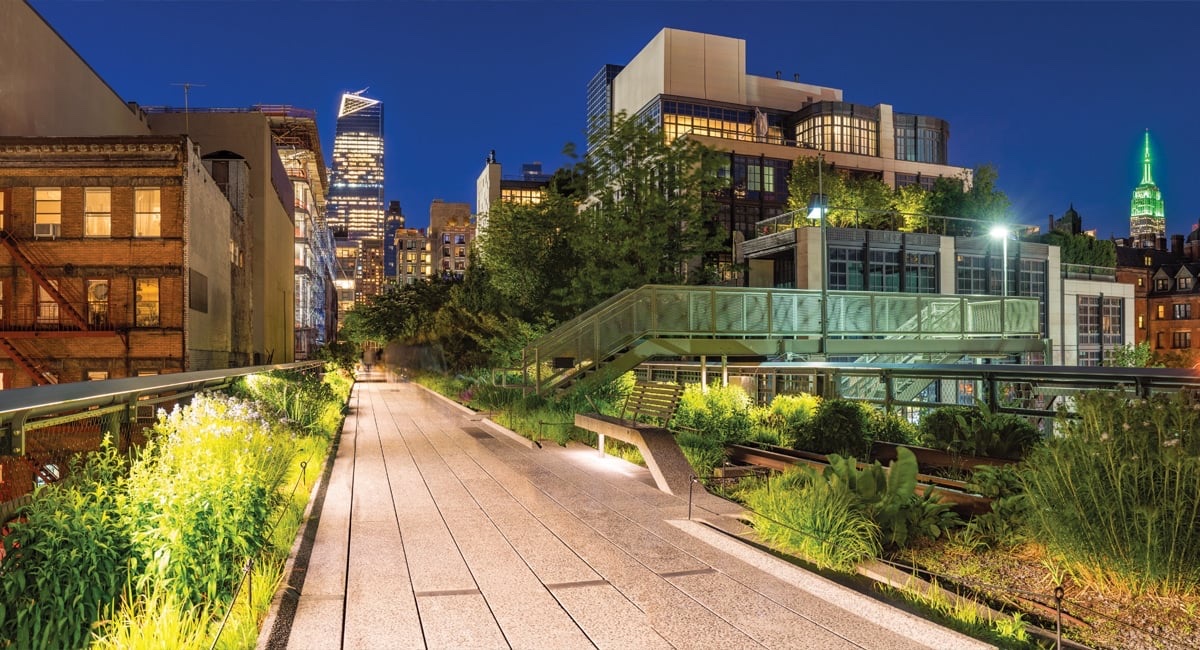
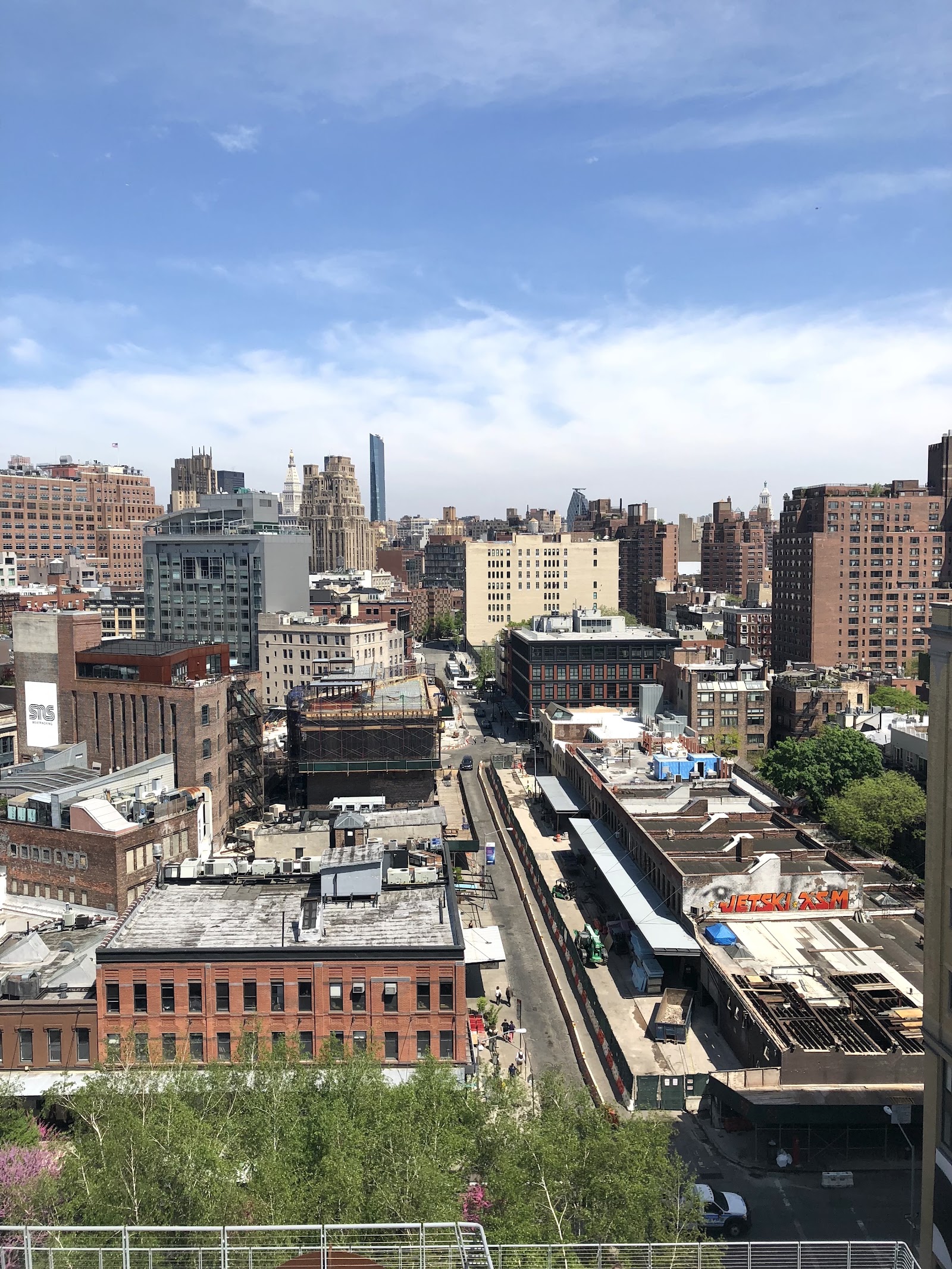
People who come back tend to enter at 34th Street and walk south, against the tourist grain. The Moynihan Connector's 600-foot tree-lined bridge feels almost countryside. The Diller-von Furstenberg Sundeck between 14th and 15th is worth the stop; so is pausing at the Hudson River Overlook just before the Whitney comes into view at Gansevoort.
The story behind High Line
Before the High Line was a park, it was a problem. Freight trains running at street level on 10th Avenue had killed more than 540 pedestrians by 1910 — enough that the avenue earned the name Death Avenue. Mounted railroad workers called West Side Cowboys rode ahead waving red flags to clear the way, until the elevated West Side Line opened in 1934 and took the trains off the ground entirely. It carried meat, dairy, and produce into the Manhattan interior until the last train ran in 1980.
The structure sat unused for nearly two decades. In 1999, Joshua David and Robert Hammond founded Friends of the High Line to save what remained from demolition. Landscape architect James Corner of Field Operations led the redesign, with architects Diller Scofidio + Renfro and planting designer Piet Oudolf. The first section opened June 2009; the final Rail Yards stretch followed in 2014, and the Moynihan Connector opened in June 2023.
Good to know
Free, open daily — 7am to 10pm April through November, 8pm close in winter. Take the A/C/E/L to 14th Street-8th Avenue for the southern entrance. Budget 75 to 120 minutes if you stop for art or food. No bikes, dogs, or skates. Free docent tours run Tuesday through Saturday.
Spring and autumn are the most comfortable seasons to walk it — mild temperatures and Oudolf's plantings at their most photogenic. Summer brings heat with little shade on exposed stretches, so early morning is worth the effort. Winter thins the crowds considerably; the park stays open until 8pm and the bare seedheads have their own spare quality.
Where is High Line?
Location
- In New York City
- 40.7480, -74.0048
- Open in Google Maps
Rating
4.7 ★ · 67,545 Google reviews
More tickets & tours for High Line
Book directly at the provider
What travellers say about High Line
The High Line is definitely one of the nicest places to visit in New York City. Built on a former elevated railway line, it offers a unique way to experience the city from above while being surrounded by greenery, flowers, and beautiful views. We really enjoyed walking along the park and taking a break from the busy streets below. It feels like a peaceful escape from the hustle and bustle of Manhattan while still being right in the middle of it all. Along the way, there are plenty of places to sit, relax, and enjoy the scenery. We also passed by The Vessel, which was nice to see, although we personally didn’t find it quite as impressive as expected. Still, it was a fun stop during the walk. One thing we especially appreciated was how easy the High Line is to access. There are multiple entrances and exits along the route, making it simple to join or leave the park whenever you want. There are also restrooms available, which is very convenient when spending a few hours exploring. Overall, the High Line is a wonderful place to slow down, enjoy some greenery, and experience a different side of New York City. Highly recommended for both visitors and locals!
Even though I live in NY, this was my first trip to the Highline! It is beautiful!! Lush greenery and trees and flowering plants! Park is very well-maintained. A man who worked there taking care of the greenery was very nice and explained to me that one of the trees was a Magnolia tree and how they are typically native to North and South Carolina. He knew a lot about plants. The views were spectacular as well. I can't wait to visit again!
If your itinerary for NYC is too packed, you can skip this. From a city design perspective this is a cool use of an old elevated railway. Specifically the section at the beginning of the trail near Chelsea market climbing up on this abandoned looking railway is pretty cool. However, the functionality is questionable. It was definitely not designed with the capacity in mind on how many people will walk on it. Most sections of the path are very very narrow. More narrow than a small sidewalk and it just does not fit the volumes. You are walking in crowds and it becomes no longer enjoyable when folks walking the other way are brushing against you. Most of the elevated railway is just grass, understanding wanting to add green to a concrete city but there is no space for walking. We walked this path around 1030AM on a weekday in late April. The area around Chelsea market was much more enjoyable. We finished the path in under 45 minutes. This is actually pretty short path. The area near the Vessle became so crowded. The other option is to walk a small section, get an idea of the path, and take one of the staircases back to street level. It’s seems to be a tourist attraction now and not used by any locals to actually commute.
We used the High Line to bridge our trip between The Vessel and Little Island. It’s a brilliant way to see the city from a different perspective. Family-Friendly Advice I walked this with my family members (ages 70–80). While it is a relatively long walk, the "stop and go" nature of the park makes it manageable. We did the walk in late March—it was a bit chilly and the gardens were just waking up, so April would likely be the sweet spot for weather and blooms. The "Insider" Shortcut The best part is at the bottom of the High Line on the Little Island side. There is very easy access directly into Chelsea Market from there. It’s the perfect way to transition from a long walk to a warm meal without having to wander around the block. Atmosphere & Views • The History: You can still see the old railroad tracks, which keeps the atmosphere unique. • The Views: Incredible sights of the Empire State Building and a cool look at how the buildings change decade-by-decade along the route. • Art: Plenty of artist galleries and pocket gardens to enjoy along the way.
The High Line is still one of my favorite public spaces anywhere. From the moment it first opened, it felt like something different—an old elevated railway turned into a walkable, living part of the city again. That transformation alone is worth appreciating, but what keeps me coming back is how it continues to evolve. I like to just wander it end to end. No rush. The plantings shift with the seasons, the views change depending on where you stop, and there are always little moments you didn’t notice before—angles of the city, details in the design, unexpected quiet pockets. It’s also one of those rare places where nature and the city actually feel integrated, not separate. Steel, concrete, grasses, skyline—it all works together. It can get crowded, sure, but that’s part of what happens when something is this good. I tend to wander in at odd hours to have more space to explore. Still a must-see, and for me, always a must-return.
More of New York City
Discover where to stay, what to do and the best deals for your trip.
Explore New York City →More attractions in New York City
All of New York City →
Background adapted from Wikipedia (CC BY-SA) · map data © OpenStreetMap contributors · ratings & place photos via Google · other photos with per-image credit. Ticket links may earn us a commission at no extra cost to you.