
Helston
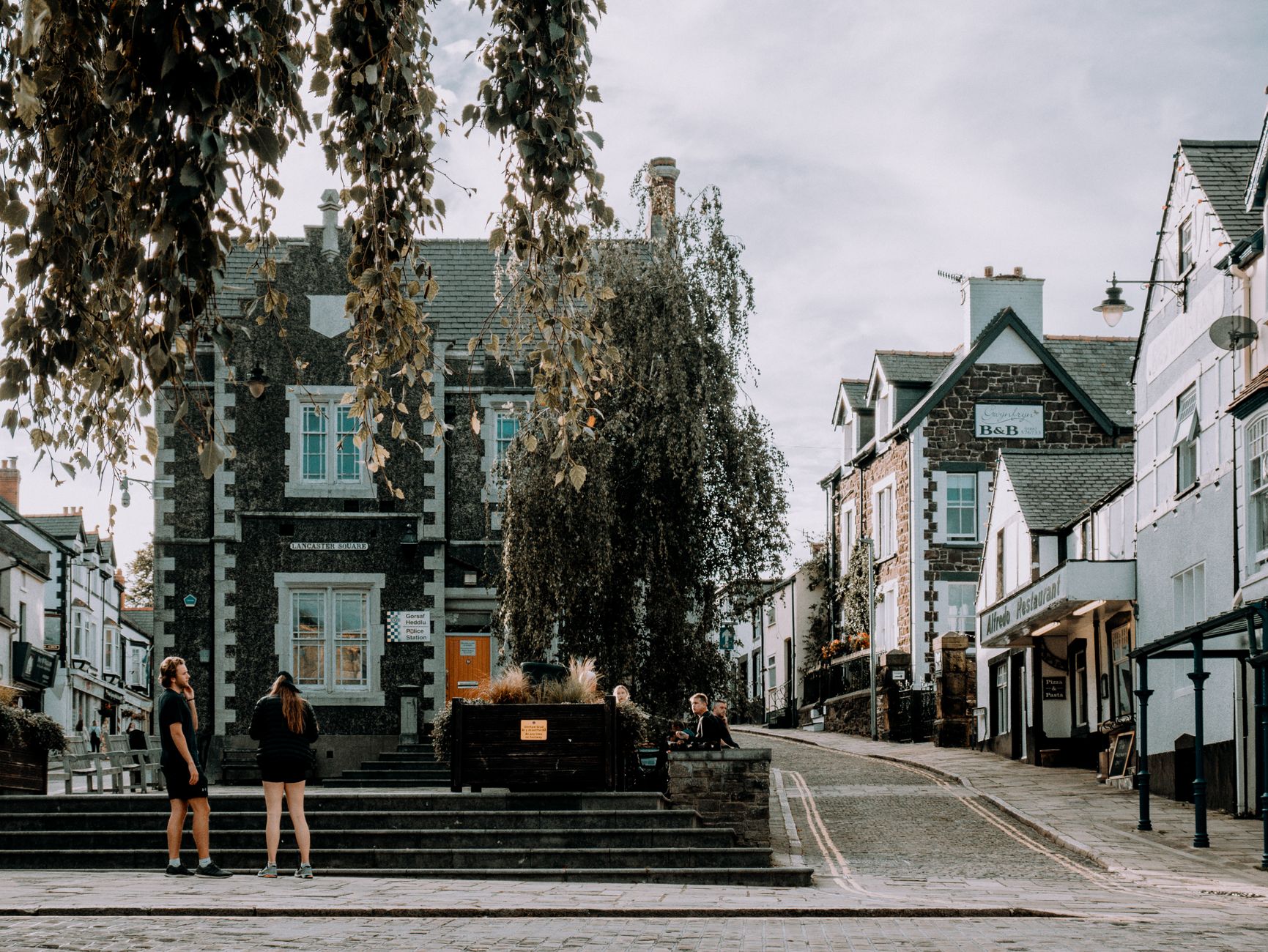


Walk Helston's high street and you'll notice something most Cornish towns lack: channels of water — called kennels — running down either side of the road, a quiet civic quirk that has been there for centuries. The street rises and falls gently, lined with Georgian and early Victorian frontages, and the whole place has the unhurried density of a town that has been important for a long time and knows it.
This was western Cornwall's dominant settlement in the 13th century, a stannary town where tin was weighed and taxed, and a parliamentary borough from 1298. The harbour silted up, the castle crumbled, but Helston kept its civic bones — the Guildhall, the old prison, the church rebuilt after a lightning strike — and that accumulation of real history gives it a weight you don't always find at the coast.
💛 What travellers fall for
People who come back tend to make straight for the Blue Anchor on Coinagehall Street, one of the oldest continuously operating breweries in the country, for a pint of Spingo. They also recommend arriving on foot from the bus rather than driving — the A394 approach hides the town centre, and the walk down from the top of the high street lets the kennels reveal themselves properly.
Deals in Helston
Book directly at the provider


How Helston came to be
Helston appears in the record books at the Domesday Inquest of 1088, held by the Crown across 4,760 acres. King John granted its earliest surviving charter in 1201, and from 1298 the town sent members to Parliament. Its 13th-century importance rested on a harbour on the River Cober, which then opened into Mount's Bay — that harbour is long gone, the Cober now draining into a landlocked lake. A castle built under Edmund, Earl of Cornwall, stood near what is now the Bowling Green; it was already ruinous by 1478.
Through the Elizabethan period Helston was one of four Cornish stannary towns, a place where tin was officially weighed and taxed before it could be sold. The Godolphin family dominated its political life across the 16th and 17th centuries, and their name survives in the church Lord Godolphin rebuilt in 1756 after lightning destroyed its predecessor, and in the Angel Hotel, which began as the family's town house in the 1500s.
Who and what shaped it
People who shaped it
Landmark buildings
See Helston in motion
Plan your visit
On the map
When to go
Cornwall's far southwest keeps winters mild by British standards, though Helston sits inland enough to catch more wind and rain than the sheltered coves nearby. Spring and early autumn are the most comfortable seasons for walking the town; summer brings reliable warmth but also the heaviest visitor traffic across the wider county.
Right now
Background & history adapted from Wikipedia (CC BY-SA) · specs from Wikidata (CC0) · weather from Open-Meteo · map data © OpenStreetMap contributors · photos from Wikimedia Commons / Unsplash with per-image credit. No third-party reviews or social posts reproduced.