
Hautefort
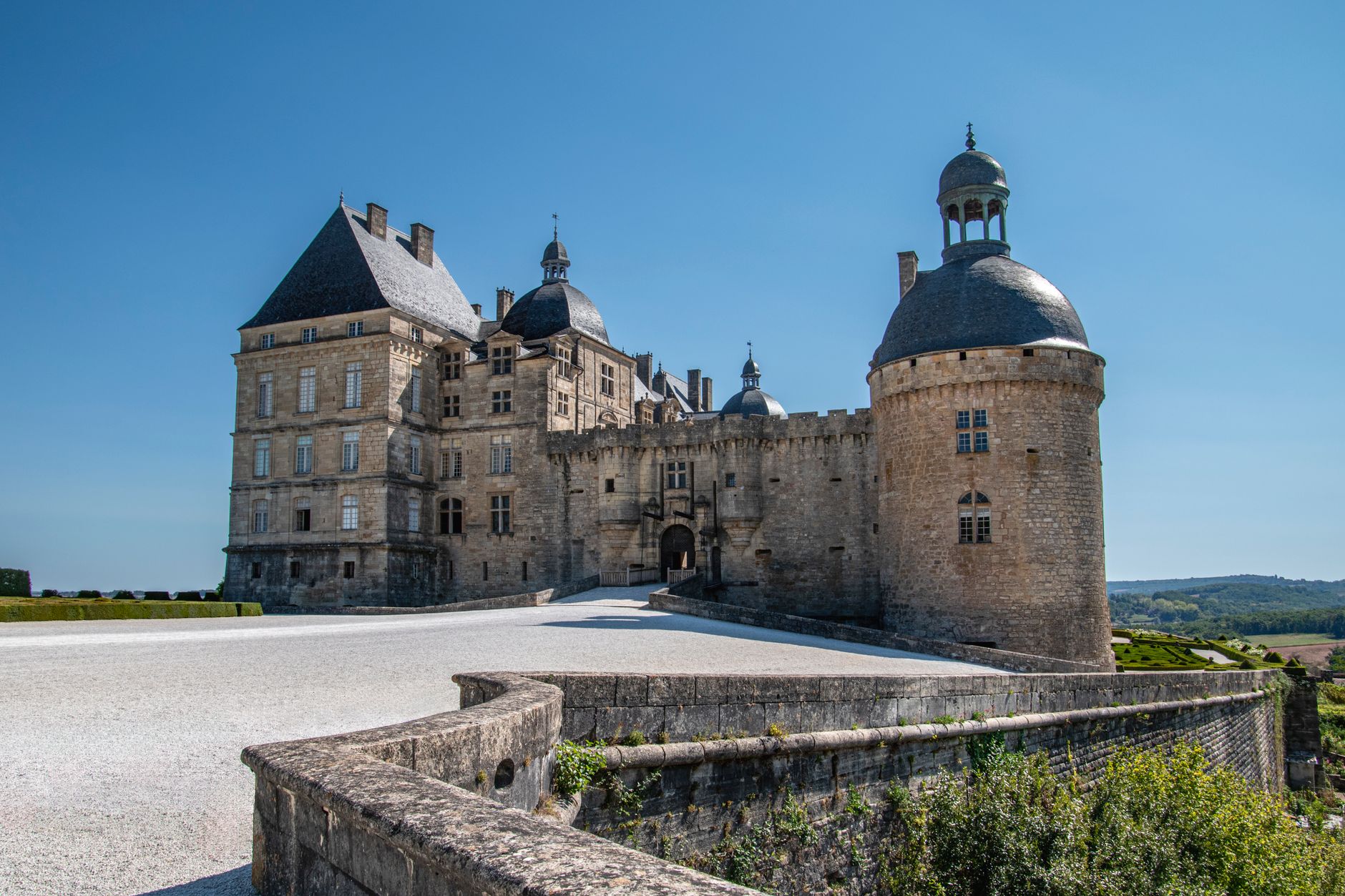
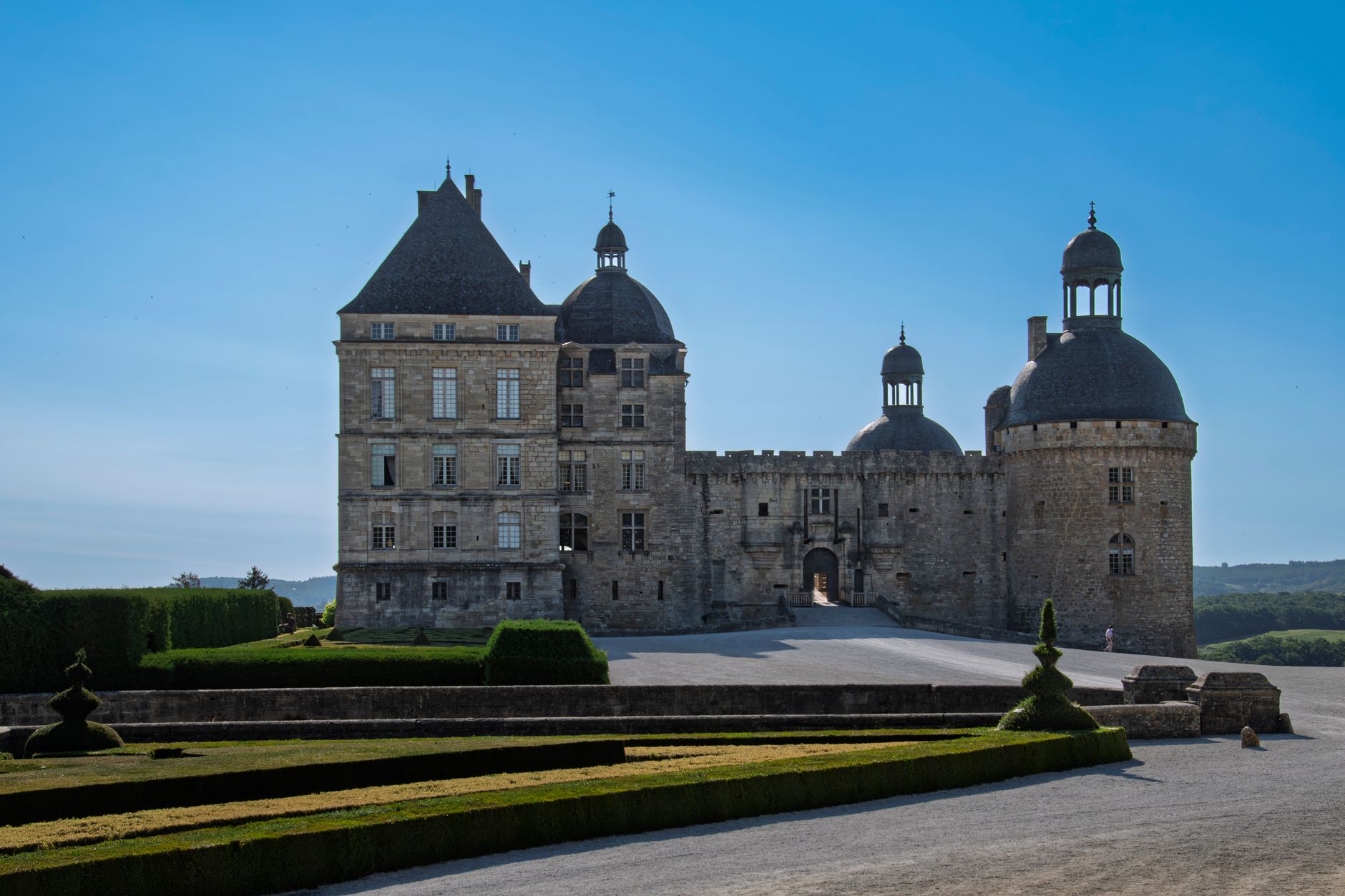
Hautefort sits on a ridge above the Auvézère Valley, its 17th-century château visible for miles — two round towers framing a roofline that looks borrowed from the Loire. What surprises most visitors is what stands beside it: the Hôtel-Dieu, a hospital founded in 1669 in the shape of a Greek cross, its chapel at the centre, now a museum where recreated sick rooms and period instruments make the history of medicine quietly unsettling.
The formal gardens alone justify the detour — three hectares of hand-pruned boxwood parterres, over 10,000 trees clipped into geometric shapes and domes that mirror the château's own silhouette. The English-style park beyond them runs to 30 hectares and offers a different kind of quiet entirely.
💛 What travellers fall for
People who return tend to time it for a Wednesday evening in summer, when the theatrical tour 'The Ladies of Hautefort' fills the rooms with tableaux vivants, ancient music and candlelight. The gourmet workshop at the bread oven, running June through September, is less known and worth booking early. Go in the morning before the tour groups arrive.
Experiences you don't want to miss


Deals in Hautefort
Book directly at the providerHow Hautefort came to be
A fortress has stood on this ridge since at least the 9th century — 'castrum de Autafort,' raised on a Roman camp by the Viscounts of Limoges. Around the year 1000, Guy de Lastours built the first proper stronghold here; his descendant Gouffier entered Jerusalem with Godefroy de Bouillon in 1099. By 1160, the troubadour Bertran de Born had become lord, sparring with his brother Constantin for two decades before defending the castle against Richard the Lionheart's siege in 1183.
The Gontaut family took ownership in the 14th century, and in the 17th century the Marquis François de Hautefort and his grandson Jacques-François — first equerry to Queen Anne of Austria — hired architects to rebuild in stone and style. After long decline, the Baron and Baroness de Bastard spent decades restoring it; the Baroness finished alone after her husband died, moved back in 1977, and opened the doors to visitors. The Queen Mother of England came in 1978. Today the David-Weill family's foundation continues the work.
Who and what shaped it
People who shaped it
Landmark buildings
See Hautefort in motion
Plan your visit
On the map
When to go
The Périgord is warmest and driest from June through September, though July and August bring crowds to the region. April, May and October offer cooler, clearer days — good light for the gardens and far fewer people on the terrace.
Right now
Background & history adapted from Wikipedia (CC BY-SA) · specs from Wikidata (CC0) · weather from Open-Meteo · map data © OpenStreetMap contributors · photos from Wikimedia Commons / Unsplash with per-image credit. No third-party reviews or social posts reproduced.