
Guggenheim Museum Bilbao
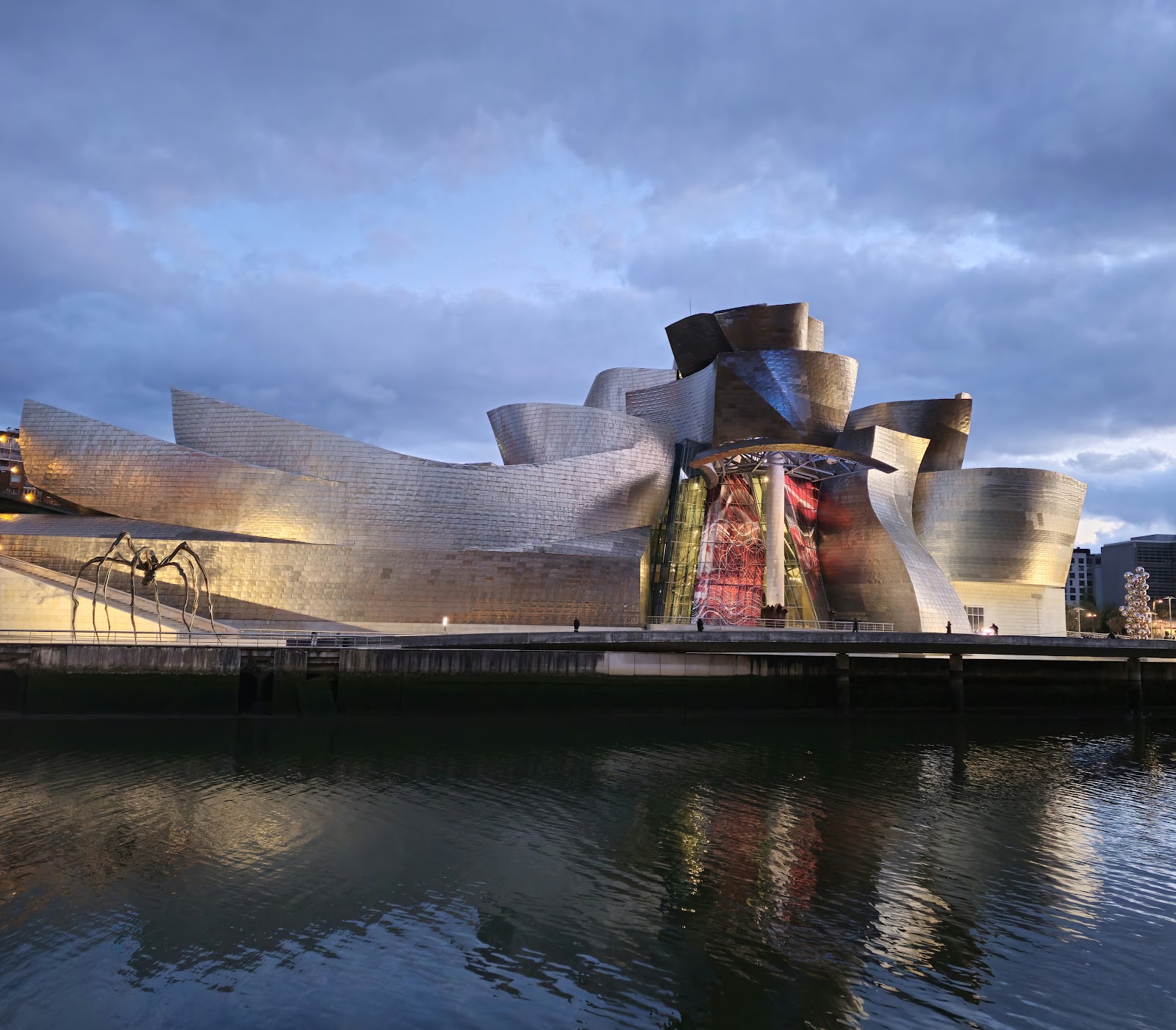
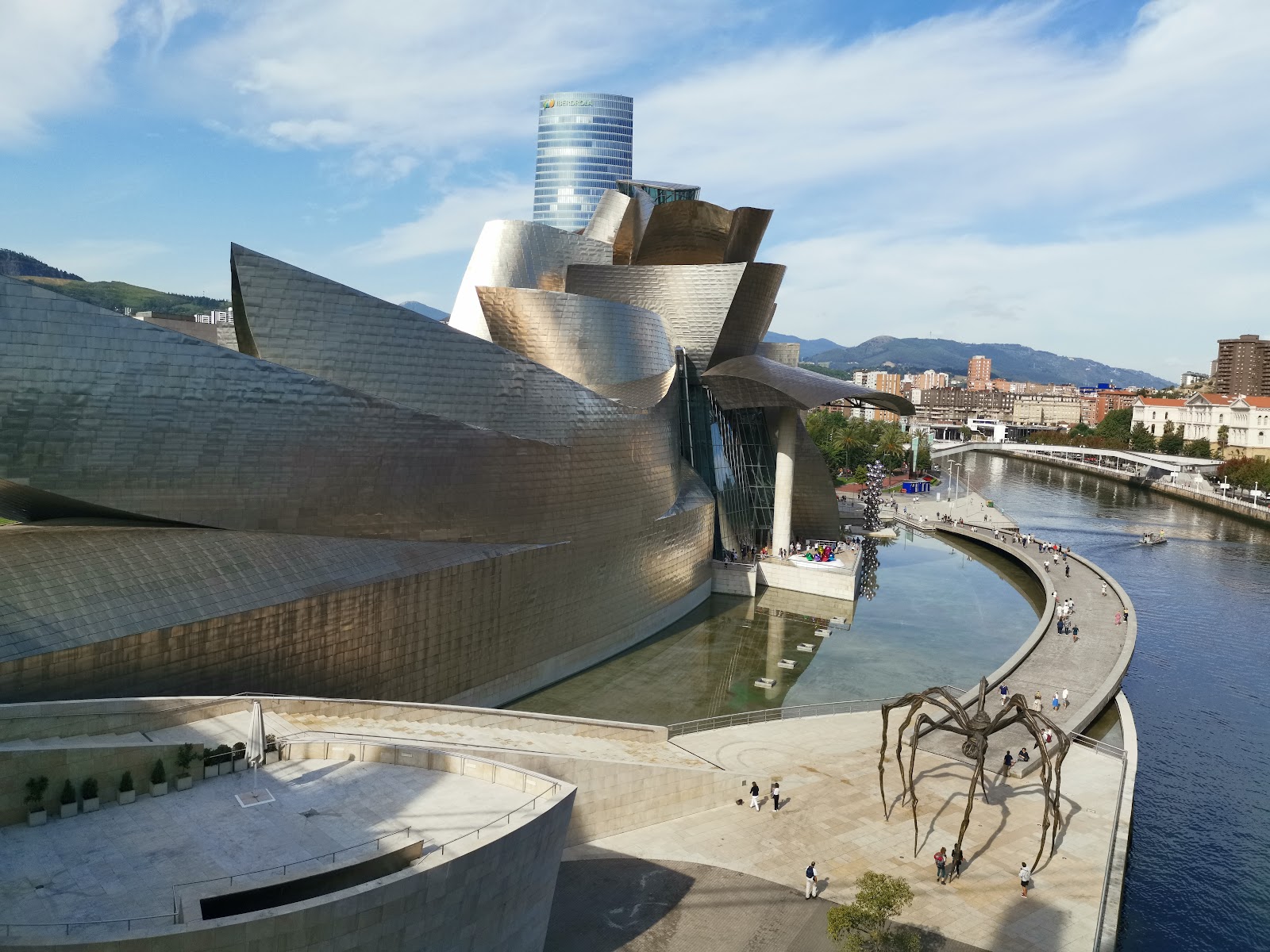
Stand on the bank of the Nervión and the building does something strange: it seems to move. Frank Gehry's titanium panels shift from silver to gold to pale rose depending on where the clouds are, and the whole mass — 33,000 sheets of metal folded into curves no right angle could contain — reads less like a museum than like something that washed up and decided to stay.
Inside, the atrium pulls you upward through curved volumes and glass curtain walls before you've even found the first gallery. The permanent collection and every temporary show are covered by a single ticket, audio guide included.
💛 What travellers fall for
People who come back tend to head straight to Gallery 104 — the vast, column-free room built to hold Richard Serra's The Matter of Time. Walk through the rusting steel corridors of that installation slowly, and the geometry starts to do things to your sense of balance. Tuesday evenings between 6 and 8 pm, admission is free and the crowds thin noticeably.
The story behind Guggenheim Museum Bilbao
By the early 1990s, the stretch of Bilbao waterfront along the Nervión had outlived its industrial purpose — the port trade that once defined the city had collapsed. In 1991, the Basque Government approached the Solomon R. Guggenheim Foundation with an unusual offer: fund the construction entirely, create an acquisitions endowment, and subsidise annual operations, in exchange for a Guggenheim outpost on this abandoned ground.
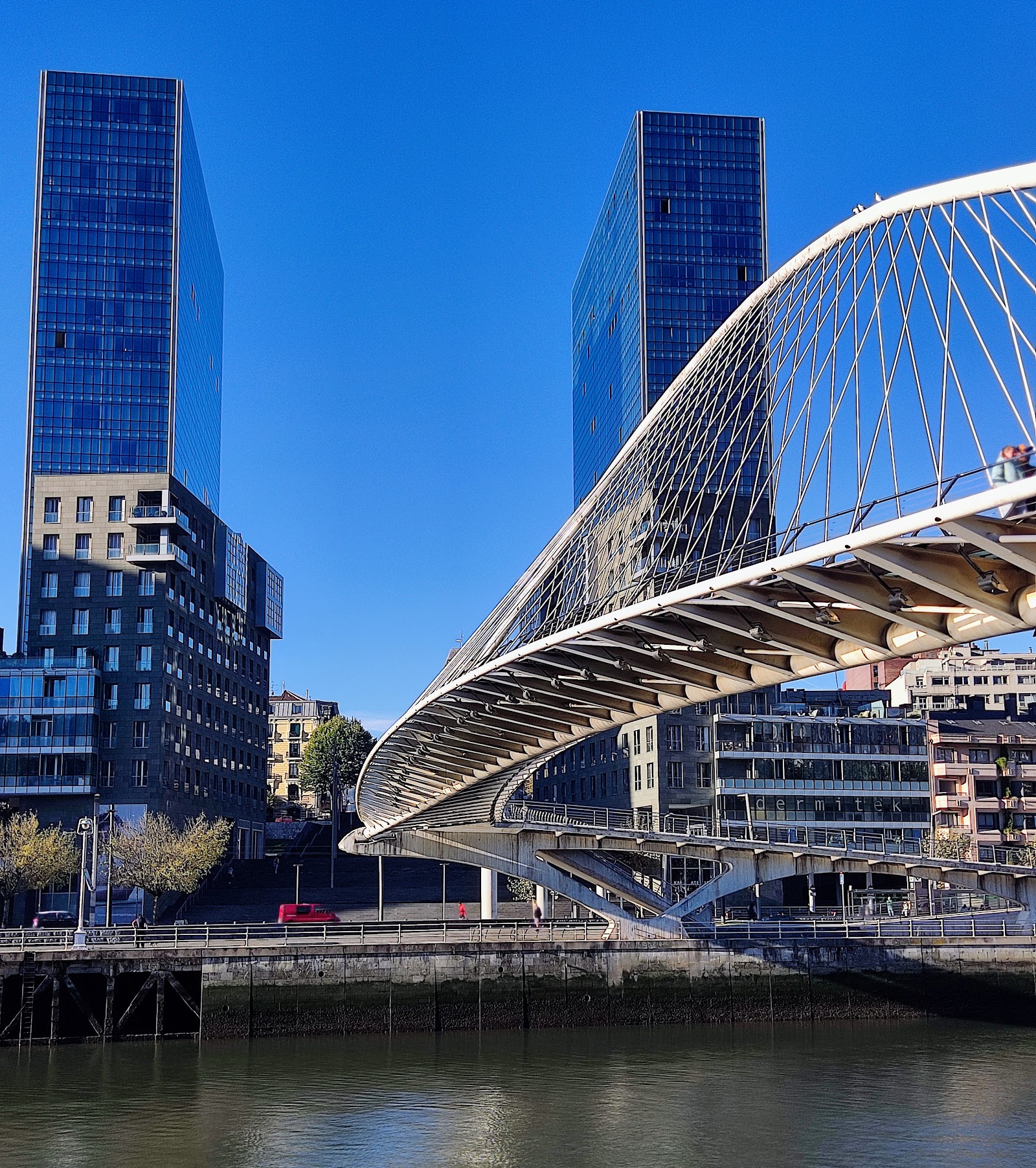
The Foundation selected Frank Gehry over two other shortlisted architects in a 1992 competition, with director Thomas Krens pushing him toward something genuinely radical. Construction ran from October 1993 to October 1997, built by Ferrovial at a final cost of $89 million. Juan Carlos I opened the museum on 18 October 1997. Since 2007, the La Salve Bridge overhead has carried Daniel Buren's red-arc sculpture, folding infrastructure into the building's extended composition.
Good to know
The nearest light rail stop is Guggenheim, a four-minute walk. Metro lines L1 and L2 stop at Moyúa or Indautxu, about ten minutes on foot. Book timed tickets in advance — summer weekends sell out. No photography inside, and no tripods or selfie sticks. Budget two to three hours.
Where is Guggenheim Museum Bilbao?
More tickets & tours for Guggenheim Museum Bilbao
Book directly at the provider
What travellers say about Guggenheim Museum Bilbao
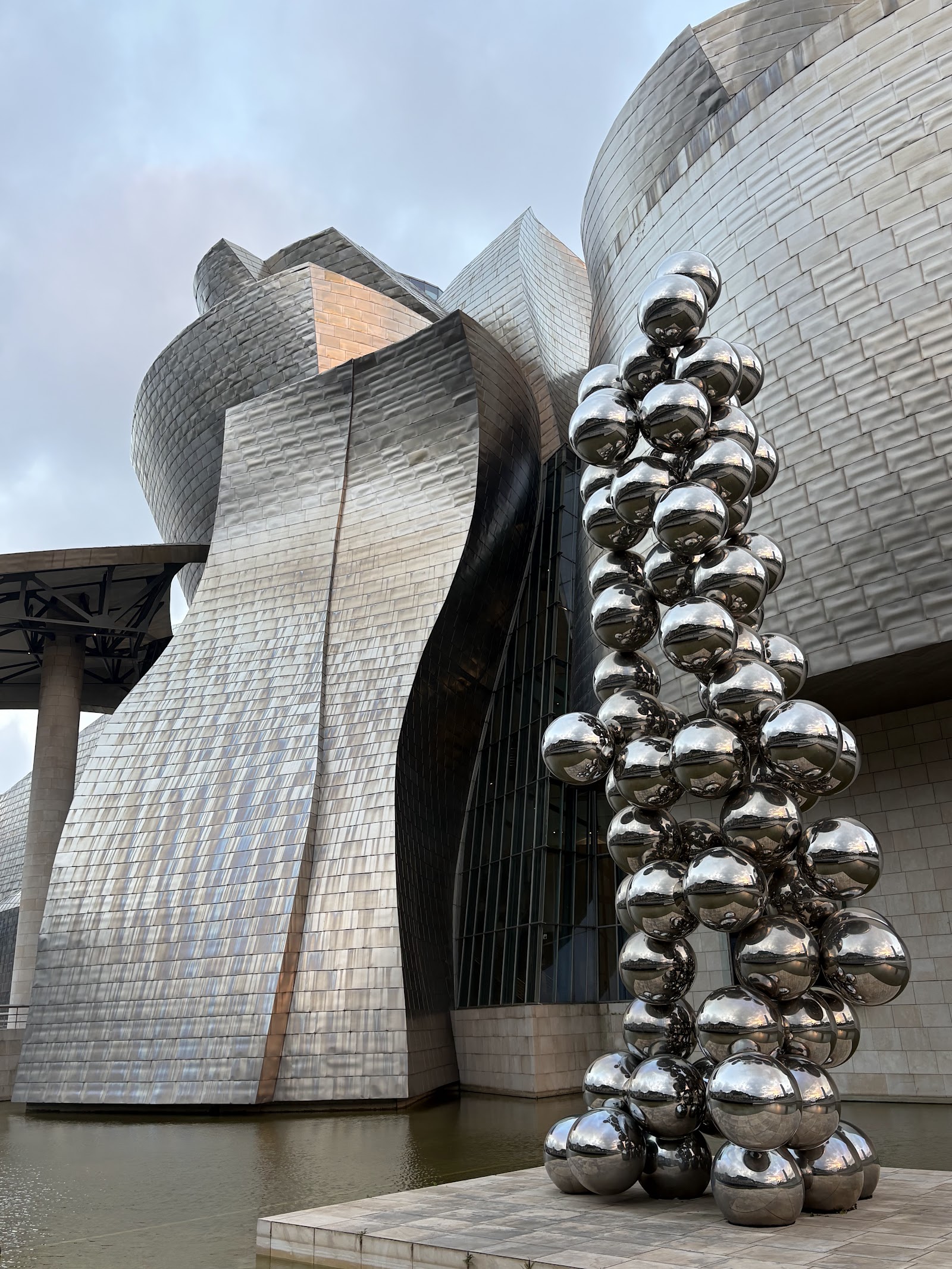
Even before entering the building, the museum is breathtaking. The architecture alone is worth the visit. The flowing titanium exterior creates one of the most recognizable museum buildings in the world, and it’s every bit as impressive in person as it appears in photographs. Plan your time carefully: if you want to explore everything properly, it’s easy to spend three hours or more here. Outside the museum, you’ll find famous large-scale artworks and sculptures, making the experience enjoyable both indoors and outdoors. Even visitors who are not particularly interested in museums may find themselves impressed simply by the scale and creativity of the space. Inside, the collection includes painting, sculpture, installation art, product design, and architectural works, offering something for a wide range of interests. Another advantage is the surrounding neighborhood. There are numerous cafés, restaurants, and shops nearby, making it easy to take a break and continue exploring after your visit. An essential stop in Bilbao.
We had the most incredible visit! We were completely thrilled by the Richard Serra installation (watching the film is highly recommended as it really gives an appreciation of the work). The others exhibitions were also amazing. LOVED the Igshaan Adams tapestries…. Simply stunning. And of course the building itself is breathtaking. Lovely staff and not so busy as we went first thing (10.00am!)
The architecture alone justifies the journey. I have stood before it through moon and day, rain and shine, but the definitive moment is an early weekday morning. Before the crowds arrive, the massive titanium curves feel quiet, almost intimate, catching the soft Basque light. It is the perfect atmospheric palate cleanser; by the time you step inside, your mind is cleared and ready for the unexpected worlds the exhibitions open up. Every visit, at least one exhibition completely reframes your perspective, but it’s that solitary dawn light on the curves of the building that stays with you.
Went with an on-line reservation at a discount for seniors. Map given has no real information have to download on your telephone assuming you have remembered to bring earphones if you have them. This is a modern art museum and maybe not to everyone's taste. The building is spectacular inside and out would have been happy to pay for the guided tour but no availability so book early. Negative is need to go out of the main area for the cafeteria and need a wrist identification to get back in. Positive allowed to take photos. Need a good 2/3 hours.
Guggenheim Bilbao More than a museum — a living sculpture. The architecture alone is a masterpiece: fluid, bold, and constantly changing with the light. You don’t just visit the Guggenheim Bilbao, you enter it. Inside, the scale is impressive and perfectly suited for large, immersive works. Some exhibitions hit hard, others challenge you — and that’s part of the experience. This is a place that takes risks and invites you to see differently. The outdoor artworks blend seamlessly with the city, turning the area into an open-air extension of the museum. A landmark that didn’t just transform Bilbao’s skyline, but its cultural soul. Highly recommended. Take your time, walk slowly, and let the space speak before the art does.
More of Bilbao
Discover where to stay, what to do and the best deals for your trip.
Explore Bilbao →More attractions in Bilbao
All of Bilbao →

Background adapted from Wikipedia (CC BY-SA) · map data © OpenStreetMap contributors · ratings & place photos via Google · other photos with per-image credit. Ticket links may earn us a commission at no extra cost to you.