
Gubbio
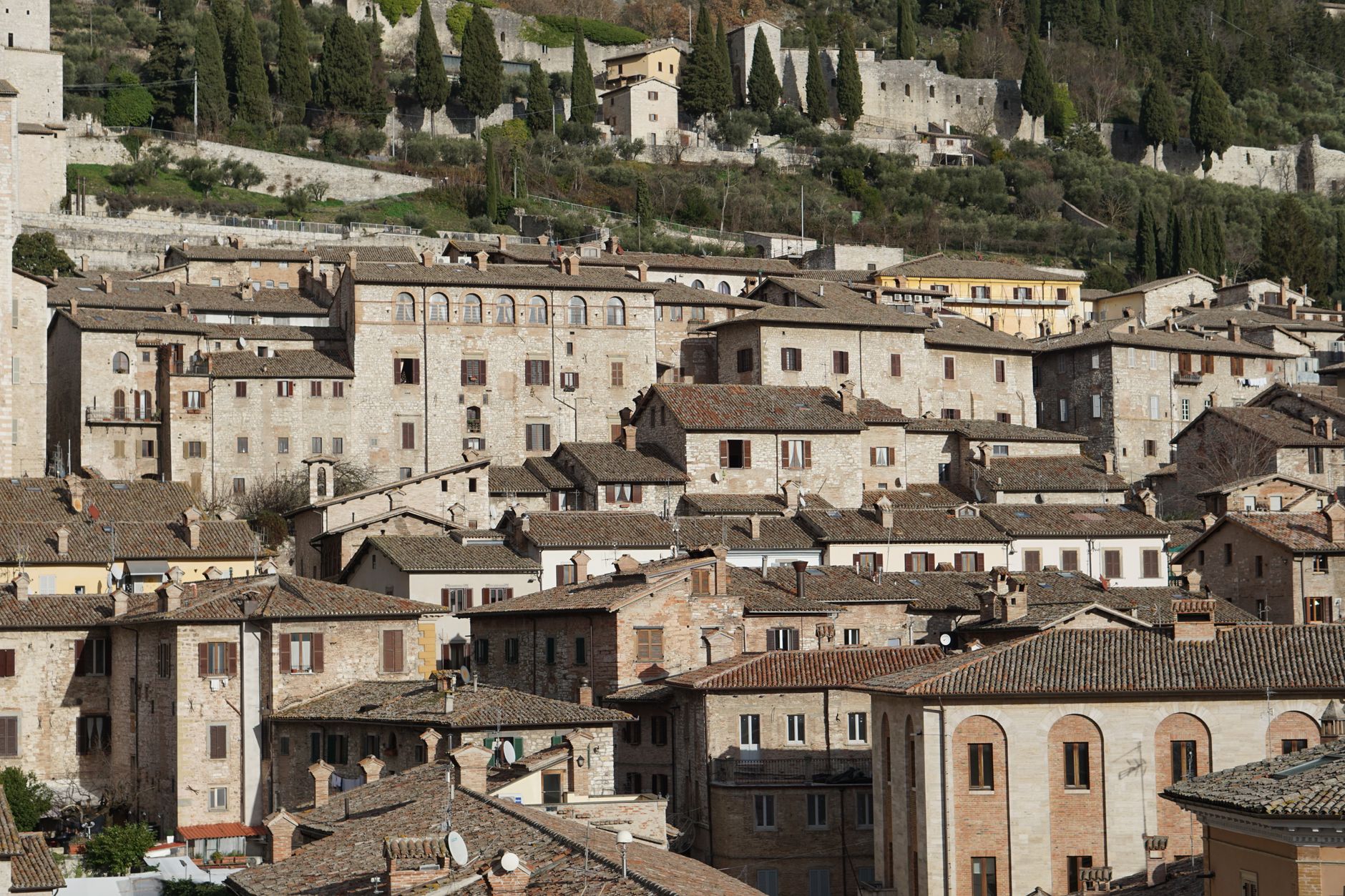
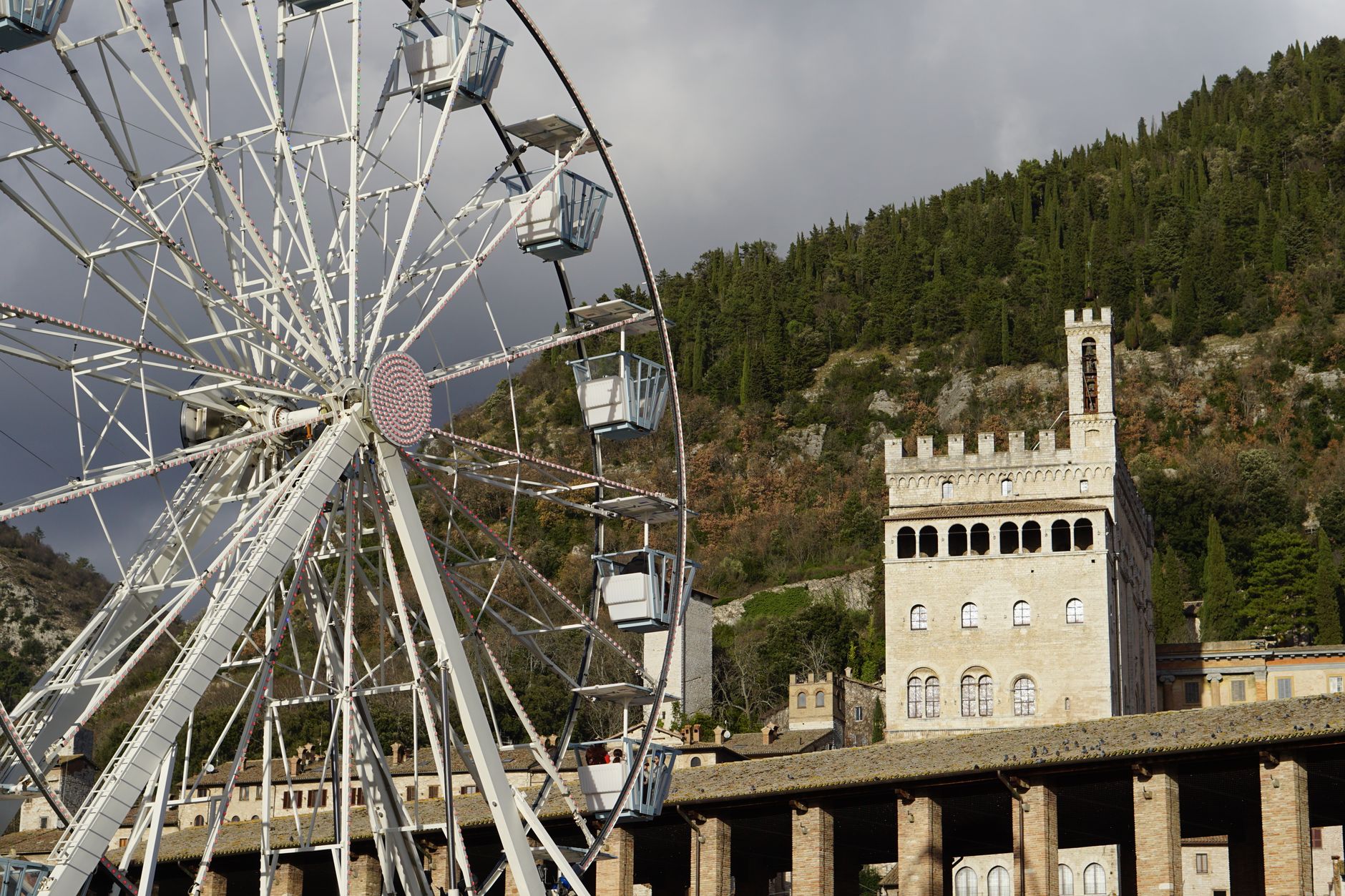
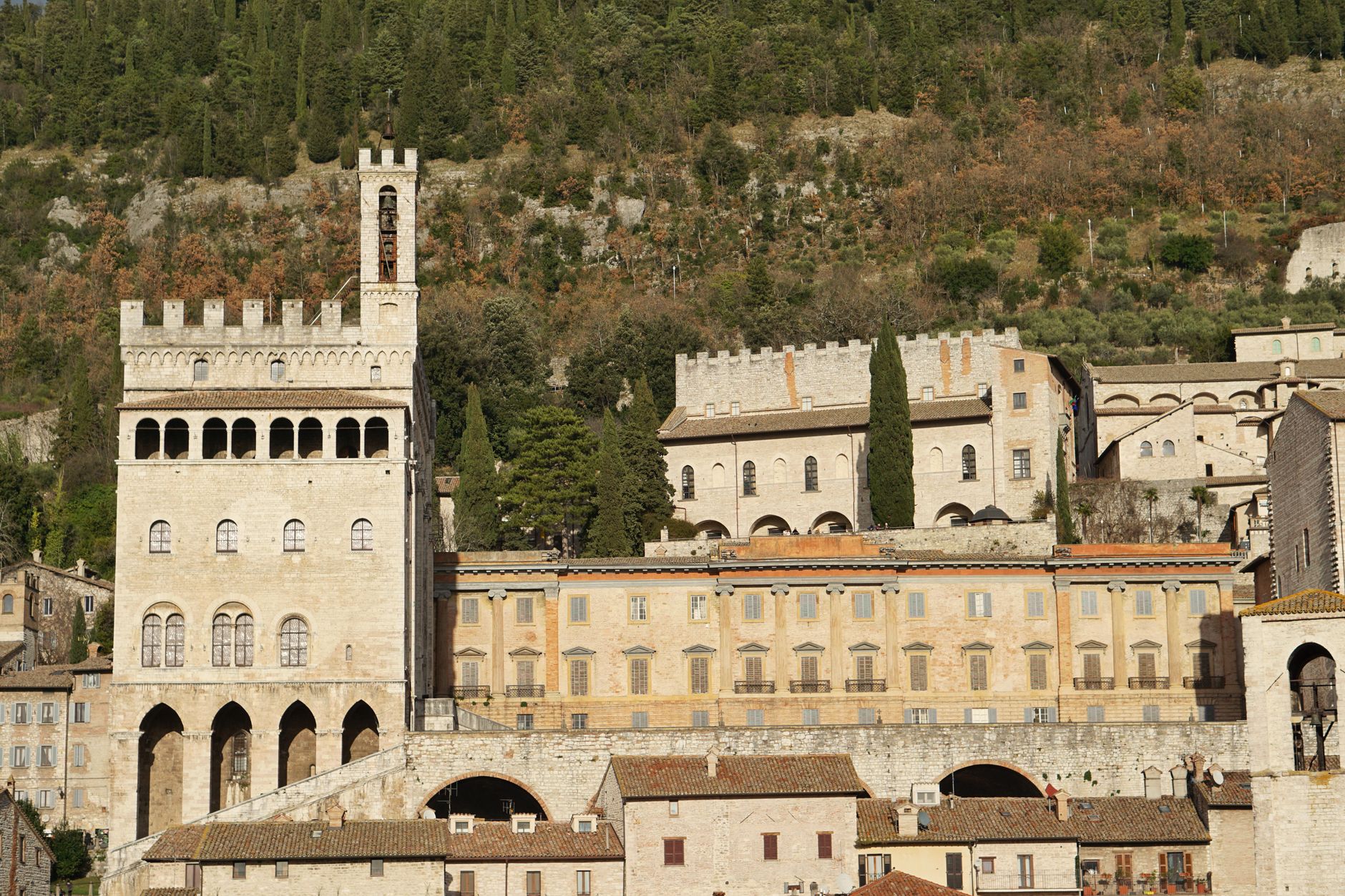
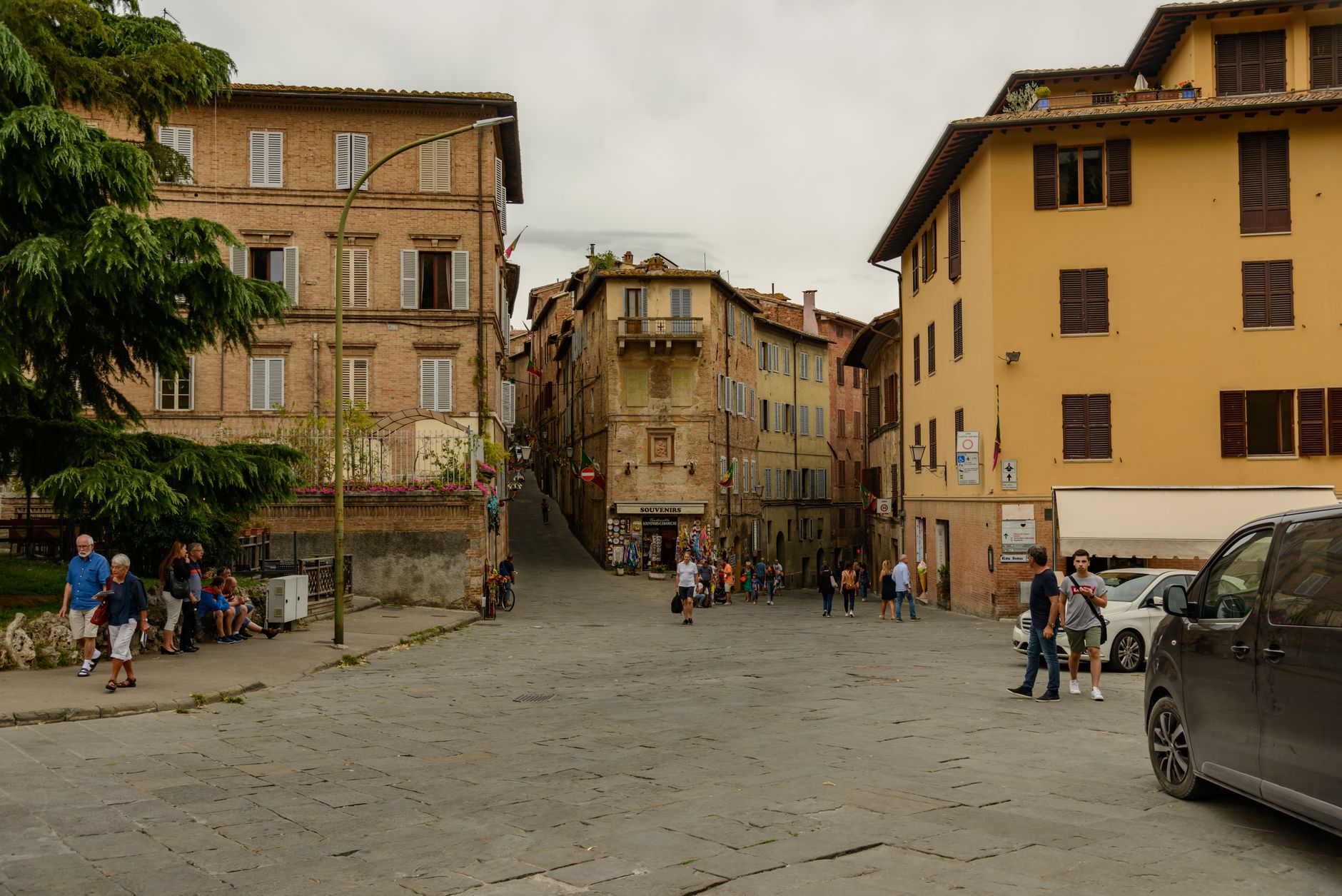
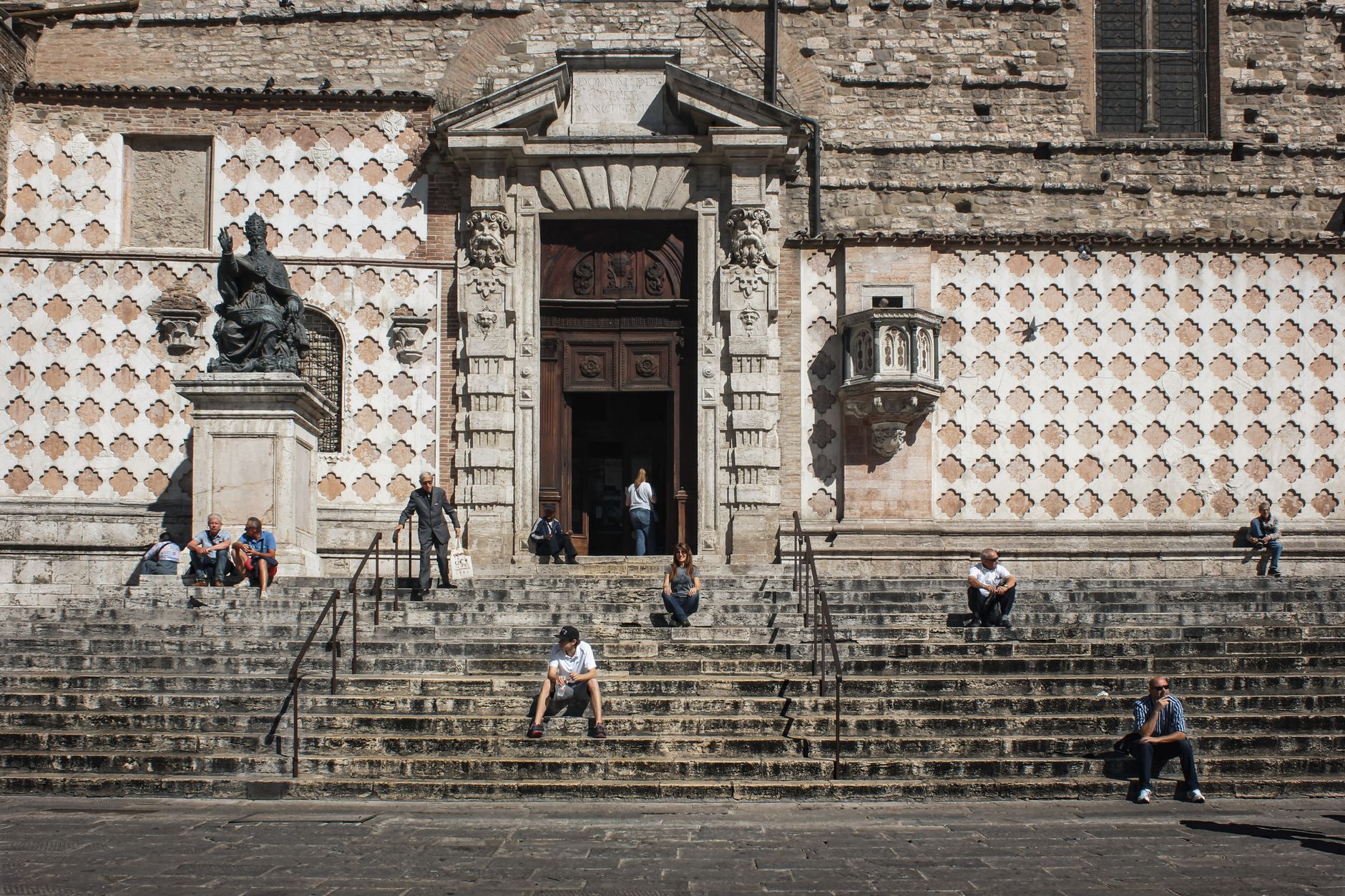
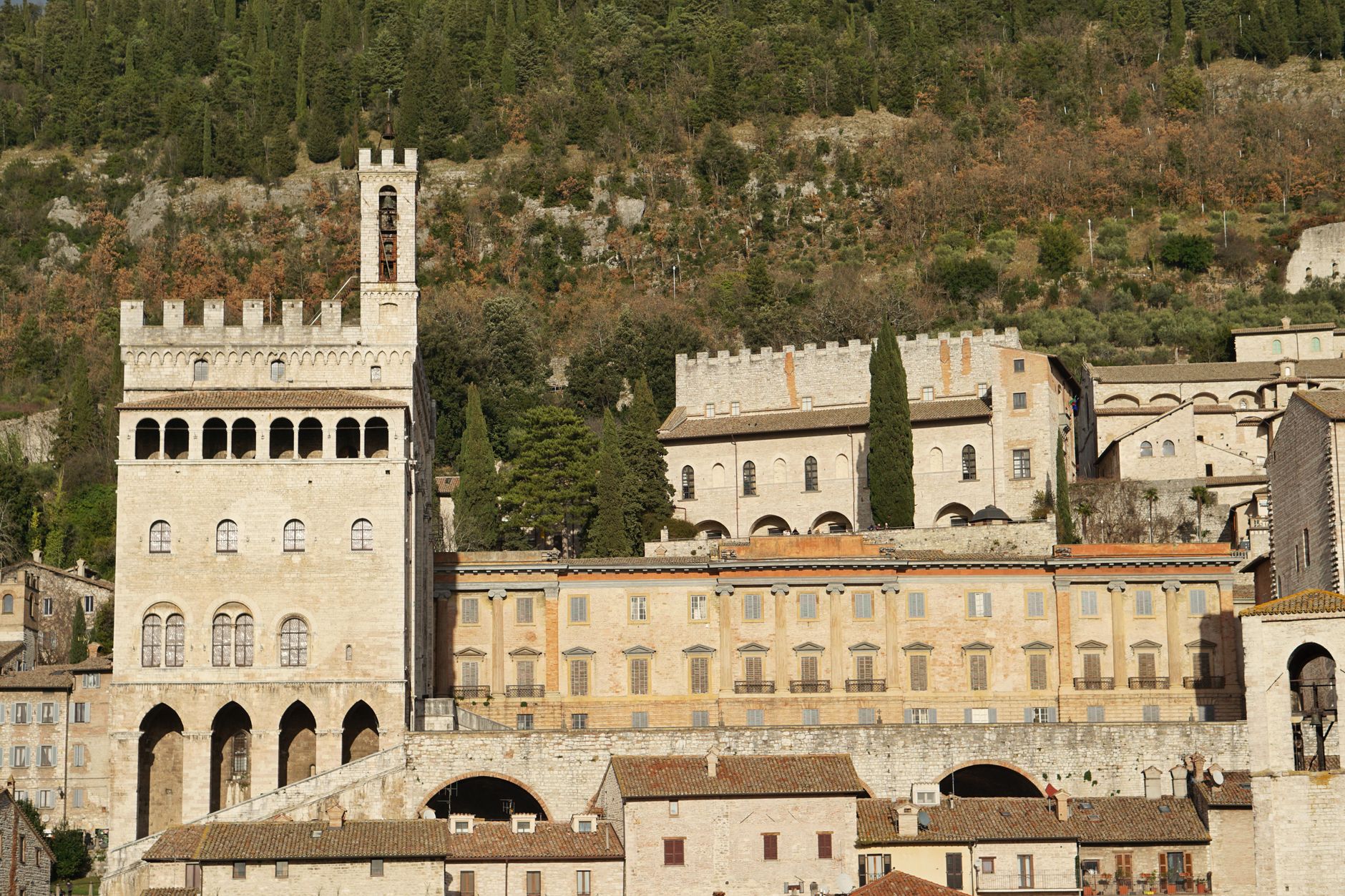
Stand on Piazza Grande — the square that hangs in mid-air above a scaffold of medieval arches — and you understand immediately that Gubbio was built by people with something to prove. The valley drops away below you, the Apennines close in on three sides, and the stone of the city has the grey-green quality of old pewter. This is Umbria's northernmost edge, and it feels distinct: harder, more self-contained than the sunnier towns to the south.
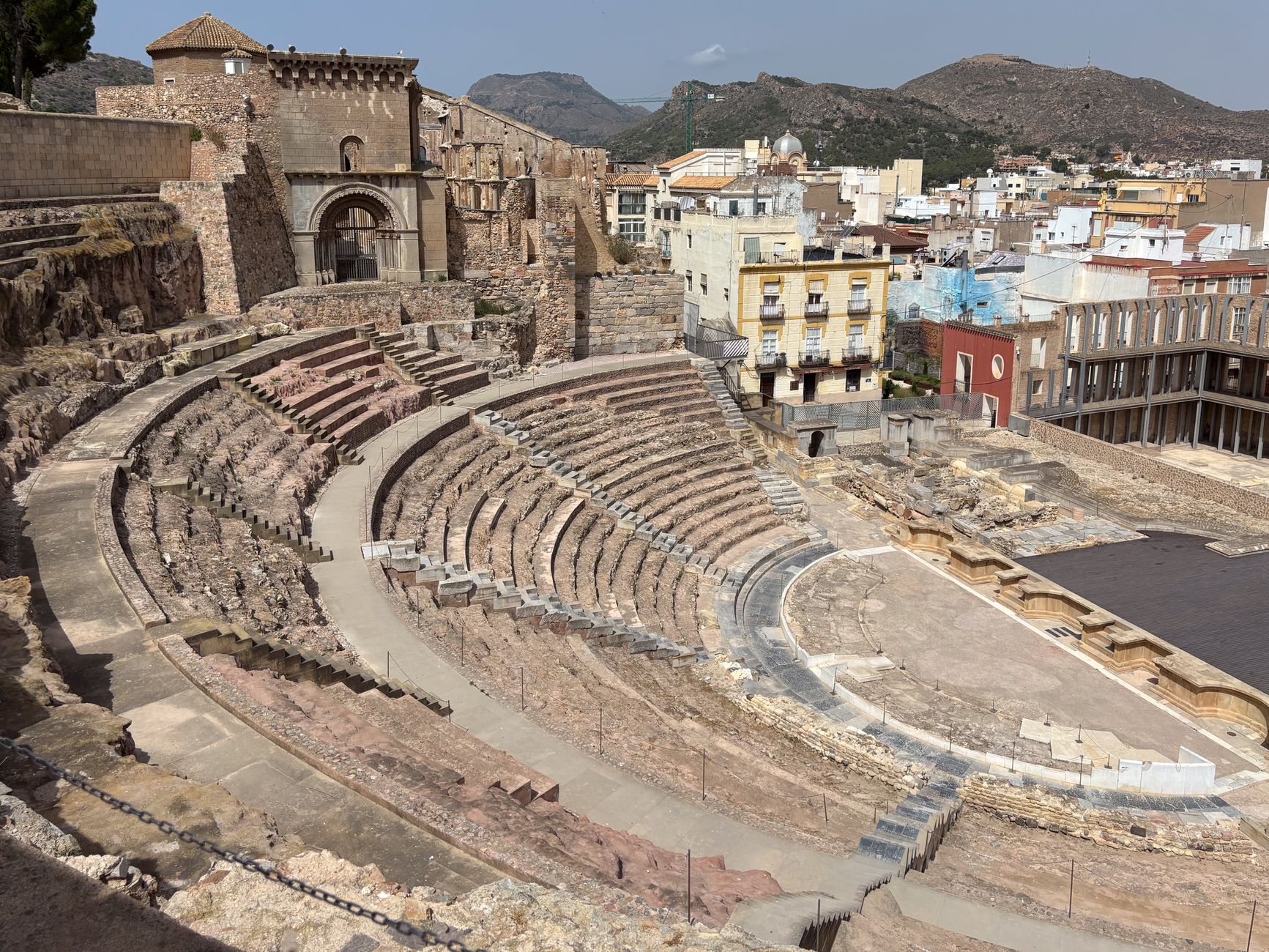
Gubbio has roughly 30,000 people and the bones of a city that was already setting its own form by the 1300s. The Roman theatre, the bronze tablets in the Palazzo dei Consoli, the funicular climbing Monte Ingino — each one is a specific thing, not a backdrop.
💛 What travellers fall for
People who come back tend to go straight to the Palazzo dei Consoli to spend time with the Eugubine Tablets — seven bronze sheets inscribed in Umbrian script, dug up by a peasant woman in 1444 near the old theatre. They're among the longest surviving texts in any Italic language, and you can stand a foot away from them.
Experiences you don't want to miss



Deals in Gubbio
Book directly at the providerHow Gubbio came to be
The valley has been inhabited since the Palaeolithic, but Gubbio — Iguvium to the Romans — grew into something coherent during the Umbrian period, even minting its own coins before Roman conquest. After the Social War it became a municipium, then endured a long sequence of destruction and rebuilding: Goths in 552, Byzantines, Lombards, Hungarians in the 10th century. The medieval commune that emerged from that turbulence had genuine ambitions.
Under Bishop Ubaldo Baldassini in the 12th century, the city defeated Perugia in open war. By 1384 it had surrendered to the Montefeltro dukes of Urbino, and Federico da Montefeltro built the Palazzo Ducale in 1480 — the first Renaissance building in Gubbio. The papacy took over in 1624 and held the city until Italian unification in 1860.
Who and what shaped it
People who shaped it
Landmark buildings
See Gubbio in motion
Plan your visit
On the map
When to go
Summers are warm and dry, with July temperatures regularly reaching the low 30s Celsius; the surrounding mountains keep the air moving. Winters are cold and sometimes snowy, which gives the stone city a particular atmosphere, but some smaller sites close or reduce hours between November and February.
Right now
Background & history adapted from Wikipedia (CC BY-SA) · specs from Wikidata (CC0) · weather from Open-Meteo · map data © OpenStreetMap contributors · photos from Wikimedia Commons / Unsplash with per-image credit. No third-party reviews or social posts reproduced.