
Grottaferrata
Twenty kilometres southeast of Rome, Grottaferrata owes its name to iron window grates on an ancient crypt — "Cryptaferrata," the ironbound crypt — that caught the attention of a Greek monk named Nilus in the early eleventh century. He founded a monastery here in 1004, and the community he started still lives and prays inside those walls today, following the Byzantine rite in a town otherwise thoroughly Italian.
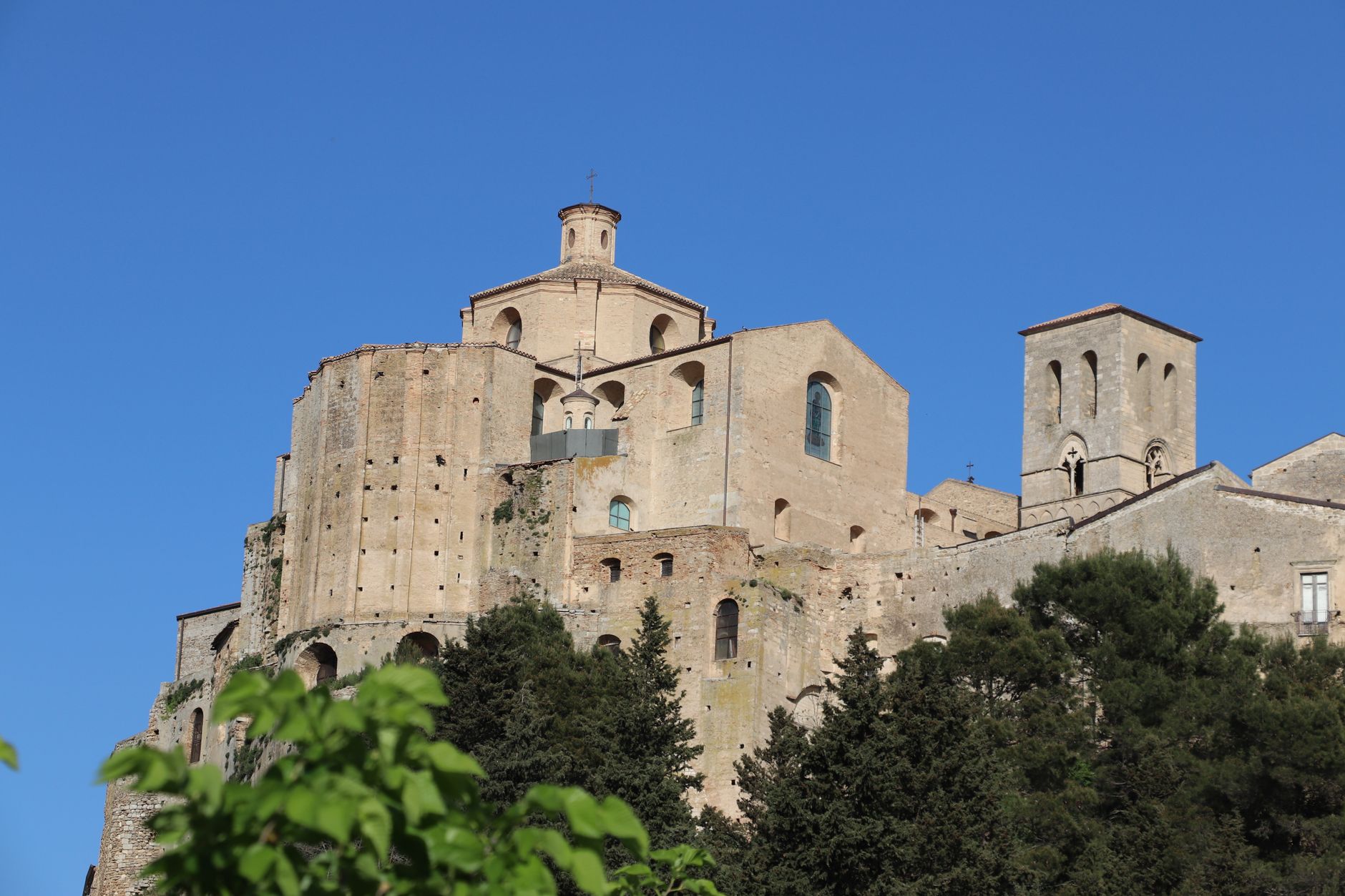
The abbey is the reason to come. Its Romanesque campanile rises over a fortified enclosure that Julius II reinforced with moat and towers; inside, Domenichino frescoed a chapel, and Bernini supplied the high altar. The monks also hold the largest collection of pre-1600 Greek manuscripts in Western Europe.
💛 What travellers fall for
People who return tend to time the visit around the museum's limited hours — Fridays, Saturdays, and select Sundays — so they don't miss the archaeological collection the monks began assembling in 1875. The abbey church itself is free and open daily, which means a quiet Tuesday morning, before the tour groups drift down from Rome, belongs almost entirely to you.
Experiences you don't want to miss


Deals in Grottaferrata
Book directly at the provider

How Grottaferrata came to be
Saint Nilus the Younger arrived at this site in 1004 and obtained the land — a former Roman villa with a fourth-century Christian oratory on it — from Gregory, Count of Tusculum. Nilus died the following year, but his successor Saint Bartholomew carried the construction forward and is considered the monastery's second founder. Pope John XIX consecrated the church on 17 December 1024.
Centuries of patronage shaped the complex: Cardinal Giulio della Rovere (later Julius II) fortified it with towers and a moat in the 1480s; Cardinal Bessarion had earlier restored and enlarged the community; Domenichino frescoed the founders' chapel between 1608 and 1610; and in 1665 Bernini's high altar was completed. In 1937 the monastery was designated the territorial abbacy of the Italo-Albanian Catholic Church, a status it still holds.
Who and what shaped it
People who shaped it
Landmark buildings
See Grottaferrata in motion
Plan your visit
On the map
When to go
The Alban Hills temper the heat slightly compared to Rome, but summers are still warm and dry — spring and autumn are the most comfortable seasons for walking the grounds. Winters are mild and quiet, occasionally damp.
Right now
Background & history adapted from Wikipedia (CC BY-SA) · specs from Wikidata (CC0) · weather from Open-Meteo · map data © OpenStreetMap contributors · photos from Wikimedia Commons / Unsplash with per-image credit. No third-party reviews or social posts reproduced.