
Grosse Cloche
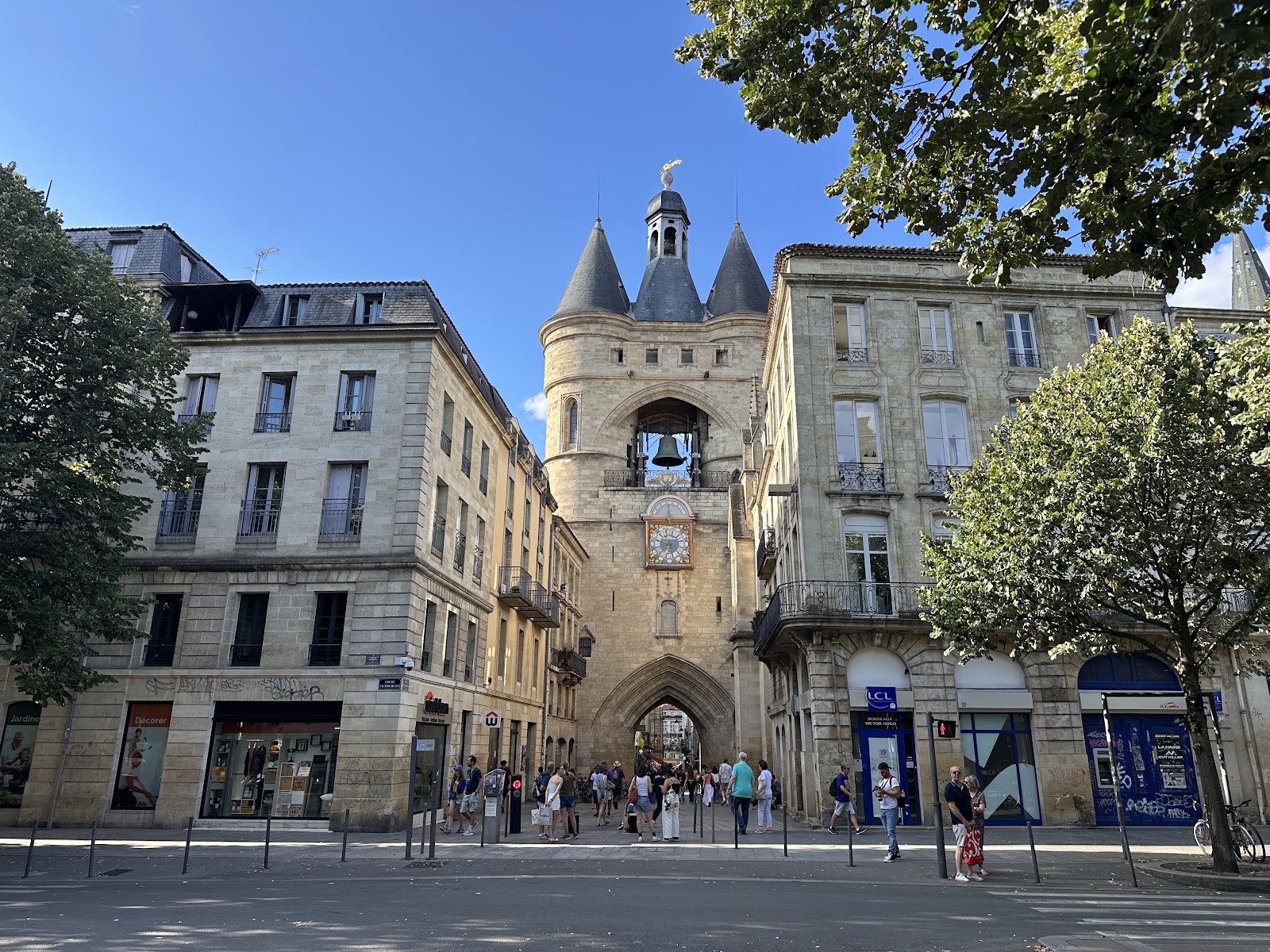
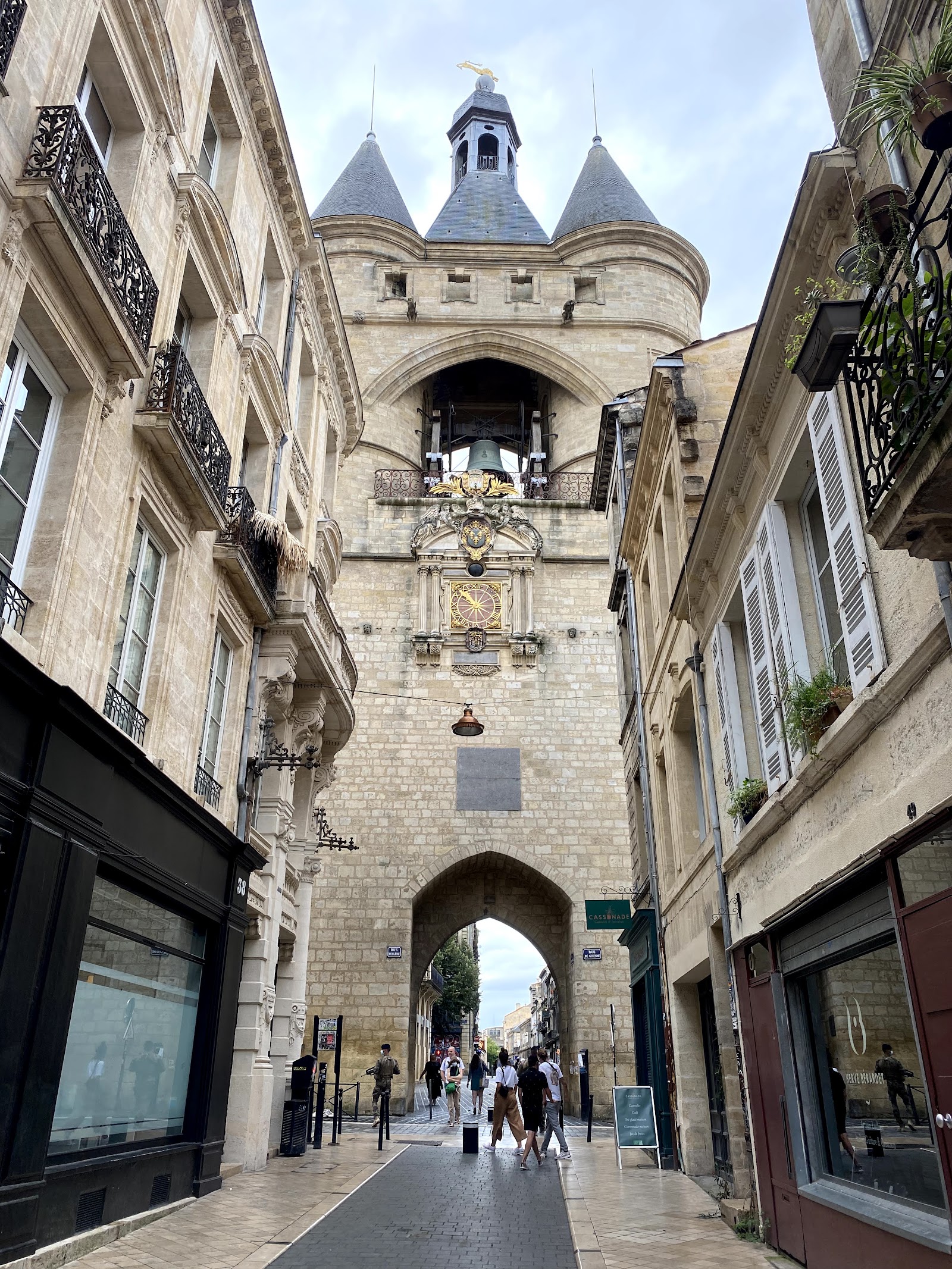
Rue Saint-James passes right through Grosse Cloche — under its arch, between its two round towers — as it has for centuries. Stand on the cobblestones south of the gate and look up: a gilded semicircular dial marks solar time on one face, while the north side tracks the lunar cycle. The weathervane on the dome is an English leopard, a quiet reminder that this was once the capital of English Guyenne.
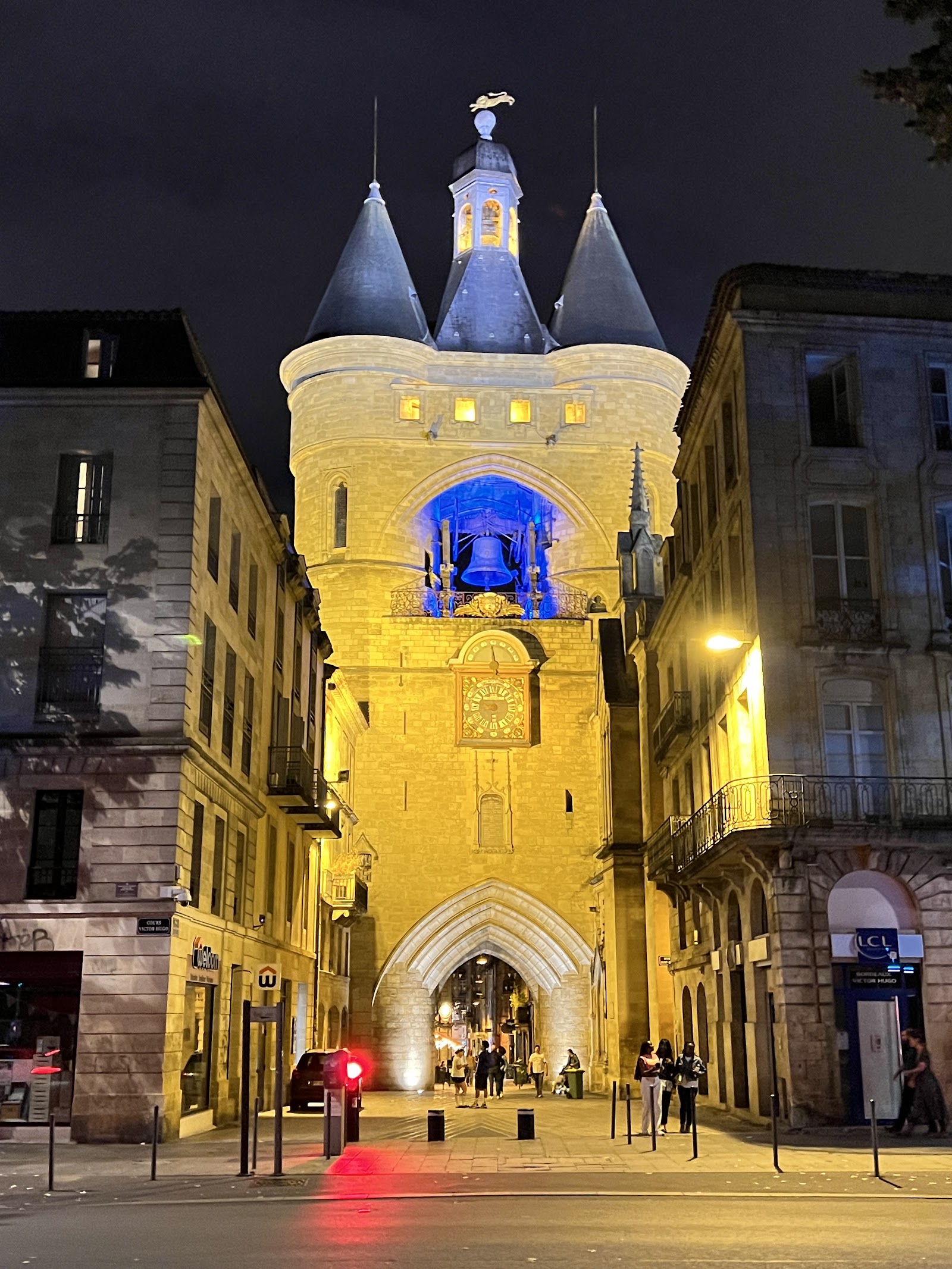
The bell up top — named Armande-Louise, cast in 1775, weighing 7,800 kilograms — rings six times a year on national dates, and on the first Sunday of each month at noon. When it goes, the whole structure seems to hold its breath.
💛 What travellers fall for
People who come back tend to time it for a first-Sunday noon, when Armande-Louise actually rings. The south-side view up Rue Saint-James is the photograph worth waiting for. And if you're doing the interior tour, know the stairs are genuinely narrow — the kind that make you appreciate the old joke about guests at the 'Hôtel du Lion d'Or,' as locals called the prison cells behind those 10-centimetre-thick doors.
The story behind Grosse Cloche
The gate standing today was built in the 15th century on the foundations of the 13th-century Porte Saint-Éloy. Modifications continued through the 17th century, layering the structure into what you see now. The bell has its own turbulent biography: Henri II had it broken and removed in 1548 as collective punishment for the Jacquerie des Pitauds, a salt-tax revolt, and it wasn't returned until 1561.
The current bell was cast in June 1775 by a founder named Turmeau, with the Maréchal de Richelieu as godfather and the Duchesse d'Aiguillon as godmother. The astronomical clock dates to 1759, designed by a mathematician named Larroque, and its mechanism was installed in its present form by Bordeaux clockmaker Gaston Guignan in 1912. The whole structure was classified as a historic monument in 1886 and last restored in 2016.
Good to know
Tram lines A, B, or F to Porte de Bourgogne gets you here in minutes. Interior access runs daily June–September (1–5 PM, €5 on-site) and Saturdays only in spring and autumn (reservation required). Exterior and arch are free, always open. Children under six aren't admitted to the interior; stairs are steep and numerous.
Spring and autumn keep the crowds smaller and the light softer — before 9 AM the angle is particularly good for photographs of the south facade. Summer opens up daily access, though midday light on the stone can be flat.
Where is Grosse Cloche?
More tickets & tours for Grosse Cloche
Book directly at the provider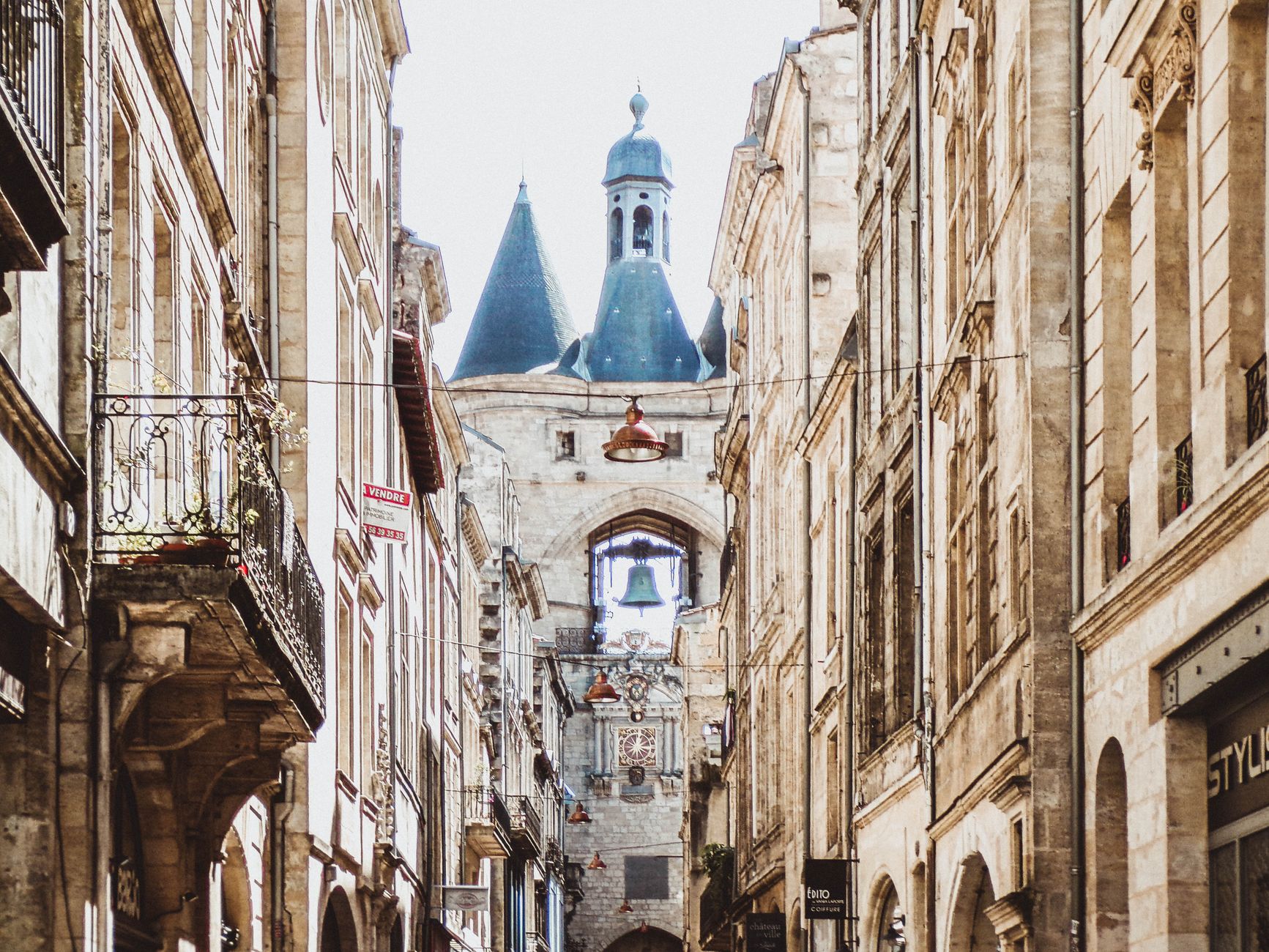
What travellers say about Grosse Cloche
A significant eighteenth-century monument that highlights the medieval heritage of the city. This grand gate once served as a bell tower and a defensive structure, featuring a massive bronze bell that rings on special occasions. It is a well-maintained landmark that offers a clear look into historical urban design and remains a popular spot for photography.
Behold the majestic Grosse Cloche, a historic gem of Bordeaux, France! Originally part of the city’s medieval fortifications in the 13th century, this stunning tower once guarded the gates with pride, its sturdy stone walls standing as a symbol of strength and resilience. Over the centuries, it evolved into a beloved landmark, its grand clock and bell ringing out to mark time and celebrate the spirit of the community. Today, the Grosse Cloche thrives as a vibrant centerpiece of Bordeaux’s old town, drawing visitors from around the world with its timeless charm. Surrounded by bustling streets and lively crowds, it stands tall under the bright July sky, inspiring all who pass by to embrace history, unity, and the endless possibilities of the present!
Such a lovely surprise in the middle of Bordeaux! The Grosse Cloche is a beautiful old bell tower that looks like it came straight out of a fairytale. You can’t go inside most of the time, but even just seeing it from the street is magical. It’s not a big attraction — more of a “wow, look at that!” moment during a walk through the old town. Totally worth stopping for a photo and soaking up the history. There are cute little cafés around too, so it’s a great place for a coffee break.
Much check landmark of the city! Beautiful area with many cute shops.
This is a neat bell tower to see, especially on the first Sunday of each month. That’s when they actually ring it at noon. There are neat book stores & eateries down the street from the bell. We sat outside and had breakfast with a perfect view of it. Also, about a block down Victor Hugo Rue there is a Falling Car poking out of a parking garage that’s fun to find and see!
More of Bordeaux
Discover where to stay, what to do and the best deals for your trip.
Explore Bordeaux →More attractions in Bordeaux
All of Bordeaux →
Background adapted from Wikipedia (CC BY-SA) · map data © OpenStreetMap contributors · ratings & place photos via Google · other photos with per-image credit. Ticket links may earn us a commission at no extra cost to you.