
Griffith Observatory
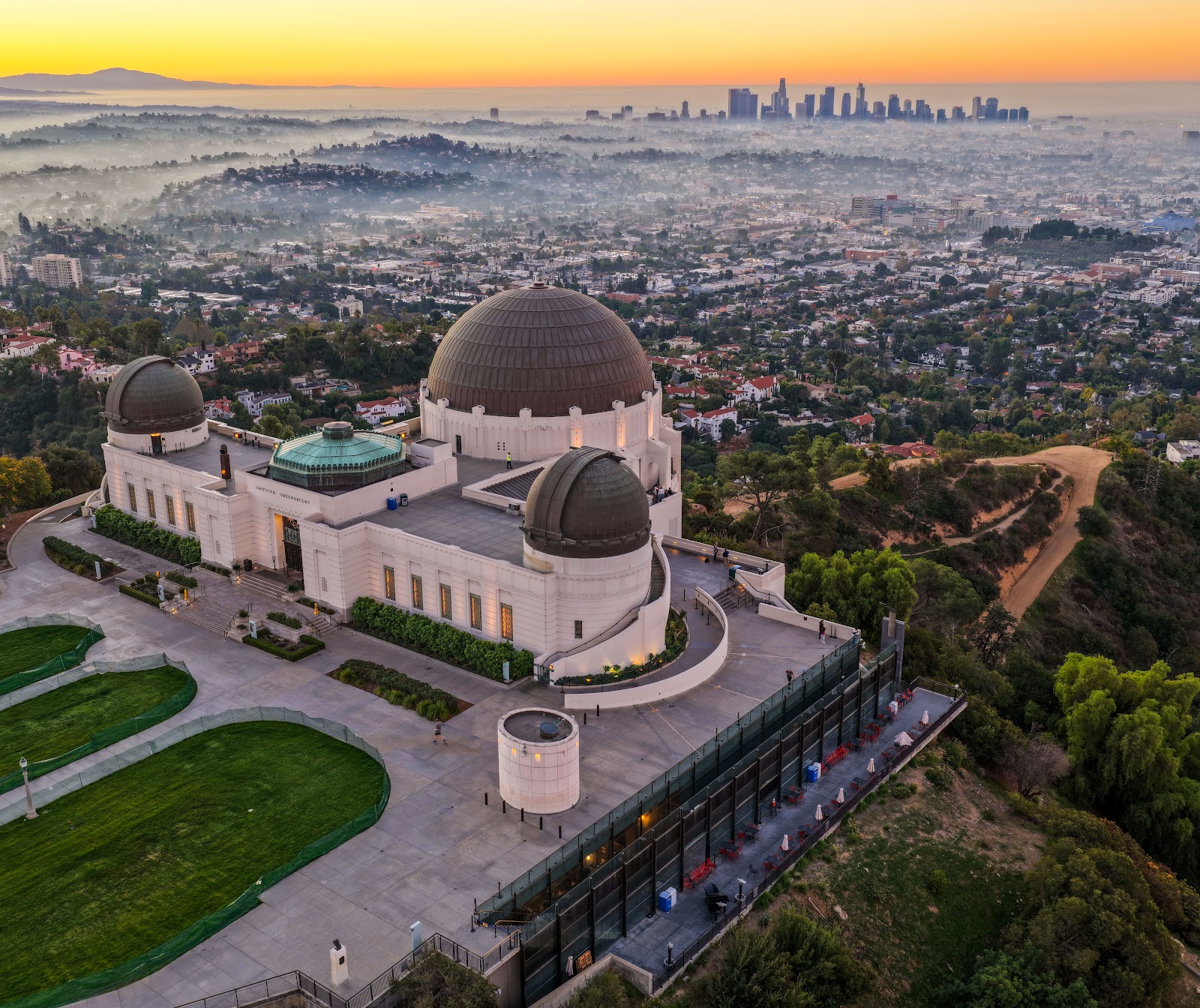
On a clear evening, you can stand on the terrace of Griffith Observatory and trace the grid of Los Angeles all the way to a thin line of Pacific on the horizon. The Hollywood Sign sits to your northwest; the city sprawls south in every direction. It's one of those rare vantage points where the scale of a place actually registers.
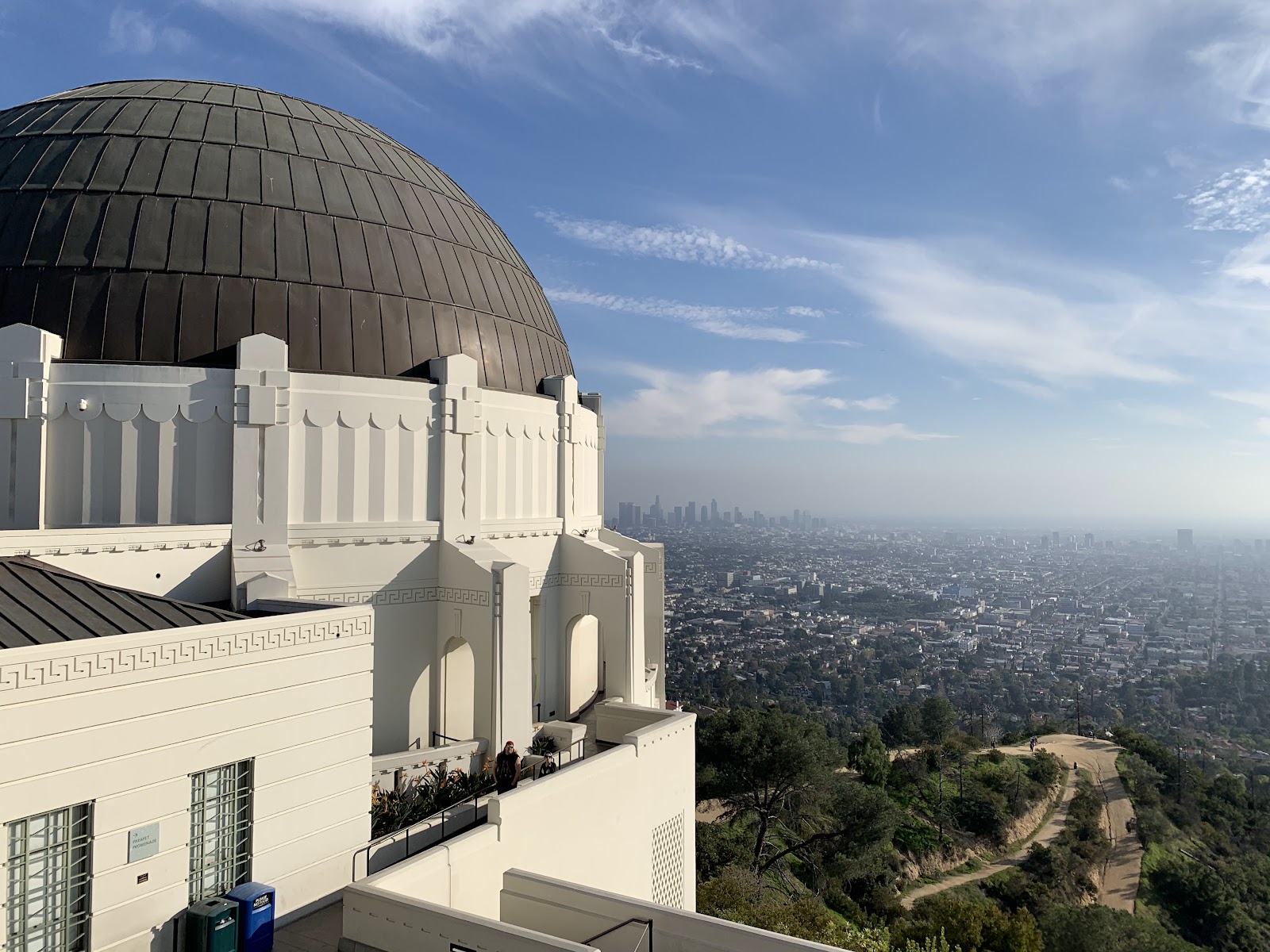
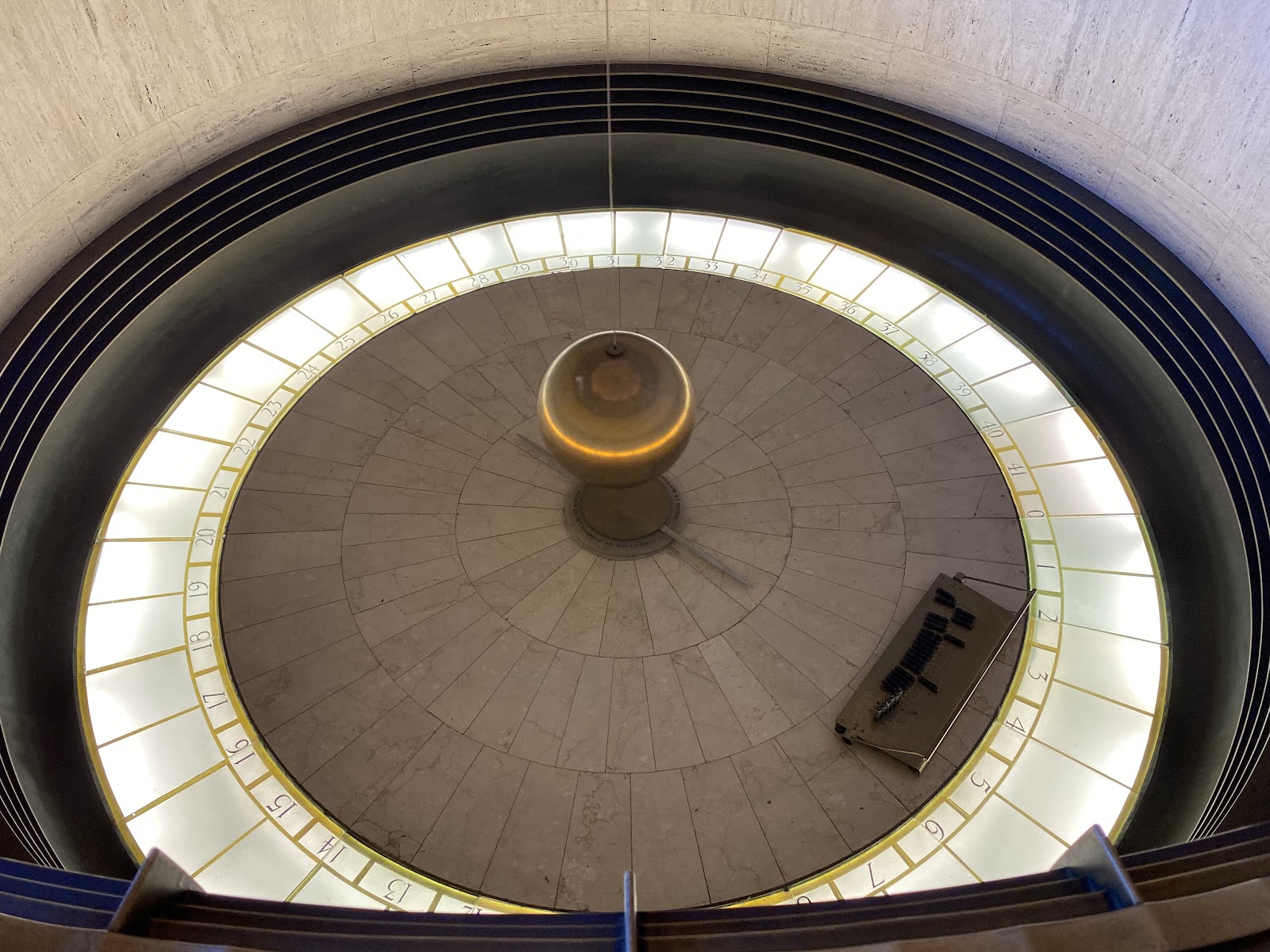
The building itself earns the trip on its own terms. Its copper-clad dome and Art Deco curves have been up here on Mount Hollywood since 1935, and since opening day more than nine million people have pressed an eye to the 12-inch Zeiss refracting telescope in the east dome — more than any other telescope on earth.
💛 What travellers fall for
People who come back tend to time it for a Tuesday or Wednesday evening, when the crowds thin and the roof terraces open up. The DASH bus from Vermont/Sunset is worth knowing about — it runs every 20-25 minutes and drops you right at the horseshoe driveway, sidestepping the parking situation entirely. Signal is patchy up here, so download what you need before you arrive.
The story behind Griffith Observatory
On December 12, 1912, a Welsh-born Los Angeles landowner named Griffith J. Griffith offered the city $100,000 to build a public observatory on Mount Hollywood. It took two decades for the project to take shape. Construction began in June 1933, with architects John C. Austin and Frederic M. Ashley working from preliminary sketches by Russell W. Porter and with input from astronomer George Ellery Hale. The observatory opened on May 14, 1935 — the country's third planetarium — and drew more than 13,000 visitors in its first five days.
In January 2002 it closed for a four-year, $93 million renovation funded largely by a public bond issue. The Art Deco exterior was preserved; the planetarium dome was replaced; and the Leonard Nimoy Event Horizon Theater was added below ground. It reopened in November 2006. Ed Krupp has served as director since 1974.
Good to know
Open Tuesday through Sunday, noon to 10 pm on weekdays, 10 am to 10 pm on weekends — closed Mondays. Building and grounds are free; planetarium tickets run $6–$10. The DASH Observatory bus connects from the Vermont/Sunset Metro Red Line station daily. Weekends at sunset are the busiest window; a midweek evening visit moves at a different pace.
Los Angeles runs mild year-round, but the elevation adds a noticeable chill after dark — bring a layer even in summer. Winter evenings can be genuinely cold, and marine fog sometimes rolls in and closes off the views; clear Santa Ana wind conditions in autumn and early winter often produce the sharpest sightlines to the Pacific.
Where is Griffith Observatory?
More tickets & tours for Griffith Observatory
Book directly at the provider
What travellers say about Griffith Observatory
This place is an amazing find. The hype is definitely worth it especially because it is free. I would like to think if they cost for the entry then they would still have a lot of customers. The outside views are absolutely breathtaking and the inside shows history of our solar system and of anything space. If you come to LA this is an absolute must see. There is a lot of interactive activities for the kids to keep them occupied as-well.
Capturing the Griffith Observatory from a drone perspective is absolutely breathtaking. The iconic building sits beautifully on the hillside, overlooking the vast city of Los Angeles. From above, you can truly appreciate how it’s framed by Griffith Park’s greenery with the sprawling urban landscape stretching endlessly beyond it. The contrast between nature, architecture, and the dense city below creates a stunning visual composition, especially during golden hour or sunset. It’s one of those places where the view feels cinematic no matter the angle, truly a must-see landmark in LA!
Had a great time at Griffith Observatory! The views of Los Angeles are incredible, especially around sunset. It's a perfect spot to take photos, enjoy the scenery, and see the Hollywood Sign up close. The exhibits inside were interesting and easy to explore, even if you're not a huge astronomy fan. Everything was well organized, and the staff were friendly and helpful. I also loved that admission is free, which makes it an awesome place to visit without spending much. Definitely worth checking out if you're in LA. Whether you're into space, sightseeing, or just looking for a cool place to hang out, Griffith Observatory is a must-see!
We had a wonderful experience visiting Griffith Observatory as part of our CityPASS night tour. The observatory itself is beautiful, and the views of Los Angeles are absolutely breathtaking, especially after sunset when the city lights begin to sparkle. The exhibits were interesting and educational, giving our students the opportunity to learn about space, science, and astronomy in an engaging way. The staff and tour guides were knowledgeable and helped make the experience enjoyable for everyone. One of the highlights was seeing the iconic Hollywood Sign and taking in the panoramic views of Los Angeles from the observation areas. It was a memorable stop on our trip and a great addition to the CityPASS package. I highly recommend Griffith Observatory to families, students, and anyone visiting Los Angeles. It combines education, history, and incredible scenery into one unforgettable experience.
Once and done type of thing. Extremely crowded 24/7 during opening hours. Huge tourist attraction. I highly recommend doing one of their planetarium shows ($12), that was the highlight of this place. General admission to the observatory is free! However the parking situation here is the worst in LA. Street parking is $15 an hour if you can find a spot otherwise be prepared to walk uphill a mile and park for free at the bottom. Beautiful mountain scenery with a great view of the Hollywood sign. Definitely worth doing if you’re visiting LA to get the full tourist experience. However be prepared to face huge crowds and drive around the loop for parking a few times.
More of Los Angeles
Discover where to stay, what to do and the best deals for your trip.
Explore Los Angeles →More attractions in Los Angeles
All of Los Angeles →


Background adapted from Wikipedia (CC BY-SA) · map data © OpenStreetMap contributors · ratings & place photos via Google · other photos with per-image credit. Ticket links may earn us a commission at no extra cost to you.