
Grand Théâtre de Bordeaux

Twelve Corinthian columns line the façade of the Grand Théâtre de Bordeaux, and above them stand twelve stone figures — the nine Muses plus Juno, Venus and Minerva — lit at night by a careful play of light that makes the whole front look more like a temple than a theatre. Which, in a sense, it is: the building sits on the ground where a Gallo-Roman forum and the Temple des Piliers de Tutelle once stood.
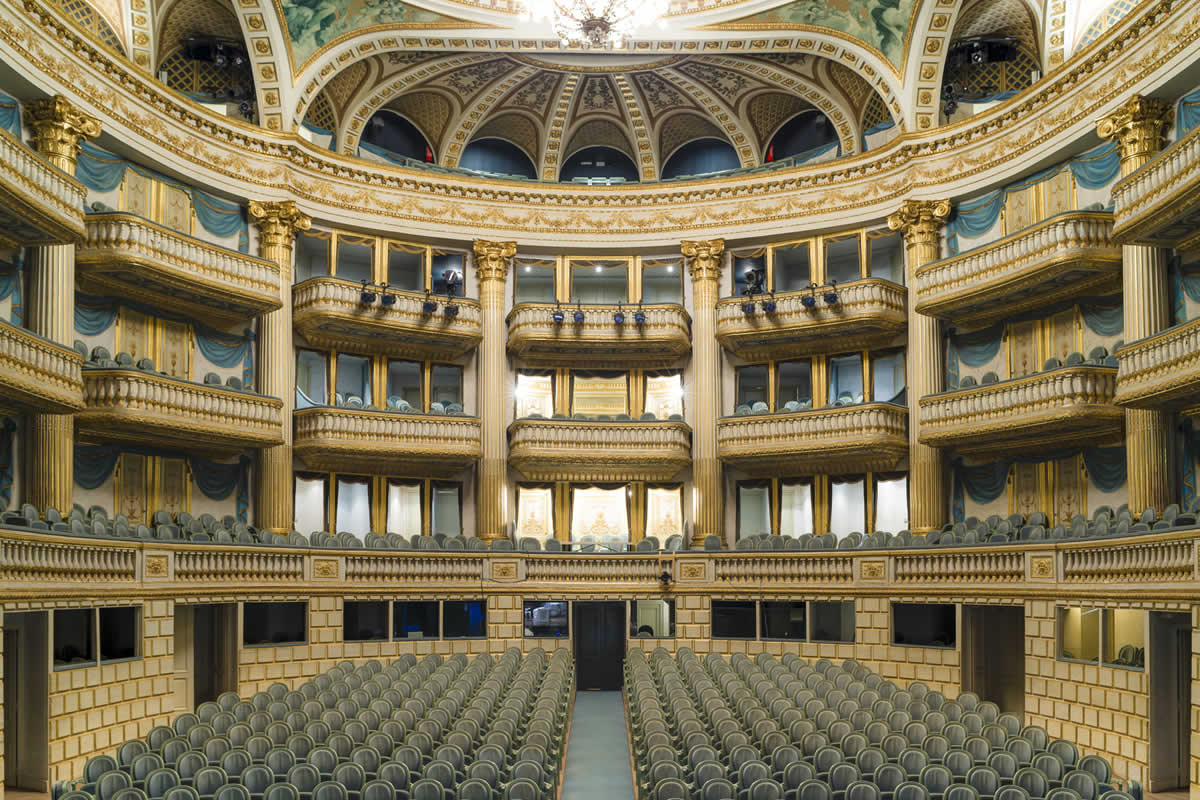
Inside, the auditorium is blue and gold, restored in 1991 to its original colours. Look up and Jean-Baptiste-Claude Robin's ceiling fresco shows an allegory of Bordeaux herself, flanked by Hermes and Athena, with the city's three historic sources of wealth — wine, sea trade, and the slave trade — arranged in the foreground. It is a ceiling that rewards a long look.
💛 What travellers fall for
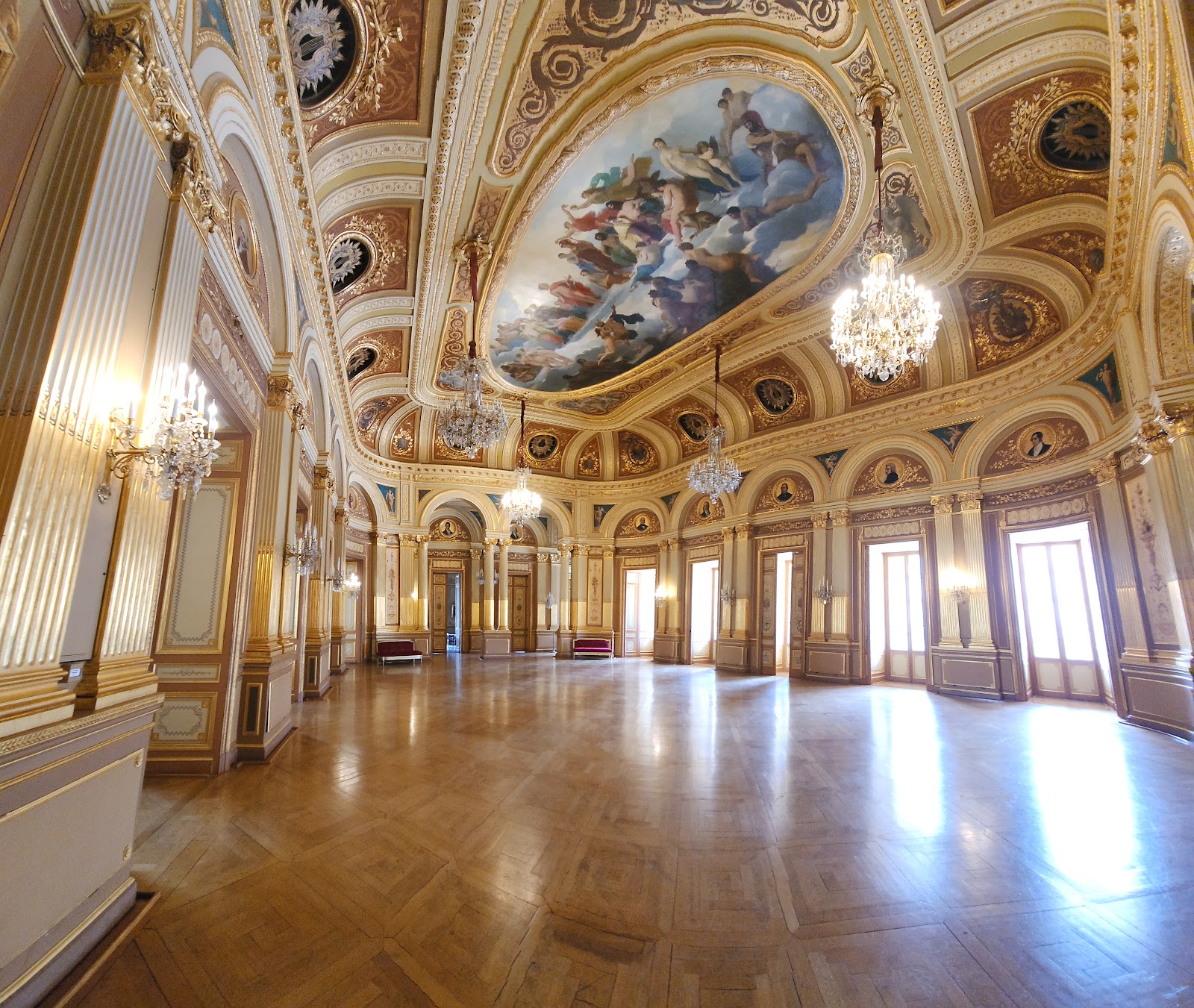
People who come back tend to book the noon guided tour in English rather than wandering alone — the grand staircase, which Victor Louis designed before Charles Garnier borrowed the idea for the Opéra in Paris, reads very differently once someone points that out. Standing in the stalls and tilting your head up at Robin's fresco is the other moment that stays with you.
The story behind Grand Théâtre de Bordeaux
The Grand Théâtre was built between 1773 and 1780 on the glacis of the demolished Château Trompette, commissioned by Louis Armand du Plessis, Duke of Richelieu and Governor of Guyenne. The architect Victor Louis — who would go on to design the galleries of the Palais Royal and the Théâtre Français in Paris — delivered something that outlasted most of its contemporaries: the building is among the oldest wooden-frame opera houses in Europe never to have burnt down or required rebuilding. It opened on 7 April 1780.
Its life has not been purely theatrical. In 1871, with Paris under siege, the French National Assembly convened here briefly, making the stage a parliament. The ballet La fille mal gardée had its premiere within these walls in 1789, and a young Marius Petipa staged some of his earliest work here. Today the building is home to the Opéra National de Bordeaux and the Ballet National de Bordeaux.
Good to know
Tram Line B stops directly at Grand-Théâtre. Public visits run Tuesday to Sunday, noon to 6:30 pm, from early July through late August (closed 14 July); the self-guided visit costs €5, the English guided tour €9.50. Plan around an hour, perhaps ninety minutes if you linger.
Where is Grand Théâtre de Bordeaux?
More tickets & tours for Grand Théâtre de Bordeaux
Book directly at the provider
What travellers say about Grand Théâtre de Bordeaux
This is a wonderful old Theatre built in the late 1700s. The outside architecture is like the Parthenon. The interior of the theater is beautifully appointed and richly decorated. It has fought years within the auditorium. It is shaped like a horseshoe in front of the stage, and we were fortunate enough to buy tickets to see the ballet. A wonderful experience with a brilliant troop of dancers. There are guided tours available to book and I highly recommend visiting this beautiful building.
The Grand Théâtre de Bordeaux is a stunning building with impressive architecture and rich history. The details inside are truly breathtaking, and it’s definitely worth a visit for anyone who appreciates classical design. However, we were disappointed that access was very limited—we could only see a small part of the theater instead of exploring more of the beautiful spaces. Still, it’s a must-see landmark in Bordeaux, and if you can catch a performance, it’s probably even better!
I took a visit, not an opera performance. The architecture of the building is very interesting and beautiful but the experience was not that pleasant. The guide was late, I had to follow him during all the time (I prefer to take my time to enjoy the place). Even other guide come tell him that we can't stay there in that moment...
We were extremely lucky to have the chance to take part on a tour inside this beautiful building - it is opened for visitors for only two days every year. The concert hall is a gem (though the seats are not from the most comfortable ones), and there is a great view from the balcony.
For me it was the best architectural monument to see in Bordeaux... Highly recommended to buy advance tickets if you want to enter inside. Obviously for me the best view was at night when all the lights were lit up.
More of Bordeaux
Discover where to stay, what to do and the best deals for your trip.
Explore Bordeaux →More attractions in Bordeaux
All of Bordeaux →
Background adapted from Wikipedia (CC BY-SA) · map data © OpenStreetMap contributors · ratings & place photos via Google · other photos with per-image credit. Ticket links may earn us a commission at no extra cost to you.