
Grand Central Terminal
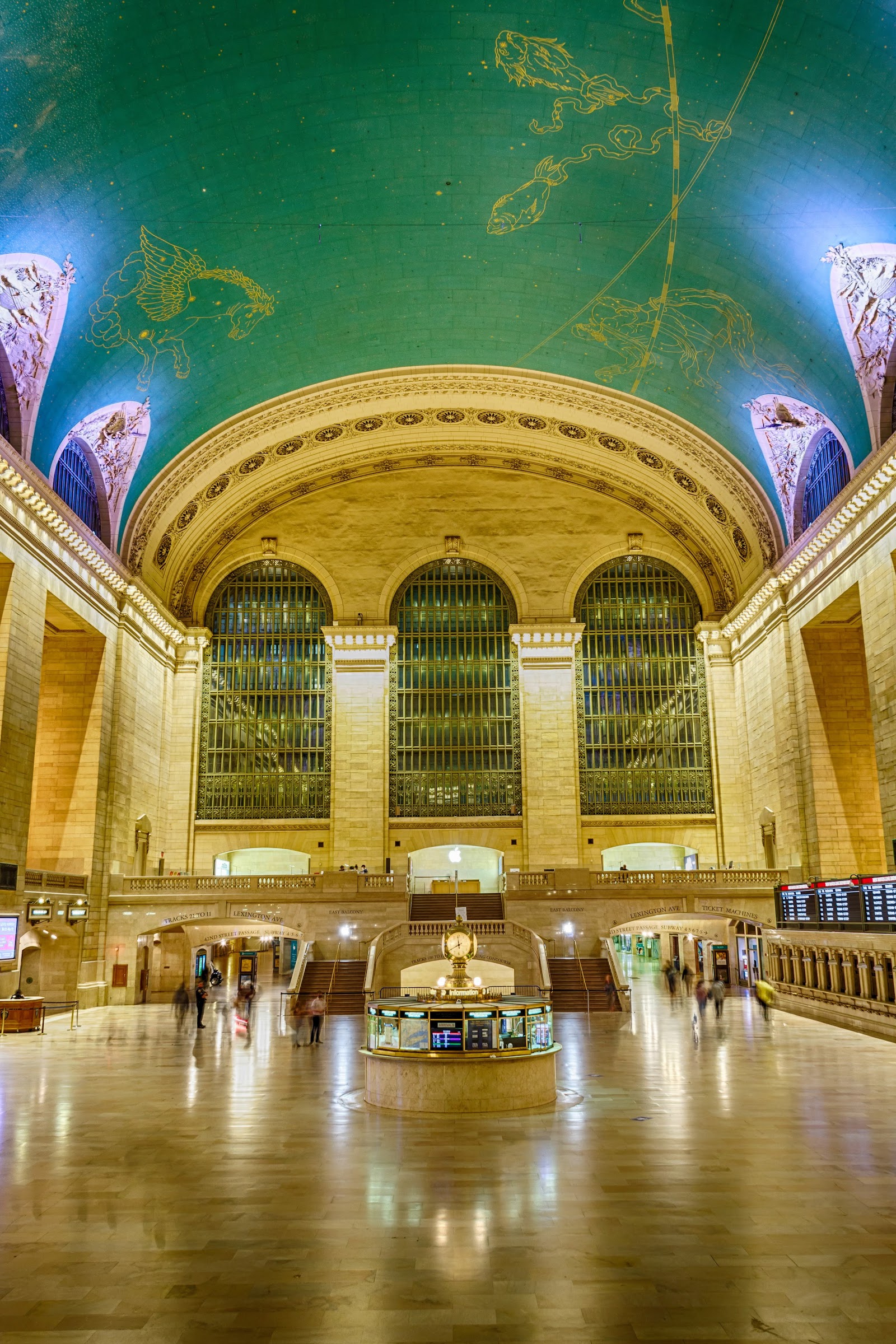
Look up the moment you step into the Main Concourse. The ceiling — 125 feet overhead — is painted with twelve constellations and 2,500 stars, the work of French artist Paul César Helleu, and after a 1998 restoration it glows the deep blue-green it had on opening day in 1913. Most people pass through Grand Central at a commuter's pace, eyes forward. The ones who slow down notice the Botticini marble underfoot, the four-faced opal clock at the information booth (estimated worth: $20 million), and the particular quality of light falling through those three tall arched windows on 42nd Street.
At 44 platforms and 67 tracks, this is the largest train station in the world by that measure — a fact that lands differently once you're standing in the middle of it all, watching the crowd move like a tide across the floor.
💛 What travellers fall for
People who come back tend to make for the Whispering Gallery before the crowds arrive — stand at one corner of the vaulted arch near the Oyster Bar and a companion at the diagonal corner can hear you clearly across the room. The Grand Central Oyster Bar has been here since 1913. The Campbell Apartment, a 1920s-era speakeasy tucked inside the terminal, is worth the detour for a drink.
The story behind Grand Central Terminal
The story of Grand Central begins with a disaster. On January 8, 1902, a collision in the smoke-choked Park Avenue Tunnel killed seventeen people, forcing the New York Central Railroad to rethink everything. Chief Engineer William J. Wilgus led the push for a new terminal; architectural firms Reed and Stem handled the overall design, while Warren and Wetmore layered on the Beaux-Arts details. Construction ran from 1903 to 1913, cost $80 million, and drew more than 150,000 visitors on opening day — February 2, 1913.
The building's survival was not guaranteed. When demolition threats loomed in the 1970s, Jacqueline Kennedy Onassis became a prominent voice in the preservation campaign. The terminal was designated a New York City landmark in 1967 and a National Historic Landmark in 1976. In January 2023, Grand Central Madison opened beneath it, bringing Long Island Rail Road service to the East Side for the first time via two new tunnels.
Good to know
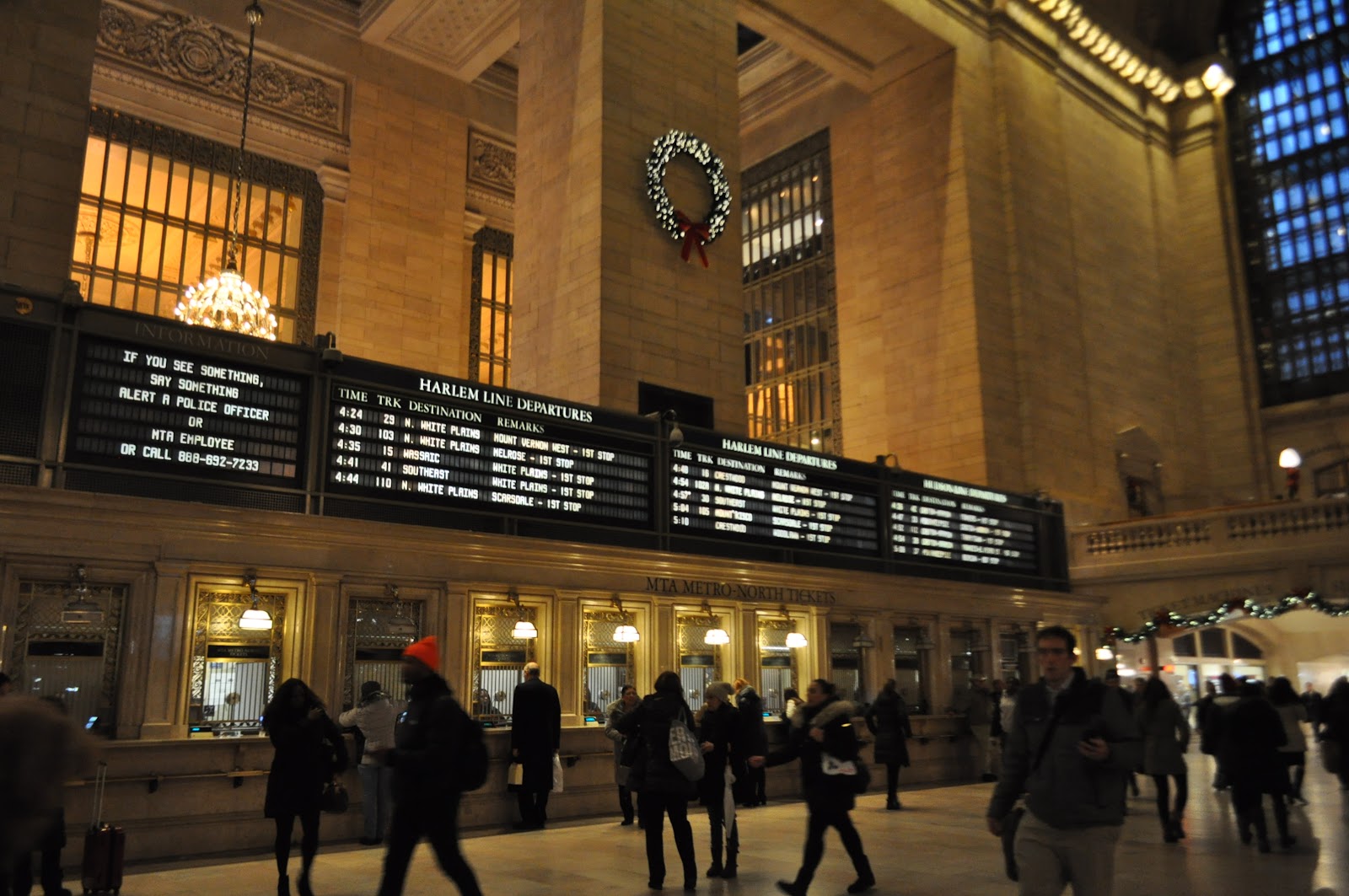
Free to enter, open daily from around 5:10 a.m. to 2 a.m. Subway lines 4, 5, 6, 7, and S stop directly here. If you're catching Metro-North to the suburbs, buy your ticket before boarding — the on-board surcharge is steep. Budget two hours minimum; half a day if you're taking a guided tour with Walks.
Where is Grand Central Terminal?
More tickets & tours for Grand Central Terminal
Book directly at the provider
What travellers say about Grand Central Terminal
I visited for a few days. And it's very beautiful and touristique place. A must I would say especially if you grew up with Gossip girl. But I would highly recommend that you stay vigilant. I was followed when I was going to take the subway in here at 4pm so please be safe.
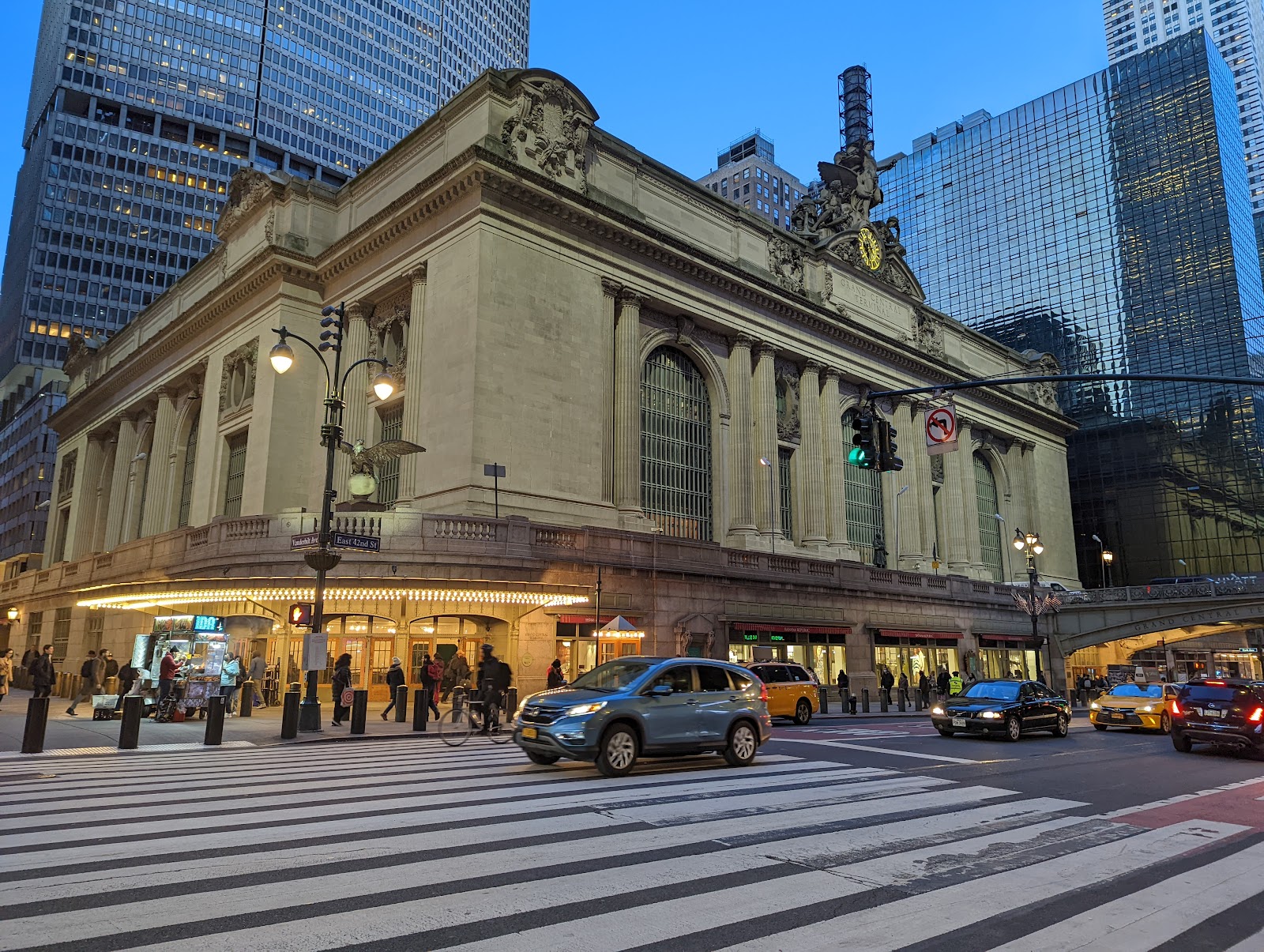
Grand Central Terminal is An Architectural & Transit Icon! Grand Central Terminal is a breathtaking masterpiece of architecture and a must-visit in NYC. From the outside, the massive Tiffany clock—the largest Tiffany glass work in the world—and the Transportation Statue featuring Mercury, Hercules, and Minerva are stunning sights to see before you even walk through the doors. Inside, the famous celestial ceiling and the opal clock make even a simple commute feel like a trip back in time. The layout is remarkably user-friendly and easy to navigate with clear, efficient signage for all travelers. Transit Hub: This is a truly central connection point. It seamlessly links the Metro-North, the NYC Subway (4, 5, 6, 7, and S lines), and now the LIRR via the new Grand Central Madison concourse. Note: While NJ Transit doesn't run directly here, it's a quick subway or shuttle ride away at Penn Station. Pro Tip: Don’t miss the Whispering Gallery or a meal at the Oyster Bar for the full experience. Dining & Shopping: The Dining Concourse and Grand Central Market offer excellent food options for a quick bite or a gourmet find. Accessibility: The station is designed for a smooth flow even during the busiest rush hours, with accessible elevators and clear paths between levels.
Must see just to have a look. You'll only need 20 minutes Personally for my, I must thak the staff, I felt dizzy when I was there, I think from long day travelling and not enough hydration. The staff found me a cool place to sit quietly and gave me a bottle of water and a sugary drink too. Fabulous support
There are many tracks thar go far and wide (over 100 tracks). The inside is beautiful and there are also many restaurants inside the dining concourse. There are ramps to allow wheelchairs to go up and down. The building is huge and contains many tracks and has beautiful architecture! In one train there are multiple seats and all of which are comfy.
I grew up in nyc all of my life and this experience left in me in awe. Wow its not only beautiful but very busy with people walking to their destinations and shopping places that's convenient, if u can afford it. But I was totally mesmerized by the decor and marble. And it led to the LIRR, metro, trains.
More of New York City
Discover where to stay, what to do and the best deals for your trip.
Explore New York City →More attractions in New York City
All of New York City →
Background adapted from Wikipedia (CC BY-SA) · map data © OpenStreetMap contributors · ratings & place photos via Google · other photos with per-image credit. Ticket links may earn us a commission at no extra cost to you.