
Gran Vía
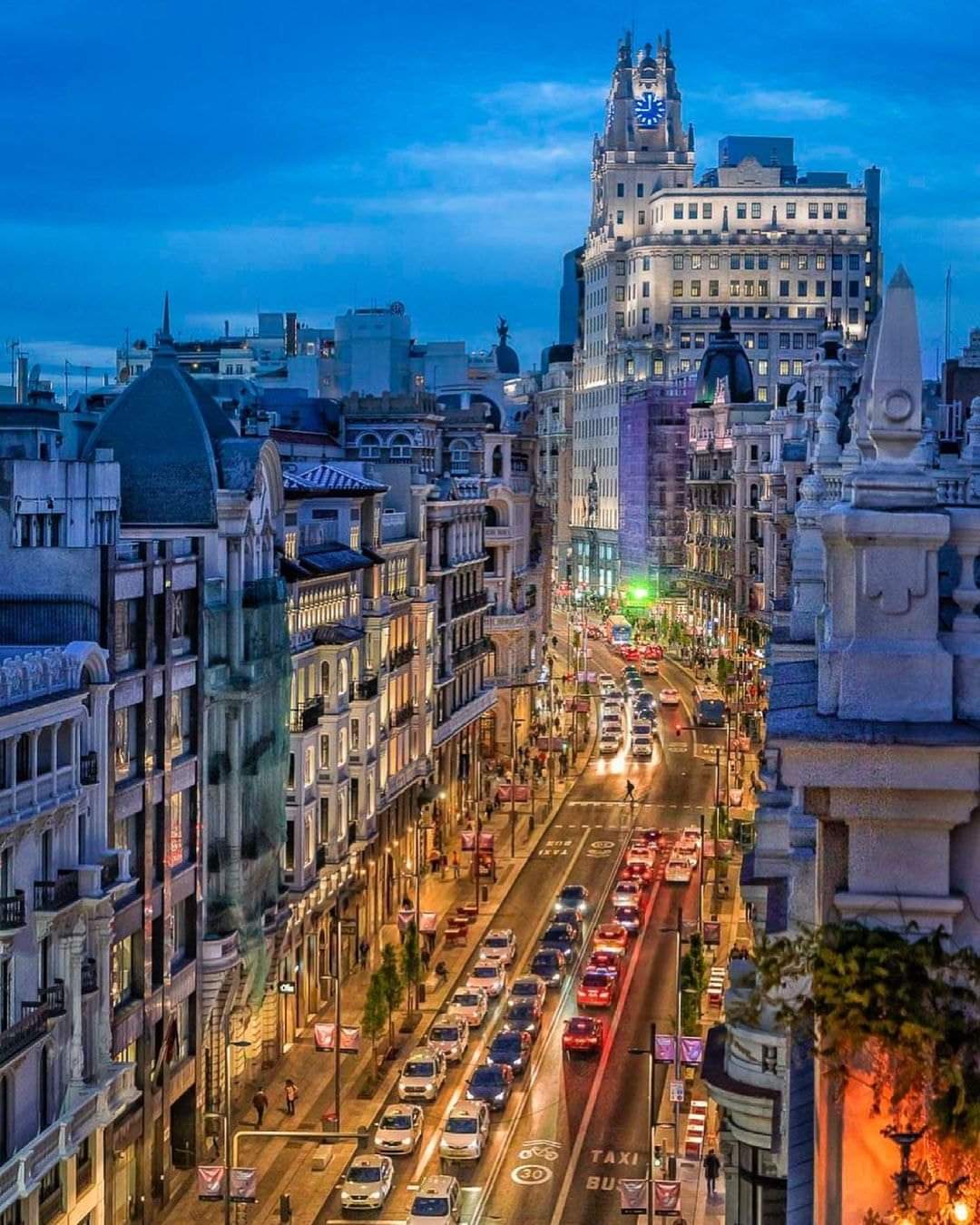
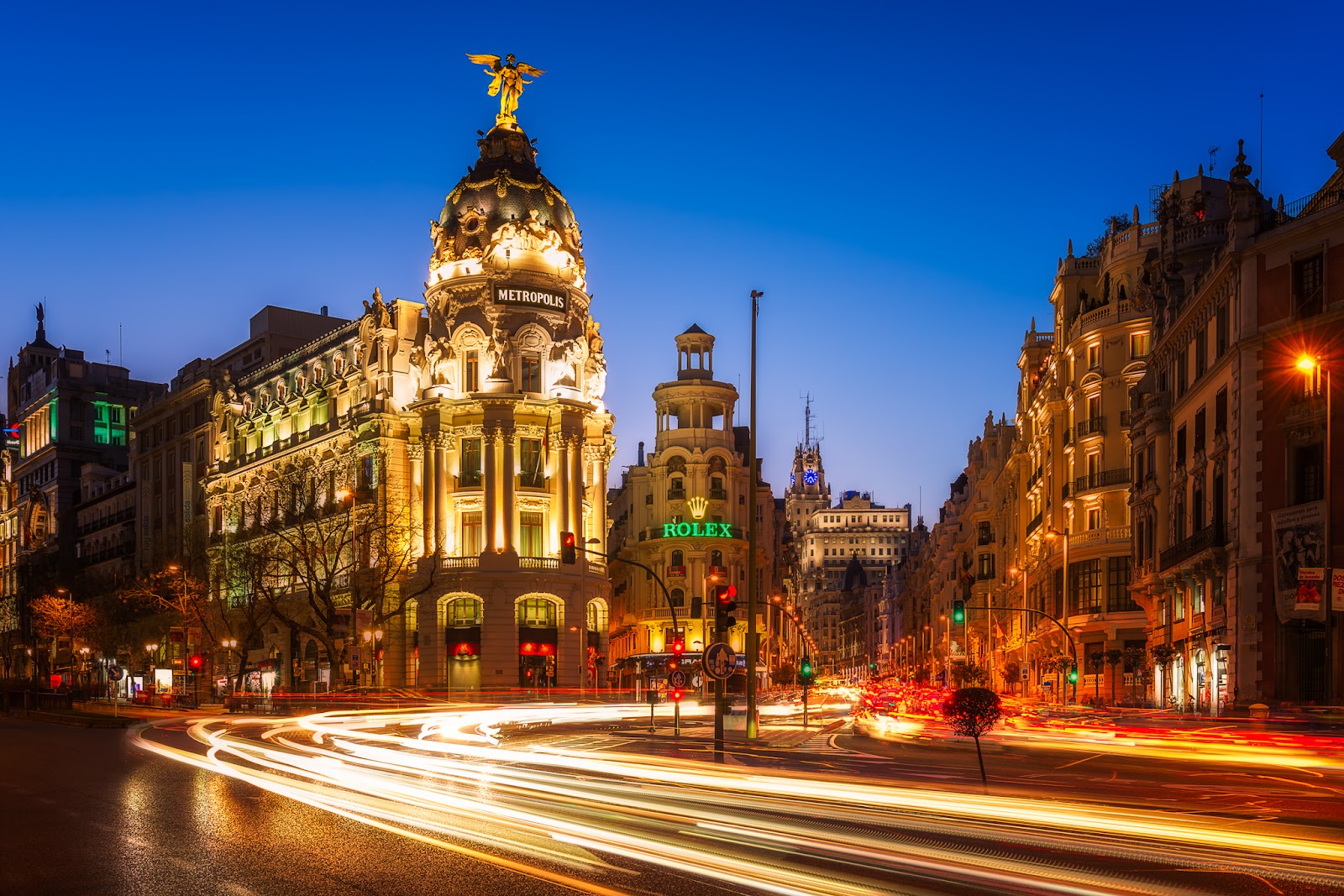
Gran Vía announces itself through architecture before you've taken twenty steps. The Edificio Metrópolis stands at its eastern end, its dome crowned by a winged Victory that replaced an earlier statue in 1975, and from there the street runs northwest for just over a kilometre, lined with a compressed century of ambition — Beaux-Arts facades, a 1929 skyscraper that was briefly the tallest in Madrid, a Capitol building with a Schweppes neon sign that still colours the night orange.
This is not a street you pass through. It was carved deliberately through some 300 buildings and 50 medieval streets to give Madrid a boulevard worthy of a European capital, and the effort shows in every ornate cornice.
💛 What travellers fall for
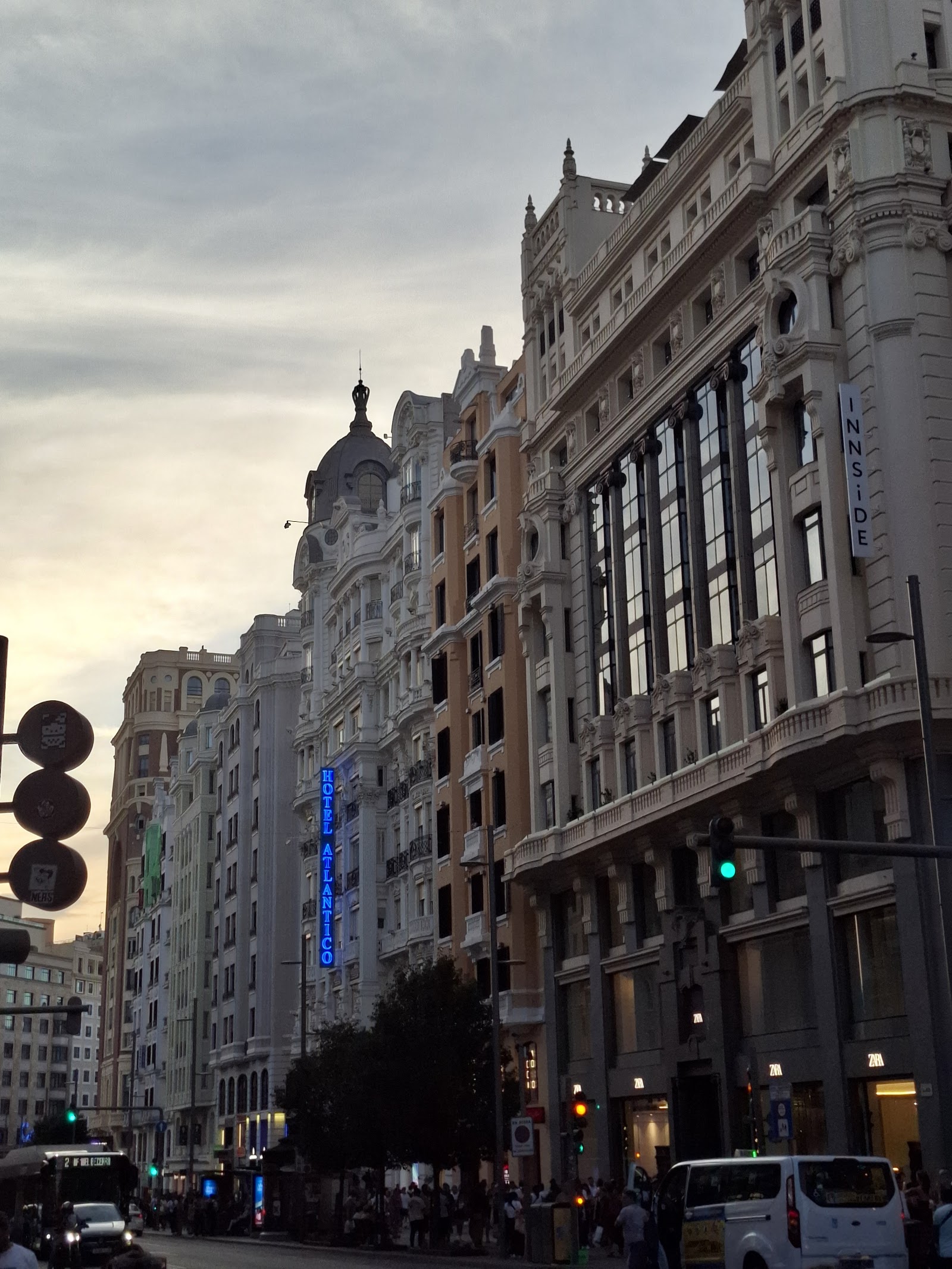
People who walk it more than once tend to look up more and down less. The street-level shops are mostly chains; the real detail is above the awnings — stone caryatids, terracotta flourishes, the Telefónica Building's setback silhouette at dusk. The metro station Gran Vía (lines 1 and 5) drops you at the midpoint if you want to start in the thick of it.
The story behind Gran Vía
The idea of a grand diagonal boulevard cutting through central Madrid's medieval core was floated as early as 1862, but a workable design didn't receive approval until 1899, drawn up by architects José López Salaberry and Francisco Octavio Palacios. King Alfonso XIII broke ground on 4 April 1910, and construction proceeded in three phases: the first section opened that same year, the second reached Callao in 1917, and the final stretch to Plaza de España was completed in 1931.
The street's name has its own political history. After the Spanish Civil War it was renamed Avenida de José Antonio, after the founder of the Falangist movement. It wasn't until 1981, under socialist mayor Enrique Tierno Galván, that Gran Vía was restored — the name it has carried since.
Good to know
The street itself is free and open at all hours. Metro stations Gran Vía (L1, L5), Callao (L3, L5) and Banco de España (L2) all give access. Early morning is when the facades are clearest of crowds; late evening is when the neon signs earn their keep.
Madrid summers are dry and genuinely hot; the street offers little shade, so mornings are more comfortable for a long walk from July through August. Spring and autumn give you mild temperatures and clear light that suits the stone facades well. Winter days are often crisp and bright.
Where is Gran Vía?
More tickets & tours for Gran Vía
Book directly at the provider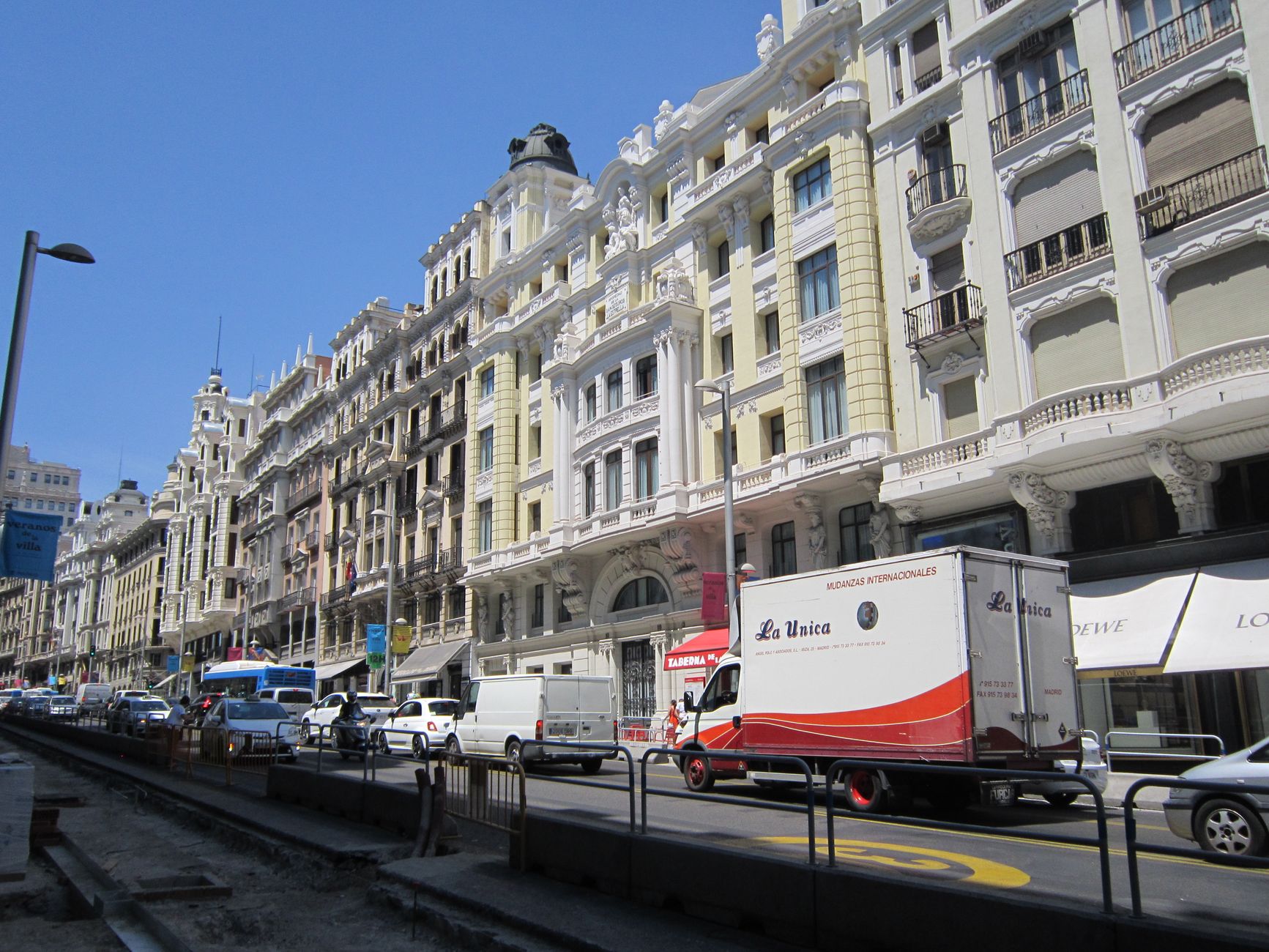
What travellers say about Gran Vía
Splendid avenue, elegant, plenty of royal buildings, shops, restaurants. It has this traditiinal Spanish vibe, way more local feel then Barcelona.
Enjoy walking along this vibe street. So crowded, so much going on. 🤩
Shopping street there is too many shops I recommend to visit el court engls and wow shop you will find good things
Good place to show and people-watch. Many brands.
Nice avenue with lots of food and shopping
More of Madrid
Discover where to stay, what to do and the best deals for your trip.
Explore Madrid →More attractions in Madrid
All of Madrid →
Background adapted from Wikipedia (CC BY-SA) · map data © OpenStreetMap contributors · ratings & place photos via Google · other photos with per-image credit. Ticket links may earn us a commission at no extra cost to you.