
Glossop
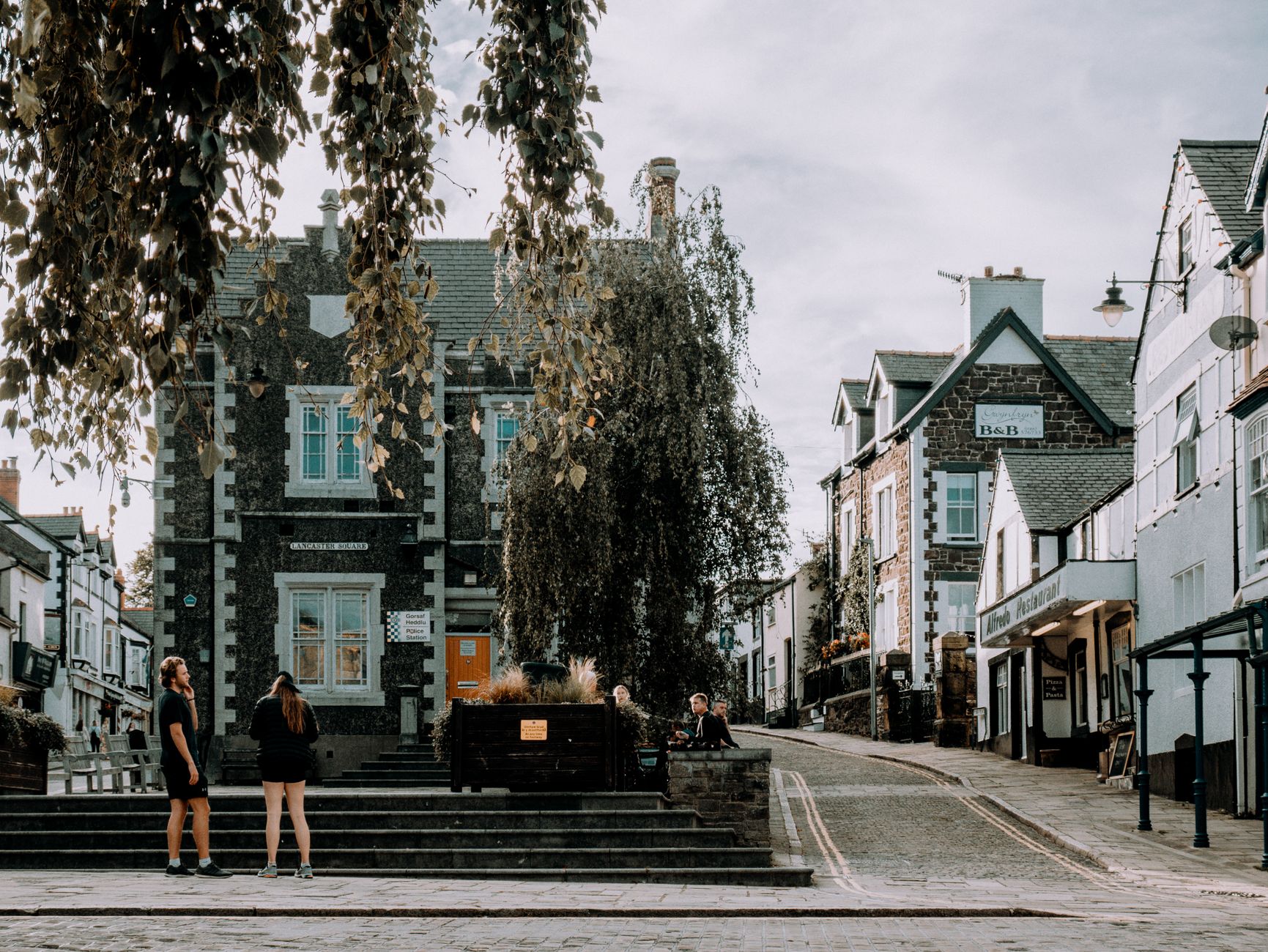

Glossop sits at the western edge of the Peak District where the moors tip down toward Greater Manchester, and it wears its industrial past openly — in the stone mills along the valley floor, in the Italianate Town Hall that a duke built to mark a queen's coronation, in the Dinting Viaduct that still carries trains over a drop that once killed three passengers who mistook its parapet for a platform. This is a mill town that also happens to have moorland at its back door.
Vivienne Westwood was born here. So, by some accounts, did Ludwig Wittgenstein think here, lodging in town while studying in Manchester. The cotton that made Glossop's fortune is long gone, but the architecture it funded remains solid and specific.
💛 What travellers fall for
Regulars tend to arrive on the train from Manchester Piccadilly and walk straight up into the hills before coming back down to the Town Hall end of town. The Saturday market is the practical reason to time your visit; the Wren Nest Mill on High Street West rewards a slow look even from the outside — the octagonal tower is easy to miss if you're moving quickly.
Deals in Glossop
Book directly at the provider


How Glossop came to be
The settlement recorded in the Domesday Book of 1086 passed through powerful hands — William Peverel, then Basingwerk Abbey, who won a market charter in 1290, then the Talbot family, then the Earls of Shrewsbury. Henry VIII granted the manor to George, Earl of Shrewsbury in 1537, and it stayed within aristocratic ownership for centuries.
The Industrial Revolution transformed the valley floor. By 1788 Derbyshire had 17 cotton mills, most of them here; by 1831 Glossopdale counted at least 30. Bernard Howard, 12th Duke of Norfolk, shaped the town's civic face — rebuilding the parish church in 1831, commissioning the Italianate Town Hall and Market Hall (designed by Sheffield architects Weightman and Hadfield, foundation stone laid on Victoria's coronation day in 1838), and improving local infrastructure. The Howard family sold the estate in 1925, donating much of the land to the town. The Depression hit hard: unemployment reached 55 percent in Glossop and 67 percent in neighbouring Hadfield.
Who and what shaped it
People who shaped it
Landmark buildings
See Glossop in motion
Plan your visit
On the map
When to go
Glossop is exposed to weather rolling in off the Pennines, and the moors above can turn wet and cold even in summer — layers are sensible year-round. Spring and September offer the clearest light for the hills; winter walks are possible but the high ground demands proper gear.
Right now
Background & history adapted from Wikipedia (CC BY-SA) · specs from Wikidata (CC0) · weather from Open-Meteo · map data © OpenStreetMap contributors · photos from Wikimedia Commons / Unsplash with per-image credit. No third-party reviews or social posts reproduced.