
Ghardaïa
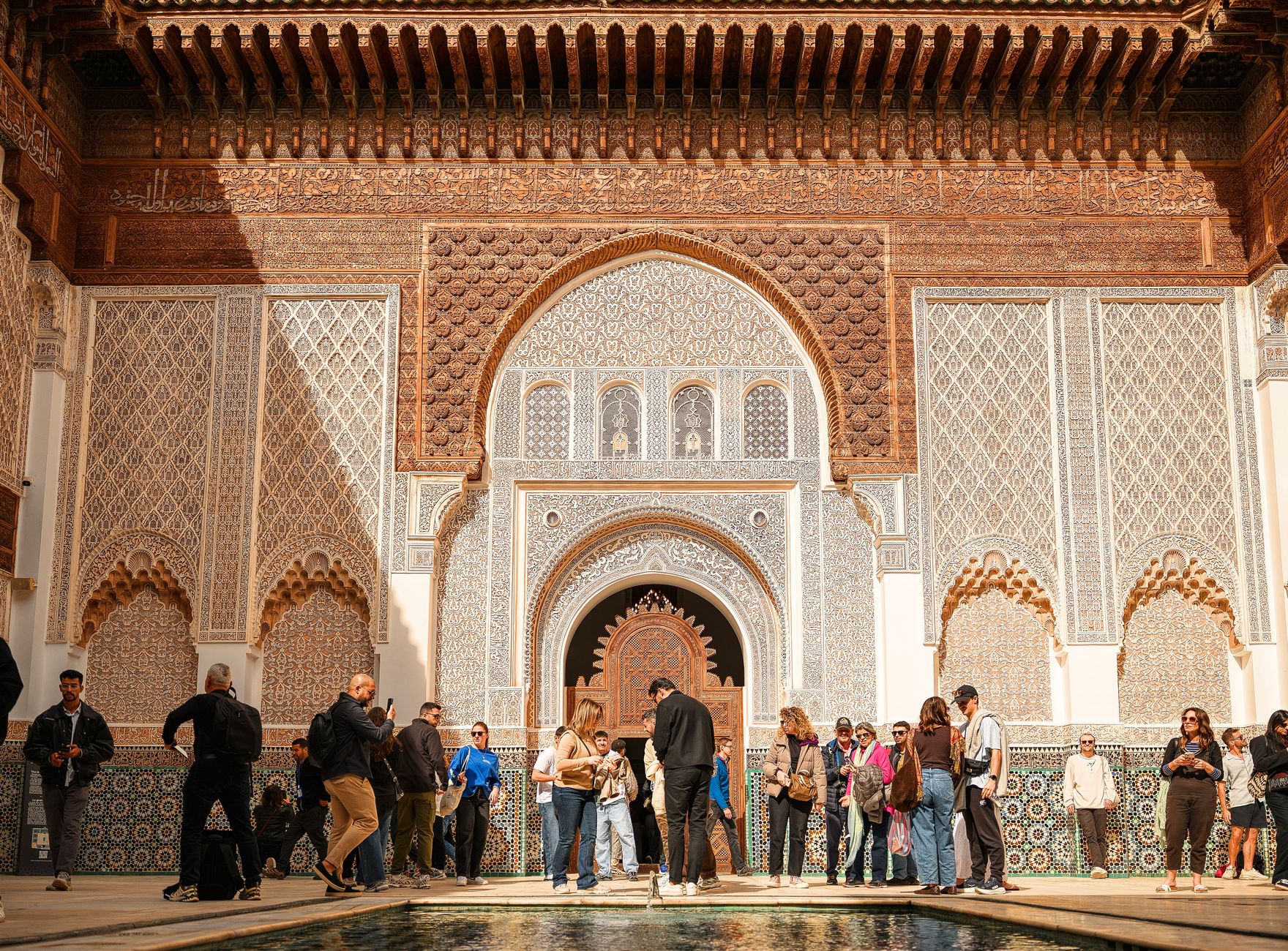
Ghardaïa sits in the M'Zab Valley, a fold in the Sahara where five hilltop towns were laid out according to the same exacting plan nearly a thousand years ago. The Great Mosque rises from the centre of each settlement like a spine, its tower designed not just for the call to prayer but for the passage of air. The people who built all this — the Mozabites, Ibadi Berber Muslims who had been pushed south by war and fire — arrived here with a theology and a civic logic that shaped every street, every wall, every arcaded square.
The pentapolis — Ghardaïa, Melika, Beni Isguen, Bou Noura and El Atteuf — became a UNESCO World Heritage Site in 1982. Walking between them, you start to read the architecture as a system: defensive, communal, calibrated to desert heat and social order in equal measure.
💛 What travellers fall for
People who come back tend to mention the same moment: climbing Bordj Cheikh El Hadj and suddenly understanding the geometry of the valley below — how the five towns relate to each other, how the fortifications connect. Yellow taxis get you between settlements quickly; after that, the old walled medinas belong entirely to foot traffic.
Deals in Ghardaïa
Book directly at the provider


How Ghardaïa came to be
The Ibadi community that founded Ghardaïa had been in motion for over a century before they arrived. Driven from Tahert after a catastrophic fire in 909, they settled briefly at Sedrata before moving deeper into the Sahara. The ksar of Ghardaïa itself was established around 1048–1085 by two tribes, the Aoulad Ammi-Aïssa and the Aoulad Ba-Slimane, who built the fortified town in three walled sectors around a central mosque.
For most of its history the valley governed itself under Ibadi principles, a model of communal self-regulation unusual in the region. In 1853 the Mozabites signed a treaty with France guaranteeing non-interference in internal affairs in exchange for tax payments — an arrangement that held until French annexation in 1882. The valley's intellectual life ran deep: theologian Muhammad ibn Yusuf Atfayysh (1820–1914) produced hundreds of works here, making the M'Zab a genuine centre of Islamic scholarship.
Who and what shaped it
People who shaped it
Landmark buildings
See Ghardaïa in motion
Plan your visit
On the map
When to go
Ghardaïa has a classic Saharan desert climate: summers are fierce and relentlessly sunny, with temperatures that make midday movement difficult. Winter is the season most visitors choose — days are mild and clear, though nights can drop close to freezing in January and February, so bring a layer you mean it.
Right now
Background & history adapted from Wikipedia (CC BY-SA) · specs from Wikidata (CC0) · weather from Open-Meteo · map data © OpenStreetMap contributors · photos from Wikimedia Commons / Unsplash with per-image credit. No third-party reviews or social posts reproduced.