
Getafe
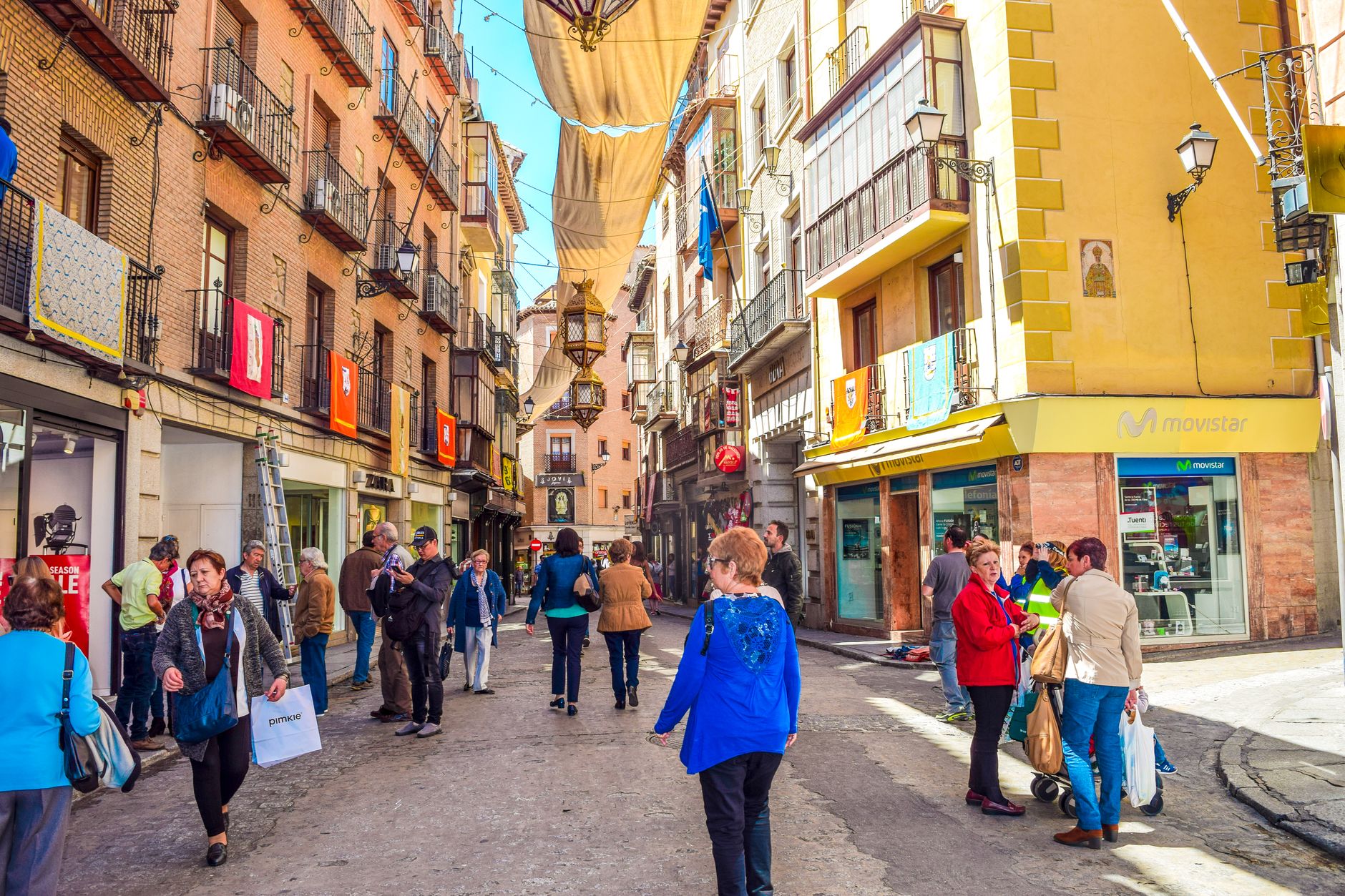
Eighteen kilometres south of Madrid, Getafe is the kind of city that rewards a slower look. At its centre stands the Cathedral of La Magdalena — a Renaissance church whose mudéjar tower rises against a sky that, in July, turns the colour of old terracotta. The city has been here in one form or another since at least 1259, and its streets carry that layered quality: a 16th-century hospital courtyard around one corner, a stadium that seats 14,400 around another.
Getafe today is home to more than 185,000 people, and its identity has shifted over the centuries from agricultural market town to industrial hub to a fully connected node of the southern Madrid metro ring. The hill to the east — Cerro de los Ángeles, traditionally marked as the geographic centre of the Iberian Peninsula — gives the city an unlikely claim to the middle of everything.
💛 What travellers fall for
People who come back tend to head straight for the Hospitalillo de San José — a 1529 hospital with a quiet Castilian courtyard that most visitors walk past without stopping. The Cerro de los Ángeles at dusk, when the light drops behind the sanctuary, is worth the extra thirty minutes most itineraries don't allow for.
Experiences you don't want to miss


Deals in Getafe
Book directly at the provider

How Getafe came to be
The name Getafe appears in records as early as 1259, and the area was reconquered by Alfonso VI in the 11th century. By 1326, scattered population centres had merged into a single municipality, and the first hermitage of La Magdalena was raised. Over the following two centuries the town grew steadily, trading with nearby Madrid, and by 1500 its population had reached around a thousand.
The 16th century brought the Church of La Magdalena and the founding of the Hospitalillo de San José in 1529. Industry arrived slowly — the first factories appeared at the start of the 20th century — but by the 1960s manufacturing had overtaken agriculture entirely. The Spanish Civil War left its mark on Cerro de los Ángeles: the Sacred Heart monument, erected in 1924, was destroyed during the conflict and later rebuilt.
Who and what shaped it
Landmark buildings
See Getafe in motion
Plan your visit
On the map
When to go
Summers run hot and dry, with July afternoons regularly reaching 35°C — mornings are the time to be outside. Winters are cold and partly cloudy, with December and January daytime highs sitting between 8°C and 12°C; a coat is not optional.
Right now
Background & history adapted from Wikipedia (CC BY-SA) · specs from Wikidata (CC0) · weather from Open-Meteo · map data © OpenStreetMap contributors · photos from Wikimedia Commons / Unsplash with per-image credit. No third-party reviews or social posts reproduced.